Engaging Telematics Can Improve Driver Safety and Increase Savings
Discover why telematics is vital for work truck fleets, cutting costs, improving safety, and optimizing insurance with real-time data — even for fleets not using ELDs.
by Lisa R. Paul, Hub International
September 12, 2024
With a modest investment in telematics, the total cost of risk can be reduced, allowing fleets to position themselves for long-term success.
Photo: Work Truck
5 min to read
The term "telematics" might sound like tech jargon in fleet management, but it's an essential tool for more work truck fleets than ever. Yes, even for those not required to maintain electronic logging devices in their trucks. Here's why:
Ad Loading...
For one, motor vehicle maintenance and repair costs have been on the rise, increasing by 4.1% annually between November 2013 and November 2023, outpacing the overall consumer price index. Telematics can provide data to help reduce accidents and enhance decision-making.
Ad Loading...
Secondly, insurance premiums are increasing, with commercial auto insurance rising 35-40% per year compared to the 3% increases in general liability and workers' compensation insurance. With reduced accidents and enhanced decision-making comes optimized insurance pricing.
Telematics allows for more efficient routing and optimized operations and presents an opportunity to tackle one of the biggest headaches for fleet managers: driver behavior. With fleet telematics, it's possible to track and address five critical areas of concern:
Speeding
Cornering
Hard braking
Distracted driving
Collision detection
Luckily, implementing telematics doesn't have to break the bank. Whether it's a comprehensive electronic logging device package with cameras or simply utilizing the dispatch tablet already in the driver's possession, there are options to fit every budget.
By harnessing driver data from these key areas, fleet managers can coach drivers to improve their behavior and instill a top-down culture of safety.
Ad Loading...
What Can Commercial Fleets Do With the Telematics Data?
Once you've integrated telematics into your fleet management strategy, the possibilities for leveraging the data are as vast as they are beneficial. Here's how you can maximize the potential of telematics data:
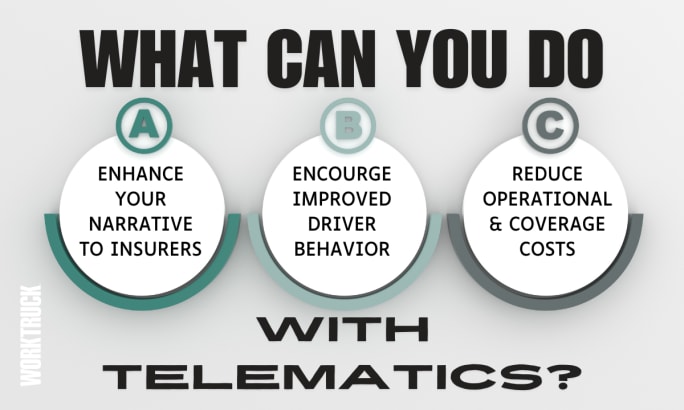
Enhance your narrative to insurers. Telematics data provides a powerful tool to articulate your fleet's risk profile to insurers accurately. Rather than allowing a large loss to overshadow years of safe driving, telematics enables you to present a comprehensive picture of your driver's performance.
With the assistance of insurance brokers, you can develop a peer score that reflects the true risk level of your fleet. Telematics help provide a precise and nuanced portrait of your risk profile, empowering brokers to advocate effectively on your behalf. This could potentially lead to more accurate premiums that align with your actual risk exposure.
Encourage improved driver behavior. The real-time insights telematics provide allow you to track driver behavior and intervene proactively to mitigate risks. By monitoring key metrics, you can identify areas for improvement and implement targeted coaching initiatives. Also, telematics data enables swift response and resolution in the event of an accident. Safety, human resources, and claims teams can all be alerted immediately, allowing for prompt assistance and initiating the claims process.
The availability of camera footage, whether inside or outside the vehicle, provides irrefutable evidence that can expedite claims resolution and potentially exonerate your business in cases where your driver is not at fault. According to a recent study, in cases where recorded footage cameras (RFC) are accessible, commercial truck drivers are deemed not responsible for accidents in 64% of claims. In comparison, they are found negligent in 29% of incidents involving RFC footage.
Reduce operational and coverage costs. With fleet telematics, changing the way insurance is priced and underwritten for your fleet is possible. Rather than relying solely on historical loss data and motor vehicle records, insurers can now assess your risk in real time based on actual driving behavior and route destinations. This shift incentivizes safe driving practices and rewards fleets with favorable safety scores and incident rates. If you have concerns about sharing this data with insurers, insurance brokers can review, validate, and assist in analyzing it before distributing it to insurers for quotation purposes.
By embracing technology and telematics solutions, companies have demonstrated significant reductions in total losses, sometimes as much as 30% annually. This reduction not only translates to lower insurance costs but also extends to other areas of operational efficiency, including reduced workers' compensation injury rates and enhanced fleet repair and return of units back to their capacity.
From refining your risk profile for insurers and improving driver behavior with real-time data, to reducing operational costs and insurance premiums, telematics can transform your fleet's performance and safety.
Photo: Work Truck
Maximizing ROI With Telematics
The return on investment achieved through telematics extends beyond insurance premiums. By deploying affordable camera technology and leveraging telematics data, fleets can realize substantial savings, enhance safety, and streamline operations.
The ability to share comprehensive risk data with insurance brokers enables you to negotiate more favorable terms and secure insurance solutions tailored to your fleet's unique needs.
Ultimately, the ROI of telematics adoption is multifaceted, encompassing reduced insurance costs, improved safety outcomes, and enhanced operational resilience. With a modest investment in telematics, the total cost of risk can be reduced, allowing fleets to position themselves for long-term success in an increasingly competitive landscape. Your insurance broker is a key resource in assisting with the ROI analysis of the potential investment.
About the Author: Lisa R. Paul, CPCU, is Chief Strategy Officer for Transportation at global insurance brokerage Hub International. Creating, planning and strategizing for success in transportation relative to the cost of risk, margin objectives and driving organic growth through the digitalization of data for transportation clients and insurance brokerage operations and their insurance risk partners is her primary objective. This includes linking small to large transportation businesses and their inter-related needs in transportation segmented insurance programs across a broad range of transportation businesses from dock to door. Paul has over 30 years in commercial auto underwriting, program and product development, including MGA Transportation & Specialty Auto Underwriting and SaaS Transportation Management before selling her business to HUB in 2017.
Think trucks under 26,001 pounds are automatically in the clear when it comes to IRP? Not always. Learn where lighter vehicles can still run into trip permit, apportioned registration, and IFTA compliance requirements when crossing state or provincial lines.
One of the most important recommendations for professional drivers traveling with pets is to ensure pets are properly restrained while the truck is moving. Other tips are available in the new guide from Volvo Trucks North America and Center for Pet Safety.
The American Petroleum Institute offers a list of safe vehicle refueling guidelines, including ways to avoid potential problems with static electricity discharges in fall, winter, and early spring.
Cold weather can expose weak batteries, tires, fuel systems, and maintenance gaps fast. Use this winter fleet checklist to prepare trucks and drivers before temperatures drop.
Fleet service partnerships rarely fall apart all at once. Learn the three warning signs that trust is eroding and what fleets and providers can do before downtime, frustration, and lost revenue follow.
Applause has integrated TRUCE driving metrics directly into its employee-first performance and safety platform that transforms mobile devices into AI-powered telematics.
Do you want to see what it is like to experience Detroit Assurance’s Active Brake Assist? In this video, Work Truck will put you in the cab to see how it all works and then hear more details from DTNA’s Mike Young.
Violence risks do not stop at the driver’s door. Learn five practical steps fleets can take to spot threats early and protect workers before loss occurs.
Fleet leaders don't need more data, they need clearer visibility into what the data is saying. This case study explores how one utility replaced speeding-event counts with a single metric — miles driven in violation — to strengthen safety and significantly reduce speeding violations.