





Related: Gas vs. Diesel: The Bad Investment Only Fleet Managers Know About
Diesel or Gasoline: Making the Right Decision
Gasoline- and diesel-powered trucks of all class sizes have their advantages and disadvantages in fleet operations. A combination of both could be the better option. How do you make the right decision for your fleet?
February 29, 2016
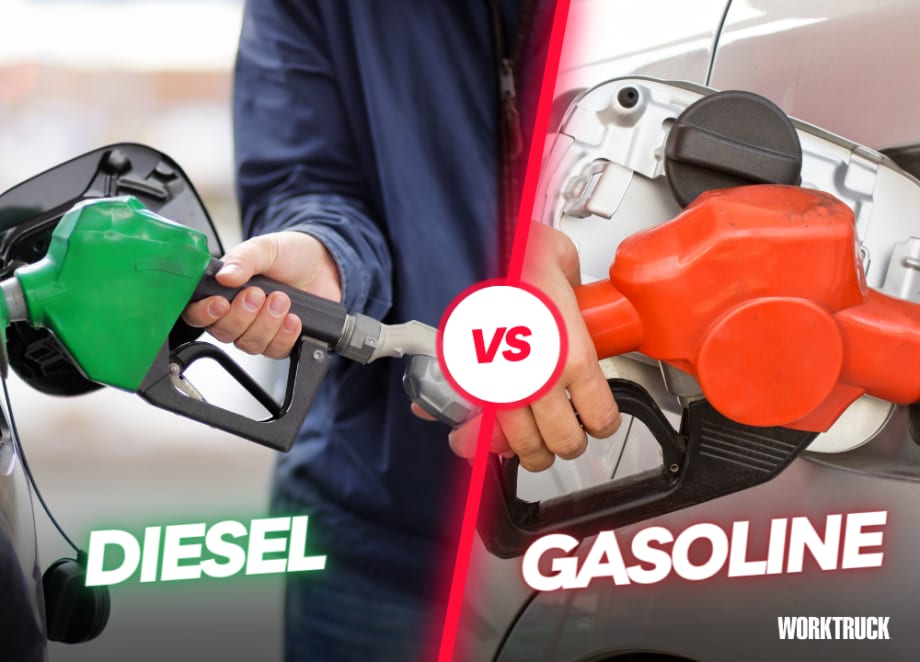
Medium-duty trucks still turn to diesel, but light-duty fleets are looking at gasoline.
Photo: Work Truck
10 min to read
A fleet manager has a number of questions to answer simply regarding vehicle management. When it comes to spec’ing work trucks, one important question is whether a diesel or gasoline powertrain — or even a mix of both — is the right option.
Currently, according to Kenworth, diesel is still “king” in the medium-duty market.
“The efficiency, torque output, longevity, and durability continues to drive its demand. We’ve had excellent results with the U.S. Environmental Protection Agency (EPA)’s 2013 emissions standards, diesel engines and after-treatment systems with increased fuel economy and vehicle uptime. Our strategy continues to be to prioritize diesel, due to these many customer benefits that come with a diesel powertrain system,” said Kurt Swihart, marketing director for Kenworth.
And, this is the forecast for the foreseeable future. “While the gasoline engine has carved a niche for itself in the medium-duty market, our data shows that it really hasn’t been able to gain any significant ground on diesel engine sales in the past five years,” said Adrian Ratza, marketing manager for Hino Trucks.
For light-duty trucks, gasoline is still the powertrain of choice.
“At the lower end of the Class spectrum, especially in the Class 1 and 2 commercial pickup categories, operators are unlikely to be commercial drivers and the lower purchase price, ready availability of gasoline, and driver familiarity with gasoline engine operation weighs in favor of gasoline engines. Only if annual mileage driven is very high or the job demands substantial towing capacity would the balance tip in favor of a diesel,” said Otto Schmid, director, product management for Mitsubishi Fuso Truck of America.
But, for the mid-range of medium-duties, it may not be as cut and dry.
“In the Class 3-5 range of medium-duty trucks, the powertrain decision requires much more careful analysis. The crossover point between gasoline and diesel engines for these classes is not fixed. It depends on several variables, including purchase price, fuel cost (dollars per gallon), annual miles driven, day-to-day or trip-to-trip load variations, the fuel consumption differences between comparable gasoline and diesel engines, and warranty cost savings,” Schmid said.
Making the Right Fuel Decision
Overall, the main consideration is vehicle usage. “The choice between gasoline and diesel is largely dependent on specific usage and applications. Diesel engines are typically utilized for low-end torque, accessory-driven components (PTO), longevity, and in high-idle applications. Gasoline engines are typically utilized for non-PTO applications and for fleets that may have a higher turn rate for their vehicles,” said Mike Levine, truck communications manager for Ford Motor Company.
To accomplish any job, you need the right tool. And, in fleet, you need to ensure that the tool — the fleet vehicle — fits the job, whether it’s delivery, towing/hauling, people moving, etc.
“As with buying any tool, the fleet manager needs to look at the ability to do the job effectively and how to achieve the best return possible on the investment. Diesels provide more low rpm torque, which can be important in stop-and-go driving and when moving heavy loads. Additionally, diesels will also provide better fuel economy and potentially better long-term durability and resale value. But, all this capability and economy comes at a significantly higher up-front cost. Such factors as the type of driving done (e.g., city vs. highway), loads carried/towed, miles driven, and number of years in operation will all play into the decision,” according to Dan Tigges, commercial product manager for General Motors Fleet.
Claus Tritt, general manager of Operations for Mercedes-Benz Vans USA, agreed. “Customer needs, size, and the weight range of typical freight deliveries, as well as distances traveled (urban, suburban, or long-haul), play a huge role in choosing either type of powertrain, assuming the same size vehicle for both engine options,” he said.
For more power and hauling abilities, the consensus is still that diesel is the way to go.
“The need for a larger, more capable truck will typically swing the decision more toward a diesel solution. These trucks are being asked to do more and the higher diesel torque and better fuel economy will be a bigger factor under heavily loaded conditions. As with any fleet decision, it comes down to choosing the right truck for the job,” according to General Motors Fleet.
Also, in addition to tow/haul capabilities, power-take off (PTO) needs must also be considered.
“A fleet manager also needs to look at whether the truck will have a PTO and will operate a certain number of hours, and then diesel will be the better option. If the truck will be driven more than 25,000 miles per year, diesel will have a lower cost of ownership and save the fleet manager money over the life of the vehicle,” said Brian Tabel, executive director of marketing for Isuzu Commercial Truck of America (ICTA).
In addition to how the vehicle is going to be used, mileage traveled is also a key consideration. “The biggest item a fleet manager needs to look at before buying a gasoline- or diesel-powered truck is what the annual mileage of the truck will be. If the truck will be driven fewer than 25,000 miles per year, gasoline may be the better choice,” Tabel said.
One other factor to consider, according to Dave Sowers, head of Ram Commercial – FCA, is what impact moving up or down in truck class makes in this decision.
“There are a variety of capabilities and unlimited uses. It really depends on the load, such as whether or not it will have equipment in the bed, tow numerous trailers, or operate as the supervisor’s daily driver. Additionally, upfits normally dictate use. A crane system, roll-back bed, ambulance, stake bed, or service truck for heavy equipment are some examples. From there it becomes a question of GVWR and how much room do you require for the upfit plus supplies,” Sowers said.
Avoid Fuel-Based Spec’ing Mistakes
When finalizing the diesel vs. gasoline powertrain decision, beware of a few common pitfalls. Overlooking some key points can cost a fleet big.
“Total cost of ownership would be the No. 1 item that is overlooked. It’s easy to look at the purchase price of the vehicle and say, ‘This is the right truck because it costs the least at the time of purchase.’ But, fleet managers must consider what that truck is going to cost over the time it will be in operation,” said Tabel of ICTA.
Overloading is also a common problem in truck fleets.
“It’s not uncommon to see a customer use a truck beyond its recommended capability. As businesses grow, so does the size of the equipment. That means the truck’s capability also needs to increase. If someone is hauling a bulldozer with a pickup ‘because it can,’ they may want to consider a larger truck that is more suited for that load,” said Sowers of FCA.
In addition to overloading a vehicle, overworking it is also an issue.
“Engine performance claims should not be over-valued. A powertrain’s ability for getting the job done efficiently and effectively should be the critical factor for most fleets. There is no replacement for reliability and durability of the entire powertrain,” according to Tigges of GM.
One of the most commonly overlooked considerations in the diesel vs. gasoline decision, according to Tritt of Mercedes-Benz Vans USA is customer service at the dealerships.
“Additionally, TCO and service intervals also play a big role. Longer service intervals mean more convenience and more time on the road,” Tritt said.
Finally, warranty considerations and details can be often overlooked.
“One consideration that can be overlooked is the diesel engine advantage in warranty coverage. Most commercial medium-duty trucks, especially in the Class 3-5 range, offer substantially different warranties for gasoline-engine powertrains than the equivalent truck with a diesel powerplant. Specifically, gasoline engine trucks typically come with basic warranties of three years/36,000 miles and powertrain warranties of five years/60,000 miles to five years/75,000 miles. Maintenance cost savings and engine longevity substantially favor the diesel engine,” said Schmid of Mitsubishi Fuso.
However, Schmid warns this may slightly change as future emission and OBD standards become more stringent and technologically more advanced. “We may start seeing cost benefits to a gasoline engine based on development costs and operational costs for more complex diesel engines in coming years,” he noted.
One Size May Not Fit All
And, as is the case in many areas of fleet management, one size may not fit all. A mix of gasoline and diesel trucks may be the road to take.
“The primary differentiators between a gasoline- and diesel-powered engine in a work truck revolve around purchase price, fuel cost, annual miles driven, engine power requirements, overall maintenance costs, and longevity. Typically, as one moves up in weight class (e.g., GVWR and payload), the inherent advantages diesel engines offer in torque and specific power output become more important,” said Fuso’s Schmid. “And, current diesel emissions technology has increased the complexity of diesel powertrains and drivers may require increased training so they understand the requirements. For instance, diesel emission fluid (DEF) tank levels must be watched and replenished independently of the fuel and diesel particulate filter (DPF) regeneration may require manual intervention under some circumstances.”
Company financials and overall lifecycle costs must also be considered.
“It all comes down to financial wherewithal. Fleet managers really need to look at their operating conditions and fleet lifecycle. Fleets that work their vehicles hard in stop-and-go driving, carry heavy loads, and keep their vehicles for a long time will tend to get a better return from a diesel. Fleets that turn their vehicles more quickly, drive mostly highway routes and do not move heavy loads all the time may be better served by a gasoline-powered truck,” according to General Motors Fleet.
But, Schmid of Mitsubishi Fuso noted difficulty in determining a definitive useful life for a truck.
“The useful life for a work truck is difficult to establish definitively because of the number of variables involved. Consequently, lacking a specific, proven advantage for a diesel, most numerical comparisons between gasoline and diesel models are done assuming equal useful life; however, general experience and qualitative evidence show that properly maintained diesel powertrains tend to last substantially longer than their equivalent gasoline counterparts in real-world operations. The extent of that advantage has to be determined by individual fleet managers based on their own experience,” Schmid said.
When determining what powertrain option will be best, analyze your purchasing cycle. “Ask yourself, ‘how many years and how many miles do you plan to put on the truck before replacement?’ ” recommended Ratza of Hino Trucks.
Remember, this is a business expense and total cost of ownership (TCO) is a valuable piece of data. “It is very important to identify use and frequency of operation. Only then can you calculate TCO. The initial cost benefit against long-term costs of operation will help determine the correct truck,” said Sowers of FCA.
Additionally, determine whether it is a lease vs. own decision. “Trucks equipped with a diesel engine tend to carry higher resale values than their gasoline-powered counterparts,” according to Ratza, which is important for fleet managers of an owned fleet looking to achieve a high resale on used units.
Also, knowing and understanding a company’s goals and the needs of the fleet will go a long way in helping make the right decision.
“For many fleets, maintenance complexity and parts inventory can be deciding factors in engine choice. If a careful evaluation of fleet operations suggests that a diesel engine is the better choice for most applications or routes, but a gasoline engine would be better for a few, it may be wiser to stick with the diesel engine configuration and avoid having to carry parts inventory and train technicians to repair a few gasoline engine vehicles. On the other hand, if a careful evaluation reveals a more even mix of routes or applications, tailoring the engine and vehicle to the route or application makes good sense, for both performance and economy,” Schmid said.
The Bottom Line
In the end, fleet managers must remember that market fluctuations in fuel price should not be the only factor in determining whether gasoline or diesel is the right option.
“The market tends to react to the difference in price between gasoline and diesel. Historically, the price of both gasoline and diesel prices tends to fluctuate together. The decision to choose fuel types is largely driven by application, time in service and need to operate accessory equipment (PTO),” said Levine of Ford.
And, once this decision has been made, the process has just begun. Additional considerations, including transmission type and brand, are next.
“While the type of engine is very important, it is not the only powertrain consideration. The rest of the powertrain needs to be capable, reliable, and durable. For example, no matter how good the engine is, the truck can’t work with a failed transmission. A transmission with a reputation for dependability is always a positive factor,” said Tigges of GM.
Subscribe to Our Newsletter
More Fuel

The Smart Way to Build a Mixed-Energy Fleet Isn’t About Picking a Side
Mixed-energy fleets aren’t about picking a winning fuel. Sarah Booth of WEX explains how vehicle data, duty cycles, charging strategy, and real-world costs can help fleets choose the right energy source for each job.
Read More →
Ignoring This Dashboard Warning Could Cost Your Fleet Thousands in Fuel
New research suggests neglected diesel aftertreatment systems could waste up to $30 in fuel per vehicle each day. Here's why vocational fleets should pay attention.
Read More →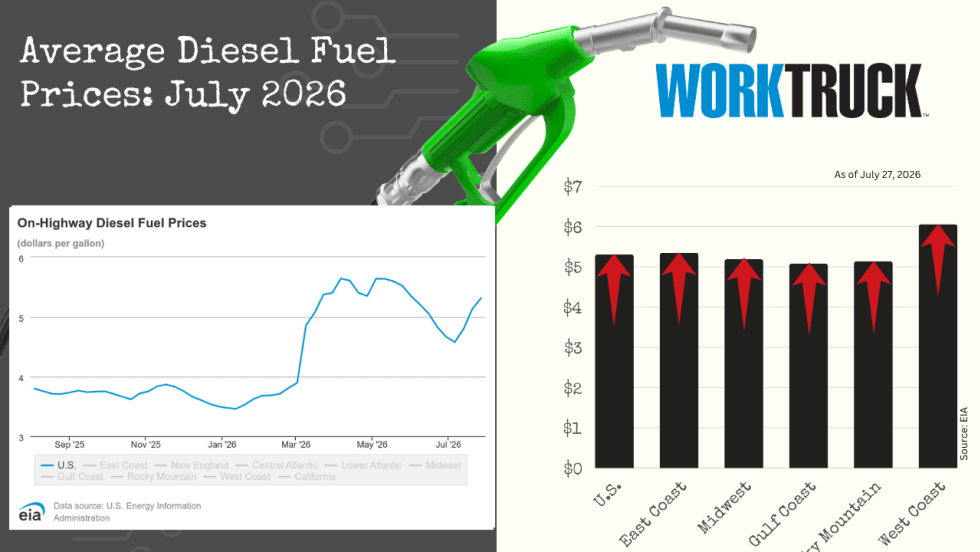
July Diesel Trends Update
The average price of a gallon of diesel increased again this week, and the EIA reported a new national average of $5.31 at the start of the week.
Read More →
WEX Brings Standard Fleet's Connected Vehicle Platform to Fleet Customers
This week’s product launch with Standard Fleet’s connected vehicle platform reflects WEX Venture Capital's strategy of turning startup innovation into customer solutions. Standard Fleet is now available to WEX fleet customers.
Read More →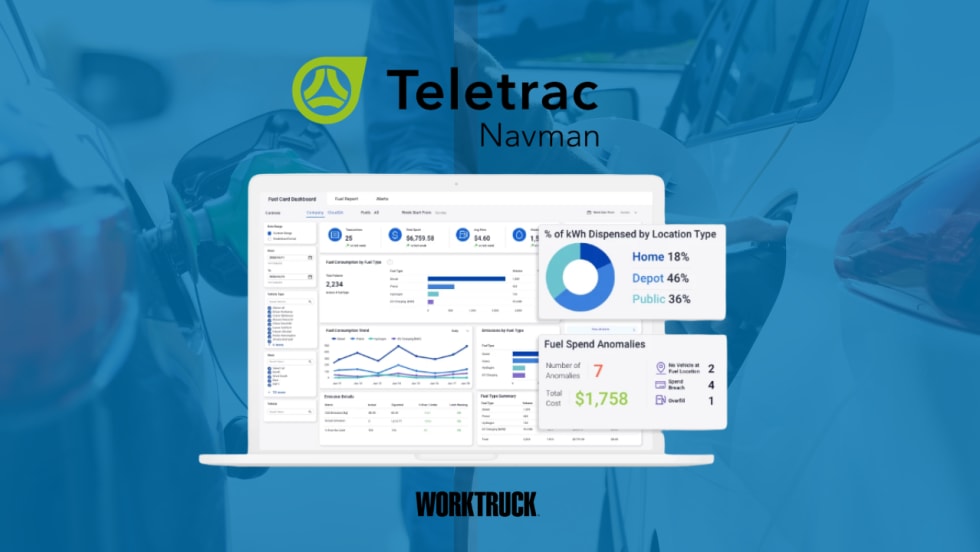
Teletrac Navman Adds Mixed-Energy Fleet Tools to TN360
The new Energy Hub combines fuel transactions, EV charging data, vehicle range, and energy costs in one dashboard for fleets operating multiple vehicle and energy types.
Read More →
WEX DriverDash adds CITGO, Expands Nationwide Access for Fleets
The DriverDash mobile payment app, by WEX, has been integrated into the CITGO merchant network, which means WEX has expanded its U.S. station footprint with the addition of approximately 4,000 CITGO locations.
Read More →
Mixed Energy Fleet Tips for Balancing EVs, Gas and Diesel Vehicles
Mixed energy fleets are becoming the new normal. Learn how fleet managers are balancing EVs, gas and diesel vehicles while controlling costs and planning for the future.
Read More →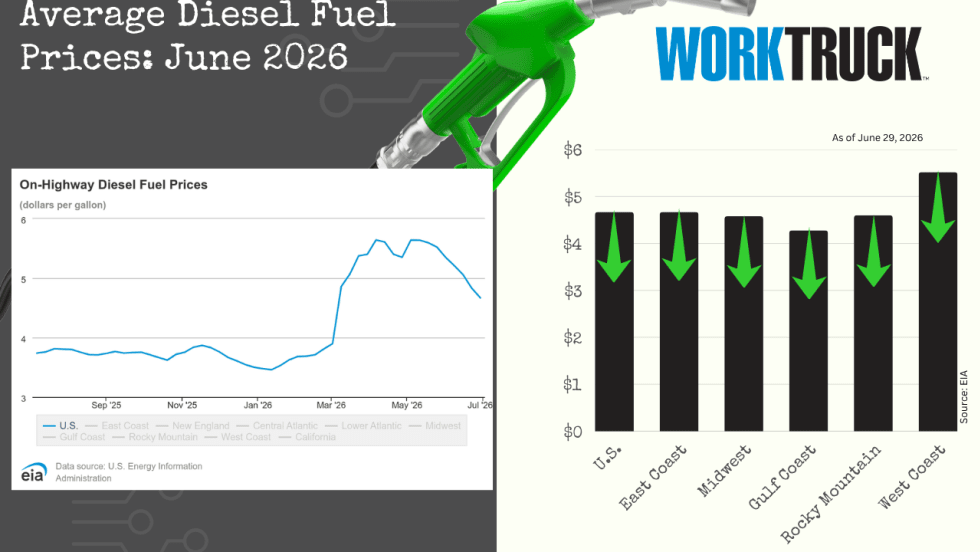
June Diesel Trends Update
The national average price of a gallon of diesel has dropped again, this week by more than 16 cents. All five regions reported lower average prices, ranging from almost 13 cents to more than 28 cents cheaper than a week ago.
Read More →
RoadFlex Launches RoadFlex Direct Open API Platform
RoadFlex Direct connects fuel cards, controls, and data to the telematics and fleet management systems fleets already run, from Geotab and Samsara to Fleetio and RTA, with no separate dashboard or double data entry.
Read More →
The Key to Fuel Efficiency Sits in the Cab
Learn how driver behavior, telematics, coaching, and fuel data can help fleets improve fuel efficiency, lower costs, and reduce emissions.
Read More →