




Cost-Reduction Strategies that Go Beyond the Asset
Fleet cost-reduction programs typically focus on the asset; however, there’s a limit to how much a fleet manager can modify truck specs without impacting the fleet mission. True cost savings are to be found in areas beyond the asset.


Photo: Getty Images
Fleet is usually among the top 10 corporate capital expenditures and is often the focus of corporate cost-reduction initiatives. When corporate revenues soften, it is management’s fiduciary responsibility to demand expense reductions and limit capital expenditures. Unfortunately, many fleet-related cost-reduction decisions are made for the short-term, with very little consideration of the long-term impact on the total cost of ownership (TCO). More often than not, senior management is more interested in the fiscal, rather than economic, consequences of their fleet-related decisions.
Cost Deferral vs. Cost Elimination
Senior management exerts intense pressure on fleet managers to control and/or reduce vehicle acquisition and operating expenses. A tighter corporate operating environment forces fleet managers to pursue two different types of cost-cutting goals — cost deferral and cost elimination. And, the easiest way to cut fleet costs is to move or defer them to future fiscal years.
There are two categories of business activity in any company — income and expense. The income side includes sales, service, and any other activity charged with producing income for the company.
The expense side includes areas such as administration, operations, and personnel, which are charged with managing the costs of doing business.
If the fleet manager reports up through the cost side of the organization (operations, administration, etc.) there is an even greater urgency to acquire fleet assets and provide fleet services at the lowest cost possible.
Fleet managers must think strategically when developing long-term cost-containment initiatives by focusing on running the fleet more efficiently. Cost reductions should be achieved through operational efficiencies by focusing on soft costs, such as driver downtime and, concurrently, lost revenue. Driver productivity can produce impressive results when quantifying cost savings, particularly in a well-run fleet program where the law of diminishing returns limits the impact of fixed and variable cost savings. Achieving true cost savings involves more than just putting off expenditures in the hope your organization’s fiscal situation will improve in the future — it requires eliminating costs.
Fleet cost-reduction programs typically focus on the asset; however, there’s a limit to how much a fleet manager can modify truck specifications without impacting the fleet mission. You can’t change the fundamental requirements of your business. This necessitates minimum fleet equipment specifications that, as a result, pre-define the expense parameters for your assets from both a fixed and operating cost perspective. In addition, if you acquire vehicle assets that best fulfill your fleet application, then any supplemental cost reduction will only be based on incremental refinements, in essence, chasing pennies to further reduce costs.
If you want to save “dollars” instead of “pennies,” the best way to achieve additional cost reduction is by modifying driver behavior. This is critical but often overlooked, since attention is typically focused on the asset. But think about it: The way employees drive company trucks and vans can improve (or decrease) fuel economy; extend (or decrease) the life of wear items, such as tires, brakes, etc.; decrease (or increase) preventable accidents; and maintain (or degrade) the overall condition of a vehicle, which, ultimately, has a direct influence on resale value.
Another misapplication of cost control resources is that, all too often, managers attempt to control fleet costs on the back-end. The best time to control cost is before it occurs and the way to do this is through establishing policies and procedures that inhibit unnecessary spending and establish the parameters as to how drivers operate and maintain an asset. By establishing fleet policies up-front for expense control and making a concerted effort to ensure these policies are uppermost in the minds of drivers, fleets will reap substantial cost savings. Fleet policy institutionalizes the mechanisms to curb money-wasting behaviors.
A fleet manager needs to use every communication method available: in-person presentations, e-mail, intranet, newsletter, and phone to continuously reinforce fleet vehicle policy. You need to be redundant if you want to increase the likelihood that your drivers are following fleet policy. You need to not only communicate it to them but, more importantly, you need to re-communicate it on a regular basis. When it comes to fleet policy, there is no such thing as being redundant. The secret to increasing driver compliance with fleet policy is just that — redundant communication.
In the final analysis, increased fleet policy compliance will help reduce unnecessary costs. Fleet policy compliance is a crucial part of a company’s overall cost-control strategy. Based on my experience, the best-managed fleets are those whose drivers adhere to a written fleet policy.
Making Better Drivers
Before implementing new fleet initiatives requiring new dollars, make it your No. 1 priority to stop the waste of existing dollars. The most effective way to reduce waste is to increase compliance with fleet policy. Fleet policy must be a powerful component of a company’s overall cost-control strategy.
If we are honest with ourselves, most of us will grudgingly acknowledge that there are wasted dollars in our fleet budgets. The overwhelming majority of fleet managers are good stewards of corporate funds so budgetary waste is not blatant but often comprised of the cumulative impact of hidden inefficiencies. This situation is best exemplified by a quote attributed to Henry Ford that says: “If you watch the pennies, the dollars will take care of themselves.”
The majority of fleet waste occurs because of non-compliance with fleet policy and, conversely, the lack of enforcement of it. It is estimated that, on average, 5-10% of a fleet’s annual budgeted dollars are wasted. The best way to identify waste is to conduct an efficiency audit of your fleet budget.
The best opportunity to modify driver behavior is by training drivers to more efficiently perform their job and operate their vehicles. One popular technique is called eco-driving. Major fleets, such as Wal-Mart, UPS, and FedEx, have implemented eco-driving programs to modify driver behavior. In essence, there are five eco-driving practices. They include:
Minimize idling.
Gently accelerate.
Maintain a steady speed.
Ease off the accelerator early before braking.
Judiciously use A/C.
For instance, if you change the driving behavior of your employees, you have a direct impact on the amount of fuel consumed. Even small increases in mpg can result in substantial savings when extrapolated across the entire fleet. For example, aggressive driving (such as speeding, rapid acceleration, and braking) can lower fuel economy by 33% at highway speeds and by 5% on city streets. Fleet tests using eco-driving techniques have demonstrated that a single truck, averaging 35,000 miles per year, can reduce fuel consumption by more than 1,200 gallons.
At its most fundamental level, waste involves consuming resources through inefficient or non-essential activities. This is not just waste, but wasteful.
The greatest amount of waste occurs with the fuel budget. If up to 30% of a vehicle’s fuel efficiency is impacted by driver behavior, you need to minimize this inefficient use of corporate assets. In fact, many of these behaviors are in violation of fleet policy. Let’s start with one of the most wasteful of all fleet activities — unnecessary idling. Until the advent of telematics devices, unnecessary idling was not perceived to be a major problem for fleets. But, once engine data was captured by fleets on a large-scale basis via telematics, it quickly became apparent that idling represented a significant “hidden” problem. The amount of unnecessary idling varies by fleet, but some fleets have recorded idling as much as 20% of the time.
Besides unnecessary idling, there are many other ways that fuel dollars are wasted, ranging from inefficient routing to drivers not being price conscious when refueling. But, what about having drivers ensure that tires are properly inflated? Driving on under-inflated tires is not only dangerous but wastes fuel dollars as well. This is the easiest, most cost-effective (and most neglected) way to boost fuel economy. For instance, keeping tires properly inflated increases fuel efficiency by 3%.
What about overloading? While this also may be perceived as strictly a safety issue, overloading is another way fleet dollars are wasted. Overloading shortens a truck’s service life and increases operating expenses. In fact, fleet maintenance surveys consistently show that overloading is the No. 1 cause of unscheduled maintenance for trucks. There’s a direct correlation between vehicle weight and fuel consumption. Every pound of extra weight requires an engine to work harder, increasing fuel consumption. For instance, an extra 100 pounds in vehicle weight can reduce mpg up to 2%. In addition, every pound deleted from curb weight is converted into revenue-generating payload.
Communicating to Management
You may think you manage a well-run fleet, but how does management really know how well you are doing unless you have objective data to prove it? It is important to have an open-book policy and share data with management, internal customers (such as driver supervisors), and suppliers. From the perspective of management, this will validate that you are getting optimum performance from the fleet. This will cultivate the recognition with senior management that you are the in-house expert on all matters dealing with fleet management. But, this isn’t a given; the fleet manager must work at earning the full support of senior management. It is important for management to understand that a competent fleet manager can easily save a company millions of dollars by implementing the right fleet policies and selecting the right suppliers.
The curse to running a well-run fleet is that it sometimes breeds complacency. Veteran fleet managers who have implemented numerous cost-saving initiatives will tell you that savings become more difficult to find — the law of diminishing returns takes hold. They point out that most of the excess cost has already been wrung out of the operation, noting metrics that prove the fleet is running smoothly. Unfortunately, these fleet managers are operating on autopilot and have become too comfortable in their positions. This is the road to complacency, or, at worst, it is the road to stagnation. They reason that things are working just fine — why monkey with a well-tuned fleet operation? When operations are running smoothly, there is inertia to change.
The conventional wisdom is to not change something that isn’t broken. Again, there is some truth to this statement, but ask yourself: “Is your goal to run a well-managed fleet or do you want to run a best-in-class fleet?” Complacency is the enemy of excellence.
More Operations

Work Truck Seeks Fleet and Industry Insights on 2026 Trends and 2027 Forecasts
Work Truck is seeking insights from fleet leaders and industry partners on the trends that shaped 2026 and what commercial fleets should prepare for in 2027. Participate today!
Read More →
30 Years in Fleet and Still Learning: Lessons Beyond Trucks
After more than three decades in fleet, Bob Adamsky has learned that knowing trucks is only part of the job. The bigger lessons come down to communication, understanding, and never assuming you know it all.
Read More →
What Every New Fleet Manager Should Know
Carolyn Edwards shares lessons on finding mentors, showing fleet’s value, and leading teams in this episode of Legends of Fleet.
Read More →From Our Partners
Basic Tracking vs Next Generation Fleet Technology
Sponsored by AT&T Business

5 Facts Every Fleet Manager Should Know About Embedded Telematics
Sponsored by Stellantis/Mobilisights

How AI Video Telematics Boosts Driver Safety and Helps to Avoid Unnecessary Costs
Sponsored by Verizon Connect

Charting the 8 Bottom-Line Benefits of Workforce Optimization
Sponsored by Verizon Connect


Les Schwab Tires Launches Foundation With $100,000 for Community Recovery
Les Schwab Tires launches a foundation with $100,000 to support recovery for Silver Rail Elementary and the Bend community following a school shooting.
Read More →
Bring Some Fleet to Your Halloween with Our Pumpkin Carving Templates
Download Work Truck’s truck-themed pumpkin patterns, explore more automotive designs, and give your shop or front porch a seasonal upgrade.
Read More →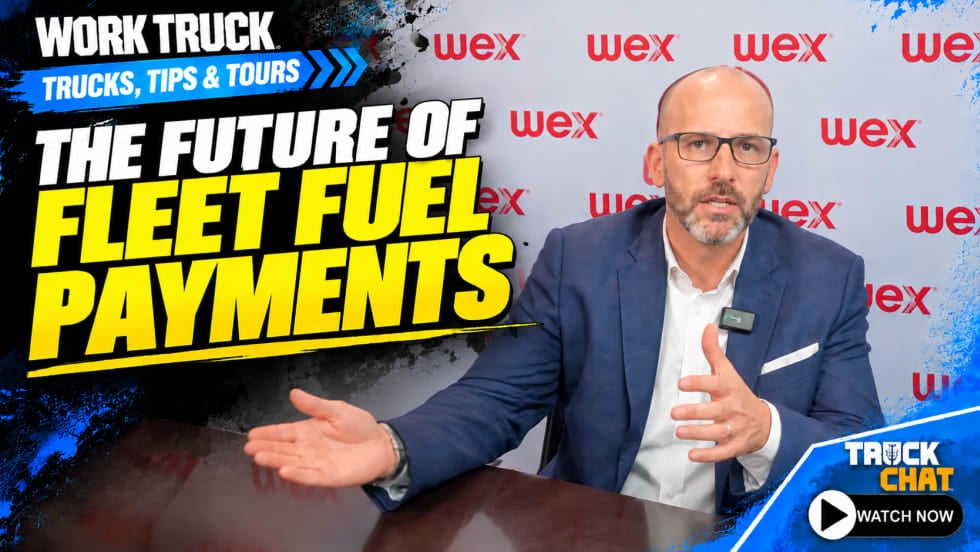
How Cardless Fuel Payments Benefit Commercial Fleets
Is it time for fleets to move beyond plastic fuel cards? David Abraham of WEX explains how cardless fuel payments can help reduce fraud, simplify driver transactions, and improve efficiency by allowing drivers to pay for fuel using their smartphones.
Read More →
Good Fleet Leadership Starts With the People You Already Have
From developing future leaders to listening to employees, discover how better leadership can help work truck fleets retain talent and build stronger teams.
Read More →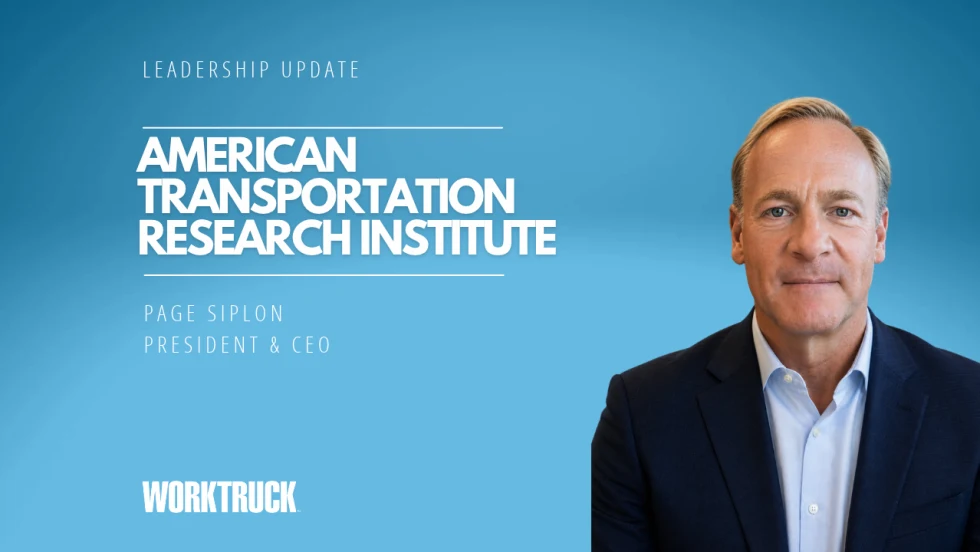
ATRI Names Next President and CEO
Page Siplon, a longtime transportation and logistics industry executive, has been chosen as the next president and CEO of the American Transportation Research Institute (ATRI).
Read More →
Coltrain Onsite Fleet Care Sponsors 2026 Cure Bowl to Support Cancer Research
The mobile fleet maintenance provider is supporting the annual college football bowl game, which has helped raise $6.83 million for cancer research since 2015.
Read More →
Racing Lessons, Electric Fleet Growth, and Ghostbusters Lead This Week's Work Truck News
Racing lessons for fleets, Republic Services' electric truck expansion, 40 years of fleet wisdom, truck trivia, autonomous yard trucks, and more headline this week's Truck Chat Cheat Sheet.
Read More →