




Clearinghouse Status Can Result in Loss of a CDL
Drivers with prohibited Clearinghouse status now face CDL/CLP downgrades. Learn how SDLAs enforce the rules and what steps are needed for reinstatement.
January 7, 2025

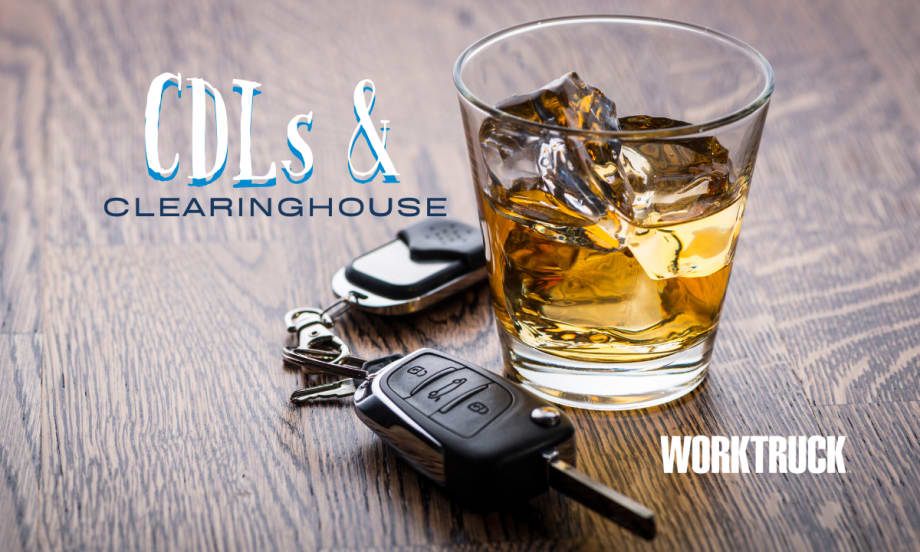
Drivers' CDLs and CLPs are now tied to Drug and Alcohol Clearinghouse status, ensuring stricter enforcement of safety compliance.
Photo: Work Truck
3 min to read
Commercial licensing is now tied to a driver’s Drug and Alcohol Clearinghouse status. Drivers in a prohibited status face a denied or downgraded commercial driver’s license (CDL) or commercial learner’s permit (CLP).
State driver’s licensing agencies (SDLAs) were given until November 18, 2024, to have systems to connect with the Clearinghouse to learn of and act on a driver’s status.
How Many Drivers are Affected?
A prohibited status is placed on a driver’s Clearinghouse record as the result of a DOT drug or alcohol violation under 49 CFR Part 382. It is not removed until the Clearinghouse receives confirmation of a completed return-to-duty (RTD) program and test.
Out of the 178,839 drivers currently in a prohibited status:
136,224 have yet to start the RTD process,
17,368 are in process, and
25,247 show as eligible to take an RTD test.
Understanding the Downgrade Process
SDLAs have been instructed by the Federal Motor Carrier Safety Administration (FMCSA) to:
Deny CDL and CLP issuance, renewal, upgrade, or transfer for any driver that has an unresolved violation (prohibited status) in the Clearinghouse; and
Downgrade existing CDL and CLP holders while they are in prohibited status in the Clearinghouse.
The SDLA must report the downgrade within 60 days of learning the status and reinstate privileges after learning that the driver is no longer prohibited.
Return to Duty Requirements
To get the prohibited status off their record, drivers must work with a substance abuse professional (SAP). The driver must designate the SAP in their Clearinghouse account. If a driver does not have a personal account, one must be created to proceed.
The designated SAP will indicate the completion of an initial evaluation, the successful completion of education/treatment, and a second evaluation.
At this point, the driver is eligible for an RTD drug and/or alcohol test, as prescribed by the SAP. The prohibited status is lifted once an employer or consortium reports a negative RTD test(s).
Reclaiming a CDL or CLP
The Clearinghouse regulations (383.73(q)) don’t outline administrative processes for the SDLA to reinstate CDL privileges. As a result, drivers can’t assume their licenses are automatically restored when the status changes from prohibited to not prohibited in the Clearinghouse. They should speak with the SDLA to learn how to reclaim their licenses and what actions and documentation might be required of them.
Motor carriers should monitor the CDL status before allowing the driver to operate a commercial motor vehicle (CMV) after the prohibited status is lifted. There could be a delay in the reinstatement. Failing to check the driving record first could result in a citation and a fine for using a driver without a CDL when one is required.
More Visibility During Traffic Stops
Knowledge of a prohibited status is no longer limited to Commercial Vehicle Safety Alliance (CVSA) inspectors during roadside inspections. CVSA inspectors can see a driver’s status to determine if a driver should be placed out of service.
The recent change allows all safety enforcement officers to identify prohibited drivers after a license downgrade by conducting a license check during a routine traffic stop. This increased visibility will keep drivers from operating commercial vehicles when restricted.
A Tool for employers
Tying the driver’s CDL or CLP to the Clearinghouse status provides a medium for motor carriers not subject to Part 382.
Why does this impact them? A driver with a prohibited status is restricted from operating all CMVs, including non-CDL CMVs. And these carriers don’t have a Clearinghouse account or a means of detecting a prohibited status.
These motor carriers can avoid using a driver in a prohibited status through a motor vehicle record (MVR) or continuous MVR monitoring. Those who manage a carrier’s driver qualifications (DQ) files should be brought into the conversation since they need to know how to respond to an MVR showing a downgraded CDL due to the Clearinghouse status.
Subscribe to Our Newsletter
More Safety
When Work Trucks Under 26,001 Pounds Need IRP Registration
Think trucks under 26,001 pounds are automatically in the clear when it comes to IRP? Not always. Learn where lighter vehicles can still run into trip permit, apportioned registration, and IFTA compliance requirements when crossing state or provincial lines.
Read More →
Volvo Trucks Releases New Safety Recommendations for Traveling with Pets
One of the most important recommendations for professional drivers traveling with pets is to ensure pets are properly restrained while the truck is moving. Other tips are available in the new guide from Volvo Trucks North America and Center for Pet Safety.
Read More →
API Issues Refueling Safety Guidelines
The American Petroleum Institute offers a list of safe vehicle refueling guidelines, including ways to avoid potential problems with static electricity discharges in fall, winter, and early spring.
Read More →
Winter Fleet Prep: Expert Tips to Keep Vehicles Running Smoothly
Cold weather can expose weak batteries, tires, fuel systems, and maintenance gaps fast. Use this winter fleet checklist to prepare trucks and drivers before temperatures drop.
Read More →
When a Work Truck Breaks Down, the Job Can Stop, Too
A work truck breakdown can stop more than the vehicle. Discover how payloads, jobsites, and specialty equipment change the roadside response.
Read More →
What Stronger Long-Term Fleet Service Partnerships Actually Require
Fleet service partnerships rarely fall apart all at once. Learn the three warning signs that trust is eroding and what fleets and providers can do before downtime, frustration, and lost revenue follow.
Read More →
Applause & TRUCE Software Partner to Improve Driver Safety Through AI-Powered Telematics & Employee Performance Management
Applause has integrated TRUCE driving metrics directly into its employee-first performance and safety platform that transforms mobile devices into AI-powered telematics.
Read More →
How Detroit Assurance with Active Brake Assist Works
Do you want to see what it is like to experience Detroit Assurance’s Active Brake Assist? In this video, Work Truck will put you in the cab to see how it all works and then hear more details from DTNA’s Mike Young.
Read More →
Get Left of Loss: A 5-Step Workplace Violence Prevention Framework for Fleet Operators
Violence risks do not stop at the driver’s door. Learn five practical steps fleets can take to spot threats early and protect workers before loss occurs.
Read More →
Sponsored•July 17, 2026
How Better Visibility Cut Speeding Violations by 48%
Fleet leaders don't need more data, they need clearer visibility into what the data is saying. This case study explores how one utility replaced speeding-event counts with a single metric — miles driven in violation — to strengthen safety and significantly reduce speeding violations.
Read More →