




Violations Motor Carriers Must Report to Clearinghouse
Since violations are often few and far between, motor carriers may not fully understand their reporting responsibilities. Medical review officers (MROs), substance abuse professionals, and motor carriers provide the data necessary to populate the Clearinghouse.


Photo: U.S. DOT
The commercial driver’s license (CDL) Drug and Alcohol Clearinghouse relies on accurate and timely submissions to provide a driver’s complete drug and alcohol testing history.
The Clearinghouse lists violations occurring under Part 382 occurring since January 6, 2020, along with milestones in the evaluation, treatment, and follow-up program. Medical review officers (MROs), substance abuse professionals, and motor carriers provide the data necessary to populate the Clearinghouse.
Since violations are often few and far between, motor carriers may not fully understand their reporting responsibilities.
MROs: Not Privy to all Violations
MROs report positive, adulterated, and substituted drug test results to the Clearinghouse. Also, MROs report shy bladder incidents without a medical explanation.
But, MROs do not know other types of testing violations, including failed alcohol tests, individual refusals to test scenarios, and a motor carrier’s actual knowledge. As a result, the obligation to report these violations to the Clearinghouse falls on the motor carrier. It must submit these events by the close of the third business day after learning of them.
Failed Alcohol Tests
A failed alcohol test is one with an alcohol concentration of at least 0.04. The violation requires the return-to-duty process and is reported by the motor carrier to the Clearinghouse.
An alcohol concentration of 0.02-0.039 is not defined as a failed test, even though the driver is removed from duty for 24 hours. This event is not shared with the Clearinghouse.
Actual Knowledge
Actual knowledge of drug or alcohol use is learned by the motor carrier in several ways, including:
Direct observation,
The driver’s admission,
Traffic citations, and
Information provided by former employers.
Actual knowledge holds the same consequences as having a positive test result.
Specific to alcohol, motor carriers must report:
On-duty use,
Use four hours before coming on duty, and
Use within eight hours following an accident (when a post-accident test was not yet performed).
A traffic citation may reveal driving while under the influence of drugs or alcohol in a commercial motor vehicle requiring a CDL. This citation is reported to the database by the carrier.
Refusals to Test
Clinics communicate many refusal-to-test scenarios to the motor carrier. Other situations are experienced first-hand. The following must be reported by the motor carrier to the Clearinghouse:
Not going for a test when instructed;
Showing up late (beyond reasonable travel time);
Failing to remain at the testing site until the testing process is complete;
Failing to cooperate with any part of the testing process;
Failing to provide an adequate amount of saliva or breath for an alcohol test, without a valid medical explanation; and
Failure to sign the certification at Step 2 of the alcohol testing form.
Pre-employment tests, however, are handled a little differently than other DOT test types. Refusals to test only occur after the driver is taken back for testing. Up to that point, the driver can leave at any time.
Benefits of Accurate Records
Motor carrier Clearinghouse administrators should be trained on the definitions of refusal to test and actual knowledge and the responsibility to report these infractions. Motor carriers must accurately communicate violations in a timely fashion.
To do otherwise puts the credibility of the database at risk. Motor carriers must have the ability to identify whether a driver is qualified to perform a safety-sensitive function.
More Safety

When Work Trucks Under 26,001 Pounds Need IRP Registration
Think trucks under 26,001 pounds are automatically in the clear when it comes to IRP? Not always. Learn where lighter vehicles can still run into trip permit, apportioned registration, and IFTA compliance requirements when crossing state or provincial lines.
Read More →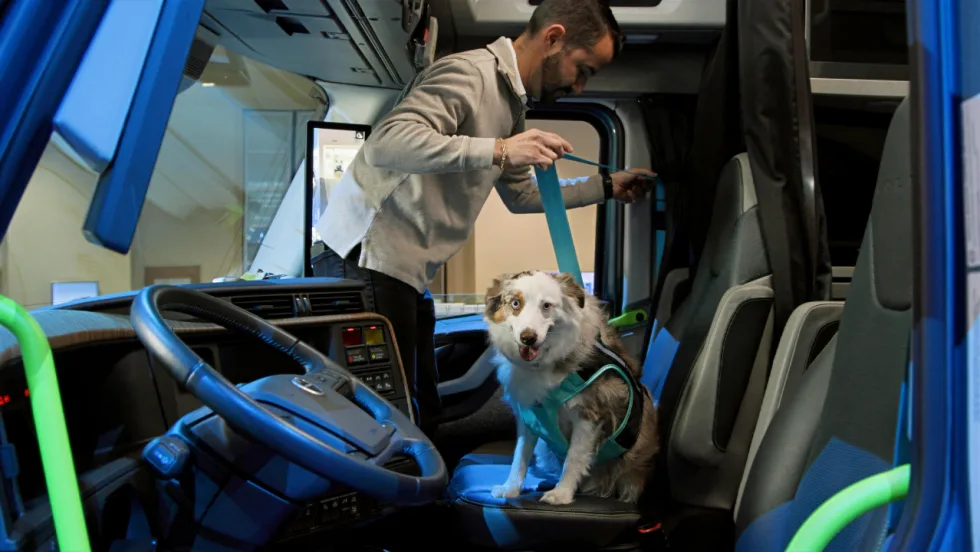
Volvo Trucks Releases New Safety Recommendations for Traveling with Pets
One of the most important recommendations for professional drivers traveling with pets is to ensure pets are properly restrained while the truck is moving. Other tips are available in the new guide from Volvo Trucks North America and Center for Pet Safety.
Read More →
API Issues Refueling Safety Guidelines
The American Petroleum Institute offers a list of safe vehicle refueling guidelines, including ways to avoid potential problems with static electricity discharges in fall, winter, and early spring.
Read More →
Winter Fleet Prep: Expert Tips to Keep Vehicles Running Smoothly
Cold weather can expose weak batteries, tires, fuel systems, and maintenance gaps fast. Use this winter fleet checklist to prepare trucks and drivers before temperatures drop.
Read More →
When a Work Truck Breaks Down, the Job Can Stop, Too
A work truck breakdown can stop more than the vehicle. Discover how payloads, jobsites, and specialty equipment change the roadside response.
Read More →
What Stronger Long-Term Fleet Service Partnerships Actually Require
Fleet service partnerships rarely fall apart all at once. Learn the three warning signs that trust is eroding and what fleets and providers can do before downtime, frustration, and lost revenue follow.
Read More →
Applause & TRUCE Software Partner to Improve Driver Safety Through AI-Powered Telematics & Employee Performance Management
Applause has integrated TRUCE driving metrics directly into its employee-first performance and safety platform that transforms mobile devices into AI-powered telematics.
Read More →
How Detroit Assurance with Active Brake Assist Works
Do you want to see what it is like to experience Detroit Assurance’s Active Brake Assist? In this video, Work Truck will put you in the cab to see how it all works and then hear more details from DTNA’s Mike Young.
Read More →
Get Left of Loss: A 5-Step Workplace Violence Prevention Framework for Fleet Operators
Violence risks do not stop at the driver’s door. Learn five practical steps fleets can take to spot threats early and protect workers before loss occurs.
Read More →
How Better Visibility Cut Speeding Violations by 48%
Fleet leaders don't need more data, they need clearer visibility into what the data is saying. This case study explores how one utility replaced speeding-event counts with a single metric — miles driven in violation — to strengthen safety and significantly reduce speeding violations.
Read More →