




Propane: What’s Old is Renewed Again
Alt-Fuel Trends in Mining Fleets
Diesel-fueled mining vehicles won't last forever. There are three alt-fuels now trending in the mining industry to promote sustainability.

Hillary Weiss・Senior Editor
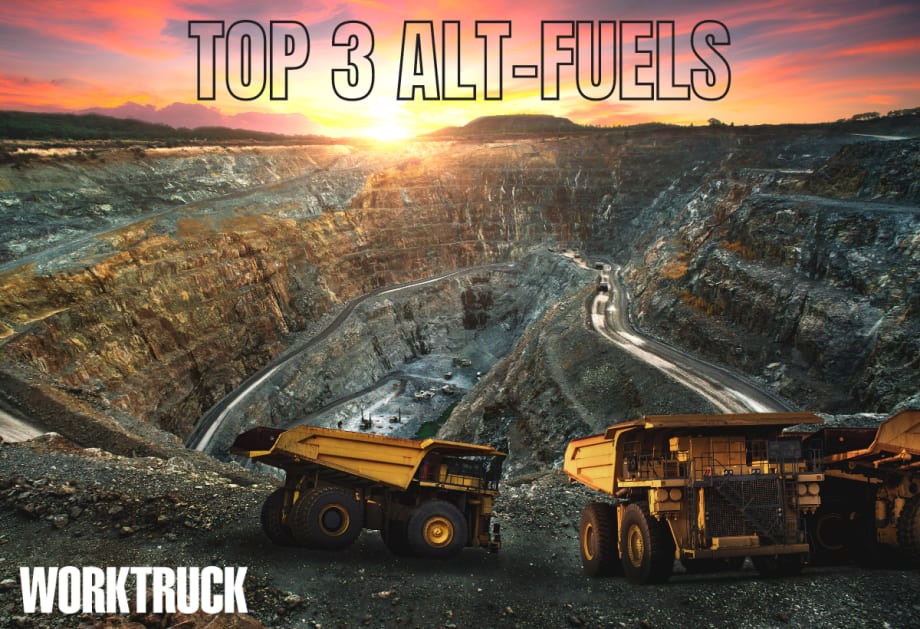
Three alternate fuels - propane, hydrogen, and renewable diesel - are trending in the mining industry.
Photo: Work Truck
4 min to read
The original mining vehicle started with the minecart in the 1500s. The cart, made of wood and metal, had the sole purpose of moving earth and minerals out of the tunnels.
Fast forward hundreds of years, the biggest mining vehicle, Bagger 288, weighs 13,500 tons and is 721 feet long.
While the original mine cart required no fuel, current mining vehicles need fuel — and lots of it.
But as the world shifts to zero-emission vehicles, the mining industry is following suit.
Fleet managers can take advantage of several alternatives to fueling mining vehicles than diesel to reduce fleet emissions.
Top 3 Mining Vehicle Alt-Fuels
Mining trucks are powerhouses that must dig through the earth or carry heavy loads from point A to point B.
According to Cummins, the average mine haul truck requires 30 gallons of fuel an hour (a semi-truck is 1.5 gallons per hour). The mining industry can save time and money by using alternative fuels.
Alt-Fuel — Electric
There has been a recent push to go electric in the mining industry. Popular mining vehicle manufacturers have already come out with electric mining vehicles.
Caterpillar rolled out its first 2,650-horsepower electric mining truck in November 2022.
And mining manufacturer Epiroc has the following batter-electric mining vehicles available:
Boomer M20, M, and E2.
Minetruck MT42.
Scooptram ST14.
Boltec M, E.
Simba M4, M6, E7.
According to Epiroc, “Battery-powered electric vehicles are superior in almost every aspect. Machine emissions are eliminated, less service and maintenance are required, and maybe most importantly, the environmental footprint is minimized.”
Alt-Fuel — Propane
According to the U.S. Department of Energy, propane can be used as a fuel source for any vehicle, from light to heavy duty.
Although propane has been used as a vehicle fuel source for decades, it hasn’t been as popular in the mining industry.
But that’s starting to change with companies like Superior Propane delivering propane to mining sites for easily accessible fuel.
According to Superior, “Using propane for heating applications and power generation gives you premier engine performance in all climates while also requiring less maintenance and downtime.”
Not only that, but propane’s low carbon and low oil contamination characteristics may result in longer engine life, and it can perform well in any climate, according to the U.S. Department of Energy.
Alt-Fuel — Hydrogen
The world’s largest zero-emissions mining truck, nuFuel, is two stories, weighs 220 tons, has a 290-tonne payload … and is hydrogen-fueled.
One of the biggest benefits of using hydrogen as a fuel source is that you don’t have to buy a new vehicle. The engine can be converted. And that’s precisely what happened to nuFuel.
nuFuel is a prototype and part of Anglo American’s FutureSmart Mining project. According to Anglo American, the dump truck was converted from a diesel engine to a hydrogen-electric drive. Not only is it zero emissions, but it also generates more power than its diesel predecessor.
And Anglo American has stated this won’t be the last. It plans on fueling whole mining fleets with hydrogen.
“Over the next several years, we envisage converting or replacing our current fleet of diesel-powered trucks with this zero-emission haulage system, fueled with green hydrogen. If this pilot is successful, we could remove up to 80% of diesel emissions at our open pit mines by rolling this technology across our global fleet,” Duncan Wanblad, Chief Executive of Anglo American, said in a press release.
Alt-Fuel — Renewable Diesel
Renewable diesel-fueled mining vehicles are gaining popularity and entering the trial phases. Mining company Rio-Tinto completed a successful trial in 2022 of using renewable diesel on a mining truck. The company partnered with Neste and Rolls-Royce to use hydrotreated vegetable oil made from sustainably sourced renewable raw materials.
According to Rio Tinto, “Results showed that a truck running on renewable diesel delivered similar performance and reliability as trucks running on conventional diesel. Based on these positive results, Rio Tinto U.S. Borax will continue to work with the Environmental Protection Agency, the state of California, and engine manufacturers to have a full transition of the heavy machinery fleet onsite to renewable diesel by 2024, representing an anticipated CO2e reduction of up to 45,000 tons per year.”
The company has already started several other trials on its mining equipment and renewable diesel at its Bingham Canyon mine and Kennecott copper operations.
Stay up-to-date on everything on all the work truck trends by signing up for Work Truck's eNewsletter and following us on your favorite social media platform!
Subscribe to Our Newsletter
More Fuel

The Smart Way to Build a Mixed-Energy Fleet Isn’t About Picking a Side
Mixed-energy fleets aren’t about picking a winning fuel. Sarah Booth of WEX explains how vehicle data, duty cycles, charging strategy, and real-world costs can help fleets choose the right energy source for each job.
Read More →
Ignoring This Dashboard Warning Could Cost Your Fleet Thousands in Fuel
New research suggests neglected diesel aftertreatment systems could waste up to $30 in fuel per vehicle each day. Here's why vocational fleets should pay attention.
Read More →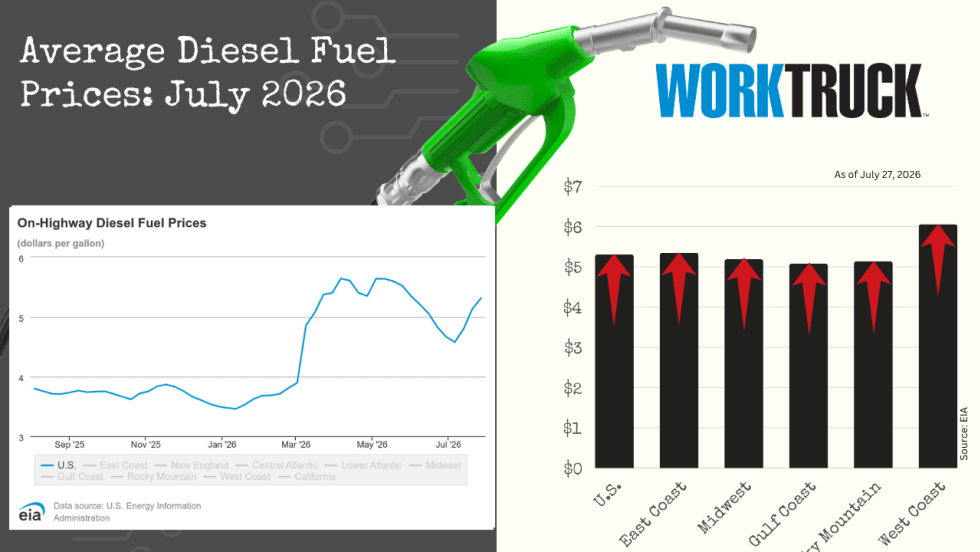
July Diesel Trends Update
The average price of a gallon of diesel increased again this week, and the EIA reported a new national average of $5.31 at the start of the week.
Read More →
WEX Brings Standard Fleet's Connected Vehicle Platform to Fleet Customers
This week’s product launch with Standard Fleet’s connected vehicle platform reflects WEX Venture Capital's strategy of turning startup innovation into customer solutions. Standard Fleet is now available to WEX fleet customers.
Read More →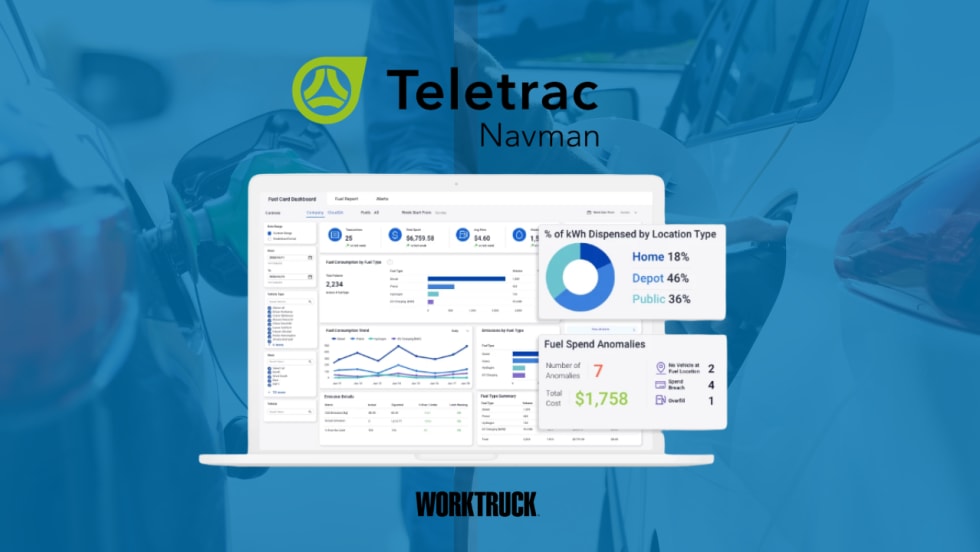
Teletrac Navman Adds Mixed-Energy Fleet Tools to TN360
The new Energy Hub combines fuel transactions, EV charging data, vehicle range, and energy costs in one dashboard for fleets operating multiple vehicle and energy types.
Read More →
WEX DriverDash adds CITGO, Expands Nationwide Access for Fleets
The DriverDash mobile payment app, by WEX, has been integrated into the CITGO merchant network, which means WEX has expanded its U.S. station footprint with the addition of approximately 4,000 CITGO locations.
Read More →
Mixed Energy Fleet Tips for Balancing EVs, Gas and Diesel Vehicles
Mixed energy fleets are becoming the new normal. Learn how fleet managers are balancing EVs, gas and diesel vehicles while controlling costs and planning for the future.
Read More →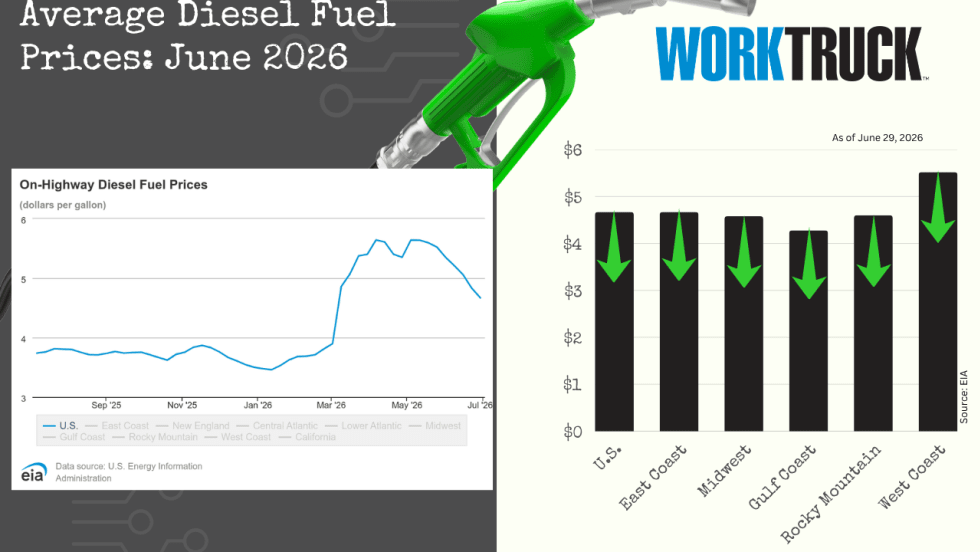
June Diesel Trends Update
The national average price of a gallon of diesel has dropped again, this week by more than 16 cents. All five regions reported lower average prices, ranging from almost 13 cents to more than 28 cents cheaper than a week ago.
Read More →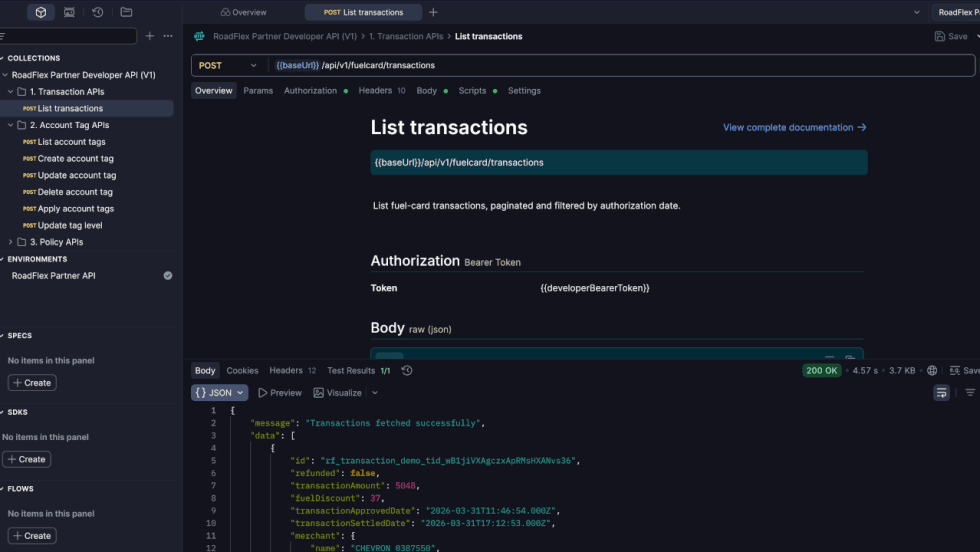
RoadFlex Launches RoadFlex Direct Open API Platform
RoadFlex Direct connects fuel cards, controls, and data to the telematics and fleet management systems fleets already run, from Geotab and Samsara to Fleetio and RTA, with no separate dashboard or double data entry.
Read More →
The Key to Fuel Efficiency Sits in the Cab
Learn how driver behavior, telematics, coaching, and fuel data can help fleets improve fuel efficiency, lower costs, and reduce emissions.
Read More →