





Related: Making the ROI Case for Telematics
Addressing Driver Push Back to Video-Based Safety Systems
Drivers for Loram were hesitant about what they thought was "constant surveillance" at first, but in less than a month, that hesitance was put at ease.
January 16, 2020

Photo by Andras Vas on Unsplash.
8 min to read
Improving driver safety, as it is for many fleets, is a top concern for Loram, a railroad maintenance service provider.
The Minnesota-based company operates a fleet of roughly 300 vehicles in North America comprised of various types of vehicles, but mostly light-duty pickups.
On average, Loram’s North American fleet clocks in a little under 6.5 million miles per year. Depending on its role, a vehicle will drive anywhere from 20,000 miles to 70,000 miles per year.
Due to the nature of its business, the vehicles are driven through all manner of terrain, such as backroad access roads, downtown sections of major cities, and prairie regions of the heartland in all types of seasonal climate.
The company has received the Platinum Service Award from the National Railroad Construction and Maintenance Association (NRC), which recognizes companies who have shown an exemplary commitment to safety, on multiple occasions.
So, Loram already had a good track record with implementing safety best practices within its operations, but it still wanted to do more to address an issue that is becoming increasingly pervasive in the U.S. — distracted driving.
The solution to this concern came in the form of an AI-powered driver safety platform. The platform leveraged embedded AI, dual facing camera, forward facing and in-cab, that can assess situational risk, distraction severity, and provide in-vehicle alerts in real-time to help prevent collisions.

Kevin Burton, Loram
By gaining this video and data, in instances where an accident occurs Loram would be able to identify the unsafe driving habits of the driver in the accident in order to address and remedy those habits.
“The primary factor in seeking this technology was the global risk of distracted driving,” said Kevin Burton, vice president of operations at Loram. “We had a good safety record with our vehicle fleet, but we wanted to have a much better one. We wanted to get in the cab and help prevent distracted driving.”
Finding the Right Technology and Addressing Driver Concern
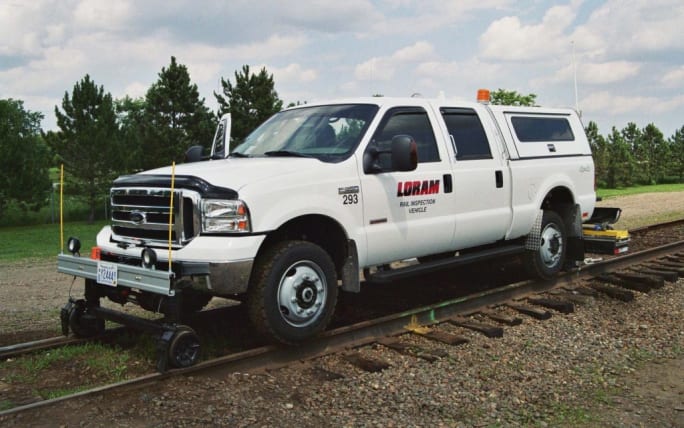
Loram uses hy-rail vehicles in its fleet. These converted vehicles are propelled with their regular tires but are also outfitted with flanged steel wheels to move on railways.
Photo courtesy of Loram.
When Burton and Rose decided that they were going to implement this AI-based video technology into their fleet, they knew that there would be resistance from drivers.
The first thing they identified was the fact that nobody like the idea of “Big Brother” watching over them. They knew that they had to come up with a messaging campaign in advance of installing the units.
“We told our people that this technology was a distracted driving prevention tool,” said Burton. “That it would give in-cab audible alerts, and that there would be a camera pointed at them, but that it would not record unless there was a severe distracted driving event.”

Graham Rose, Loram
Burton, and Graham Rose, Loram’s vehicle fleet manager, told their drivers that this video technology wasn’t meant to be big brother, it was meant to protect them and maintain their privacy.
To further ease driver uneasiness of constant surveillance, Burton and Rose shared additional information about technology’s functionality.
As mentioned, the camera will only record when a distracted driving event occurs. That footage is then uploaded directly to the cloud. At this point, management has still not been notified, the footage and the record of the event are simply added to that driver’s profile.
The only time that the system immediately notifies management is when an accident occurs.
“I think that was the big thing that people realized,” said Burton. “They realized that the system might be recording, but nobody’s looking at it because, quite honestly, we both have full-time jobs and we don’t have time to go online and look at people’s videos. So, we use it as an exception-based reporting tool, when something happens, we get a notification.”
Less than a month after implementing the camera system, the drivers that were initially not pleased with the idea of being recorded were mostly at ease.
In fact, because driver footage is uploaded to the cloud, drivers can view their own footage. Burton noted that many drivers who thought they had good driving habits have been able to view instances where they’re distracted, and they have strived to make personal improvements.
There were a bevy of options when Burton and Rose began searching for a video-based safety platform.
Rose said that he looked at 25 different options before ultimately landing on his choice.
The factor that ultimately led to his decision was the AI-powered distracted driving detection capability that was offered by the platform vendor.
The fact that the camera installed in the vehicle films the inside and outside of the vehicle at all times, but only records and uploads to the cloud when a distracted driving event occurs, and will only notify management in the event of an incident solidified his decision.
“The system also includes a driver score that uses data points such as harsh acceleration and braking, along with distracted driving events,” said Rose. “The driver score and AI-powered camera [helped me] make the choice.”
Burton and Rose noted that they revised their safety policy after implementing this technology into their fleet.
Loram’s safety policy now includes language that let’s its drivers know that in the case of an incident recorded by the device, the video captured may be used to terminate employment of employees that are willfully violating company policy or state and federal laws.
The intention with the safety policy update was to set crystal clear expectations.
The Technology in Action
In 2019 Loram had a driver that hit some black ice and ended up in a ditch, by himself, in Northern Minnesota. Loram was notified almost instantly and management was able to call the driver to make sure he was okay.
In rural roads, people have hit deer, the system notifies management, and similarly, they’ve been able to check in to ensure the safety of the driver.
“We’re using this as a way to make sure our employees are okay after an incident,” said Burton. “And I think in all cases our drivers have been very appreciative of the fact that someone’s reaching out to make sure they’re alright.”
An additional feature of the safety platform is an audible notification system that acts as a form of in vehicle coaching.
There are three levels of notifications that will start with light beeping and will get progressively louder until it gives drivers a verbal cue that they’re distracted.
During the pilot program Burton and Rose tested the technology both with the audible notifications on and off to get a baseline for the test.
The test group first drove the vehicles without the audible notifications and then that same group drove with the notifications on.
Burton and Rose found was that he test group saw a roughly 15% reduction in distracted driving once the notifications were on.
When we spoke to Loram they had installed the technology into about 95% of their fleet and had several months of use under their belts.
In that time they had seen improvements in driving habits, a reduction in accidents, and a 50% reduction in at-fault determination by their insurance underwriters.
“Each year we would have judgements that would put us somewhat or completely at fault for accidents we knew we were not at fault for,” said Burton. “We’ve already been cleared of fault in some accidents where we were not at fault for, which is one of the clearest and earliest indicators of how strong this platform can be.”
Burton and Rose said that they were still in the early stages of really seeing how the technology will affect its operations. Early indicators have them optimistic of the results, they’re waiting until they’ve used the system for a year before making that evaluation.
The Type of Drivers at Loram
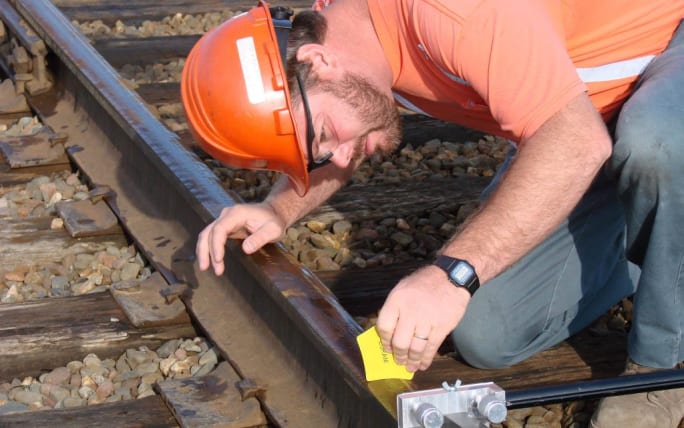
There are various duties that Loram personnel are tasked with. One of their jobs is maintaining and improving railways infrastructure.
Photo courtesy of Loram.
Burton and Rose noted that there are essentially four different type of company drivers within Loram’s operations.
One of those types of drivers operate vehicles that are governed by the Department of Transportation (DOT). These drivers are hauling material in a semi-truck, such as an F-550 hauling a trailer.
They operate in mixed traffic and essentially travel to loading dock facilities from on shipping location to another.
Burton described the second type of driver as a field clerk driver. These drivers will pickup up crews of workers in the morning or at night, before their shift, to the company’s rail-bound equipment and drops them off in that location.
After dropping off the crews, the field clerk driver will then spend their day pickup up parts, picking up sup-plies, and running general errands. These drivers drive in and out of freight terminals and travel to various types of retail stores.
The third type of driver is a designated driver for small crews. These drivers will transport two to three people These drivers are also in charge of fueling the vehicle before a shift and picking up general supplies for the crew, such as groceries before the shift begins. During this driver’s shift, he or she will follow rail-bound equipment while its moving from one location to another.
They’re essentially chasing certain rail equipment, jumping in and out of their vehicle as they’re following the equipment to look at quality of work that the equipment is leaving behind.
After inspecting, they’ll get back into their vehicle and continue to follow the equipment across town or move on to other equipment on different rail yards.
The fourth type of driver operates in a service technician role. They’re driving by themselves 100% of the time and they travel from work location to work location in a support capacity.
As mentioned, the first type of driver operates large, DOT-regulated vehicles, but the rest of the drivers operate light-duty pickups. These light-duty pickups make up most of Loram’s fleet in North America.
Originally posted on Automotive Fleet
Subscribe to Our Newsletter
More Technology
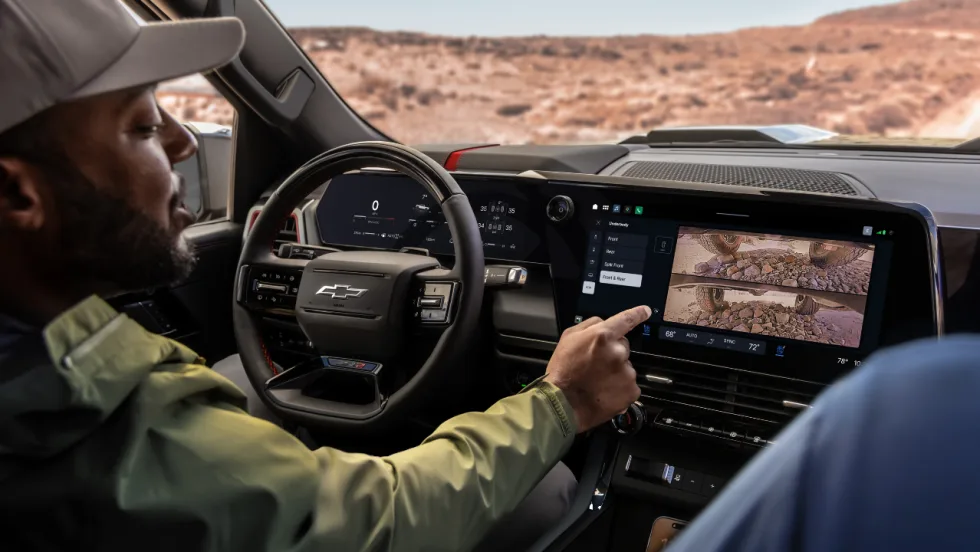
GM Brings New Truck Focused Interface to 2027 Silverado and Sierra
GM's new pickup interface puts trailering data, camera views, vehicle controls, and smartphone integration closer to the driver in the 2027 Silverado and Sierra.
Read More →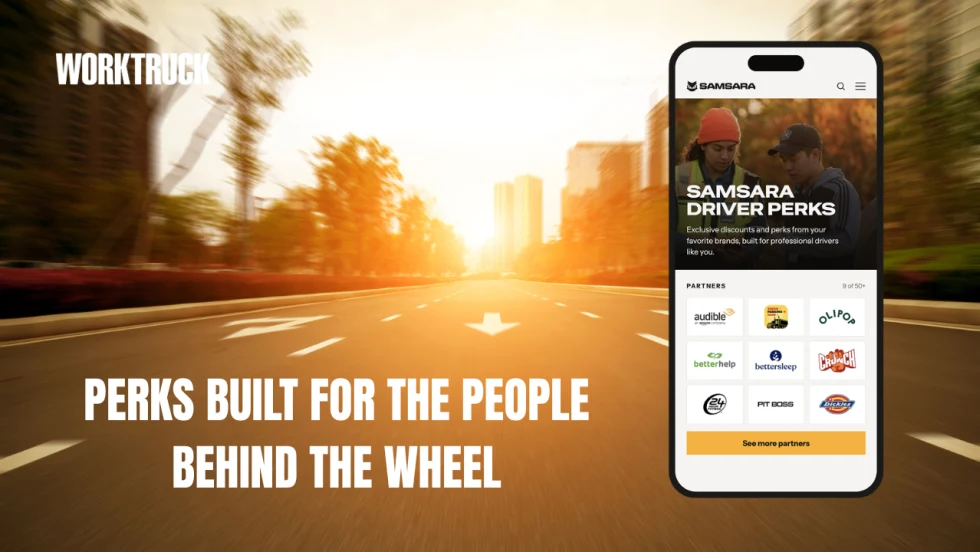
Samsara Driver Perks Expands Rewards Beyond the Long Haul Driver
Samsara’s new driver rewards program was built with a broader professional driver in mind, including employees who split their day between driving, job sites, service calls, and other work.
Read More →
AI Service Advisor Aims to Cut Fleet Repair Downtime
Fleetio said its AI Service Advisor can help fleets cut repair downtime by an average of 2.5 hours per repair while reducing manual maintenance work.
Read More →
Verra Mobility Launches AI-Driven Title & Registration Solution
Verra Mobility has launched a new AI-driven Title & Registration platform to help fleets move vehicles from acquisition to the road the same day while reducing compliance risk.
Read More →
Wialon Unlocks OEM Data to Give Fleet Owners Data Ownership & Operational Clarity
Wialon has introduced hardware-free OEM integration as the EU Data Act accelerates the shift in vehicle data access across the fleet industry in many countries.
Read More →
Teletrac Navman Promotes New CEO from Within
Teletrac Navman’s next CEO, Ricardo Buranello, has served as the company’s chief financial and operating officer. He brings deep financial and operational expertise, a strong strategic orientation, and an intimate knowledge of the business to his new role.
Read More →
Smith System Wants Work Truck Fleets to Look Beyond the Driver Alert
Smith System’s new Driver Risk Management program is built to help mixed work truck fleets turn telematics alerts and observations into specific behaviors, coaching actions, and measurable follow-up.
Read More →
Ford Pro Software Updates: August 26
Check out the latest Ford Pro software updates, including Google Maps integration, Remote Vehicle Alarm integration, Motor Pool for easier management of shared pool vehicles, and more.
Read More →
Where AI Is Actually Saving Fleet Managers Time
AI is moving past the buzzword stage and into the daily fleet workflow. Fleetio’s Brianna Perry Lang breaks down where fleets are seeing real time savings, from maintenance and data entry to repair decisions, safety, and compliance
Read More →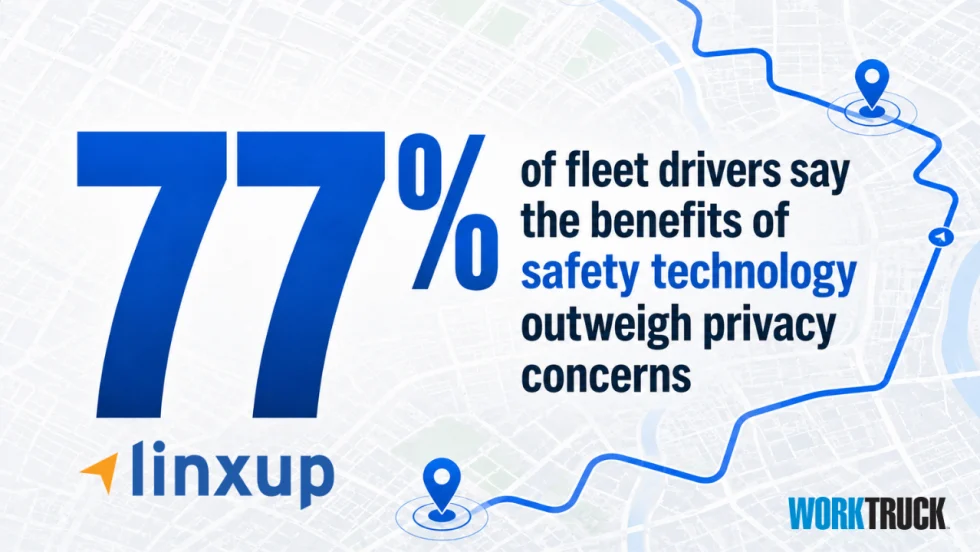
Are Work Truck Drivers Warming Up to Dash Cams and GPS Tracking?
A new survey finds field-service drivers may be more comfortable with dash cams and GPS tracking than fleet managers think, especially when the technology helps protect them after a crash.
Read More →