




Accident Management 101: Why Early Reporting and Post-Crash Protocols Matter More Than Ever
Accidents are costly. Learn why quick reporting, solid protocols, and insurer support are essential to protect your fleet and reduce downtime in 2025.
April 15, 2025

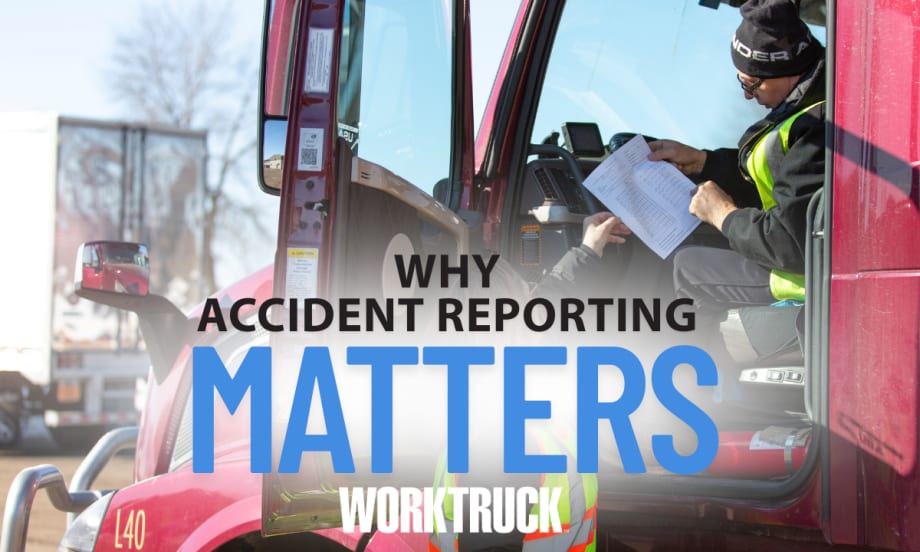
Every second counts. How fleets respond after an accident can shape the entire outcome.
Photo: Work Truck | Sentry Insurance
6 min to read
Accidents aren’t just stressful. They’re costly, time-consuming, and packed with legal and financial risks. For work truck fleets, how an accident is handled in the first few moments, hours, and days can shape everything from insurance payouts to court outcomes. That's why accident management is rising to the top of fleet priority lists in 2025.
“Quick claims reporting and clear post-accident procedures have always been critical for fleets. It needs to be a foundational element of a fleet’s risk management approach,” said Larry Harlow, Director of Claims at Sentry Insurance. “While the fundamentals haven’t changed — the environment has.”
As legal exposure grows and liability varies widely from state to state, fleets need to ensure their drivers know what to do in the heat of the moment. That’s where insurance partners like Sentry are stepping in with hands-on guidance, training tips, and even boots-on-the-ground support to help fleets take control of a bad situation.
Immediate Steps After an Accident
The first thing a driver should do after an accident is check that everyone is okay.
“A driver should immediately check on others involved and provide support,” Harlow said. “Contact the police for assistance and render aid if anyone is injured.”
Once safety is secured, it’s time to document the scene. That includes collecting names of witnesses, snapping photos of vehicles and surroundings, and noting law enforcement and tow companies present.
“The more information you can document, the better,” Harlow said. “Having detailed, documented information in the moment helps us more accurately assess what happened.”
But the most critical step? Reporting the accident immediately.
“The sooner we’re alerted, the sooner we can offer support and guidance to fleets and drivers,” Harlow emphasized.
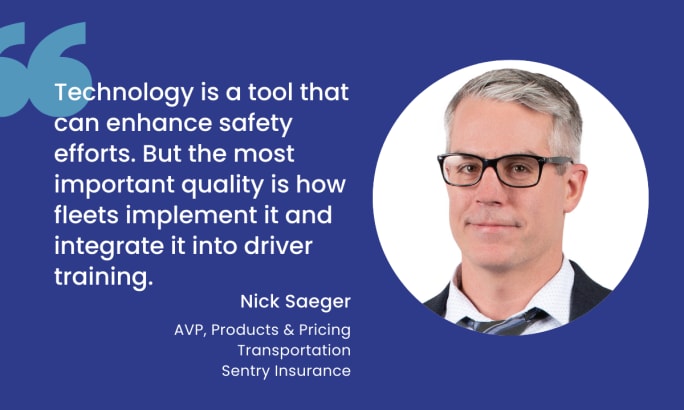
Nick Saeger of Sentry Insurance emphasizes the real impact of integrating safety tech into training.
Photo: Work Truck | Sentry Insurance
Why Timing Is Everything
Delayed accident reporting can be a fleet’s biggest downfall.
“Not reporting claims immediately can have an adverse impact in the claim investigation,” Harlow said. “That missing evidence could make it harder to defend against disputes.”
Quick reporting gives claims teams a chance to send experts to the scene, preserve evidence, and cut down on added costs like storage and cargo spoilage. It also supports drivers who may be overwhelmed in the moment and need help navigating next steps.
“Fleets are juggling a lot right after an accident — safety, damage, documentation, and communication,” Harlow said. “That’s where claims professionals step in to help ease the load.”
Common Mistakes and How to Avoid Them
Beyond delayed reporting, missing or incomplete information is another major issue.
“We often see cases without names of involved parties, witnesses, or accident photos,” Harlow said. “All of that information is critical.”
Training drivers to gather the right details, even when emotions are high, can make all the difference. And it’s not just about handing out a checklist. Fleets need to weave these steps into their ongoing training programs year-round.
“Accidents happen unexpectedly. Training needs to be built into your schedule from your most tenured drivers to your newest hires,” Harlow said.
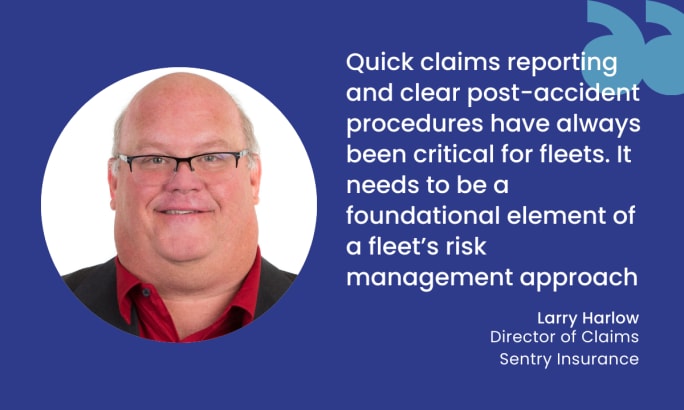
Larry Harlow, Director of Claims, knows that fast, informed response is key to risk management success.
Photo: Work Truck | Sentry Insurance
Bringing Tech into the Safety Equation
Technology can enhance accident prevention and response but only when used effectively.
“Cameras can make a real difference,” said Nick Saeger, AVP of Products & Pricing for Transportation at Sentry Insurance. “We recently partnered with Motive, and they’re continuously innovating with cameras and AI technology that can provide instant feedback to drivers.”
Tools like lane-departure warnings and forward-collision avoidance systems also add layers of protection. But Saeger cautions fleets to focus less on the tool and more on the integration.
“Technology is a tool that can enhance safety efforts,” Saeger said. “But the most important quality is how fleets implement it and integrate it into driver training.”
Getting on Site, Fast
In many cases, Sentry doesn’t wait for claims paperwork to roll in, they deploy adjusters or reconstruction experts directly to the scene.
“Depending on the circumstances, we may assign a local adjuster to complete an immediate scene investigation and preserve evidence,” Harlow said.
On-site support helps mitigate storage and towing costs, preserve cargo, and ensure nothing important is overlooked. This boots-on-the-ground approach reflects the real-time needs of today’s work truck fleets.
“We also assist with cargo preservation, which can include arranging cargo transfer or securing temporary storage,” Harlow added.
What to Document at the Scene
There are seven key pieces of info every driver should capture before leaving the scene:
Names of all parties involved.
Names and contact info of witnesses.
Law enforcement agency details.
Tow company names.
Equipment involved.
Photos of the scene.
Photos of all vehicles involved.
And don’t just snap a few pics: Train drivers on how to take high-quality, useful ones.
“Photos should be clear, in focus, and capture multiple angles,” Harlow said. “Include close-ups of damage and wide shots that show the overall scene. Make sure license plates and VIN numbers are visible, too.”
When Details Go Missing
There have been cases where missing or delayed information caused major issues for fleets during legal proceedings.
“The best way to prevent this is consistently emphasizing timely reporting,” Harlow said. “Even if you don’t think you’re at fault.”
That’s especially important because fault isn’t always black and white. In many states, partial fault still leads to legal consequences.
“If you’re assigned even 1% fault, you could go to trial in some regions,” Saeger explained. “That’s why early claims reporting matters so much, it gives your insurer a chance to step in and support the case from the start.”
Navigating Liability State-by-State
Negligence laws vary drastically from state to state, and it’s something fleet managers need to understand.
“One of the more challenging issues is joint and several liability,” Harlow said. “In some states, even if you’re found just 1% at fault, you could be responsible for the full judgment amount.”
States like California, Texas, and New York still apply this concept, which can expose fleets to significant risk without early intervention.
“A consistent response and fast reporting helps fleets navigate those differences,” Saeger said.
What about cargo claims? When cargo is involved, things can get even more complicated and costly.
“We have dedicated cargo adjusters to manage losses,” Harlow said. “Timely reporting allows us to secure cargo, minimize loss, and preserve what can be salvaged.”
Getting Fleets Back on the Road
Downtime is costly. Sentry’s transportation claims team includes heavy equipment appraisers and adjusters whose only job is to handle fleet claims efficiently.
“Their focus is to get damaged equipment back on the road as soon as possible with as little business interruption as possible,” Harlow said.
Long-Term Risk Reduction
Preventing accidents is still the best option. That means building a culture of safety from the top down.
“Make sure you’re doing everything you’ve committed to in your documented safety program,” Saeger said. “Plaintiff attorneys will find even the smallest departures.”
And the data doesn’t lie. Prior accident frequency is one of the top predictors of future claims.
“With social inflation and bodily injury claims rising, keeping claims to a minimum — or preventing them altogether — is imperative,” Saeger said. “The best way to avoid a nuclear claim is to prevent accidents.”
The Bottom Line
Accidents may be unpredictable, but your response doesn’t have to be. With clear procedures, ongoing training, and strong insurer partnerships, work truck fleets can minimize risk, support their drivers, and get back to business faster.
Subscribe to Our Newsletter
More Safety

Volvo Trucks Releases New Safety Recommendations for Traveling with Pets
One of the most important recommendations for professional drivers traveling with pets is to ensure pets are properly restrained while the truck is moving. Other tips are available in the new guide from Volvo Trucks North America and Center for Pet Safety.
Read More →
API Issues Refueling Safety Guidelines
The American Petroleum Institute offers a list of safe vehicle refueling guidelines, including ways to avoid potential problems with static electricity discharges in fall, winter, and early spring.
Read More →
Winter Fleet Prep: Expert Tips to Keep Vehicles Running Smoothly
Cold weather can expose weak batteries, tires, fuel systems, and maintenance gaps fast. Use this winter fleet checklist to prepare trucks and drivers before temperatures drop.
Read More →
When a Work Truck Breaks Down, the Job Can Stop, Too
A work truck breakdown can stop more than the vehicle. Discover how payloads, jobsites, and specialty equipment change the roadside response.
Read More →
What Stronger Long-Term Fleet Service Partnerships Actually Require
Fleet service partnerships rarely fall apart all at once. Learn the three warning signs that trust is eroding and what fleets and providers can do before downtime, frustration, and lost revenue follow.
Read More →
Applause & TRUCE Software Partner to Improve Driver Safety Through AI-Powered Telematics & Employee Performance Management
Applause has integrated TRUCE driving metrics directly into its employee-first performance and safety platform that transforms mobile devices into AI-powered telematics.
Read More →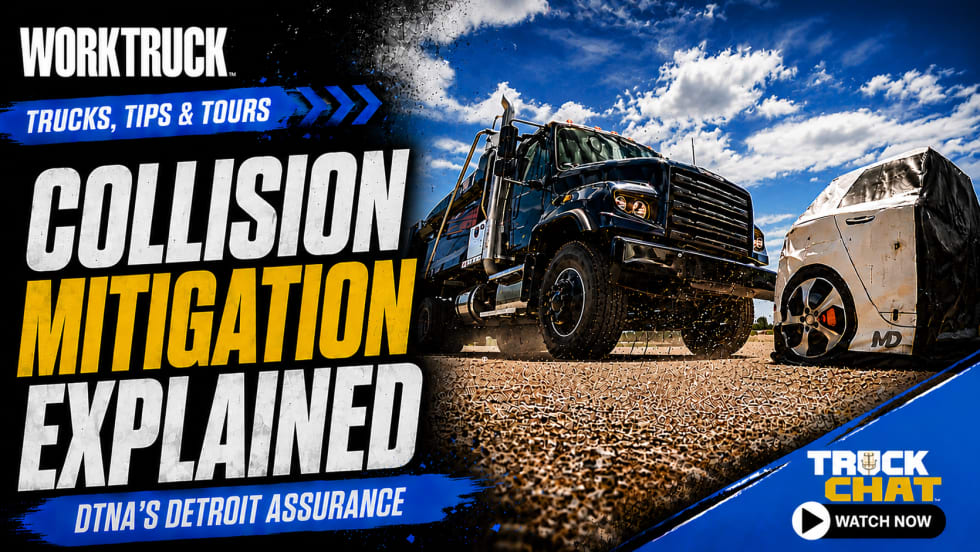
How Detroit Assurance with Active Brake Assist Works
Do you want to see what it is like to experience Detroit Assurance’s Active Brake Assist? In this video, Work Truck will put you in the cab to see how it all works and then hear more details from DTNA’s Mike Young.
Read More →
Get Left of Loss: A 5-Step Workplace Violence Prevention Framework for Fleet Operators
Violence risks do not stop at the driver’s door. Learn five practical steps fleets can take to spot threats early and protect workers before loss occurs.
Read More →
Sponsored•July 17, 2026
How Better Visibility Cut Speeding Violations by 48%
Fleet leaders don't need more data, they need clearer visibility into what the data is saying. This case study explores how one utility replaced speeding-event counts with a single metric — miles driven in violation — to strengthen safety and significantly reduce speeding violations.
Read More →
13 Safe Driving Tips for Commercial Vehicle Drivers
Make sure you are spending time on the road safely with these important tips.
Read More →