




2022 Work Truck Safety Study: Rising Costs & Safety Focus
Keeping your drivers safe, your fleet trucks in top working order, and your costs low are some of the chief goals of any fleet manager. But what fleet safety-related trends are impacting these goals?


There are a number of safety strategies work truck fleets focus on, including driver training and a focus on a safety culture.
Photo: Work Truck
Is your truck fleet truly safe? What is up with work truck fleet safety today? The second annual fleet safety study, conducted in partnership with sister publication Heavy Duty Trucking, has concluded. Work Truck collected some of the top findings for your planning and reference.
Of the 105 respondents, 41% said they operated Class 1 or 2 trucks in their fleet operations. Additionally, 43% indicated that they operated Class 3-5 trucks. Finally, 41% operated Class 6 trucks.
Note that some respondents use more than one vehicle class.
Most respondents operate fleets of more than 50 vehicles, with 23% of light-duty fleets operating more than 250 vehicles and 24% of medium-duty fleets operating more than 250 vehicles.
The top three fleet types in the light- and medium-duty vehicle categories were construction/mining, utilities, and manufacturing. Additional top fleet types included general freight, retail, last-mile delivery, and other fleet services.
Top respondents for light- and medium-duty fleets classified themselves as corporate/executive management, including owner/operator; fleet manager/administrator; and VP/general manager.
This year, responses were broken out by light-duty (Class 1-2) trucks under 10,000-lbs. GVWR, medium-duty (Class 3-5) trucks 10,001-19,500-lbs. GVWR, and larger medium-duty (Class 6) trucks 19,501-26,000-lbs. GVWR.
Digging into the Data
The survey results show that most fleets operating Class 1-5 trucks had very similar challenges and needs. Looking at the larger, Class 6 medium-duty trucks, things started to change.
[ Insurance Costs in Work Truck Fleets ]
How did vehicle and liability insurance costs change over the past year for work truck fleet operations?
Not one truck fleet respondent noted insurance costs decreased. But, around 29-30% of light- and medium-duty fleets noted insurance costs remained essentially unchanged.
| Increased | Increased | Increased | Largely | Don't Know/ | |
|---|---|---|---|---|---|---|
Class | 20% | 17% | 12% | 3% | 30% | 18% |
Class | 21% | 17% | 10% | 2% | 29% | 21% |
Class | 18% | 26% | 10% | 3% | 23% | 20% |
[ Work Truck Fleet Safety Strategies ]
In a long list of potential safety strategies, the top five answers for light-duty and medium-duty fleets were well-maintained vehicles, written safety policies and procedures, driver training, stricter driver hiring standards, and a focus on safety culture.
Additional top fleet safety strategies used by light- and medium-duty Class 1-6 truck fleets include dash cams/in-cab cameras, driver safety bonuses, driver safety awards and recognition, advanced safety technology, and more. (Note, fleets were allowed to select more than one category.)
Written Safety | Well-Maintained | Driver | Strict Driver | Safety Culture | |
|---|---|---|---|---|---|
Class | 79% | 77% | 59% | 56% | 56% |
Class | 76% | 73% | 59% | 49% | 51% |
Class | 83% | 78% | 70% | 58% | 55% |
[ Truck Fleet Safety Technology ]
The leading safety technologies used for light-duty and medium-duty fleets were backup cameras, forward collision warnings, and lane departure warnings.
Additional safety technologies that didn’t make the top five list for Class 1-5 trucks include adaptive cruise control, speed limiters, and collision mitigation with active emergency braking. (Note, fleets were allowed to select more than one category.)
Backup | Air Disc | Forward | Lane | Electronic | |
|---|---|---|---|---|---|
Class | 57% | 49% | 49% | 49% | 43% |
Class | 55% | 45% | 42% | 42% | 42% |
The top safety technologies used by medium-duty, Class 6 trucks changed from their smaller counterparts, adding speed limiters to the list and bumping backup cameras down the rankings. (Note, fleets were allowed to select more than one category.)
Air Disc | Speed | Forward | Backup | Lane | |
|---|---|---|---|---|---|
Class | 58% | 50% | 42% | 39% | 39% |
Regarding safety technologies Class 1-6 fleets plan to implement next year, the top five answers for all fleet categories were the same, with the only change in the top-ranking percentages for Class 6 trucks. Note: for in-cab cameras*, this includes forward-facing only.
Backup | Air Disc | Side | Adaptive | In-Cab | Don't | |
|---|---|---|---|---|---|---|
Class | 34% | 20% | 20% | 20% | 17% | 31% |
Class | 31% | 19% | 19% | 17% | 17% | 36% |
Class | 26% | 17% | 20% | 17% | 20% | 34% |
[ Work Truck Fleet Safety Training ]
For safety training techniques, the top five answers for light- and medium-duty fleets were hands-on/behind-the-wheel, in-person/classroom, independent video/online training, live remote training (such as via Zoom), and the use of a driving simulator. Additional training options included virtual/augmented reality, other, and does not apply.
In-Person/ | Hands-On/ | Independent | Live Remote | Driving | |
|---|---|---|---|---|---|
Class | 60% | 54% | 46% | 11% | 11% |
Class | 61% | 53% | 50% | 14% | 8% |
Class | 66% | 63% | 51% | 11% | 9% |
When are drivers given safety-related training? The top three answers for light-duty and medium-duty fleets were when first bringing them into the company (onboarding), after an accident or incident, and after adding new equipment or technology to the fleet. Additionally, around one-third of survey respondents provide regular training, with annual training the most popular.
New | After | Adding | Regular: | Regular: | Regular: | |
|---|---|---|---|---|---|---|
Class | 44% | 51% | 51% | 29% | 20% | 17% |
Class | 75% | 53% | 53% | 33% | 22% | 17% |
Class | 77% | 63% | 57% | 31% | 29% | 14% |
[ Truck Fleet Accidents ]
When asked about work truck accidents, at-fault accident rates are essential when looking at liability, risk, and driver training needs. No fleet respondents reported experiencing higher than 75% of their accidents as at-fault.
0% | 1% - | 25% - | 50% - | Does | Don't | |
|---|---|---|---|---|---|---|
Class | 32% | 35% | 15% | 0% | 12% | 6% |
Class | 31% | 42% | 11% | 0% | 8% | 8% |
Class | 26% | 40% | 17% | 3% | 6% | 9% |
More Safety

Volvo Trucks Releases New Safety Recommendations for Traveling with Pets
One of the most important recommendations for professional drivers traveling with pets is to ensure pets are properly restrained while the truck is moving. Other tips are available in the new guide from Volvo Trucks North America and Center for Pet Safety.
Read More →
API Issues Refueling Safety Guidelines
The American Petroleum Institute offers a list of safe vehicle refueling guidelines, including ways to avoid potential problems with static electricity discharges in fall, winter, and early spring.
Read More →
Winter Fleet Prep: Expert Tips to Keep Vehicles Running Smoothly
Cold weather can expose weak batteries, tires, fuel systems, and maintenance gaps fast. Use this winter fleet checklist to prepare trucks and drivers before temperatures drop.
Read More →
When a Work Truck Breaks Down, the Job Can Stop, Too
A work truck breakdown can stop more than the vehicle. Discover how payloads, jobsites, and specialty equipment change the roadside response.
Read More →
What Stronger Long-Term Fleet Service Partnerships Actually Require
Fleet service partnerships rarely fall apart all at once. Learn the three warning signs that trust is eroding and what fleets and providers can do before downtime, frustration, and lost revenue follow.
Read More →
Applause & TRUCE Software Partner to Improve Driver Safety Through AI-Powered Telematics & Employee Performance Management
Applause has integrated TRUCE driving metrics directly into its employee-first performance and safety platform that transforms mobile devices into AI-powered telematics.
Read More →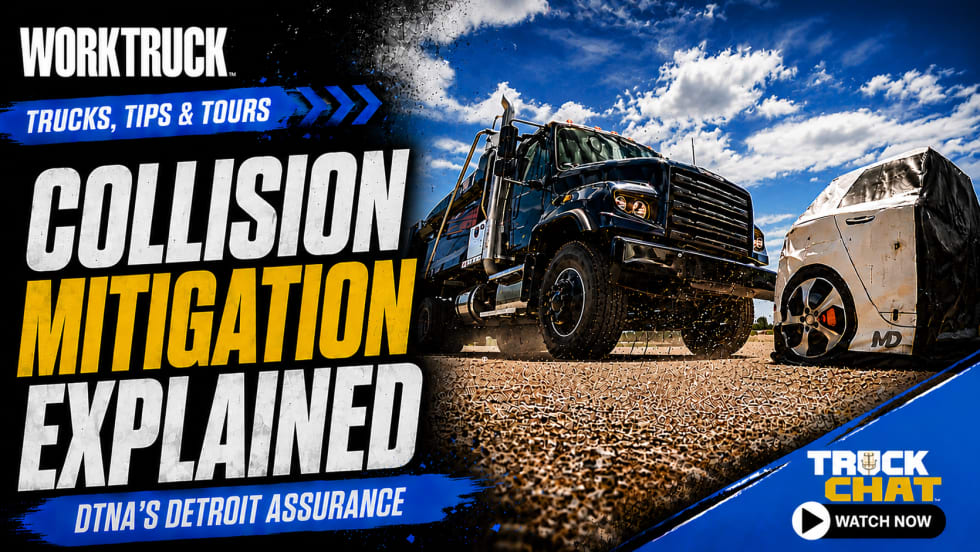
How Detroit Assurance with Active Brake Assist Works
Do you want to see what it is like to experience Detroit Assurance’s Active Brake Assist? In this video, Work Truck will put you in the cab to see how it all works and then hear more details from DTNA’s Mike Young.
Read More →
Get Left of Loss: A 5-Step Workplace Violence Prevention Framework for Fleet Operators
Violence risks do not stop at the driver’s door. Learn five practical steps fleets can take to spot threats early and protect workers before loss occurs.
Read More →
How Better Visibility Cut Speeding Violations by 48%
Fleet leaders don't need more data, they need clearer visibility into what the data is saying. This case study explores how one utility replaced speeding-event counts with a single metric — miles driven in violation — to strengthen safety and significantly reduce speeding violations.
Read More →
13 Safe Driving Tips for Commercial Vehicle Drivers
Make sure you are spending time on the road safely with these important tips.
Read More →