




Why Fleet Drivers Need to Buckle Up
Each year, U.S. employers spend billions on traffic accidents involving workers who didn’t wear a seat belt. And some workers are more likely to ditch the belt than others.
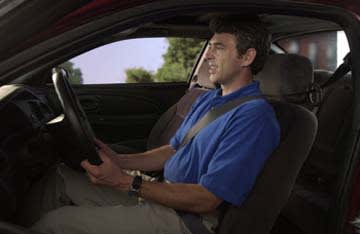
Photo courtesy of the National Highway Traffic Safety Administration.
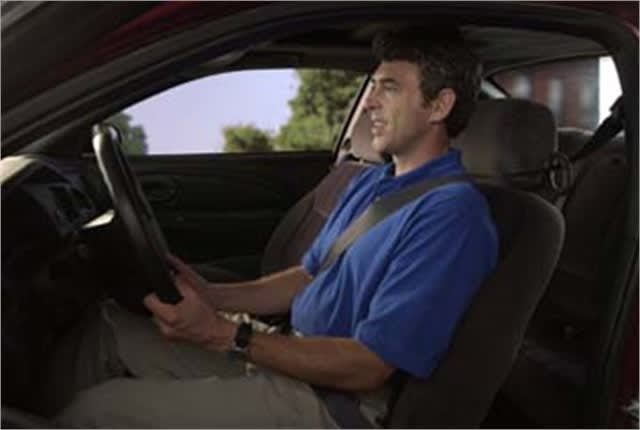
Photo courtesy of the National Highway Traffic Safety Administration.
Fleet managers often struggle to reach and maintain a high seat belt use rate among employees. And research suggests that the task of convincing all fleet drivers to buckle up is a taller order for some fleet managers than others, depending on the employer location and industry.
Studies show that drivers in jurisdictions lacking strong seat belt enforcement laws are much more likely to fail to buckle up. What’s more, a study released this past summer indicates that drivers working in some occupational groups — construction and extraction, for example — are at a greater risk for eschewing seat belts.
In 2015, 35,092 people in the U.S. died in traffic crashes. Almost half of the passenger vehicle occupants killed weren’t wearing seat belts, according to the National Highway Traffic Safety Administration.
Use of lap and shoulder seat belts reduces the fatal injury risk to car front-seat occupants by 45% and the risk to light truck front-seat occupants by 60%, according to federal research.
In 2015, the nationwide seat belt use rate reached 88.5%, as measured by a NHTSA survey. Nineteen states reached seat belt use rates of 90% or higher, including California, Georgia, Oregon, Illinois, Washington, Minnesota, New Mexico, Alabama, Iowa, Maryland, Michigan, Hawaii, New York, Nevada, Indiana, South Carolina, New Jersey, Texas, and Delaware.
In general, states with more relaxed seat belt laws with lower fines see lower belt use rates. The states with the lowest seat belt use rates in 2015 included Arkansas (77.7%), Massachusetts (74.1%), Mississippi (79.6%), Missouri (79.9%), Montana (77%), Nebraska (79.6%), New Hampshire (69.5%; no seat belt law for adults), South Dakota (73.6%), and Wyoming (79.8%).
Use rates are also lower in states with secondary-enforcement, rather than primary-enforcement, seat belt laws. In states with a secondary seat belt law, law enforcement officers can issue a ticket for not wearing a seat belt only when there’s another traffic violation observed, such as speeding or an illegal turn. Police can’t pull over a vehicle solely because seat belt nonuse is suspected. Fifteen states have secondary seat belt laws, according to the Governors Highway Safety Association.
“For all occupational groups, the prevalence of not always using seat belts was higher in states with secondary seat belt laws (23.6% unadjusted) than in states with primary seat belt laws (10.4% unadjusted),” researchers noted in the summary of a 2016 study on seat belt use among adult workers. “After adjusting for age, sex, race/ethnicity, education, marital status, body mass index, county urbanization, and state seat belt law type, there was substantial variability among occupational groups in self-reported seat belt use.”
This study, based on self-reported 2013 data, was released by the Centers for Disease Control and Prevention in June of this year. It was the first U.S. report on seat belt use among a wide range of occupational groups in a representative population-based sample.
So which occupational groups, as defined by the U.S. Department of Labor, were less likely to buckle up in 2013?
According to the CDC study, they were construction and extraction; legal; installation, maintenance, and repair; protective service; and farming, fishing, and forestry.
U.S. employers are collectively spending an extra $5 billion annually on traffic crashes involving employees who weren’t wearing a seat belt while driving or riding in a vehicle — either on the job or off, according to a 2016 study released by the Network of Employers for Traffic Safety (NETS). To help employers improve seat belt usage among employees, NETS and NHTSA partnered to develop a free online toolkit called 2seconds2click.
To download the toolkit, click here. It includes a plan for a six-week promotional campaign.
To download the full NETS study, click here.
To download the full CDC study, click here.
To access a list of state seat belt laws, click here.
Originally posted on Automotive Fleet
More Safety
When Work Trucks Under 26,001 Pounds Need IRP Registration
Think trucks under 26,001 pounds are automatically in the clear when it comes to IRP? Not always. Learn where lighter vehicles can still run into trip permit, apportioned registration, and IFTA compliance requirements when crossing state or provincial lines.
Read More →
Volvo Trucks Releases New Safety Recommendations for Traveling with Pets
One of the most important recommendations for professional drivers traveling with pets is to ensure pets are properly restrained while the truck is moving. Other tips are available in the new guide from Volvo Trucks North America and Center for Pet Safety.
Read More →
API Issues Refueling Safety Guidelines
The American Petroleum Institute offers a list of safe vehicle refueling guidelines, including ways to avoid potential problems with static electricity discharges in fall, winter, and early spring.
Read More →
Winter Fleet Prep: Expert Tips to Keep Vehicles Running Smoothly
Cold weather can expose weak batteries, tires, fuel systems, and maintenance gaps fast. Use this winter fleet checklist to prepare trucks and drivers before temperatures drop.
Read More →
When a Work Truck Breaks Down, the Job Can Stop, Too
A work truck breakdown can stop more than the vehicle. Discover how payloads, jobsites, and specialty equipment change the roadside response.
Read More →
What Stronger Long-Term Fleet Service Partnerships Actually Require
Fleet service partnerships rarely fall apart all at once. Learn the three warning signs that trust is eroding and what fleets and providers can do before downtime, frustration, and lost revenue follow.
Read More →
Applause & TRUCE Software Partner to Improve Driver Safety Through AI-Powered Telematics & Employee Performance Management
Applause has integrated TRUCE driving metrics directly into its employee-first performance and safety platform that transforms mobile devices into AI-powered telematics.
Read More →
How Detroit Assurance with Active Brake Assist Works
Do you want to see what it is like to experience Detroit Assurance’s Active Brake Assist? In this video, Work Truck will put you in the cab to see how it all works and then hear more details from DTNA’s Mike Young.
Read More →
Get Left of Loss: A 5-Step Workplace Violence Prevention Framework for Fleet Operators
Violence risks do not stop at the driver’s door. Learn five practical steps fleets can take to spot threats early and protect workers before loss occurs.
Read More →
How Better Visibility Cut Speeding Violations by 48%
Fleet leaders don't need more data, they need clearer visibility into what the data is saying. This case study explores how one utility replaced speeding-event counts with a single metric — miles driven in violation — to strengthen safety and significantly reduce speeding violations.
Read More →