




Want Mandatory OSHA Charts? Visit TIA's Website
BOWIE, MD - The Tire Industry Association (TIA) is helping the Occupational Safety and Health Administration (OSHA) get the word out about truck tire service guidelines.
BOWIE, MD - The Tire Industry Association (TIA) is helping the Occupational Safety and Health Administration (OSHA) get the word out about truck tire service guidelines, according to Modern Tire Dealer magazine.
Under OSHA standard 29 CFR 1910.177, commercial truck tire service providers are required to have a copy of three recently released OSHA charts in every service area, which includes mobile service trucks. Previously a two-chart set, the new set includes a third chart that separately addresses procedures for demounting, mounting and inflating single and multi-piece assemblies.
TIA has posted the charts on the association's website. To download copies of them, click on www.tireindustry.org/cts.asp.
"TIA initiated this project back in 2005 after meeting with OSHA to address our concerns regarding the out-of-date information in the old charts," says Kevin Rohlwing, TIA's senior vice president of training. "From there, we assembled a team of tire, wheel and tool manufacturers to develop new charts that would reflect the current guidelines for servicing truck tires.
"TIA recommended expanding to three charts before submitting the drafts to OSHA and then worked closely with the agency throughout the review process. This is a perfect example of government and industry working together to protect workers from the hazards related to truck tire and wheel service with minimal expense to the taxpayers."
Taking a cue from TIA's Commercial Tire Service (CTS) Program, OSHA also compiled the three charts into a booklet that can be easily printed so all of the information is readily available every place that truck tires are serviced (as required by law).
According to OSHA officials, there are no plans to print the traditional wall charts. The electronic files are available so employers can have charts printed, but 29 CFR 1910.177 specifically states that the charts or the information contained in the charts must be available in the service area. By giving employers the option of printing charts or the booklet, more employees will have access these important safety guidelines.
"We took the lead on this project because our members are counting on TIA to provide them with the latest information for servicing truck tires," says Rohlwing. "TIA is very pleased with the new OSHA charts, and we are confident they will increase the level of safety awareness in the truck tire service industry."
Commercial tire dealers also can download copies of the new OSHA charts by visiting OSHA's website, www.osha.gov.
More Safety

When Work Trucks Under 26,001 Pounds Need IRP Registration
Think trucks under 26,001 pounds are automatically in the clear when it comes to IRP? Not always. Learn where lighter vehicles can still run into trip permit, apportioned registration, and IFTA compliance requirements when crossing state or provincial lines.
Read More →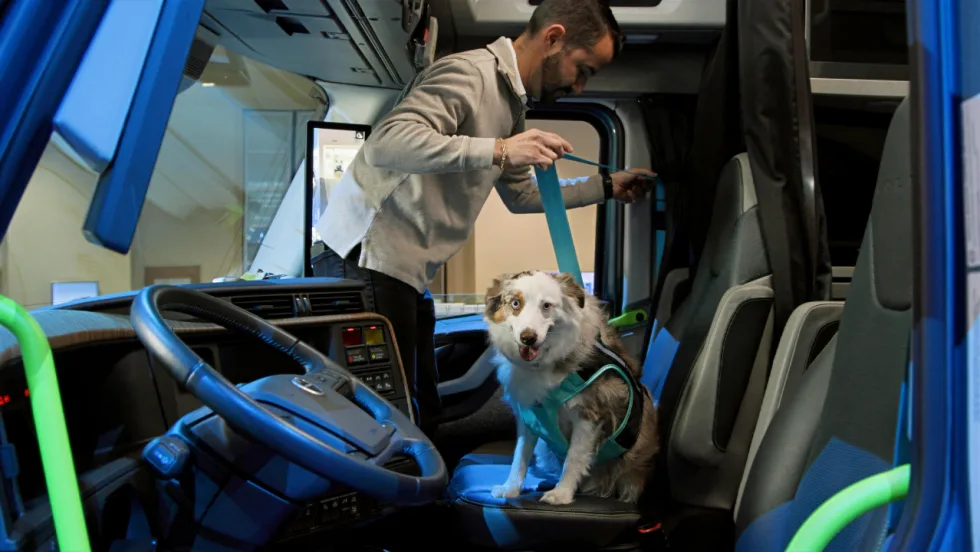
Volvo Trucks Releases New Safety Recommendations for Traveling with Pets
One of the most important recommendations for professional drivers traveling with pets is to ensure pets are properly restrained while the truck is moving. Other tips are available in the new guide from Volvo Trucks North America and Center for Pet Safety.
Read More →
API Issues Refueling Safety Guidelines
The American Petroleum Institute offers a list of safe vehicle refueling guidelines, including ways to avoid potential problems with static electricity discharges in fall, winter, and early spring.
Read More →
Winter Fleet Prep: Expert Tips to Keep Vehicles Running Smoothly
Cold weather can expose weak batteries, tires, fuel systems, and maintenance gaps fast. Use this winter fleet checklist to prepare trucks and drivers before temperatures drop.
Read More →
When a Work Truck Breaks Down, the Job Can Stop, Too
A work truck breakdown can stop more than the vehicle. Discover how payloads, jobsites, and specialty equipment change the roadside response.
Read More →
What Stronger Long-Term Fleet Service Partnerships Actually Require
Fleet service partnerships rarely fall apart all at once. Learn the three warning signs that trust is eroding and what fleets and providers can do before downtime, frustration, and lost revenue follow.
Read More →
Applause & TRUCE Software Partner to Improve Driver Safety Through AI-Powered Telematics & Employee Performance Management
Applause has integrated TRUCE driving metrics directly into its employee-first performance and safety platform that transforms mobile devices into AI-powered telematics.
Read More →
How Detroit Assurance with Active Brake Assist Works
Do you want to see what it is like to experience Detroit Assurance’s Active Brake Assist? In this video, Work Truck will put you in the cab to see how it all works and then hear more details from DTNA’s Mike Young.
Read More →
Get Left of Loss: A 5-Step Workplace Violence Prevention Framework for Fleet Operators
Violence risks do not stop at the driver’s door. Learn five practical steps fleets can take to spot threats early and protect workers before loss occurs.
Read More →
How Better Visibility Cut Speeding Violations by 48%
Fleet leaders don't need more data, they need clearer visibility into what the data is saying. This case study explores how one utility replaced speeding-event counts with a single metric — miles driven in violation — to strengthen safety and significantly reduce speeding violations.
Read More →