




Uptake Transforms Fleet Safety and Efficiency with Advanced Tire Monitoring
With advanced tire monitoring solutions like Uptake's Tire Insights, fleet managers have the tools to detect and address tire issues proactively, reducing the risk of blowouts, enhancing safety, and cutting maintenance costs.

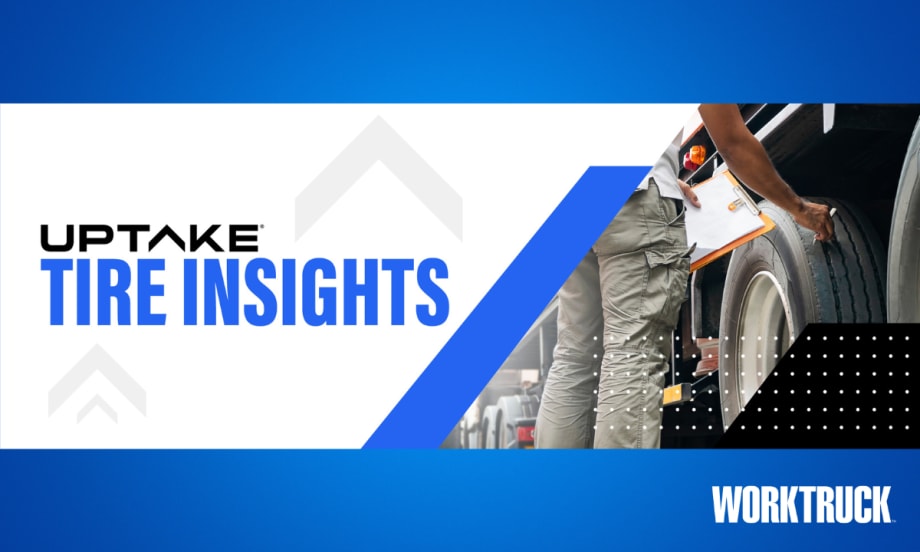
Properly inflated tires reduce rolling resistance, improving fuel efficiency and lowering fuel costs. Early detection of minor leaks prevents them from becoming significant issues, reducing costly emergency repairs and downtime.
Photo: Uptake
In commercial and work truck fleets, tire health isn't just a matter of maintenance — it's a matter of safety, efficiency, and cost control.
According to the National Transportation Safety Board, tire-related incidents account for over 33,000 accidents annually in the U.S., so the need for early detection of tire leaks and advanced tire monitoring systems has never been more critical.
Uptake's new suite of solutions, Tire Insights, promises to revolutionize fleet tire health management, enhance safety, and reduce maintenance costs. The system offers unprecedented capabilities in monitoring and managing tire health to reduce significant failures by 83%.
Enhancing Fleet Safety and Reducing Maintenance Costs
"Detecting tire leaks early is key for timely repairs or replacements to prevent blowouts that lead to accidents," explains Adam McElhinney, CEO of Uptake. Properly inflated tires ensure stable handling and optimal braking performance, reducing the risk of losing control and enhancing overall road safety. Well-maintained tires also provide a smoother ride, reducing driver fatigue and increasing alertness, which is crucial for long-haul drivers.
Moreover, maintaining correct tire pressure is essential for consistent traction and performance, especially in adverse weather conditions.
"This not only prolongs tire life by minimizing uneven tread wear but also reduces maintenance costs," McElhinney added.
Properly inflated tires reduce rolling resistance, improving fuel efficiency and lowering fuel costs. Early detection of minor leaks prevents them from becoming significant issues, reducing costly emergency repairs and downtime.
Advantages of Advanced Tire Pressure Monitoring Systems (TPMS)
Advanced Tire Pressure Monitoring Systems (TPMS) offer several advantages over traditional methods, primarily in safety, cost efficiency, operational efficiency, and data-driven insights.
"Advanced TPMS provides real-time monitoring, offering immediate alerts when tire pressure deviates from the optimal range," McElhinney said.
This technology allows for swift corrective action to prevent accidents. These systems are highly accurate in detecting small changes in pressure, which might not be noticeable through visual inspections or manual gauges. Early leak detection through advanced TPMS helps prevent blowouts and other tire-related failures, ensuring that tires operate within safe parameters and enhancing vehicle handling and braking performance.
In terms of cost efficiency, properly inflated tires reduce uneven wear and tear, extending tire lifespan and reducing replacement costs. Early identification of issues allows for minor repairs instead of costly replacements or emergency repairs. Correct tire pressure also minimizes rolling resistance, improving fuel economy and significantly saving fuel costs over time.
Operational efficiency is improved by minimizing downtime through scheduled maintenance enabled by advanced TPMS. "This reduces unexpected breakdowns, keeping vehicles operational for longer periods and increasing fleet productivity and profitability," McElhinney notes. Advanced TPMS also offers ease of use by continuously monitoring tire pressure without driver intervention, saving time and effort.
Improving Operational Efficiency and Fuel Savings
Improving tire health monitoring enhances operational efficiency and fuel savings for fleets. Advanced tire health monitoring systems detect issues early, allowing for proactive maintenance and reducing unplanned downtime. This monitoring keeps vehicles operational and enables efficient fleet management by providing real-time data on tire conditions, helping managers better plan maintenance schedules without disrupting operations.
Another benefit is enhanced safety, as monitoring systems provide alerts for anomalies, preventing tire blowouts and accidents. This enhances safety and avoids the downtime and costs associated with accident recovery and repairs. Properly maintained tires improve vehicle handling and performance, reducing the likelihood of incidents that can cause delays.
Fuel savings are realized through optimal tire pressure maintenance. "Properly inflated tires reduce rolling resistance, meaning the engine requires less energy to move the vehicle, leading to significant fuel savings," McElhinney explained.
Continuous monitoring ensures that tires remain at optimal pressure levels, avoiding the increased fuel consumption associated with underinflated tires.
Leveraging Uptake's Tire Insights
Uptake's Tire Insights provides comprehensive coverage for identifying and addressing tire-related problems, from rapid pressure drops to gradual leaks and sensor malfunctions. Using the Uptake platform, fleet managers receive notifications of Tire Insights along with the supporting evidence behind each triggered insight.
"Fleet managers can assign these insights to work orders and cases, enabling them to resolve issues earlier than traditional methods allow," McElhinney highlights.
The product suite helps fleets improve fuel efficiency by 5% and reduce unsafe driving days by over 90%.
Tire Health is Critical
With the advent of advanced tire monitoring solutions like Uptake's Tire Insights, fleet managers now have the tools to detect and address tire issues proactively, reducing the risk of blowouts, enhancing safety, and cutting maintenance costs.
"At Uptake, we are relentlessly focused on product innovation and excellence," McElhinney added. "Our new Tire Insights integrate seamlessly with existing tire pressure monitoring systems and leverage historical data to enhance insights and improve fleet maintenance strategies significantly."
By adopting these advanced technologies for truck tires, work truck fleets can ensure safer, more efficient operations, ultimately transforming their approach to tire maintenance and overall fleet management.
More Safety

Volvo Trucks Releases New Safety Recommendations for Traveling with Pets
One of the most important recommendations for professional drivers traveling with pets is to ensure pets are properly restrained while the truck is moving. Other tips are available in the new guide from Volvo Trucks North America and Center for Pet Safety.
Read More →
API Issues Refueling Safety Guidelines
The American Petroleum Institute offers a list of safe vehicle refueling guidelines, including ways to avoid potential problems with static electricity discharges in fall, winter, and early spring.
Read More →
Winter Fleet Prep: Expert Tips to Keep Vehicles Running Smoothly
Cold weather can expose weak batteries, tires, fuel systems, and maintenance gaps fast. Use this winter fleet checklist to prepare trucks and drivers before temperatures drop.
Read More →
When a Work Truck Breaks Down, the Job Can Stop, Too
A work truck breakdown can stop more than the vehicle. Discover how payloads, jobsites, and specialty equipment change the roadside response.
Read More →
What Stronger Long-Term Fleet Service Partnerships Actually Require
Fleet service partnerships rarely fall apart all at once. Learn the three warning signs that trust is eroding and what fleets and providers can do before downtime, frustration, and lost revenue follow.
Read More →
Applause & TRUCE Software Partner to Improve Driver Safety Through AI-Powered Telematics & Employee Performance Management
Applause has integrated TRUCE driving metrics directly into its employee-first performance and safety platform that transforms mobile devices into AI-powered telematics.
Read More →
How Detroit Assurance with Active Brake Assist Works
Do you want to see what it is like to experience Detroit Assurance’s Active Brake Assist? In this video, Work Truck will put you in the cab to see how it all works and then hear more details from DTNA’s Mike Young.
Read More →
Get Left of Loss: A 5-Step Workplace Violence Prevention Framework for Fleet Operators
Violence risks do not stop at the driver’s door. Learn five practical steps fleets can take to spot threats early and protect workers before loss occurs.
Read More →
How Better Visibility Cut Speeding Violations by 48%
Fleet leaders don't need more data, they need clearer visibility into what the data is saying. This case study explores how one utility replaced speeding-event counts with a single metric — miles driven in violation — to strengthen safety and significantly reduce speeding violations.
Read More →
13 Safe Driving Tips for Commercial Vehicle Drivers
Make sure you are spending time on the road safely with these important tips.
Read More →