




SoCalGas Dispensing California-Produced Renewable Natural Gas
Southern California Gas Co. (SoCalGas) announced it is for the first time dispensing California-produced renewable natural gas (RNG) at many of the natural gas fueling stations it operates across the state.


SoCalGas recently began purchasing RNG from Pixley-based Calgren Dairy Fuels (Calgren), which captures the greenhouse gas-producing manure from dairy farms and turns it into RNG, a renewable fuel.
Photo: SoCalGas
Southern California Gas Co. (SoCalGas) announced it is for the first time dispensing California-produced renewable natural gas (RNG) at many of the natural gas fueling stations it operates across the state.
The utility recently began purchasing RNG from Pixley-based Calgren Dairy Fuels (Calgren), which captures the greenhouse gas-producing manure from dairy farms and turns it into RNG, a renewable fuel. SoCalGas has dispensed 100% RNG from out-of-state sources at its fueling stations for a year. Calgren's facility is part of a rapidly growing biomethane industry in California and is currently the largest dairy biogas operation in the U.S.
"RNG is an important tool in reducing greenhouse gas emissions, which cause climate change, and we're looking forward to major growth in production of this renewable fuel in California," said Jawaad Malik, SoCalGas vice president of gas acquisition. "With the right incentives in place, RNG has significant opportunity to help the state move toward carbon-neutrality in not only the transportation sector but in many areas where traditional natural gas is now used."
RNG is produced when methane, a greenhouse gas that occurs naturally when organic waste breaks down, is captured and upgraded to pipeline standards rather than being released into the air. Organic waste sources such as dairy farms, landfills, sewage, food waste, and dead forest trees create about 80% of all methane emissions in California. Capturing this methane and converting it to RNG rapidly reduces greenhouse gas emissions.
In California, a 2016 law requires a 40% reduction of methane emissions from waste sources, with provisions to deliver that energy to customers.
Production of the fuel has accelerated quickly in California, supported by state incentive programs seeking to reduce greenhouse gas emissions from trucking and dairy farms. In just the next three and a half years, at least 160 RNG production facilities will be online in California to serve the transportation fuel sector, producing more than 15.8 million therms of carbon-negative RNG every year and replacing about 119 million gallons of diesel fuel. That's enough to reduce greenhouse gas emissions by over 3.4 million tons every year, the equivalent of taking more than 730,000 cars off the road.
Renewable natural gas trucks currently displace about 150 million gallons of diesel fuel in California. By increasing RNG trucks by ten times and decreasing diesel trucks by half, California could cut NOx emissions by 200 tons and reduce greenhouse gas emissions by 10 million tons.
In addition, California recently enacted legislation that expands the definition of renewable natural gas to include organic waste such as dead trees, agricultural waste and vegetation removed for wildfire mitigation which is typically converted to RNG by non-combustion thermal conversion. The new legislation has a twin benefit of helping to manage wildfires with reduced debris and also lowering greenhouse gas emissions.
To help expand the growth and use of RNG, SoCalGas has proposed a service that would give its customers the option to purchase a portion of their natural gas from renewable sources, just as millions of people can opt to purchase renewable electricity today. The California Public Utilities Commission (CPUC) has issued a draft ruling authorizing such a service, which is expected to be voted on by the end of the year.
Investment in RNG is also growing beyond California. Oregon recently enacted legislation allowing its natural gas utilities to purchase RNG on behalf of its customers, with the goal of replacing 15% of traditional natural gas with RNG by 2030. Virginia-based Dominion Energy has committed to investing in enough RNG projects to make its gas infrastructure net-zero carbon by 2040. In 20 years, enough RNG could be available in the U.S. to replace about 90% of the nation's current residential natural gas consumption, according to a recent study by ICF.
"Calgren is excited to be one of the leading production facilities in the U.S., which will eventually capture the waste of more than 132,000 cows from at least 18 dairies," said Lyle Schlyer, president of Calgren. "Using the methane captured from dairy waste for transportation fuel is good for the environment because it not only keeps methane from escaping to the air, it allows us to replace traditional natural gas with a renewable version, and it reduces pollution from diesel truck engines."
More Utility Fleet
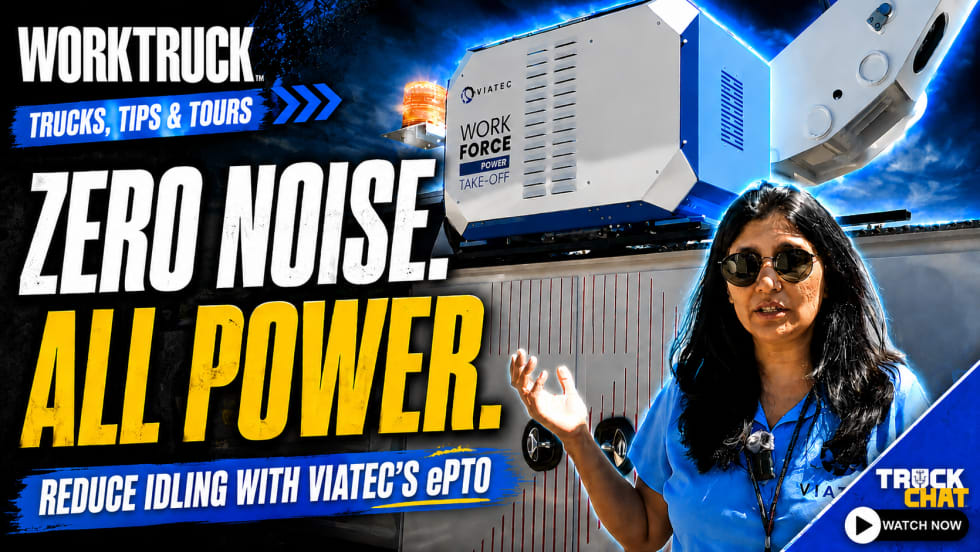
Reduce Noise & Idling with Viatec’s ePTO
Viatec's Workforce ePTO lets utility trucks power booms, outriggers, and auxiliary equipment using battery power instead of idling the engine. Learn how this technology helps reduce fuel use, noise, engine wear, and emissions while improving operator comfort.
Read More →
Why Utility Fleets Choose the Kenworth T380
The Kenworth T380 is engineered for utility fleets with custom chassis layouts, optimized frame rails, 4x4 capability, and improved driver visibility. See how its design helps maximize upfit flexibility and field performance.
Read More →
PALFINGER PB 38 AT P: Purpose-Built for Telecom Fleets
Purpose-built for telecommunications crews, the PALFINGER PB 38 ATP combines a 43-foot working height, flexible basket stowage, integrated cameras, and operator communication systems to improve productivity and safety during fiber and overhead cable installation.
Read More →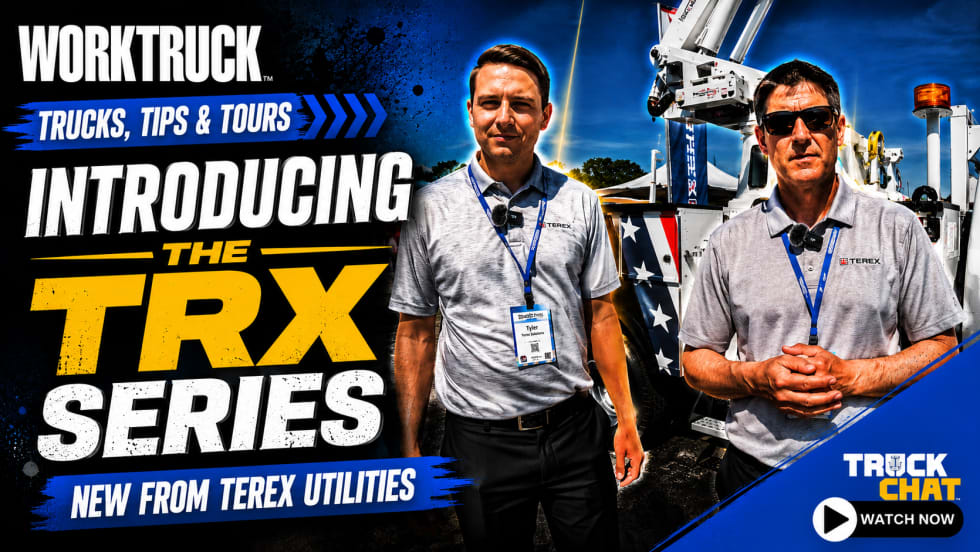
Inside Terex Utilities' Latest Work Truck Innovations
Terex Utilities is advancing utility fleet operations with its new TRX aerial platforms, Flex Pro controls, and AI-powered 3rd Eye safety technology. See how these innovations are helping fleets work safer, smarter, and more productively.
Read More →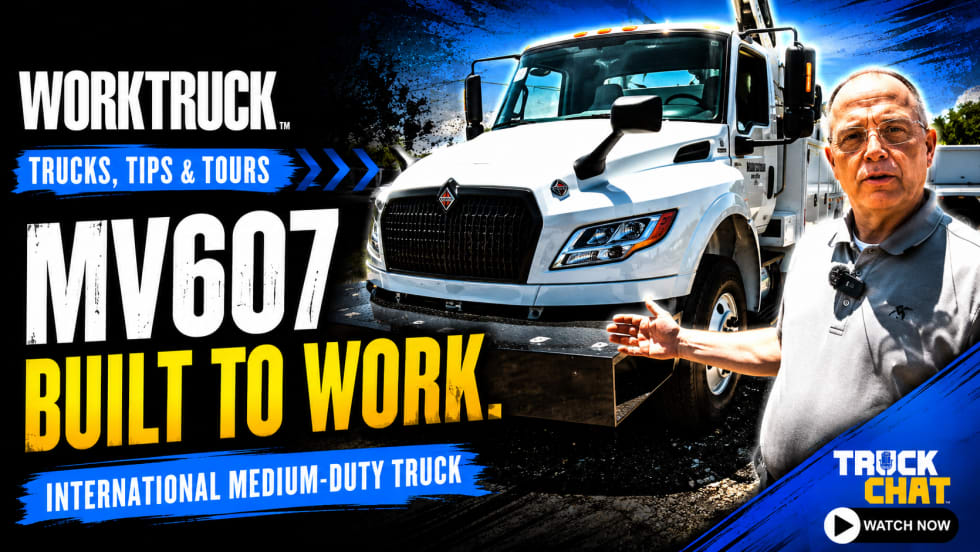
Walkaround of International MV607 Digger Derrick
The International MV607 combines advanced safety technologies, excellent visibility, vocational flexibility, and seamless body integration to create a powerful platform for utility fleet operations. Take a closer look at this Altec digger derrick configuration from EUFMC.
Read More →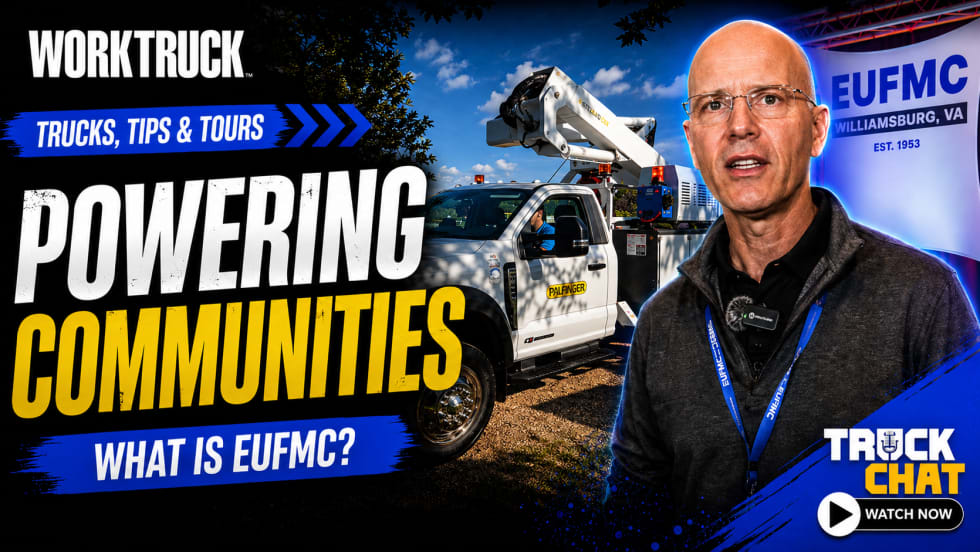
Inside the Electric Utility Fleet Managers Conference
What is EUFMC? For more than seven decades, the Electric Utility Fleet Managers Conference has served as a hub for collaboration, education, and innovation within the utility fleet industry. In this video, Work Truck talks to EUFMC President Greg Loew to learn more.
Read More →
Inside the EUFMC Equipment Expo & Drive-Through
Follow Work Truck as we check out the trucks and other vehicles that were showcased at the Electric Utility Fleet Managers Conference in Williamsburg, Virginia. Whether looking for something on tires or treads, it was there for fleet managers to see.
Read More →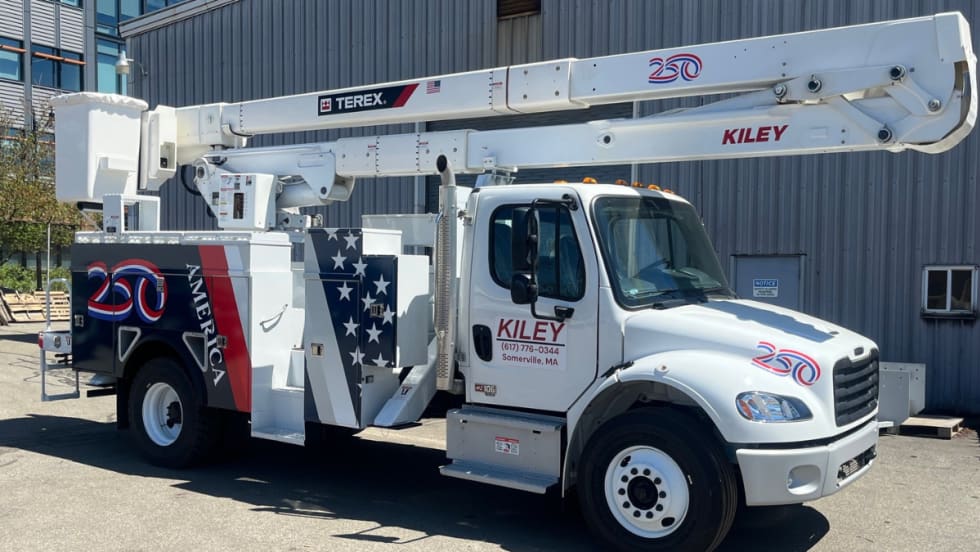
Terex Utilities & Kiley Unveil Custom America 250 Bucket Trucks at EUFMC 2026
Terex Utilities showcased a patriotic spirit in its booth this week during the Electric Utility Fleet Managers Conference in Williamsburg, Virginia, by debuting two custom-wrapped bucket trucks celebrating America’s upcoming 250th anniversary.
Read More →
Panasonic Connect & Anterix Strengthen Connectivity Options for Utilities and Field Workers
The Panasonic Connect Toughbook 56 is the first Toughbook to earn the AnterixActive badge, which means it can connect to and operate on Anterix’s 900 MHz network even in the most remote locations.
Read More →
Streamlight Launches Portable Scene Light III & LiteBox 1Million
Streamlight has launched its Portable Scene Light III (PSL III), which delivers up to 10,000 lumens, and the LiteBox 1Million, a long-range search light that delivers one million candela.
Read More →