




Safety First Program Helps Fleets Upgrade
The Fleet Advantage Safety First Program aims to help transportation fleets upgrade into newer trucks with advanced safety features.

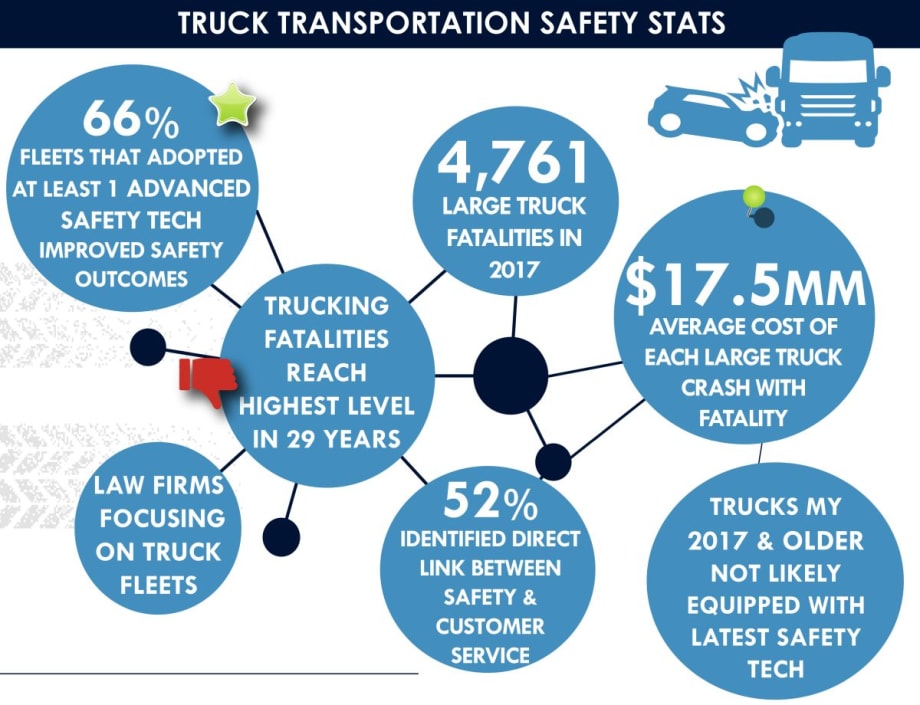
the Fleet Advantage survey also showed that 11% of transportation fleets estimate they have saved more than $1 million in crash avoidance by upgrading to newer trucks with advanced safety features.
Photo: Fleet Advantage
The Fleet Advantage Safety First Program aims to help transportation fleets upgrade into newer trucks with advanced safety features. Companies cannot afford to drive obsolete equipment that places their company and drivers at risk, noted Fleet Advantage. Under the program, Fleet Advantage purchases 2017 and older model-year tractors and leases them back for an interim period while the company transitions to new state-of-the-art trucks with the latest safety technology.
The company’s specification experts then work with the fleet to design new trucks for maximum safety, fuel efficiency, lowest maintenance cost and highest resale values. They include advanced safety features in each spec beyond the standard OEM features and work with the OEMs and vendors to achieve this at minimum cost.
By focusing on safety proactively, Fleet Advantage is ultimately advising companies about risk that they may otherwise not likely identify, as well as a solution that could save millions of dollars in cost reduction while avoiding damage to their corporate image and brand identity.
The company began an exhaustive investment and research initiative into the program following the 2016 fatal truck accident involving Tracy Morgan, which resulted in loss of life and a settlement exceeding $100 million.
Over the past ten years, heavy-duty truck fatalities have reached an all-time high, with judgments and settlements reaching $20-$200 million. Statistics show that new safety features reduce collisions by 22% and improve government published safety records.
More transportation fleets are paying attention to their trucks’ safety obsolescence in addition to their economic obsolescence, meaning safety has become a larger reason to upgrade into newer truck technology. However, according to a survey commissioned by Fleet Advantage, roughly 50% of fleets said their trucks are 2017 models or older (some fleets have as many as 3,000 trucks older than 2017 models). This is critical since many OEMs have adopted advanced safety systems on 2018 and newer models as standard features, such as collision avoidance and lane departure warnings. Trucks that are 2017 models and older likely do not have these safety technologies and cannot be retrofitted with collision mitigation.
The Fleet Advantage survey showed that 11% of transportation fleets estimate they have saved more than $1 million in crash avoidance by upgrading to newer trucks with advanced safety features. These types of safety technologies have led to safer roads for drivers, passengers and other motorists, and have lowered accident costs. This is especially important since trucking fatalities recently reached the highest level in the past 30 years, with the average cost of each heavy-duty truck crash reaching $17.5 million.
John Flynn, CEO of Fleet Advantage, says the program is critical to get safer trucks on the road quicker since modernization would otherwise take four or five years longer. “Today’s business climate has placed a premium on all-around safety, especially given the COVID-19 pandemic and containment efforts where keeping drivers and motorists safe is the main priority,” added Flynn. “We also fully recognize the difficult economic climate today, and we want to assist our customers with a program that provides near-term financial support while helping them move toward safer trucks in the near future.”
More Safety
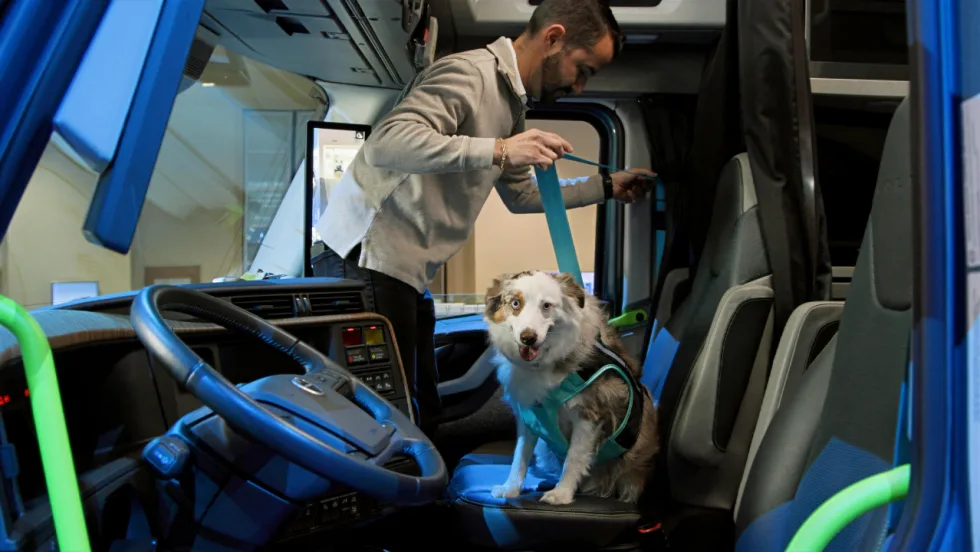
Volvo Trucks Releases New Safety Recommendations for Traveling with Pets
One of the most important recommendations for professional drivers traveling with pets is to ensure pets are properly restrained while the truck is moving. Other tips are available in the new guide from Volvo Trucks North America and Center for Pet Safety.
Read More →
API Issues Refueling Safety Guidelines
The American Petroleum Institute offers a list of safe vehicle refueling guidelines, including ways to avoid potential problems with static electricity discharges in fall, winter, and early spring.
Read More →
Winter Fleet Prep: Expert Tips to Keep Vehicles Running Smoothly
Cold weather can expose weak batteries, tires, fuel systems, and maintenance gaps fast. Use this winter fleet checklist to prepare trucks and drivers before temperatures drop.
Read More →
When a Work Truck Breaks Down, the Job Can Stop, Too
A work truck breakdown can stop more than the vehicle. Discover how payloads, jobsites, and specialty equipment change the roadside response.
Read More →
What Stronger Long-Term Fleet Service Partnerships Actually Require
Fleet service partnerships rarely fall apart all at once. Learn the three warning signs that trust is eroding and what fleets and providers can do before downtime, frustration, and lost revenue follow.
Read More →
Applause & TRUCE Software Partner to Improve Driver Safety Through AI-Powered Telematics & Employee Performance Management
Applause has integrated TRUCE driving metrics directly into its employee-first performance and safety platform that transforms mobile devices into AI-powered telematics.
Read More →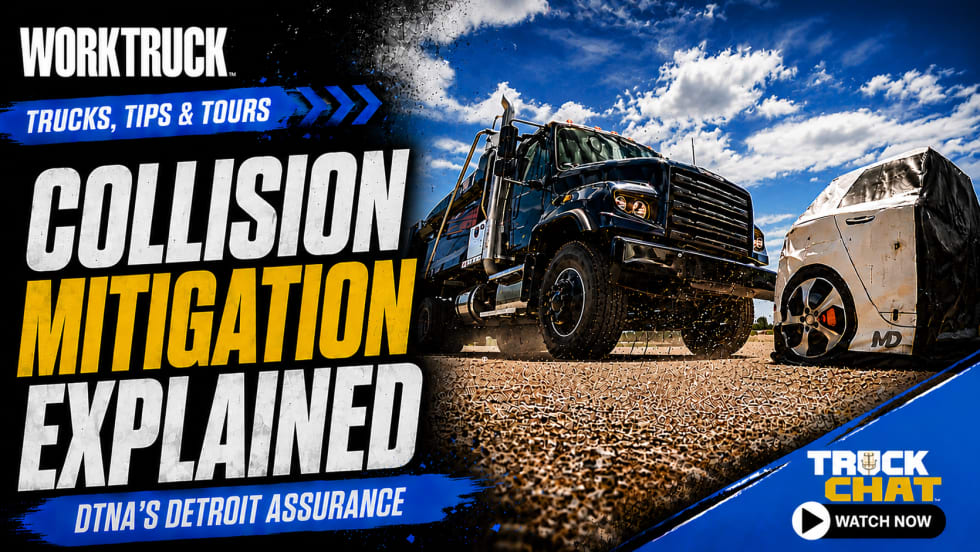
How Detroit Assurance with Active Brake Assist Works
Do you want to see what it is like to experience Detroit Assurance’s Active Brake Assist? In this video, Work Truck will put you in the cab to see how it all works and then hear more details from DTNA’s Mike Young.
Read More →
Get Left of Loss: A 5-Step Workplace Violence Prevention Framework for Fleet Operators
Violence risks do not stop at the driver’s door. Learn five practical steps fleets can take to spot threats early and protect workers before loss occurs.
Read More →
How Better Visibility Cut Speeding Violations by 48%
Fleet leaders don't need more data, they need clearer visibility into what the data is saying. This case study explores how one utility replaced speeding-event counts with a single metric — miles driven in violation — to strengthen safety and significantly reduce speeding violations.
Read More →
13 Safe Driving Tips for Commercial Vehicle Drivers
Make sure you are spending time on the road safely with these important tips.
Read More →