




Rotary Lift Reveals 'Y'
MADISON, IN - Rotary Lift has unveiled the Y-Lift, the first in a series of new vehicle lifts with faster speed designed to help improve technician productivity and increase shop productivity.
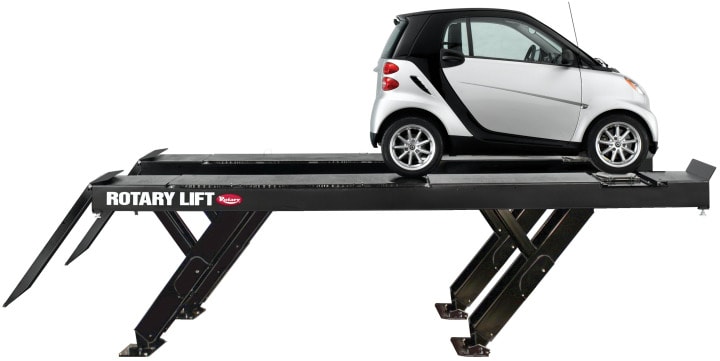
Rotary "Y" Lift
MADISON, IN - Rotary Lift has unveiled the Y-Lift, the first in a series of new vehicle lifts with faster speed designed to help improve technician productivity and increase shop productivity.
"Rotary Lift is helping shop owners boost the bottom line by designing products like the Y-Lift that enable technicians to work more efficiently," says John Podczerwinski, Vehicle Service Group (VSG) general manager for North and South America. "And, over the next 12 months, we'll launch even more models offering faster rise and descent times, as well as new productivity features."
Rotary Lift's new Y-Lift (model YA12) is a drive-on hinged lift that uses a patented design and unique Y-shaped legs to provide faster rise/descent speeds and greater vehicle access than traditional scissor lifts. Its innovative weight-sensing control system maximizes rise speed based on the weight of the vehicle being lifted. For most vehicles, the rise time will be around 37 seconds, which is at least 33 percent faster than comparable scissor lifts. The faster rise time means technicians using a Y-Lift can start servicing a vehicle sooner. And when they're done, the Y-Lift also offers speedier descent than many scissor lifts, so techs can move on to the next job more quickly.
"Technicians hate wasting time getting vehicles into position for service and waiting to unload them from the lift when they're done," explains Doug Brown, VSG director of new product development. "The Y-Lift drastically reduces that wait time. The lift's unique design also eliminates the restrictive scissor arms that get in the way on scissor lifts, so technicians have full vehicle access from side-to-side and front-to-rear, as well as 20 percent more overall work space. This allows them to work more efficiently. As a result, productivity is enhanced, and profitability increases accordingly."
Although it somewhat resembles a parallelogram lift, the Y-Lift provides true vertical movement. As a result, the lift has a compact footprint that fits in smaller service bays.
The Y-Lift was designed for vehicle alignments and general service work. It accommodates a greater wheelbase range than any other alignment lift, and is the only lift that enables technicians to perform four-wheel alignments on micro-cars like the smart fortwo. The Y-Lift can be used for four-wheel alignments on wheelbases as short as 71½ inches. Competitive scissor lifts need a minimum wheelbase of 88 inches. Full-size pick-up trucks are no problem for the Y-Lift, either. It can be used to perform four-wheel alignments on vehicles with wheelbases up to 158 inches long. The Y-Lift is compatible with all leading alignment instrumentation, including new 3D and camera wheel alignment systems.
The Y-Lift incorporates a number of design features to provide overall durability and a long useful life. For example, the hydraulic cylinder, locking mechanism and position sensor are all located inside the Y-Lift's runways, to protect them from corrosives and physical damage. Protecting the integrity of these components reduces lift downtime.
The Y-Lift has been third-party tested by ETL and ALI certified to meet ANSI/ALI ALCTV-2006 safety standards. It can be flush-mounted or recessed. Capacity is 12,000 lbs. The Y-Lift is made in the U.S.A.
For more information about the Y-Lift, contact your local Rotary Lift distributor, log on to www.rotarylift.com or call (800) 640-5438.
More Safety
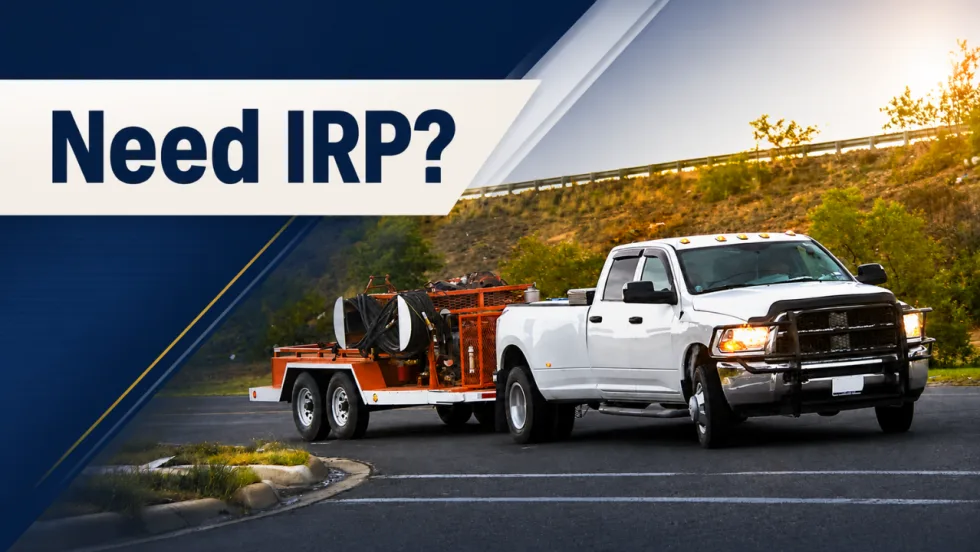
When Work Trucks Under 26,001 Pounds Need IRP Registration
Think trucks under 26,001 pounds are automatically in the clear when it comes to IRP? Not always. Learn where lighter vehicles can still run into trip permit, apportioned registration, and IFTA compliance requirements when crossing state or provincial lines.
Read More →
Volvo Trucks Releases New Safety Recommendations for Traveling with Pets
One of the most important recommendations for professional drivers traveling with pets is to ensure pets are properly restrained while the truck is moving. Other tips are available in the new guide from Volvo Trucks North America and Center for Pet Safety.
Read More →
API Issues Refueling Safety Guidelines
The American Petroleum Institute offers a list of safe vehicle refueling guidelines, including ways to avoid potential problems with static electricity discharges in fall, winter, and early spring.
Read More →
Winter Fleet Prep: Expert Tips to Keep Vehicles Running Smoothly
Cold weather can expose weak batteries, tires, fuel systems, and maintenance gaps fast. Use this winter fleet checklist to prepare trucks and drivers before temperatures drop.
Read More →
When a Work Truck Breaks Down, the Job Can Stop, Too
A work truck breakdown can stop more than the vehicle. Discover how payloads, jobsites, and specialty equipment change the roadside response.
Read More →
What Stronger Long-Term Fleet Service Partnerships Actually Require
Fleet service partnerships rarely fall apart all at once. Learn the three warning signs that trust is eroding and what fleets and providers can do before downtime, frustration, and lost revenue follow.
Read More →
Applause & TRUCE Software Partner to Improve Driver Safety Through AI-Powered Telematics & Employee Performance Management
Applause has integrated TRUCE driving metrics directly into its employee-first performance and safety platform that transforms mobile devices into AI-powered telematics.
Read More →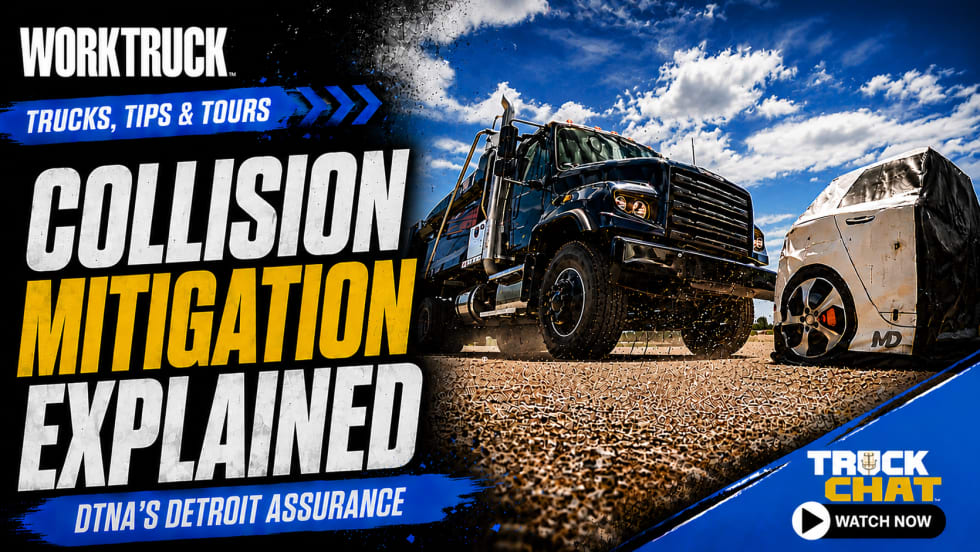
How Detroit Assurance with Active Brake Assist Works
Do you want to see what it is like to experience Detroit Assurance’s Active Brake Assist? In this video, Work Truck will put you in the cab to see how it all works and then hear more details from DTNA’s Mike Young.
Read More →
Get Left of Loss: A 5-Step Workplace Violence Prevention Framework for Fleet Operators
Violence risks do not stop at the driver’s door. Learn five practical steps fleets can take to spot threats early and protect workers before loss occurs.
Read More →
How Better Visibility Cut Speeding Violations by 48%
Fleet leaders don't need more data, they need clearer visibility into what the data is saying. This case study explores how one utility replaced speeding-event counts with a single metric — miles driven in violation — to strengthen safety and significantly reduce speeding violations.
Read More →