




Lightning eMotors, GoBolt Deploy Electric Cargo Vans
As part of this agreement, Lightning eMotors will deliver 70 Class 3 zero-emission, all-electric cargo vans and 100 Class 5 zero-emission, all-electric box trucks.


In addition to vehicles, Lightning Energy will be providing both AC level 2 and DC fast chargers to support the vehicle deployment.
Photo: Lightning eMotors
Lightning eMotors, a provider of zero-emissions, medium-duty commercial vehicles and electric vehicle technology for fleets, announced it has entered into a strategic partnership with GoBolt — a technology-led, customer-centric sustainable logistics provider — to manufacture 170 all-electric cargo vans and box trucks over the next 12 months. These vehicles will be deployed across the U.S. and Canada.
As part of this agreement, Lightning eMotors will deliver 70 Class 3 zero-emission, all-electric cargo vans and 100 Class 5 zero-emission, all-electric box trucks. Deployment of the Class 3 vans is already underway. The fleet will feature a mix of 80kWh and 120kWh battery capacity vans with an expected range of up to 200 miles per charge. Development of the Class 5 box trucks is in progress, with deliveries targeted to begin early next year.
Toronto-based GoBolt recently announced it has expanded operations into the U.S., positioning the company to reach 12.75 million additional households with a simplified, customer-centric, and sustainable approach to vertical supply chain integration.
“We couldn’t be more excited about our strategic partnership with GoBolt, and that it comes as they are rapidly expanding into the U.S. market,” said Lightning eMotors’ CEO Tim Reeser. “We have seen a huge uptick in interest from the supply chain and last- and middle-mile fulfillment industries and applaud GoBolt’s commitment to sustainable logistics services. We look forward to continuing this journey of growth with them.”
GoBolt selected Lightning as its high-volume commercial EV partner after testing and evaluating several commercial medium duty EVs on the market and after visiting Lightning’s best-in-class R&D and manufacturing facility in Colorado. Lightning’s mature and active production facility stood apart when compared with other EV companies relative to advanced technology integration, efficiency, and volume of new and repowered vehicles in production.
“This partnership is an important development of our growing North American network of zero-emission delivery vehicles and brings GoBolt one step closer to being a carbon-negative business by the end of 2023,” said GoBolt’s co-founder and chief executive officer, Mark Ang. “Lightning shares the same entrepreneurial DNA as GoBolt and has demonstrated the drive to challenge the status quo in an industry that is in need of disruption.”
Lighting has been providing medium-duty, Class 3-7 zero-emission, all-electric commercial vehicles to customers for more than four years. More than 300 of these zero-emission fleet vehicles have racked up over 2,500,000 all-electric miles as market demand has continued to increase. In total, Lightning vehicles have accumulated over 6 million low- or zero-emission, real world fleet miles. Lightning offers a wide range of all-electric vehicles to customers across more vehicle classes than its competitors and has announced development of its own Lightning e-Chassis for deployment next year.
In addition to vehicles, Lightning Energy will be providing both AC level 2 and DC fast chargers to support the vehicle deployment.
“Our partnership with GoBolt is another great example of Lightning’s ability to develop, build, and deploy the complete fleet electrification solutions that the market needs,” said Lightning eMotors’ chief revenue officer Kash Sethi. “By providing both the vehicles and charging infrastructure that GoBolt needs, we can assure interoperability and simplify their fleet deployment. Providing a one-stop shop for fleet electrification is going to be a game changer.”
Check out this Lightning eMotors vans in partnership with Perrone Robotics!
More Green Fleet

Fleet Forward Conference Introduces One-Day Passes for 2026
New one-day registration gives fleet professionals the flexibility to attend Tuesday, Wednesday, or Thursday, with passes available for $199 through Sept. 18.
Read More →
CALSTART Rebrands as Catalyst Mobility, Will Combine with Forth in 2027
CALSTART has rebranded as Catalyst Mobility and will combine with Forth at the start of 2027. The new organization said it is poised to become one of the world's largest, strongest, and most impactful clean transportation nonprofits.
Read More →
Electric Truck and Charging Programs to Boost Sustainability at NY & NJ Ports
Together, the Port Authority of New York and New Jersey and CALSTART will electrify drayage and terminal operations serving the East Coast’s busiest container port. A pair of incentive programs totaling $45 million has launched to accelerate adoption of zero-emission drayage trucks and terminal tractors.
Read More →
Xos Hub Surpasses One Gigawatt-Hour of Energy Delivered in the Field
A single Xos Hub has surpassed one gigawatt-hour of energy across more than 33,600 charging sessions in the field, demonstrating performance that supports Xos' expansion across new products and markets.
Read More →
Carrier Transicold Launches All-Electric Vector 8200 TRU for Diesel-Free On-Site Cold Storage
Carrier Transicold’s first engineless multi-temperature TRU helps fresh- and frozen-food fleets add supplemental cold storage capacity during seasonal peaks.
Read More →
Narro Trucks Introduces Electric Utility Vehicle
Narro Trucks officially launched its operations on Aug. 20 and hosted a ride and drive to showcase its electric truck, which will be produced in Virginia.
Read More →
Samsung SDI Takes Full Control of GM Battery JV as Indiana Plant Pivots to Energy Storage
Samsung SDI is taking full control of its Indiana battery plant with GM, marking a major shift from the EV-focused joint venture Charged Fleet first covered in 2023.
Read More →
NWSA Taps CALSTART to Administer Zero-Emission Drayage Assistance Program
CALSTART will provide free technical assistance services to drayage fleets serving the Ports of Seattle and Tacoma and looking to transition to cleaner technologies and help decarbonize freight hubs.
Read More →
EV Fleet Reality Check: What Operators Wish They Knew Before Electrifying Their Work Vans
Electric work truck upfits bring new compatibility questions. Learn how parts availability, OEM guidance, power demands, and route planning can affect fleet performance.
Read More →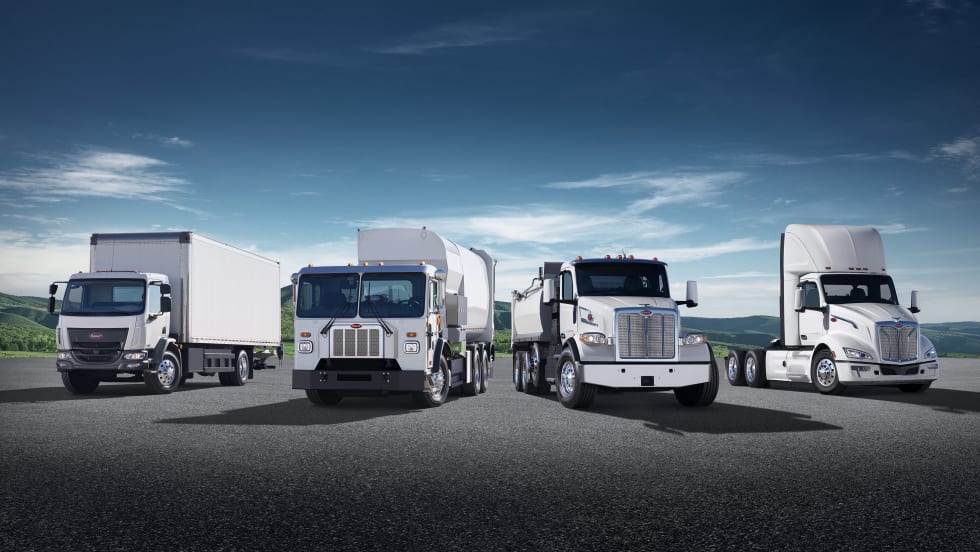
Peterbilt Expands Sourcewell Partnership with Electric Vehicle Lineup
Peterbilt Motors Company’s cooperative purchasing agreement with Sourcewell and its Canadian partner, Canoe Procurement Group, now includes including Peterbilt's battery-electric vehicle lineup.
Read More →