




Kenworth Truck Company Offers Key Tips on Spec’ing for Medium-Duty Trucks
LEBANON, MO - Kenworth Truck Company recommends that companies know their payload, terrain conditions, and body requirements to better spec medium-duty trucks for business applications.
LEBANON, MO – For years, a key criterion for spec’ing medium-duty trucks has been the gross vehicle weight rating (GVWR). Users select trucks primarily on the basis of their class. So a Class 6 vehicle may be suitable for one application and a Class 7 may work better for another, according to www.truck.net. Medium-duty trucks fall into the Class 5 (16,001 to 19,500 lb. GVWR), Class 6 (19,501 to 26,000 lb. GVWR), and Class 7 (26,001 to 33,000 lb. GVWR).
Kenworth Truck Company recommends that companies know their payload, terrain conditions, and body requirements to better spec medium-duty trucks for business applications. While the vehicle’s GVWR is still important, buyers are increasingly focusing on other factors when making their selection, according to Judy McTigue, medium-duty marketing manager for Kenworth Truck Company.
“Customer expectations of medium duty trucks have continued to increase in recent years,” McTigue said. “Many users look for a business solution that provides superior uptime and reliability. An increased focus on fuel efficiency and efforts to reduce the environmental footprint are driving interest in hybrids, such as the Kenworth T270 and T370 straight trucks for pickup and delivery and utility applications and T370 tractor for local haul applications, including beverage, general freight and grocery distribution. Dependability is also high on the list because, day in and day out, medium duty trucks are work trucks and customer satisfaction is based on making timely deliveries, pick-ups, or service calls.”
Some of the first things to consider are the type of load, annual mileage, and type of operating environment. Buyers can choose from a wide range of bodies that can be mounted differently depending on the truck’s wheelbase and local weight regulations.
McTigue said that Kenworth dealers use a special vehicle spec’ing software called Prospector that makes it easier for a salesperson to put together the right spec.
“We always review every order that comes in to make sure the spec will meet the customers requirement,” she said. “Some clients want to over spec or under spec their vehicle. This won’t necessarily improve the truck and may add to the operating costs and result in poor fuel economy and performance.”
Other important driver factors are driveability, startability, maneuverability, visibility, and ease of entrance and exit into and from the truck.
Also, a carefully spec’d drivetrain can lower your total operating costs over the truck’s life. Be careful not to over-spec the engine, McTigue added.
More Operations

Les Schwab Tires Launches Foundation With $100,000 for Community Recovery
Les Schwab Tires launches a foundation with $100,000 to support recovery for Silver Rail Elementary and the Bend community following a school shooting.
Read More →
Bring Some Fleet to Your Halloween with Our Pumpkin Carving Templates
Download Work Truck’s truck-themed pumpkin patterns, explore more automotive designs, and give your shop or front porch a seasonal upgrade.
Read More →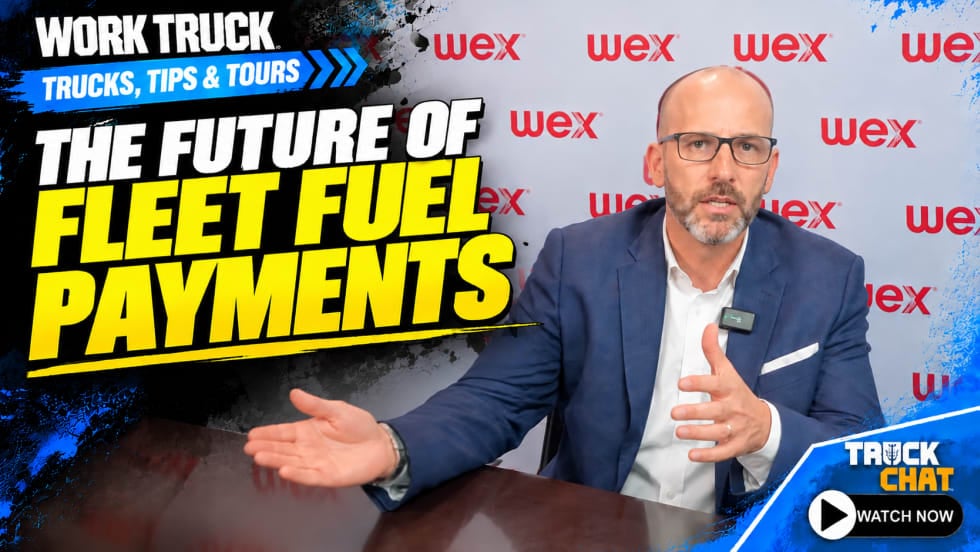
How Cardless Fuel Payments Benefit Commercial Fleets
Is it time for fleets to move beyond plastic fuel cards? David Abraham of WEX explains how cardless fuel payments can help reduce fraud, simplify driver transactions, and improve efficiency by allowing drivers to pay for fuel using their smartphones.
Read More →From Our Partners
Basic Tracking vs Next Generation Fleet Technology
Sponsored by AT&T Business

5 Facts Every Fleet Manager Should Know About Embedded Telematics
Sponsored by Stellantis/Mobilisights
How AI Video Telematics Boosts Driver Safety and Helps to Avoid Unnecessary Costs
Sponsored by Verizon Connect

Charting the 8 Bottom-Line Benefits of Workforce Optimization
Sponsored by Verizon Connect


Good Fleet Leadership Starts With the People You Already Have
From developing future leaders to listening to employees, discover how better leadership can help work truck fleets retain talent and build stronger teams.
Read More →
ATRI Names Next President and CEO
Page Siplon, a longtime transportation and logistics industry executive, has been chosen as the next president and CEO of the American Transportation Research Institute (ATRI).
Read More →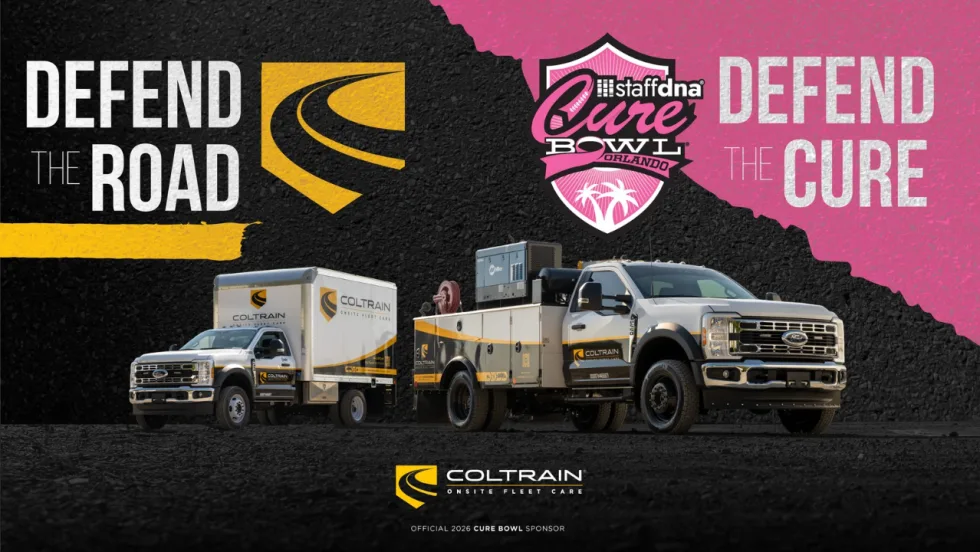
Coltrain Onsite Fleet Care Sponsors 2026 Cure Bowl to Support Cancer Research
The mobile fleet maintenance provider is supporting the annual college football bowl game, which has helped raise $6.83 million for cancer research since 2015.
Read More →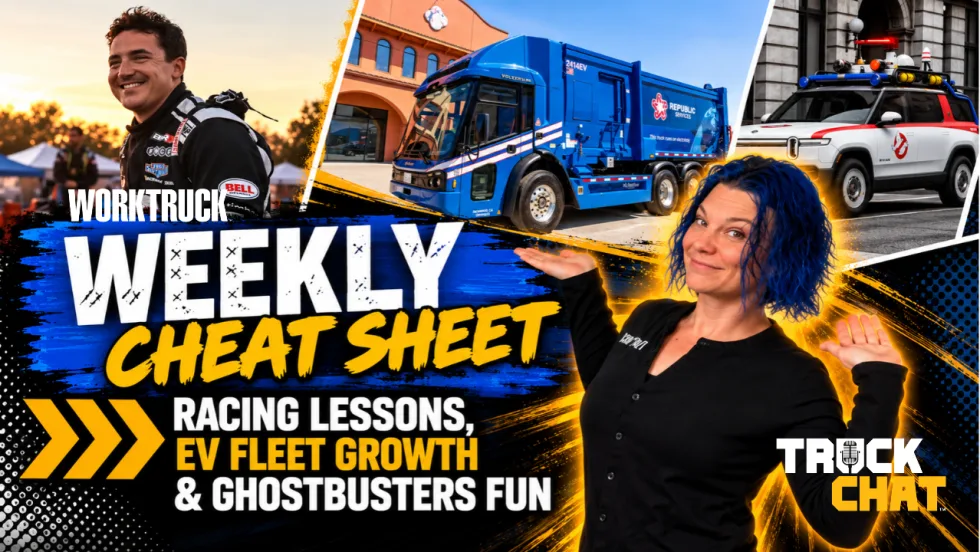
Racing Lessons, Electric Fleet Growth, and Ghostbusters Lead This Week's Work Truck News
Racing lessons for fleets, Republic Services' electric truck expansion, 40 years of fleet wisdom, truck trivia, autonomous yard trucks, and more headline this week's Truck Chat Cheat Sheet.
Read More →
A buyer's guide to fleet management software in 2027
Buying fleet management software in 2027 means looking beyond features and price. As fleet operations, technology and expectations evolve, this guide explores what today’s fleet professionals should consider when choosing a system that can deliver value now and adapt to what comes next.
Read More →
How to Build a Lasting Fleet Career by Staying Curious and Connected
Tina Kourakos never planned on a career in fleet. More than 30 years later, she says curiosity, strong relationships, and a willingness to keep learning helped turn an unexpected assignment into a career spanning fleet management and OEM leadership.
Read More →
Think You Know Trucks? Take Our 19-Question Fleet Trivia Challenge
From chicken lights to diesel engines and trucking history, test your knowledge with 19 questions from the 2026 Work Truck Exchange and Heavy Duty Trucking Exchange.
Read More →