




International ProStar+ with MaxxForce 13 Advanced EGR Independently Tested
WARRENVILLE, IL - Navistar, Inc. announced results from independent, third-party testing which prove the new 2010 International ProStar+ Class 8 tractor with the MaxxForce 13 Advanced EGR engine is the industry leader in fluid economy.
WARRENVILLE, IL - Navistar, Inc. announced results from independent, third-party testing which prove the new 2010 International ProStar+ Class 8 tractor with the MaxxForce 13 Advanced EGR engine is the industry leader in fluid economy - a measurement of diesel fuel plus liquid urea consumed and the new standard of comparison for Class 8 trucks, according to the manufacturer.
"With the ProStar+, we continue to have the most efficient Class 8 truck on the road," said Jim Hebe, Navistar senior vice president, North American sales operations. "We weren't satisfied with simply being the best - we were determined to make the best even better and the results speak for themselves."
Until recently, comparisons of Class 8 trucks were centered on fuel economy, with the first-generation International ProStar as the industry leader. However, today, with different trucks offering different technologies for 2010 emissions, fuel economy doesn't tell the whole story. Competitor's trucks offer a liquid urea SCR (Selective Catalytic Reduction) solution and, like diesel fuel, liquid urea costs money.
To help customers make informed decisions about which truck-engine combination is right for them, Navistar commissioned the Transportation Research Center Inc. (TRC Inc.) to conduct a head-to-head fluid economy comparison. TRC Inc. performed independent TMC (Technology & Maintenance Council) Type IV testing of three EPA 2010-compliant trucks: International ProStar+ with MaxxForce Advanced EGR vs. Freightliner Cascadia and Kenworth T660, both with liquid-urea SCR.
"The rigorous TMC Type IV over-the-road testing requires strict attention to detail and is one of the most accurate representations of real-world conditions," said Ramin Younessi, Navistar group vice president, product development and strategy. "The test results of the ProStar+ are a validation of the commitment we made to deliver one of the most efficient trucks on the road."
The specifications for each truck were as similar as possible. Only one tank of diesel per truck was allowed. Each truck was equipped with its most fuel-efficient engine. Each ran three 444-mile runs on public highways, in real-world conditions. Drivers and trailers were switched at the mid-point of each test.
The test results were clear. In the comparison of fluid economy, the 2010 International ProStar+ with MaxxForce 13 consistently outperformed the competing trucks by nearly 1 percent to 2.5 percent. In addition to better fluid economy, the International ProStar+ with MaxxForce Advanced EGR is the only no-hassle 2010 emissions solution.
As vehicle weight continues to be a top priority for customers, the ProStar+ is 700 pounds lighter than its predecessor. When you include the MaxxForce 13, with its durable, lightweight compacted graphite iron (CGI) cylinder block, and MaxxForce Advanced EGR emissions technology, the ProStar+ has an additional 600-pound advantage versus the leading 15-liter engine, providing an extra 1,300 pounds of added payload capacity and fluid economy benefits.
As the prices of diesel fuel and liquid urea drive customers toward higher payloads, fleets are more and more weight conscious, with every pound contributing to the bottom line. In the end, as fleets look for more productive loads and optimized routes, they're looking for trucks and engines that have the necessary power and capabilities but that are lower weight. With ProStar+ with MaxxForce 13, a customer can still get the power they've come to expect from a 15.0L engine with considerably less weight (NOTE: Navistar's launch of its own 15.0L engine, the MaxxForce 15, remains on track for October 2010, with a full-scale launch in January 2011).
"If liquid urea SCR trucks can't compete on fluid economy," asks Hebe, "then why would customers want to deal with the cost and hassle of adding and maintaining after-treatment equipment, finding and filling up with liquid urea and retraining technicians?"
For more information on the testing and results, visit www.internationaltrucks.com/results.
More Fuel

The Smart Way to Build a Mixed-Energy Fleet Isn’t About Picking a Side
Mixed-energy fleets aren’t about picking a winning fuel. Sarah Booth of WEX explains how vehicle data, duty cycles, charging strategy, and real-world costs can help fleets choose the right energy source for each job.
Read More →
Ignoring This Dashboard Warning Could Cost Your Fleet Thousands in Fuel
New research suggests neglected diesel aftertreatment systems could waste up to $30 in fuel per vehicle each day. Here's why vocational fleets should pay attention.
Read More →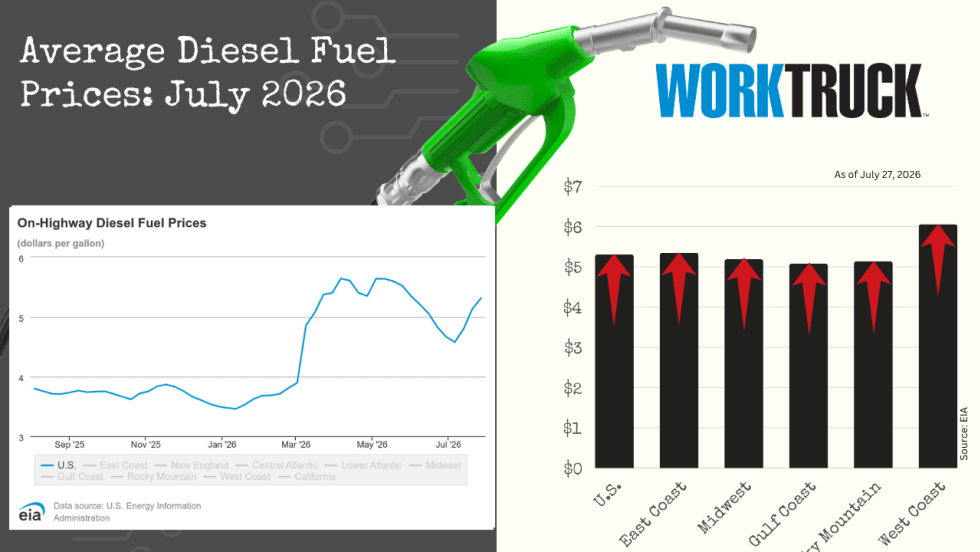
July Diesel Trends Update
The average price of a gallon of diesel increased again this week, and the EIA reported a new national average of $5.31 at the start of the week.
Read More →
WEX Brings Standard Fleet's Connected Vehicle Platform to Fleet Customers
This week’s product launch with Standard Fleet’s connected vehicle platform reflects WEX Venture Capital's strategy of turning startup innovation into customer solutions. Standard Fleet is now available to WEX fleet customers.
Read More →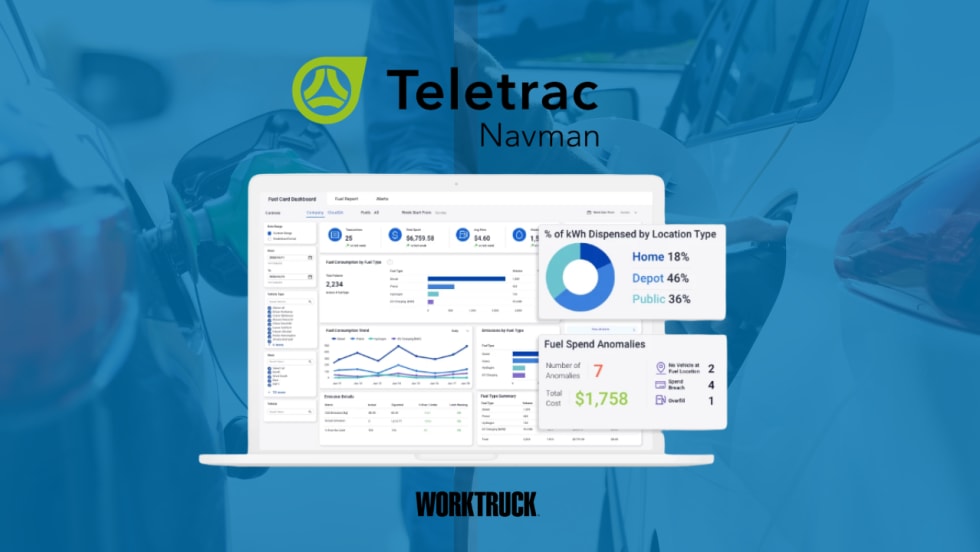
Teletrac Navman Adds Mixed-Energy Fleet Tools to TN360
The new Energy Hub combines fuel transactions, EV charging data, vehicle range, and energy costs in one dashboard for fleets operating multiple vehicle and energy types.
Read More →
WEX DriverDash adds CITGO, Expands Nationwide Access for Fleets
The DriverDash mobile payment app, by WEX, has been integrated into the CITGO merchant network, which means WEX has expanded its U.S. station footprint with the addition of approximately 4,000 CITGO locations.
Read More →
Mixed Energy Fleet Tips for Balancing EVs, Gas and Diesel Vehicles
Mixed energy fleets are becoming the new normal. Learn how fleet managers are balancing EVs, gas and diesel vehicles while controlling costs and planning for the future.
Read More →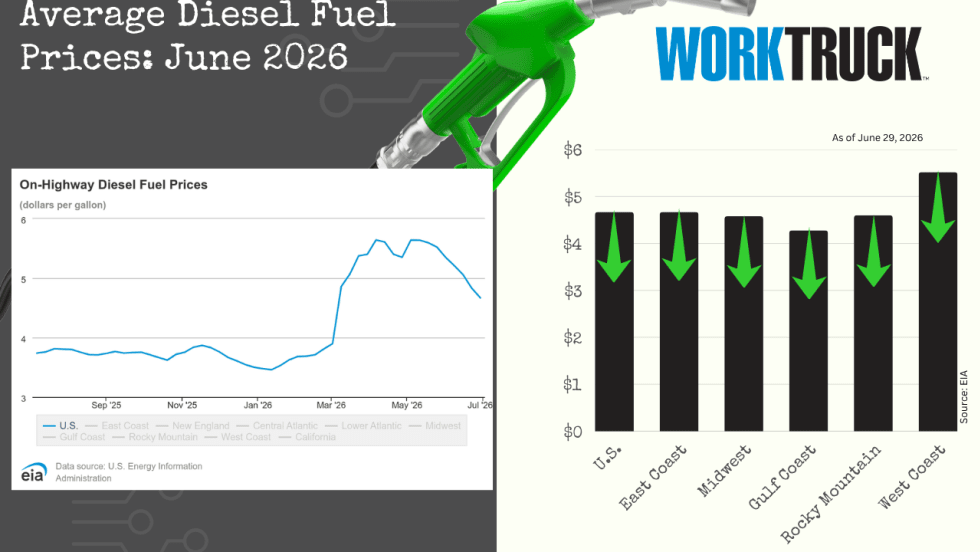
June Diesel Trends Update
The national average price of a gallon of diesel has dropped again, this week by more than 16 cents. All five regions reported lower average prices, ranging from almost 13 cents to more than 28 cents cheaper than a week ago.
Read More →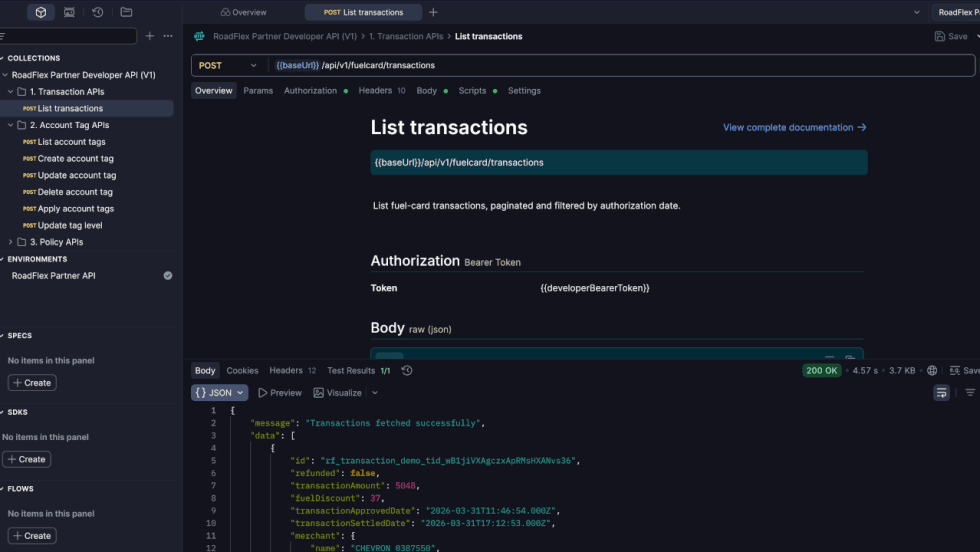
RoadFlex Launches RoadFlex Direct Open API Platform
RoadFlex Direct connects fuel cards, controls, and data to the telematics and fleet management systems fleets already run, from Geotab and Samsara to Fleetio and RTA, with no separate dashboard or double data entry.
Read More →
The Key to Fuel Efficiency Sits in the Cab
Learn how driver behavior, telematics, coaching, and fuel data can help fleets improve fuel efficiency, lower costs, and reduce emissions.
Read More →