





Learn More: Amply Power Helps Hawaiian Electric Transition Passenger Vehicle Fleet to Zero-Emissions
Hawaiian Electric Wins Approval for Electric Bus Pilot Program
The program will encourage the growth of electric bus fleets by helping operators reduce the upfront cost of installing charging equipment on Oahu, Maui, and Hawaii Island.
June 15, 2021
2 min to read
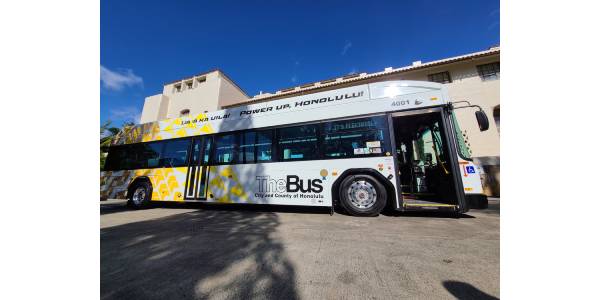
Hawaiian Electric received approval to move forward with a pilot program that will encourage the growth of electric bus fleets by helping operators reduce the upfront cost of installing charging equipment on Oahu, Maui, and Hawaii Island.
The "eBus Make-Ready Infrastructure Pilot Project" recently approved by the Public Utilities Commission (PUC) is the latest initiative launched by Hawaiian Electric under its commitment to support and accelerate the electrification of transportation as part of a clean energy vision for Hawaii.
The PUC approval clears the way for Hawaiian Electric to install “make-ready” infrastructure that will support up to 20 electric bus charging ports at five to 10 qualifying customer sites over three years on the three islands. The company will use the pilot to inform the design of a potential full-scale program.
Under the pilot program, Hawaiian Electric will pay for and manage construction of equipment and wiring up to and beyond the fleet operator's meter to the point where the chargers would be installed. The customers’ responsibilities will include installing and maintaining the charging station(s), the cost of the electricity used, and procuring the electric buses.
Hawaiian Electric is in the process of ramping up the program and expects to begin accepting applications from prospective participants by January 2022. The program will be available to bus operators that meet specific eligibility criteria.
For bus fleet operators, two obstacles to electric bus use are cost – which includes the buses, charging stations, and infrastructure – and operational adjustments needed to the switch from diesel fueling to charging. Hawaiian Electric addresses these issues by assuming some of the expense. After an initial investment, operating an electric bus could save more than $400,000 over its lifetime due to lower fuel and maintenance costs.
Switching to electric buses as fleets are replaced or expanded will reduce diesel use and tailpipe emissions, benefiting riders, drivers, and the communities in which they operate. In its application to the PUC, Hawaiian Electric included an analysis of the pilot’s impact on greenhouse gas emissions. Factoring in the 2019 composition of generation resources on Hawaiian Electric's Oahu electric grid, and depending on the time of charging, net GHG emissions were estimated to be 27% to 38% lower per mile for an electric bus compared to a diesel-powered bus.
Hawaiian Electric anticipates the local electric bus market will grow over the next 12 to 15 years, and the costs undertaken in the pilot are a preliminary investment that will result in broader ongoing benefits to all customers in the future.
More Green Fleet

Fleet Forward Conference Introduces One-Day Passes for 2026
New one-day registration gives fleet professionals the flexibility to attend Tuesday, Wednesday, or Thursday, with passes available for $199 through Sept. 18.
Read More →
CALSTART Rebrands as Catalyst Mobility, Will Combine with Forth in 2027
CALSTART has rebranded as Catalyst Mobility and will combine with Forth at the start of 2027. The new organization said it is poised to become one of the world's largest, strongest, and most impactful clean transportation nonprofits.
Read More →
Electric Truck and Charging Programs to Boost Sustainability at NY & NJ Ports
Together, the Port Authority of New York and New Jersey and CALSTART will electrify drayage and terminal operations serving the East Coast’s busiest container port. A pair of incentive programs totaling $45 million has launched to accelerate adoption of zero-emission drayage trucks and terminal tractors.
Read More →
Xos Hub Surpasses One Gigawatt-Hour of Energy Delivered in the Field
A single Xos Hub has surpassed one gigawatt-hour of energy across more than 33,600 charging sessions in the field, demonstrating performance that supports Xos' expansion across new products and markets.
Read More →
Carrier Transicold Launches All-Electric Vector 8200 TRU for Diesel-Free On-Site Cold Storage
Carrier Transicold’s first engineless multi-temperature TRU helps fresh- and frozen-food fleets add supplemental cold storage capacity during seasonal peaks.
Read More →
Narro Trucks Introduces Electric Utility Vehicle
Narro Trucks officially launched its operations on Aug. 20 and hosted a ride and drive to showcase its electric truck, which will be produced in Virginia.
Read More →
Samsung SDI Takes Full Control of GM Battery JV as Indiana Plant Pivots to Energy Storage
Samsung SDI is taking full control of its Indiana battery plant with GM, marking a major shift from the EV-focused joint venture Charged Fleet first covered in 2023.
Read More →
NWSA Taps CALSTART to Administer Zero-Emission Drayage Assistance Program
CALSTART will provide free technical assistance services to drayage fleets serving the Ports of Seattle and Tacoma and looking to transition to cleaner technologies and help decarbonize freight hubs.
Read More →
EV Fleet Reality Check: What Operators Wish They Knew Before Electrifying Their Work Vans
Electric work truck upfits bring new compatibility questions. Learn how parts availability, OEM guidance, power demands, and route planning can affect fleet performance.
Read More →
Peterbilt Expands Sourcewell Partnership with Electric Vehicle Lineup
Peterbilt Motors Company’s cooperative purchasing agreement with Sourcewell and its Canadian partner, Canoe Procurement Group, now includes including Peterbilt's battery-electric vehicle lineup.
Read More →