




GMC Sierra's Trailering Tech Enhances Safety & Performance
The all-new 2014 GMC Sierra 1500 offers the majority of its customers a full suite of trailering technologies that aid everything from acceleration to safety and braking, according to the automaker.
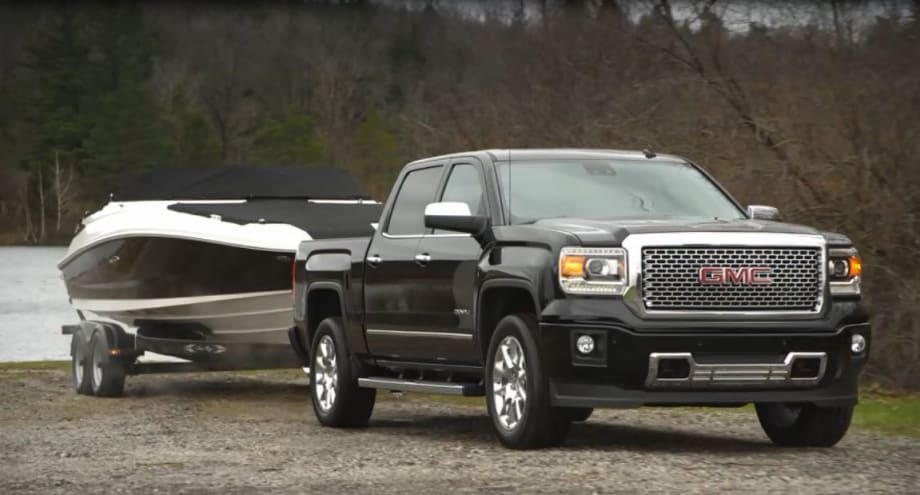
The 2014 GMC Sierra offers an enhanced trailering package.
The all-new 2014 GMC Sierra 1500 offers the majority of its customers a full suite of trailering technologies that aid everything from acceleration to safety and braking, according to GM.
Before the 2014 Sierra is even in motion, systems are monitoring conditions and preparing the truck to perform, according to the automaker. On any grade of about 5 percent or higher, Hill Start Assist automatically engages the Sierra’s brakes for 1.5 seconds or until the gas pedal is pressed. This keeps the truck from rolling rearward and helps in trailering situations like climbing a boat launch.
Tow/Haul mode, activated by a button on the shift lever, modifies the standard 6-speed transmission’s shift mapping to take full advantage of the Sierra’s new EcoTec3 engine. Under acceleration, shift points are higher for more power, while downshifts are initiated earlier to promote engine braking, reducing wear on the Sierra’s disc brakes.
With Tow/Haul mode engaged, Sierra’s Trailer Grade Braking is activated when the driver lightly applies the brakes. This feature initiates downshifts to assist with braking on long downgrades. In addition to slowing the vehicle more efficiently, Auto Grade Braking can reduce brake rotor temperatures by 100 degrees Celsius during a braking event, according to GM.
For drivers who prefer full control over their truck’s shifting, improved TapShift controls on the shift lever are backed by a patent-pending shift algorithm that improves shift response time by up to 60 percent compared to previous systems. When the TapShift controls are in use, Sierra’s Trailer Grade Braking is deactivated because the driver is manually controlling gearshifts.
Trailer Sway Control works with the Sierra’s standard StabiliTrak to provide the driver with additional assistance when towing a trailer. When it senses trailer sway, it intervenes with braking and/or reduced engine power to bring the trailer under control and keep it on its intended path. It also uses the electric trailer brakes when a trailer is plugged into the standard wiring harness of the truck.
Sierra owners can also fine tune a trailer’s braking performance right from the driver’s seat. With an available high-mounted Integrated Trailer Brake Controller, the driver can adjust gain – the level of output to the electric trailer brakes – via buttons to the left of the steering wheel. System information is displayed in the Driver Information Center on the instrument cluster.
The Trailer Brake Controller allows owners to quickly modify trailer braking force based on the weight of a trailer. For example, a driver delivering heavy building supplies could adjust the controller to lower trailer gain for an empty trailer on the return trip, minimizing the chance of trailer wheel lock-up.
The 2014 Sierra’s optional Max Trailering Package allows trailering up to a class-leading 12,000 pounds with the optional 6.2L EcoTec3 V-8 engine. The Max Trailering Package is available on 2WD and 4WD V-8 crew cab and double cab models and includes:
Trailering package with seven-pin and four-pin connector
Enhanced cooling
Automatic locking rear differential
Heavy-duty 9.75-inch rear axle with 3.73 ratio Increased-capacity rear leaf springs
Revised shock tuning for increased control
Integrated trailer brake controller.
Sierra’s 5.3L EcoTec3 V-8 offers maximum trailering of 11,500 pounds, more than any competitor. Sierra’s 4.3L EcoTec3 V-6 can trailer up to 7,200 pounds, 500 pounds more than a Ford F-150 3.7L pickup and 700 pounds more than a Ram 1500 3.6L.
Related Content: 5 Trailering Mistakes to Avoid
More Safety
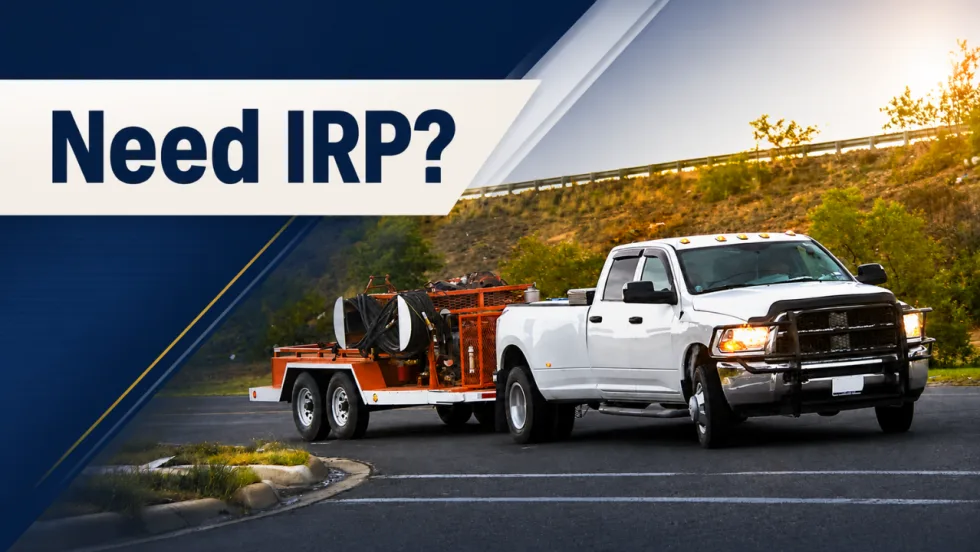
When Work Trucks Under 26,001 Pounds Need IRP Registration
Think trucks under 26,001 pounds are automatically in the clear when it comes to IRP? Not always. Learn where lighter vehicles can still run into trip permit, apportioned registration, and IFTA compliance requirements when crossing state or provincial lines.
Read More →
Volvo Trucks Releases New Safety Recommendations for Traveling with Pets
One of the most important recommendations for professional drivers traveling with pets is to ensure pets are properly restrained while the truck is moving. Other tips are available in the new guide from Volvo Trucks North America and Center for Pet Safety.
Read More →
API Issues Refueling Safety Guidelines
The American Petroleum Institute offers a list of safe vehicle refueling guidelines, including ways to avoid potential problems with static electricity discharges in fall, winter, and early spring.
Read More →
Winter Fleet Prep: Expert Tips to Keep Vehicles Running Smoothly
Cold weather can expose weak batteries, tires, fuel systems, and maintenance gaps fast. Use this winter fleet checklist to prepare trucks and drivers before temperatures drop.
Read More →
When a Work Truck Breaks Down, the Job Can Stop, Too
A work truck breakdown can stop more than the vehicle. Discover how payloads, jobsites, and specialty equipment change the roadside response.
Read More →
What Stronger Long-Term Fleet Service Partnerships Actually Require
Fleet service partnerships rarely fall apart all at once. Learn the three warning signs that trust is eroding and what fleets and providers can do before downtime, frustration, and lost revenue follow.
Read More →
Applause & TRUCE Software Partner to Improve Driver Safety Through AI-Powered Telematics & Employee Performance Management
Applause has integrated TRUCE driving metrics directly into its employee-first performance and safety platform that transforms mobile devices into AI-powered telematics.
Read More →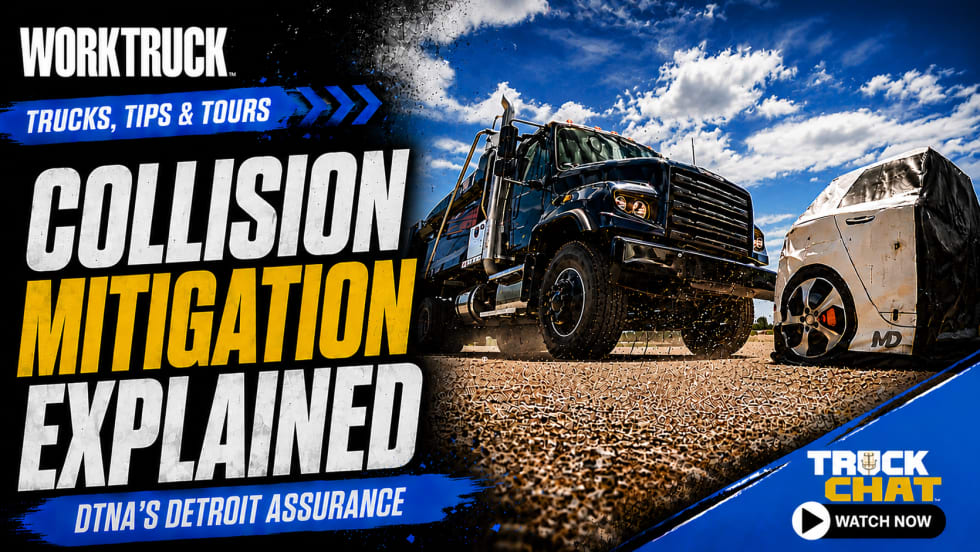
How Detroit Assurance with Active Brake Assist Works
Do you want to see what it is like to experience Detroit Assurance’s Active Brake Assist? In this video, Work Truck will put you in the cab to see how it all works and then hear more details from DTNA’s Mike Young.
Read More →
Get Left of Loss: A 5-Step Workplace Violence Prevention Framework for Fleet Operators
Violence risks do not stop at the driver’s door. Learn five practical steps fleets can take to spot threats early and protect workers before loss occurs.
Read More →
How Better Visibility Cut Speeding Violations by 48%
Fleet leaders don't need more data, they need clearer visibility into what the data is saying. This case study explores how one utility replaced speeding-event counts with a single metric — miles driven in violation — to strengthen safety and significantly reduce speeding violations.
Read More →