





More News: GM Energy Helps Electrify Commercial Fleets
GM, Microvast to Develop Part for Safer, Stronger EV Batteries
The new separator technology aims to enhance all types of lithium-ion cells to improve safety, charging, and battery life.
November 2, 2022
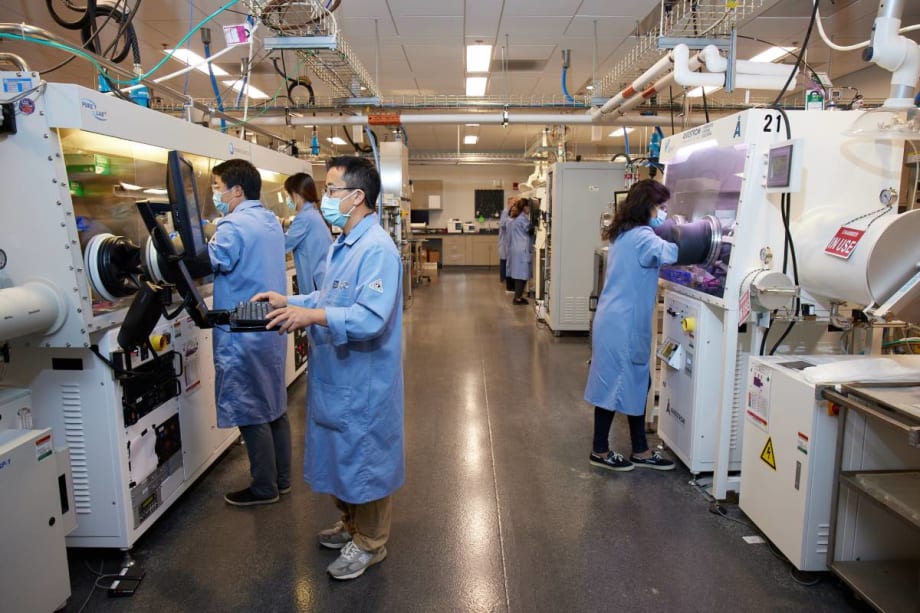
GM is joining a team of battery experts from national laboratories, academia and industry who are working to develop more reliable, affordable, longer range and higher performance EV batteries.
Photo: General Motors
2 min to read
General Motors and battery manufacturer Microvast will work together to develop specialized EV battery separator technology and build a new separator plant in the U.S., which is expected to create hundreds of new jobs, the companies announced Nov. 2.
This work will be supported by a $200 million grant from the U.S. Department of Energy's Battery Materials Processing and Battery Manufacturing initiative.
Separators are safety-critical EV battery components that serve to separate the anode from the cathode, allowing for ion transfer. GM will contribute its cutting-edge separator and coating technology to the collaboration with Microvast.
The companies will work together to develop new separator technology that can help improve EV safety, charging and battery life. This advanced technology is designed to enhance thermal stability of EV batteries and work with nearly all types of lithium-ion cells, including graphite, silicon, and lithium-metal anodes and nickel-rich, cobalt-free, lithium iron phosphate-type and high-voltage cathodes.
"This collaboration with Microvast supports our ongoing efforts to develop a North American-focused EV supply chain and help put everyone in an EV," said Kent Helfrich, GM chief technology officer and VP of research and development, in a news release. "It will also provide us with pioneering separator technology that can be used in future Ultium batteries, and most importantly, supports our continuing commitment to safety."
Dr. Wenjuan Mattis, chief technology officer at Microvast, added, “We expect the safety advantages of our innovative, highly thermally stable polyaramid separators to transform high-energy lithium-ion battery development and drive significant value for the industry."
In addition, the Department of Energy has further recognized GM's battery expertise by selecting the company for its Battery500 Consortium, which is being awarded $75 million for a second phase of research.
Led by the Pacific Northwest National Laboratory, the consortium is a team of battery experts from national laboratories, academia and industry working to develop more reliable, affordable, longer range and higher performance EV batteries.
GM is the only auto manufacturer selected for the consortium and will work with other members to accelerate development of high-energy, rechargeable lithium metal batteries.
Topics:partnershipsGeneral MotorsElectric Vehicleslithium-ion batterieschargingGreen FleetSmall Fleet
Originally posted on Charged Fleet
More Green Fleet

Fleet Forward Conference Introduces One-Day Passes for 2026
New one-day registration gives fleet professionals the flexibility to attend Tuesday, Wednesday, or Thursday, with passes available for $199 through Sept. 18.
Read More →
CALSTART Rebrands as Catalyst Mobility, Will Combine with Forth in 2027
CALSTART has rebranded as Catalyst Mobility and will combine with Forth at the start of 2027. The new organization said it is poised to become one of the world's largest, strongest, and most impactful clean transportation nonprofits.
Read More →
Electric Truck and Charging Programs to Boost Sustainability at NY & NJ Ports
Together, the Port Authority of New York and New Jersey and CALSTART will electrify drayage and terminal operations serving the East Coast’s busiest container port. A pair of incentive programs totaling $45 million has launched to accelerate adoption of zero-emission drayage trucks and terminal tractors.
Read More →
Xos Hub Surpasses One Gigawatt-Hour of Energy Delivered in the Field
A single Xos Hub has surpassed one gigawatt-hour of energy across more than 33,600 charging sessions in the field, demonstrating performance that supports Xos' expansion across new products and markets.
Read More →
Carrier Transicold Launches All-Electric Vector 8200 TRU for Diesel-Free On-Site Cold Storage
Carrier Transicold’s first engineless multi-temperature TRU helps fresh- and frozen-food fleets add supplemental cold storage capacity during seasonal peaks.
Read More →
Narro Trucks Introduces Electric Utility Vehicle
Narro Trucks officially launched its operations on Aug. 20 and hosted a ride and drive to showcase its electric truck, which will be produced in Virginia.
Read More →
Samsung SDI Takes Full Control of GM Battery JV as Indiana Plant Pivots to Energy Storage
Samsung SDI is taking full control of its Indiana battery plant with GM, marking a major shift from the EV-focused joint venture Charged Fleet first covered in 2023.
Read More →
NWSA Taps CALSTART to Administer Zero-Emission Drayage Assistance Program
CALSTART will provide free technical assistance services to drayage fleets serving the Ports of Seattle and Tacoma and looking to transition to cleaner technologies and help decarbonize freight hubs.
Read More →
EV Fleet Reality Check: What Operators Wish They Knew Before Electrifying Their Work Vans
Electric work truck upfits bring new compatibility questions. Learn how parts availability, OEM guidance, power demands, and route planning can affect fleet performance.
Read More →
Peterbilt Expands Sourcewell Partnership with Electric Vehicle Lineup
Peterbilt Motors Company’s cooperative purchasing agreement with Sourcewell and its Canadian partner, Canoe Procurement Group, now includes including Peterbilt's battery-electric vehicle lineup.
Read More →