




Ford Investing $4B in Autonomous Vehicles
Ford Motor Co. has established a new self-driving-vehicle business unit, and will invest $4 billion through 2023 to better organize and accelerate its efforts to commercialize autonomous vehicles, Ford has announced.

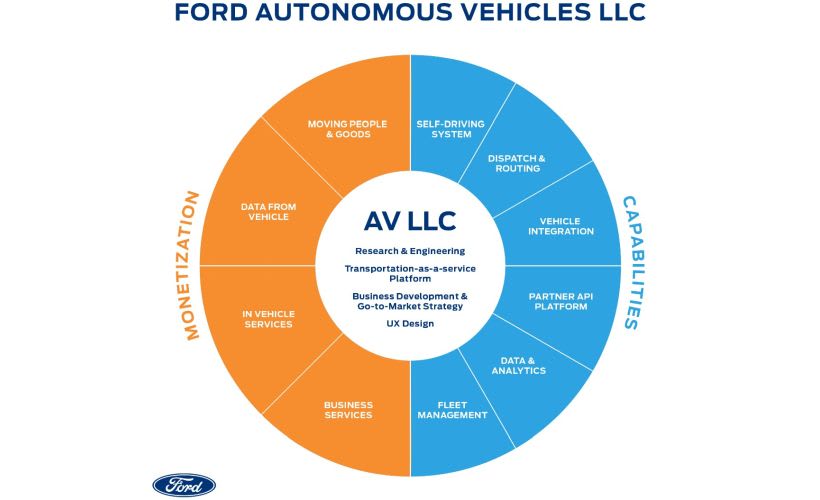
Ford is investing $4 billion in a new autonomous vehicle business unit.
Chart courtesy of Ford.
Ford Motor Co. has established a new self-driving-vehicle business unit, and will invest $4 billion through 2023 to better organize and accelerate its efforts to commercialize autonomous vehicles, Ford has announced.
The $4 billion investment counts Ford's $1 billion investment in Argo AI that was announced in February of 2017. At the time, the company said it was hoping to introduce a fully autonomous ride-hailing vehicle by 2021. The new unit, Ford Autonomous Vehicles LLC, is based at Ford's Corktown campus in Detroit. It will include Ford's self-driving systems integration, autonomous vehicle research and advanced engineering, autonomous vehicle transportation-as-a-service network development, user experience, business strategy, and business development teams.
Ford Autonomous Vehicles LLC will hold the ownership stake in Argo AI, which is based in Pittsburgh. Sherif Marakby will lead the new unit as its chief executive officer. He leaves his role as a vice president of autonomous vehicles and electrification. He'll report to a board of directors chaired by Marcy Klevorn, an executive vice president and president of mobility with Ford.
In a corresponding move, Ted Cannis will lead Team Edison — the team responsible for developing the company's next generation of battery-electric vehicles. Cannis remains the global director of electrification, while Team Edison continues to report to Jim Farley, executive vice president and president of global markets.
For is also realigning its information technology and global order-to-delivery teams under its global operations unit. The move will help the company accelerate the integration and application of technology across its industrial system to streamline manufacturing, speed vehicle delivery times, reduce inventories, and improve capital efficiency.
Ford is also developing a deeper product lineup of trucks, vans, and utility vehicles as it moves its focus away from passenger cars. The company is replacing three quarters of its lineup by 2020 and adding four new trucks and SUVs. Hai Thai-Tang, executive vice president of product development and purchasing, will now report to Jim Hackett, Ford's chief executive.
Ford is cutting vehicle development time by shifting to five flexible architechtures, including body-on-frame, front-wheel-drive unibody, rear-wheel-drive unibody, commercial van unibody, and battery-electric vehicles.
"We're looking at every part of our business, making it more fit and ensuring that every action we take is driven by what will serve our customers in a way that supports our fitness and performance goals," Hackett said.
The organizational changes will go into effect on Aug. 1.
Related: Ford Invests $1B Toward 2021 Autonomous Vehicle
Originally posted on Automotive Fleet
More Safety
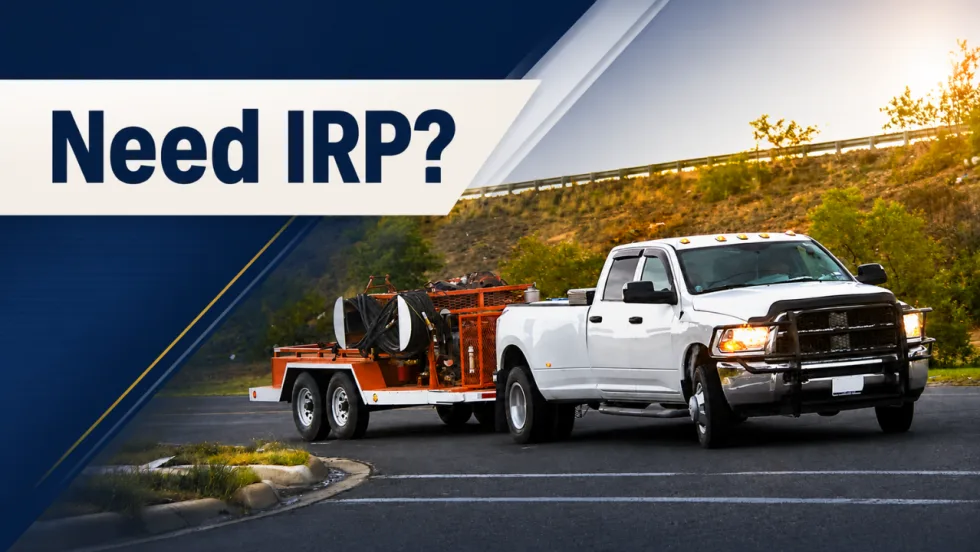
When Work Trucks Under 26,001 Pounds Need IRP Registration
Think trucks under 26,001 pounds are automatically in the clear when it comes to IRP? Not always. Learn where lighter vehicles can still run into trip permit, apportioned registration, and IFTA compliance requirements when crossing state or provincial lines.
Read More →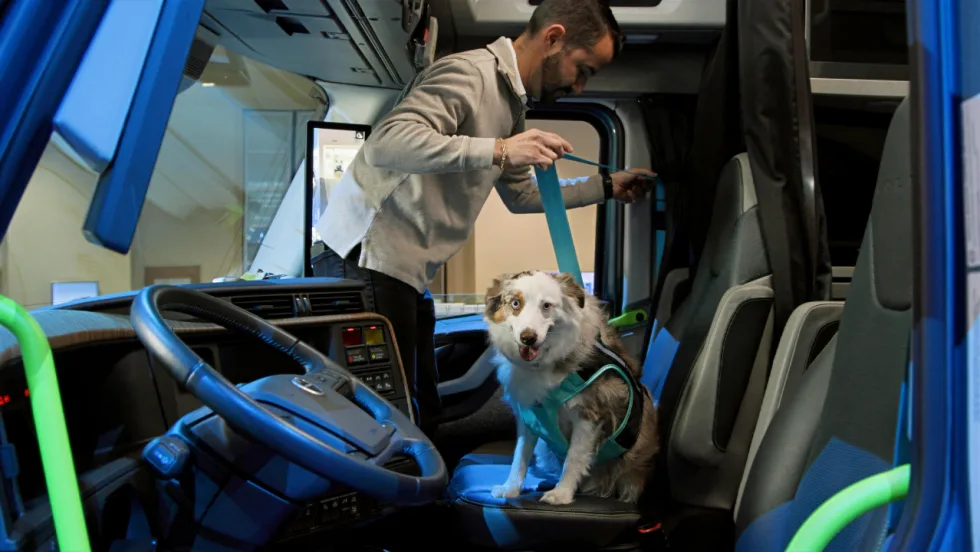
Volvo Trucks Releases New Safety Recommendations for Traveling with Pets
One of the most important recommendations for professional drivers traveling with pets is to ensure pets are properly restrained while the truck is moving. Other tips are available in the new guide from Volvo Trucks North America and Center for Pet Safety.
Read More →
API Issues Refueling Safety Guidelines
The American Petroleum Institute offers a list of safe vehicle refueling guidelines, including ways to avoid potential problems with static electricity discharges in fall, winter, and early spring.
Read More →
Winter Fleet Prep: Expert Tips to Keep Vehicles Running Smoothly
Cold weather can expose weak batteries, tires, fuel systems, and maintenance gaps fast. Use this winter fleet checklist to prepare trucks and drivers before temperatures drop.
Read More →
When a Work Truck Breaks Down, the Job Can Stop, Too
A work truck breakdown can stop more than the vehicle. Discover how payloads, jobsites, and specialty equipment change the roadside response.
Read More →
What Stronger Long-Term Fleet Service Partnerships Actually Require
Fleet service partnerships rarely fall apart all at once. Learn the three warning signs that trust is eroding and what fleets and providers can do before downtime, frustration, and lost revenue follow.
Read More →
Applause & TRUCE Software Partner to Improve Driver Safety Through AI-Powered Telematics & Employee Performance Management
Applause has integrated TRUCE driving metrics directly into its employee-first performance and safety platform that transforms mobile devices into AI-powered telematics.
Read More →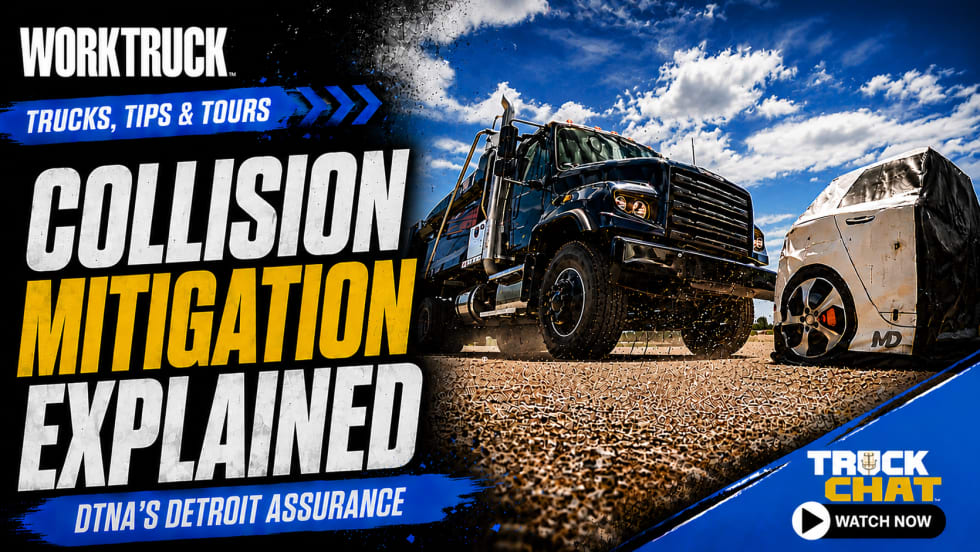
How Detroit Assurance with Active Brake Assist Works
Do you want to see what it is like to experience Detroit Assurance’s Active Brake Assist? In this video, Work Truck will put you in the cab to see how it all works and then hear more details from DTNA’s Mike Young.
Read More →
Get Left of Loss: A 5-Step Workplace Violence Prevention Framework for Fleet Operators
Violence risks do not stop at the driver’s door. Learn five practical steps fleets can take to spot threats early and protect workers before loss occurs.
Read More →
How Better Visibility Cut Speeding Violations by 48%
Fleet leaders don't need more data, they need clearer visibility into what the data is saying. This case study explores how one utility replaced speeding-event counts with a single metric — miles driven in violation — to strengthen safety and significantly reduce speeding violations.
Read More →