




ELD Violations Won't Count Against CSA Scores During Transition Period
Federal officials have taken another step to make the transition to mandatory electronic devices less painful. If drivers are cited at roadside for not complying with the ELD rule come the Dec. 18 deadline, the citation will be a “no points cite” that will not affect the Safety Measurement System that feeds into CSA scores – until April 1.
November 15, 2017


Derek Barrs, Florida’s chief of commercial vehicle enforcement, asked for a show of hands among the state enforcement people in the room if they were ready for the ELD mandate. Photo: Deborah Lockridge
4 min to read

Derek Barrs, Florida’s chief of commercial vehicle enforcement, asked for a show of hands among the state enforcement people in the room if they were ready for the ELD mandate. Photo: Deborah Lockridge
BIRMINGHAM, AL – Federal officials have taken another step to make the transition to mandatory electronic devices less painful.
If drivers are cited at roadside for not complying with the ELD rule come the Dec. 18 deadline, the citation will be a “no points cite” that will not affect the Safety Measurement System that feeds into CSA (Compliance, Safety, Accountability) scores – through April 1.
Federal Motor Carrier Safety Administration officials shared this news during the Southern Regional Road Show event Wednesday.
In late August, FMCSA and the Commercial Vehicle Safety Alliance announced a phased-in approach to the ELD mandate and said it would delay implementing out-of-service criteria related to ELDs until April 1, 2018, and that each jurisdiction would have discretion as to whether they actually issue citations in the beginning.
As it has become increasingly obvious that much of the trucking industry as well as the enforcement community are not fully ready for the Dec. 18 ELD mandate deadline, the agency apparently felt it needed to go further.
Jon Dierberger, FMCSA field administrator, told the room full of enforcement officials and a smattering of fleet and insurance representatives that for violations cited at roadside for not having an ELD through April 1, there will be no SMS points impact. He confirmed to HDT that this was in a recent internal memo.
Anne Collins, associate administrator, FMCSA field operations, confirmed to HDT that this was a recent “corollary” to the previous announcement that ELD citations would not result in out of service orders, in order to be “clear and consistent nationwide.”
Lane Kidd, managing director of The Alliance for Driver Safety & Security, pointed out in an email response to HDT that this doesn't mean there won't be repercussions for not having an ELD.
"Tickets may not levy points against the driver, but the fines attached to those tickets will likely cost the drivers more than the price of an ELD, so I'd hardly call this announcement a win for anybody holding out on buying an ELD." The Trucking Alliance, as it's known, is a proponent of ELDs and other truck safety technologies, such as collision mitigation and speed limiters.
Officials reiterated that there would be no extension of the ELD mandate deadline, noting that the rule has been out there for nearly two years now, and that it is "supported at the highest levels."
However, as part of an ELD implementation panel discussion at the roadshow, Derek Barrs, Florida’s chief of commercial vehicle enforcement, asked for a show of hands among the state enforcement people in the room if they were ready for the ELD mandate. Not a single hand was raised.
Dierberger told the room that the eRODS software that enforcement officials will use to “read” the data from ELDs at roadside is still in final testing and is scheduled to be released by the end of November. The FMCSA has been conducting "train the trainer" programs, and those trainers are now in the process of training enforcement officials in their jurisdictions, along with a not-final version of the software.
Fleet comments as part of the discussion indicated problems with not being able to get ELDs – and the problem extends to the AOBRDs, or automatic onbaord recording devices, that would allow for grandfathering for an additional two years. Safety staff from one fleet said while it has AOBRDs installed in half of its fleet, it’s been trying for six months to get them installed in the remaining half; its provider says it has been “overwhelmed” with orders.
Barrs emphasized the importance of fleets making sure drivers are prepared for the roadside encounter with the enforcement official. Drivers need to know how to handle the data transfer, and if they need to show their logs on the device itself they need to be able to show the enforcement officer how to navigate through the ELD. They need to have the required instructions available, and be able to answer questions such as whether they have and AOBRD or ELD, or why they are exempt, such as in the case of trucks with older non-electronic engines.
“Our folks are going to be learning as well; that’s a cold hard fact,” Barrs said. “We have a learning curve just like your drivers are. It’s going to take a partnership between the roadside officer and the driver to push this forward at the end of the day.”
Originally posted on Automotive Fleet
More Safety & Compliance
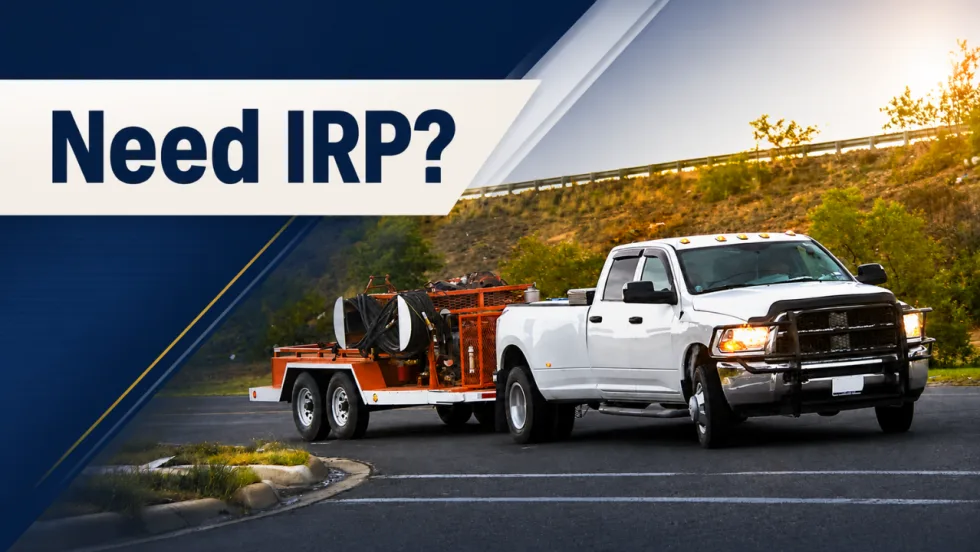
When Work Trucks Under 26,001 Pounds Need IRP Registration
Think trucks under 26,001 pounds are automatically in the clear when it comes to IRP? Not always. Learn where lighter vehicles can still run into trip permit, apportioned registration, and IFTA compliance requirements when crossing state or provincial lines.
Read More →
Volvo Trucks Releases New Safety Recommendations for Traveling with Pets
One of the most important recommendations for professional drivers traveling with pets is to ensure pets are properly restrained while the truck is moving. Other tips are available in the new guide from Volvo Trucks North America and Center for Pet Safety.
Read More →
API Issues Refueling Safety Guidelines
The American Petroleum Institute offers a list of safe vehicle refueling guidelines, including ways to avoid potential problems with static electricity discharges in fall, winter, and early spring.
Read More →


Winter Fleet Prep: Expert Tips to Keep Vehicles Running Smoothly
Cold weather can expose weak batteries, tires, fuel systems, and maintenance gaps fast. Use this winter fleet checklist to prepare trucks and drivers before temperatures drop.
Read More →
When a Work Truck Breaks Down, the Job Can Stop, Too
A work truck breakdown can stop more than the vehicle. Discover how payloads, jobsites, and specialty equipment change the roadside response.
Read More →
What Stronger Long-Term Fleet Service Partnerships Actually Require
Fleet service partnerships rarely fall apart all at once. Learn the three warning signs that trust is eroding and what fleets and providers can do before downtime, frustration, and lost revenue follow.
Read More →
Applause & TRUCE Software Partner to Improve Driver Safety Through AI-Powered Telematics & Employee Performance Management
Applause has integrated TRUCE driving metrics directly into its employee-first performance and safety platform that transforms mobile devices into AI-powered telematics.
Read More →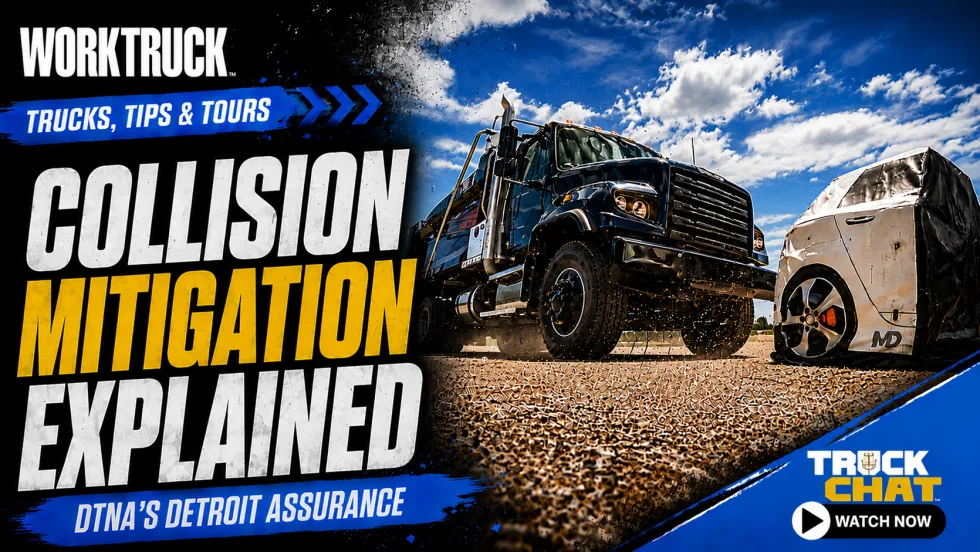
How Detroit Assurance with Active Brake Assist Works
Do you want to see what it is like to experience Detroit Assurance’s Active Brake Assist? In this video, Work Truck will put you in the cab to see how it all works and then hear more details from DTNA’s Mike Young.
Read More →
Get Left of Loss: A 5-Step Workplace Violence Prevention Framework for Fleet Operators
Violence risks do not stop at the driver’s door. Learn five practical steps fleets can take to spot threats early and protect workers before loss occurs.
Read More →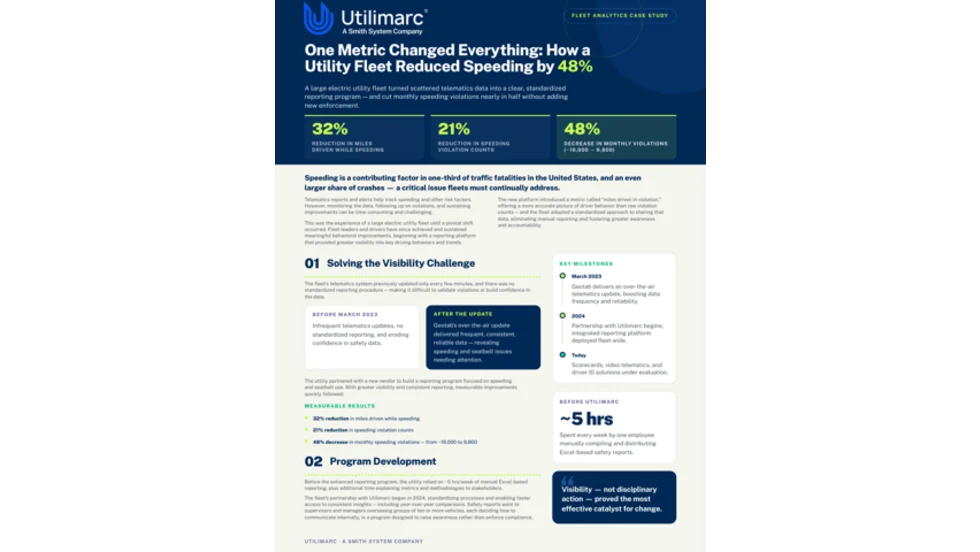
How Better Visibility Cut Speeding Violations by 48%
Fleet leaders don't need more data, they need clearer visibility into what the data is saying. This case study explores how one utility replaced speeding-event counts with a single metric — miles driven in violation — to strengthen safety and significantly reduce speeding violations.
Read More →