




Drugged Driving on the Rise, NHTSA Says
Despite a drop in drunk driving, new NHTSA research finds that growing use of marijuana and prescription drugs is raising new safety concerns.

Photo of OxyContin by 51fifty via Wikimedia Commons.
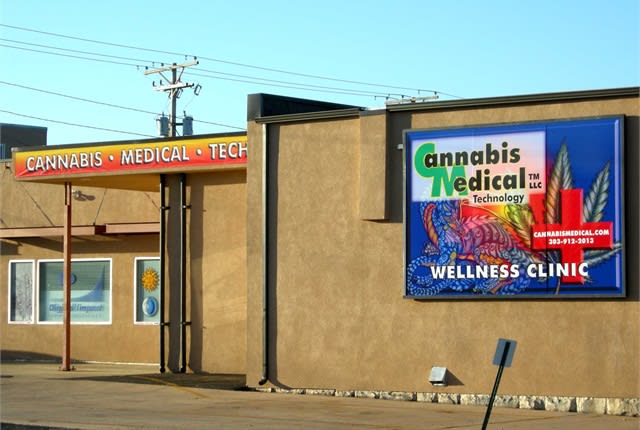
Photo of medical marijuana clinic in Denver by Plazak via Wikimedia Commons.
Though drunk driving is less prevalent today compared to past decades, new research released by the federal government suggests that growing use of marijuana and prescription drugs is raising new driver safety concerns.
The National Highway Traffic Safety Administration on Feb. 6 released a pair of studies focused on impaired driving in the U.S. One study, the latest version of NHTSA’s Roadside Survey of Alcohol and Drug Use by Drivers, found that the number of drivers with alcohol in their system has declined by nearly one-third since 2007 – and by more than three-quarters since the first Roadside Survey in 1973.
But that same survey indicated a spike in the number of drivers using marijuana or illegal drugs. In the 2014 survey, nearly one in four drivers tested positive for at least one drug that could affect safety.
“America made drunk driving a national issue and while there is no victory as long as a single American dies in an alcohol-related crash, a one-third reduction in alcohol use over just seven years shows how a focused effort and cooperation among the federal government, states and communities, law enforcement, safety advocates and industry can make an enormous difference,” said NHTSA Administrator Mark Rosekind. “At the same time, the latest Roadside Survey raises significant questions about drug use and highway safety."
The National Roadside Survey, conducted five times over the past 40 years, is a completely voluntary, anonymous survey that gathers data in dozens of locations across the country.
Multiple roadside signs alert drivers that a voluntary survey site is ahead, and researchers gather data from those who volunteer. Drivers are notified that the survey is completely voluntary and that collected information is entirely anonymous. NHTSA has worked with research experts, law enforcement agencies and privacy advocates to refine procedures and address any potential concerns.
The latest edition of the survey shows that the prevalence of alcohol use by drivers continues to drop. About 8 percent of drivers during weekend nighttime hours were found to have alcohol in their system, and just over 1 percent were found with 0.08 percent or higher breath alcohol content – the legal limit in every state. This is down by about 30 percent from the previous survey in 2007 and down 80 percent from the first survey in 1973.
On the other hand, use of illegal drugs or medicines that can affect road safety is climbing. The number of weekend nighttime drivers with evidence of drugs in their system climbed from 16.3 percent in 2007 to 20 percent in 2014. The number of drivers with marijuana in their system grew by nearly 50 percent, according to the survey.

Photo of OxyContin by 51fifty via Wikimedia Commons.
A second survey, the largest of its kind ever conducted, assessed whether driver marijuana use is associated with greater crash risk. The survey found that marijuana users are more likely to be involved in accidents, but the increased risk may be partially linked to the demographics of such users. In particular, marijuana users are more likely to be young men – a group already at high risk.
This was the most precisely controlled study of its kind ever conducted, NHTSA said, but it measured the risk associated with marijuana at the levels found among drivers in a large community.
Other studies using driving simulators and test tracks have found that marijuana at sufficient dosage levels will affect driver risk.
“Drivers should never get behind the wheel impaired, and we know that marijuana impairs judgment, reaction times and awareness,” said Jeff Michael, NHTSA’s associate administrator for research and program development. “These findings highlight the importance of research to better understand how marijuana use affects drivers so states and communities can craft the best safety policies.”
The study, conducted in Virginia Beach, Va., gathered data over a 20-month period from more than 3,000 drivers who were involved in crashes, as well as from a comparison group of 6,000 drivers who did not crash. The study found that drivers who had been drinking above the 0.08 percent legal limit had about four times the risk of crashing as sober drivers. Those with blood alcohol levels at 0.15 percent or higher had 12 times the risk.
NHTSA plans a series of additional studies to further understand the risk of drugged driving. They will include the Washington State Roadside Survey, which will assess risk in a state where marijuana has recently been legalized, and a simulator study with the National Institute on Drug Abuse to assess how drivers under the influence of drugs behave behind the wheel.
“Researchers have developed a deep body of knowledge about the link between drinking, driving and risk. We know drunk driving kills,” Rosekind said. “The combined message of these two surveys is that our work to understand and combat drunk driving is paying off, but that we have much to learn about how illegal drugs and prescription medicines affect highway safety – and that developing that knowledge is urgent, because more and more drivers have these drugs in their systems.”
Originally posted on Automotive Fleet
More Safety

When Work Trucks Under 26,001 Pounds Need IRP Registration
Think trucks under 26,001 pounds are automatically in the clear when it comes to IRP? Not always. Learn where lighter vehicles can still run into trip permit, apportioned registration, and IFTA compliance requirements when crossing state or provincial lines.
Read More →
Volvo Trucks Releases New Safety Recommendations for Traveling with Pets
One of the most important recommendations for professional drivers traveling with pets is to ensure pets are properly restrained while the truck is moving. Other tips are available in the new guide from Volvo Trucks North America and Center for Pet Safety.
Read More →
API Issues Refueling Safety Guidelines
The American Petroleum Institute offers a list of safe vehicle refueling guidelines, including ways to avoid potential problems with static electricity discharges in fall, winter, and early spring.
Read More →
Winter Fleet Prep: Expert Tips to Keep Vehicles Running Smoothly
Cold weather can expose weak batteries, tires, fuel systems, and maintenance gaps fast. Use this winter fleet checklist to prepare trucks and drivers before temperatures drop.
Read More →
When a Work Truck Breaks Down, the Job Can Stop, Too
A work truck breakdown can stop more than the vehicle. Discover how payloads, jobsites, and specialty equipment change the roadside response.
Read More →
What Stronger Long-Term Fleet Service Partnerships Actually Require
Fleet service partnerships rarely fall apart all at once. Learn the three warning signs that trust is eroding and what fleets and providers can do before downtime, frustration, and lost revenue follow.
Read More →
Applause & TRUCE Software Partner to Improve Driver Safety Through AI-Powered Telematics & Employee Performance Management
Applause has integrated TRUCE driving metrics directly into its employee-first performance and safety platform that transforms mobile devices into AI-powered telematics.
Read More →
How Detroit Assurance with Active Brake Assist Works
Do you want to see what it is like to experience Detroit Assurance’s Active Brake Assist? In this video, Work Truck will put you in the cab to see how it all works and then hear more details from DTNA’s Mike Young.
Read More →
Get Left of Loss: A 5-Step Workplace Violence Prevention Framework for Fleet Operators
Violence risks do not stop at the driver’s door. Learn five practical steps fleets can take to spot threats early and protect workers before loss occurs.
Read More →
How Better Visibility Cut Speeding Violations by 48%
Fleet leaders don't need more data, they need clearer visibility into what the data is saying. This case study explores how one utility replaced speeding-event counts with a single metric — miles driven in violation — to strengthen safety and significantly reduce speeding violations.
Read More →