From emergency back-up electrical power systems to emergency response and recovery assets diesel power is ready to play a central role in hurricane preparedness, response and recovery, keeping everyone safe.
June 1 was the official start of the Atlantic hurricane season, which runs through November 30.
Photo: Pexels
4 min to read
From emergency back-up electrical power systems to emergency response and recovery assets diesel power is ready to play a central role in hurricane preparedness, response and recovery, keeping everyone safe.
Ad Loading...
With all that is happening in the world with the Coronavirus pandemic, it can be hard to focus on other potential national emergencies. But June 1 was the official start of the Atlantic hurricane season, which runs through November 30, and according to the National Oceanic and Atmospheric Administration's forecast, the 2020 Atlantic hurricane season is "expected to be a busy one" with as many as 19 named storms and six major hurricanes. But it only takes one storm to change your life and community even more dramatically than a global pandemic.
Ad Loading...
States are only just starting to come out of their lockdowns and start the recovery process and a hurricane will only make things more difficult for relief agencies that are already stretched thin due to the Coronavirus. Frequent weather-related disasters call attention to the vulnerability of the nation's electrical grid and the importance of continuous electrical power.
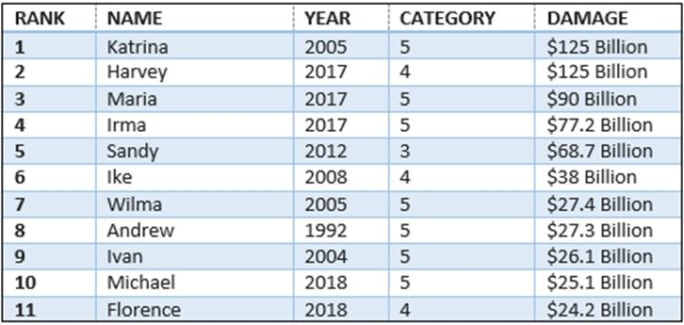
Weather events and disasters, both large and small, cut off power to hundreds of thousands of people and businesses for days exposing the importance of emergency backup power as part of local, state and federal emergency preparedness, response and recovery. It should come as no surprise that the National Oceanic and Atmospheric Administrationestimates that severe weather related events that knock out power cost the U.S. economy roughly $100 billion per year over the last five years with five of the top 11 most costly hurricanes in U.S. history.
Preparing for hurricanes and weather-related natural disasters well in advance is a critical first step to a successful recovery as well as minimizing losses from the storm event. Before, during and after the storms hit, resources must be put in place to preserve public health and safety, to render aid and help restore communities.
Keeping the lights on during and after severe weather events not only saves lives, but also lessens the adverse impact, both physically and financially, of severe weather events and potential power outages. Diesel power plays a major role in making sure businesses, governments and private citizens are prepared for and can respond to any emergency.
Top 10 Costliest U.S. Hurricanes:
Ad Loading...
Source: NOAA
For decades, stationary and mobile diesel standby generators have proved their value during severe weather events. Diesel generators are frequently seen on roof tops of large buildings, as well as at hospitals, data centers, water and sewage facilities, fueling stations, communication centers, and other mission-critical facilities. These facilities require continuous power to protect public health and safety.
Fast Facts about Diesel Generators
Many diesel generators are built to withstand temperatures below 0°F and built to withstand winds up to 180 miles per hour.
Diesel generators are able to achieve full load-carrying capacity within 10 seconds of grid power outage.
Diesel generators come in various mobile sizes and configurations and come with their own standalone fuel supply – important when other sources of power are disabled by utilities in an emergency situation.
The most critical applications such as keeping lifesaving equipment operating and climate control systems functioning at hospitals and ensuring drinking water, sewage treatment facility and storm water pumping stations stay in operation, depend on diesel power to provide reliable, immediate and full strength electric power within 10 seconds when there is a failure of the primary power supply system, minimizing losses from these events.
One of the unique benefits of diesel technology is its unmatched energy density can be delivered to just about any location on the earth. A fleet of mobile diesel-powered generators and fuel can be dispatched quickly to restore electricity to mission critical facilities. Interruptions of electrical power, even of short duration, create situations that could imperil public health and safety. Emergency backup electrical generators can save lives during an emergency.
Another complication in hurricane response this year is that evacuation centers will be less accessible due to ongoing social distancing requirements due to the Coronavirus pandemic. This will make generators in homes and multi-family dwellings even more important. Diesel generators are also providing much more value in storm preparedness and resiliency. Many states susceptible to severe weather are now requiring or encouraging retail fuel locations to install emergency backup power capabilities to keep motorists along evacuation routes and also allow first responders to refuel in the event of a widespread power outage.
To prepare for this year’s hurricane season, here are some practical tips to follow to protect against power outages:
Ad Loading...
Build an emergency kit and communications plan, following FEMA’s guidelines.
Assess your needs for a backup generator – follow our checklist here.
Think trucks under 26,001 pounds are automatically in the clear when it comes to IRP? Not always. Learn where lighter vehicles can still run into trip permit, apportioned registration, and IFTA compliance requirements when crossing state or provincial lines.
One of the most important recommendations for professional drivers traveling with pets is to ensure pets are properly restrained while the truck is moving. Other tips are available in the new guide from Volvo Trucks North America and Center for Pet Safety.
The American Petroleum Institute offers a list of safe vehicle refueling guidelines, including ways to avoid potential problems with static electricity discharges in fall, winter, and early spring.
Cold weather can expose weak batteries, tires, fuel systems, and maintenance gaps fast. Use this winter fleet checklist to prepare trucks and drivers before temperatures drop.
Fleet service partnerships rarely fall apart all at once. Learn the three warning signs that trust is eroding and what fleets and providers can do before downtime, frustration, and lost revenue follow.
Applause has integrated TRUCE driving metrics directly into its employee-first performance and safety platform that transforms mobile devices into AI-powered telematics.
Do you want to see what it is like to experience Detroit Assurance’s Active Brake Assist? In this video, Work Truck will put you in the cab to see how it all works and then hear more details from DTNA’s Mike Young.
Violence risks do not stop at the driver’s door. Learn five practical steps fleets can take to spot threats early and protect workers before loss occurs.
Fleet leaders don't need more data, they need clearer visibility into what the data is saying. This case study explores how one utility replaced speeding-event counts with a single metric — miles driven in violation — to strengthen safety and significantly reduce speeding violations.