




Coalition Founded to Speed Zero-Emission Vehicle Infrastructure Deployments
Established by Daimler Truck North America, Navistar, Inc., and Volvo Group North America, Powering America’s Commercial Transportation (PACT) is the unified voice for medium- and heavy-duty zero-emission vehicle infrastructure

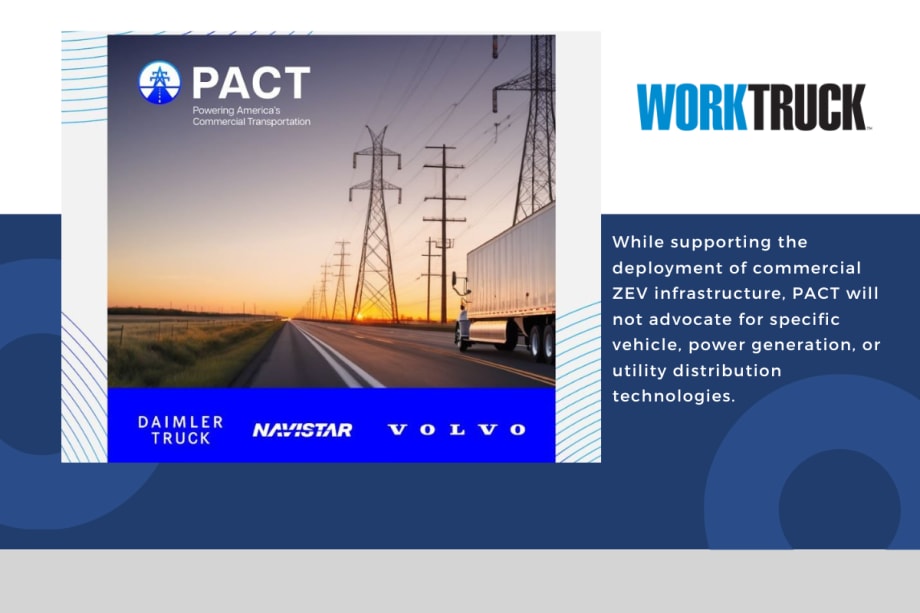
Access to charging infrastructure is an increasingly significant bottleneck to the widespread adoption of ZEV technologies.
Photo: PACT | Work Truck
Powering America’s Commercial Transportation (PACT), a coalition focused on education and advocacy for accelerating the construction of nationwide infrastructure for medium- and heavy-duty (M/HD) zero-emission vehicles (ZEVs), launched on February 1, 2024.
PACT has the express purpose of overcoming the many barriers delaying access to ZEV infrastructure and enhancing national climate policies to address the infrastructure needs of M/HD ZEVs.
PACT is established by Daimler Truck North America, Navistar, Inc., and Volvo Group North America, representing approximately 70% of all new M/HD truck sales in the U.S., and is committed to ambitious electrification goals.
“Decarbonizing the commercial transportation sector – the fleets that keep America moving – is critical to meeting our nation’s climate goals. But the transition to zero-emission vehicles is stalling without deploying the needed charging infrastructure,” said John O’Leary, president and CEO of Daimler Truck North America. “Through PACT, we aim to accelerate this infrastructure buildout so that fleets can adopt ZEVs at scale and we can all benefit from impactful emissions reductions as quickly as possible.”
Each original equipment manufacturer has battery-electric vehicles in the marketplace, but access to charging infrastructure is an increasingly significant bottleneck to the widespread adoption of these technologies.
“The scale of infrastructure required for medium- and heavy-duty EV adoption is unprecedented. Understanding and coordination across the different stakeholders is imperative to deploy chargers quickly and cost-effectively,” said Stephen Roy, chairman of Volvo Group North America and president of Mack Trucks. “PACT will promote best practices to streamline this complex transition while minimizing impacts on fleets, utilities, and the economy.”
Coalition membership is open to all stakeholders interested in accelerating the deployment of zero-emission commercial vehicles and the requisite infrastructure, including other OEMs, infrastructure developers, electric utilities, and grid operators. Other founding members include ABB E-mobility, Burns & McDonnell, BC Hydro, Greenlane, Prologis Inc., and Voltera.
So far in the United States, transportation electrification has primarily focused on the needs of light-duty passenger vehicles, according to a recent release from PACT. This different market segment does not require the same unique considerations as M/HDs.
Quickly deploying reliable and accessible ZEV infrastructure to power the nation’s commercial transportation fleet necessitates distinct considerations for capital investment, electrical grid upgrades, and dedicated charging equipment.
According to the International Council on Clean Transportation, nearly 700,000 chargers will be needed nationwide to accommodate the 1 million Class 4-8 M/HD ZEVs anticipated to be deployed by 2030, which will consume 140,000 megawatts of electricity every day, equivalent to the monthly energy needs of over 100 million American homes.
“Commercial vehicle customers require fast, reliable, affordable, and convenient power to deploy ZEV fleets at scale effectively,” said Mathias Carlbaum, president and CEO of Navistar. “To enable their success, we must work collaboratively across sectors to deliver an infrastructure that provides access to seamless electricity and meets the commercial transportation industry’s unique needs. PACT provides a concerted forum dedicated to making this vision a reality, truly working to accelerate the impact of sustainable mobility.”
While supporting the deployment of commercial ZEV infrastructure, PACT will not advocate for specific vehicle, power generation, or utility distribution technologies. PACT exists to educate stakeholders about infrastructure challenges that hamper M/HD ZEV adoption in the marketplace and work with stakeholders to find solutions for the benefit of all interested parties. The Coalition also champions practical and efficient infrastructure solutions supporting increasing M/HD ZEV deployments.
More Green Fleet

Fleet Forward Conference Introduces One-Day Passes for 2026
New one-day registration gives fleet professionals the flexibility to attend Tuesday, Wednesday, or Thursday, with passes available for $199 through Sept. 18.
Read More →
CALSTART Rebrands as Catalyst Mobility, Will Combine with Forth in 2027
CALSTART has rebranded as Catalyst Mobility and will combine with Forth at the start of 2027. The new organization said it is poised to become one of the world's largest, strongest, and most impactful clean transportation nonprofits.
Read More →
Electric Truck and Charging Programs to Boost Sustainability at NY & NJ Ports
Together, the Port Authority of New York and New Jersey and CALSTART will electrify drayage and terminal operations serving the East Coast’s busiest container port. A pair of incentive programs totaling $45 million has launched to accelerate adoption of zero-emission drayage trucks and terminal tractors.
Read More →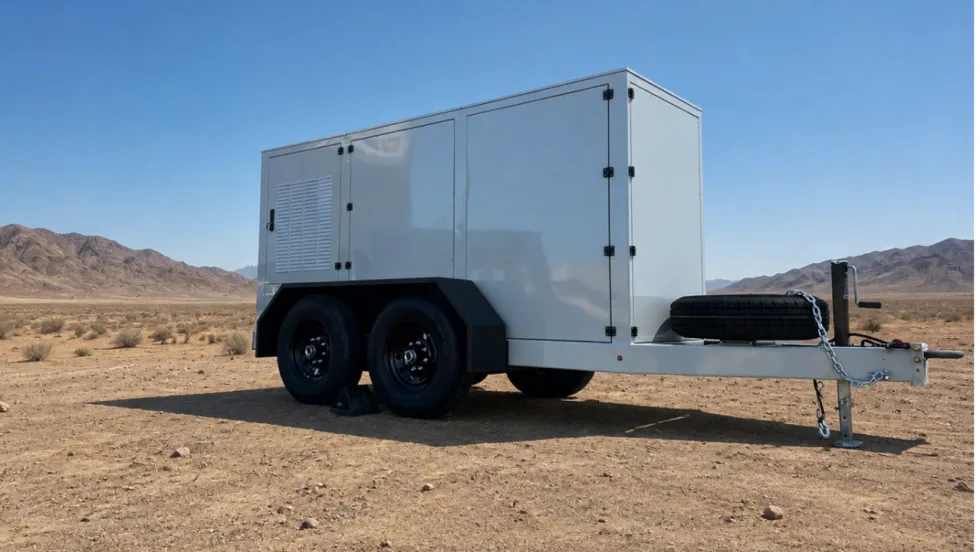
Xos Hub Surpasses One Gigawatt-Hour of Energy Delivered in the Field
A single Xos Hub has surpassed one gigawatt-hour of energy across more than 33,600 charging sessions in the field, demonstrating performance that supports Xos' expansion across new products and markets.
Read More →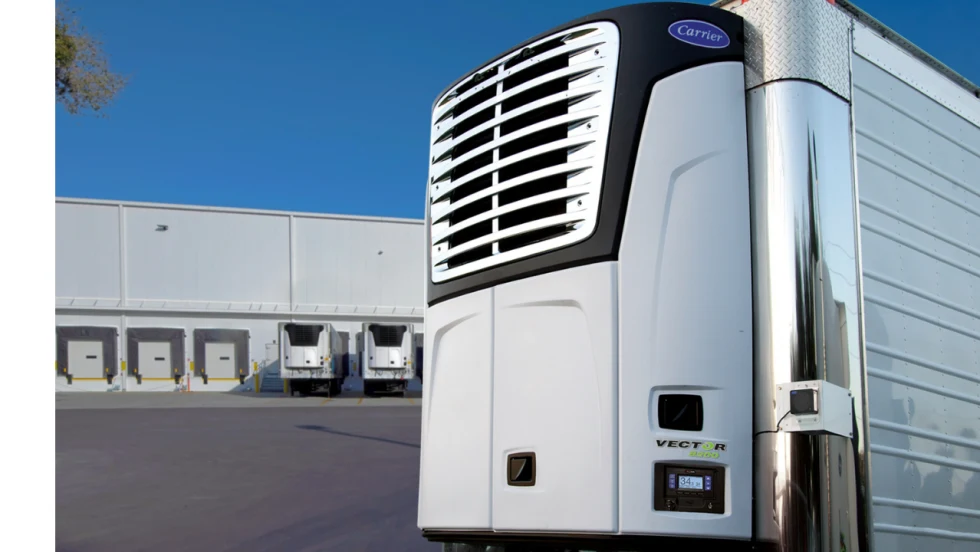
Carrier Transicold Launches All-Electric Vector 8200 TRU for Diesel-Free On-Site Cold Storage
Carrier Transicold’s first engineless multi-temperature TRU helps fresh- and frozen-food fleets add supplemental cold storage capacity during seasonal peaks.
Read More →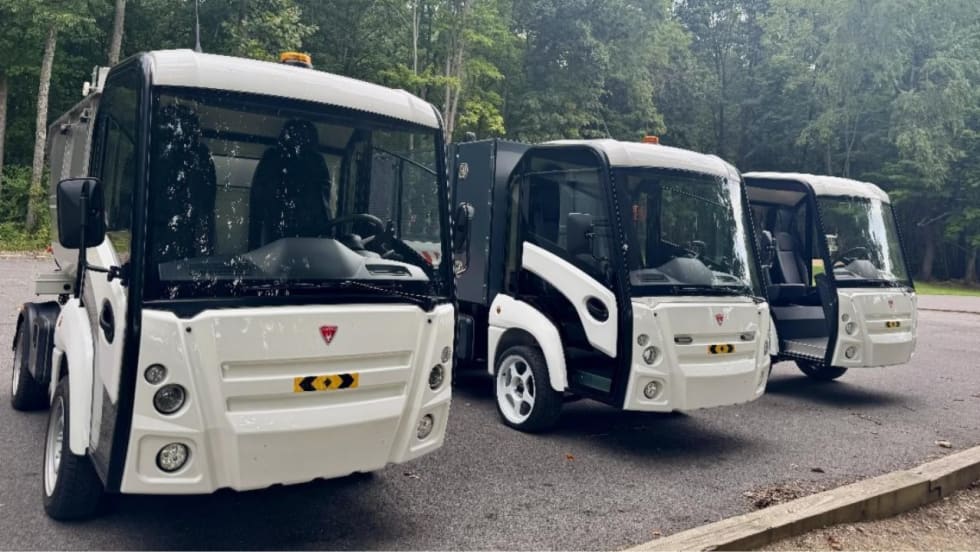
Narro Trucks Introduces Electric Utility Vehicle
Narro Trucks officially launched its operations on Aug. 20 and hosted a ride and drive to showcase its electric truck, which will be produced in Virginia.
Read More →
Samsung SDI Takes Full Control of GM Battery JV as Indiana Plant Pivots to Energy Storage
Samsung SDI is taking full control of its Indiana battery plant with GM, marking a major shift from the EV-focused joint venture Charged Fleet first covered in 2023.
Read More →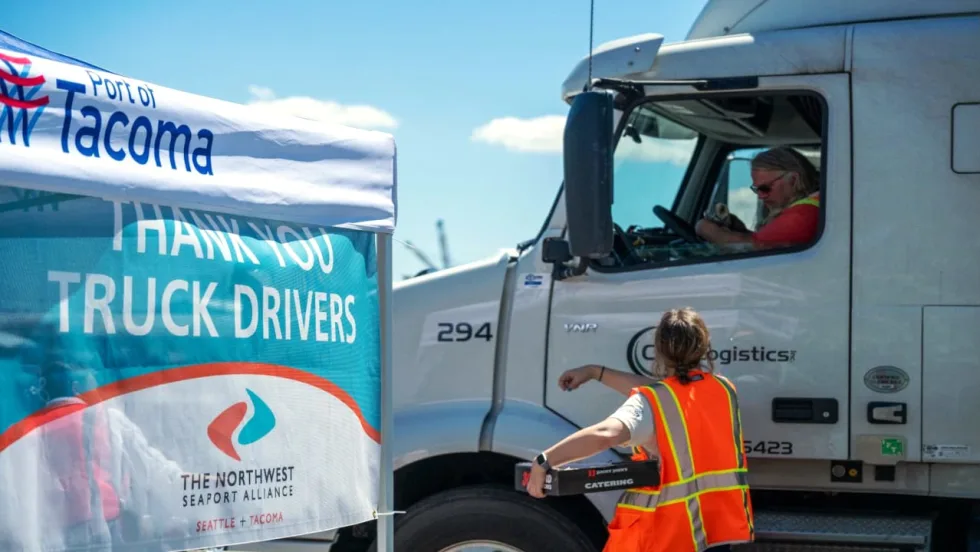
NWSA Taps CALSTART to Administer Zero-Emission Drayage Assistance Program
CALSTART will provide free technical assistance services to drayage fleets serving the Ports of Seattle and Tacoma and looking to transition to cleaner technologies and help decarbonize freight hubs.
Read More →
EV Fleet Reality Check: What Operators Wish They Knew Before Electrifying Their Work Vans
Electric work truck upfits bring new compatibility questions. Learn how parts availability, OEM guidance, power demands, and route planning can affect fleet performance.
Read More →
Peterbilt Expands Sourcewell Partnership with Electric Vehicle Lineup
Peterbilt Motors Company’s cooperative purchasing agreement with Sourcewell and its Canadian partner, Canoe Procurement Group, now includes including Peterbilt's battery-electric vehicle lineup.
Read More →