



Fleet FAQ: Which state has the strictest vehicle emission laws? California!
Which states have the least vehicle-focused regulations? Mississippi, South Dakota, Wyoming, Missouri, Arizona, and Idaho.
 MENU
MENU SEARCH
With fleets often operating in multiple states and regions, do you know what zero-emission vehicle mandates are going to impact you and when?
While not all states currently have a zero emission vehicle (ZEV) mandate, the number of states that do is growing.
Photo: Work Truck
The world is moving toward sustainable and environmentally friendly practices, causing a significant transformation in the automotive industry. Electric cars and trucks are gaining popularity, and many states in the U.S. are implementing policies to encourage their adoption.
With fleets often operating in multiple states and regions, it's essential to be aware of the changing landscape.
First, a zero-emission vehicle is considered any vehicle that uses a propulsion technology that does not produce internal combustion engine exhaust or other greenhouse gas emissions. Zero-emission vehicles include:
Battery-electric vehicles (BEVs).
Plug-in hybrid electric vehicles (PHEVs).
Hydrogen fuel cell electric vehicles (FCEV).
Utilizing these vehicles helps reduce pollution in the form of greenhouse gases, which helps reduce the risks of climate change. And zero-emission vehicle sales are increasing. 2023 marked the first time annual U.S. EV sales surpassed 1 million. Sales through the first three quarters of 2023 were about 58% higher than in 2022.
This list provides an overview of the current situation regarding each state's zero-emission vehicle mandates. It will be updated regularly as new information becomes available, helping your fleet stay up-to-date on the latest developments.
Some states have set ambitious targets for transitioning their entire fleets to zero-emission vehicles. In contrast, others have implemented smaller-scale initiatives such as offering rebates for purchasing zero-emission vehicles or setting up charging infrastructure.
Here is a breakdown of each state's zero-emission vehicle mandates:
Alabama – None.
Alaska – None.
Note: As of September 2023, it does offer a $1,000 rebate to residential customers who own a new or pre-owned electric vehicle.
Arizona – None.
Note: In August 2023, The Arizona Legislature and the governor barred the state from restricting the use — or sale — of a vehicle “based on its energy source.” This includes requiring vehicles to be zero-emission. Local governments will also be blocked from creating restrictions.
Note: Electric vehicles registered in Arizona are not required to complete annual emissions testing. All alternative fuel vehicles, excluding electric and hydrogen vehicles, used to commute into Phoenix or Tucson must be emissions tested before they are registered.
Note: Arizona has joined the Intermountain West Electric EV Corridor with Colorado, Idaho, Montana, Nevada, New Mexico, Utah, and Wyoming to help drivers to use EVs across the Western U.S.
Arkansas – None.
California – In 2022, California approved a rule requiring 100% of new light- and medium-duty vehicles sold in the state to be zero-emission by 2035.
Colorado – In 2019, Colorado set a goal of reducing greenhouse gas emissions from the transportation sector. The bill required that at least 20% of new vehicles sold in the state be electric by 2030. In 2023, Colorado’s air regulators set a rule requiring 82% of vehicles on sale to be electric by 2032.
Note: Colorado has joined the Intermountain West Electric EV Corridor with Arizona, Idaho, Montana, Nevada, New Mexico, Utah, and Wyoming to help drivers to use EVs across the Western U.S.
Resources:
Colorado Large Entity Reporting (LER). LER requires entities with fleets of 20 or more vehicles with a GVWR greater than 8,500 pounds to report fleet information to CDPHE. Fleet information will be collected twice. Applicable entities must submit their reports by November 30, 2024, and December 31, 2027.
Connecticut - In 2019, Connecticut set a goal of having 50,000 ZEVs on the road by 2025 and requiring at least 20% of new car sales to be ZEVs by 2025.
Delaware – In late 2023, Delaware finalized its clean car regulations. In 2027, 43% of new cars and trucks sold in Delaware will be electric or hybrid models. This percentage will increase to 82% in 2032, and the rule will expire the following year.
Florida – None.
Note: Despite the absence of a state mandate, Florida is working to promote the adoption of EVs.
Georgia – None.
Hawaii - Hawaii established state goals to reduce greenhouse gas emissions by 50% below 2005 levels by 2030 and achieve zero emissions across all transportation sectors by 2045.
Idaho – None.
Note: Idaho is working to expand its fleet of charging stations in the state to support electric vehicle use.
Note: Idaho has joined the Intermountain West Electric EV Corridor with Arizona, Colorado, Montana, Nevada, New Mexico, Utah, and Wyoming to help drivers to use EVs across the Western U.S.
Illinois – By 2035, auto manufacturers must sell 100% new ZEVs. All vehicles purchased and leased by a governmental unit after January 1, 2025, must be zero-emission or converted to zero emissions.
Indiana – None.
Note: Indiana does offer incentives, including state incentives, to help encourage the use of electric vehicles.
Iowa – None.
Note: Iowa did adopt an electric fuel excise tax as of July 1, 2023, which requires owners of EV charging stations to report and pay a fee per kilowatt hour of electric fuel as well as electric car rebates.
Kansas – None.
Kentucky – None.
Note: House Bill 6, the spending plan for the coming fiscal years, includes wording specifying what type of vehicles can be purchased for the state fleet with its $2.5 million-per-year fleet replacement budget. The bill states, in part, "Every fleet vehicle replaced shall be replaced with a vehicle that has an internal combustion engine."
Note: Kentucky does offer electric vehicle incentives and charges EV charging station owners and lessees an excise tax and surtax on electricity used to charge vehicles.
Louisiana – None.
Maine – Maine’s zero-emission vehicle mandate will require 43% of new vehicles sold in Maine to be ZEVs by the 2027 model year and 82% by 2032.
Maryland - In 2020, Maryland set a goal of having 60,000 ZEVs on the road by 2025 and requiring at least 20% of new car sales to be ZEVs by 2025.
Massachusetts - In 2019, Massachusetts set a goal of having 75,000 ZEVs on the road by 2025 and requiring at least 30% of new car sales to be ZEVs by 2030.
Michigan – In 2023, Michigan set a goal to convert 100% of the state’s fleet to zero-emission vehicles by 2040.
Minnesota – In 2021, Minnesota was the first midwestern state to adopt California emissions standards, which are set to take effect in 2024 for the 2025 model year. The rules gradually require manufacturers to increase the production of ZEVs sold in the state.
Note: Minnesota also offers EV rebates to residents.
Mississippi – None.
Missouri – None.
Montana – None.
Note: Montana has joined the Intermountain West Electric EV Corridor with Arizona, Colorado, Idaho, Nevada, New Mexico, Utah, and Wyoming to help drivers to use EVs across the Western U.S.
Nebraska – None.
Nevada – Nevada adopted a ZEV program that takes effect in 2025 with a goal for all vehicles to be 100% ZEV by 2035.
Note: Nevada has joined the Intermountain West Electric EV Corridor with Arizona, Colorado, Idaho, Montana, New Mexico, Utah, and Wyoming to help drivers to use EVs across the Western U.S.
New Hampshire – None.
New Jersey - In 2020, New Jersey set a goal of having 30,000 ZEVs on the road by 2025 and requiring at least 10% of new car sales to be ZEVs by 2025. In late 2023, New Jersey announced a goal that all cars sold in the state will be ZEVs or plug-in hybrids by 2035.
New Mexico - In 2026, 43% of new passenger cars and light-duty trucks shipped to New Mexico auto dealerships must be zero-emission vehicles. Additionally, by 2031, 82% of the vehicles delivered to New Mexico must be ZEVs; by 2032, 82% of new passenger vehicles sold in the state must be ZEVs. The state has been directed to transition to a ZEV fleet by 2035.
Note: New Mexico has joined the Intermountain West Electric EV Corridor with Arizona, Colorado, Idaho, Montana, Nevada, Utah, and Wyoming to help drivers to use EVs across the Western U.S.
New York
In 2019, New York set a goal to transition the state's transportation sector to carbon neutrality by 2050. This includes a goal of having 800,000 ZEVs on the road by 2030 and requiring 100% of new light-duty vehicles sold in the state to be ZEVs by 2035.
On January 1, 2025, the New York Advanced Clean Truck Rule went into effect, which requires manufacturers of vehicles greater than 8,500 pounds to sell an increasing number of zero-emission vehicles (ZEVs) in New York State.
The regulation complements New York's recently adopted legislation that established a goal for 100 percent of medium- and heavy-duty vehicles offered for sale or lease, or sold, or leased, for registration in the State be zero-emission by 2045, where feasible.
North Carolina - In October 2018, North Carolina set a goal to increase the number of ZEVs in North Carolina to at least 80,000 by 2025. The order also directs the North Carolina Department of Transportation (NCDOT) to develop a ZEV strategic plan to guide ZEV adoption in the state. The order also aims to register at least 1,250,000 ZEVs by 2030 and increase the share of new passenger vehicle sales to 50% ZEVs by 2030.
North Dakota – None.
Ohio – None.
Oklahoma – None.
Oregon - In 2018, Oregon adopted a ZEV mandate that requires automakers to sell an increasing percentage of ZEVs in the state. More recently, Oregon adopted standards requiring 100% of new passenger vehicles sold in the state to be 100% ZEVs by 2035.
Pennsylvania – While it does not currently have a statewide ZEV mandate, Pennsylvania does have an Advanced Clean Trucks standard that requires manufacturers to increase ZEV sales to 30-50% by 2030 and 40-75% by 2035.
Rhode Island - In 2019, Rhode Island set a goal of having 25,000 ZEVs on the road by 2025 and requiring at least 15% of new car sales to be ZEVs by 2025. Through new rules, Rhode Island will require all new cars sold in 2035 and beyond to be ZEVs.
Note: Rhode Island also offers the “Driving Rhode Island to Vehicle Electrification Fleet (DRIVE EV Fleet), which gives EV rebates up to $2,500.
South Carolina – In 2023, South Carolina passed a bill prohibiting the sale of passenger motor vehicles manufactured after January 1, 2035, unless they are ZEVs.
South Dakota – None.
Tennessee – None.
Note: Tennessee is participating in the National Electric Vehicle Infrastructure (NEVI) planning for communicating annual charging station updates.
Texas – None.
Note: Texas requires EV owners to pay a first-time registration fee of $400 plus a renewal fee of $200.
Utah – None.
Note: Utah has joined the Intermountain West Electric EV Corridor with Arizona, Colorado, Idaho, Montana, Nevada, New Mexico, and Wyoming to help drivers to use EVs across the Western U.S.
Vermont – Vermont’s new emission standards and requirements start in 2026. By 2035, all new passenger vehicles sold must be ZEVs.
Virginia – Virginia set a goal starting in 2024 that requires all new cars, pickup trucks, and SUVs to be ZEVs by 2035. Sales of new gasoline-powered cars will be banned.
Washington – In 2022, Washington set a new rule requiring 100% of passenger vehicles, light-duty trucks, and medium-duty trucks to be ZEVs by 2035. The rule also requires heavy-duty internal combustion engines to be cleaner.
Washington Fleet Reporting Platform - This guidebook for fleet managers explains the process for completing the fleet reporting requirements adopted in December 2022.
Ecology’s fleet reporting platform is accessed through the Secure Access Washington (SAW) portal. Current SAW users can access the fleet reporting platform (FRP) through the Air Quality Portal on the main SAW page, while new users must sign up for a SAW account to access the FRP.
West Virginia – None.
Wisconsin – None.
Wyoming – None.
Note: Wyoming has joined the Intermountain West Electric EV Corridor with Arizona, Colorado, Idaho, Montana, Nevada, New Mexico, and Utah to help drivers to use EVs across the Western U.S.
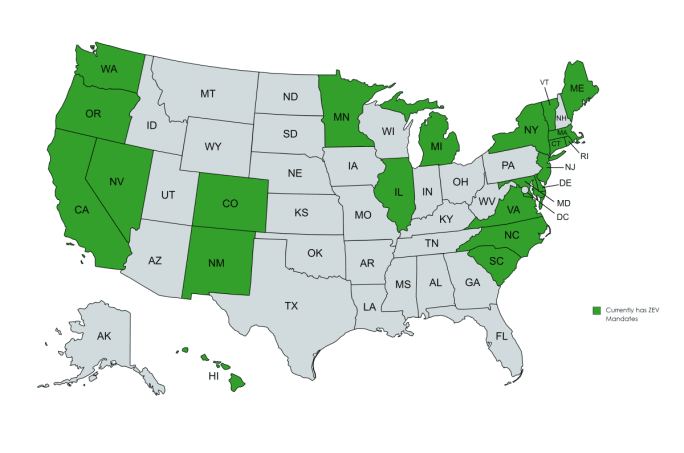
A quick visual shows which states (in green) currently have a form of ZEV mandate.
Photo: Work Truck
There is a lot happening in the U.S. when it comes to sustainability efforts. There are multiple efforts for reducing greenhouse gas emissions, including:
Clean Car States: As of publication, 17 states have adopted the CARB vehicle standards: New York, Massachusetts, Vermont, Maine, Pennsylvania, Connecticut, Rhode Island, Washington, Oregon, New Jersey, Maryland, Delaware, Colorado, Minnesota, Nevada, Virginia, and New Mexico.
Advanced Clean Trucks Rule: As of publication, eight states have adopted the ACCII rule: California, Oregon, Washington, Massachusetts, Vermont, New York, New Jersey, and Colorado. Maryland and North Carolina were in process.
Currently, 45 states and the District of Columbia provide an incentive for certain EVs and/or PHEVs, through a specific utility operating in the state or state legislation. The incentives range from tax credits or rebates to fleet acquisition goals, exemptions from emissions testing, or utility time-of-use rate reductions.
Remember, regulations and mandates are constantly shifting and changing. Be sure to check directly with each state to confirm the most current regulatory requirements you need to operate in, and check back often for updates!
Have an update? Help us keep this current by emailing us at WorkTruckEditors@bobit.com. Want to be sure you get all the updates? Sign up for our eNewsletters today!

New one-day registration gives fleet professionals the flexibility to attend Tuesday, Wednesday, or Thursday, with passes available for $199 through Sept. 18.
Read More →
CALSTART has rebranded as Catalyst Mobility and will combine with Forth at the start of 2027. The new organization said it is poised to become one of the world's largest, strongest, and most impactful clean transportation nonprofits.
Read More →
Together, the Port Authority of New York and New Jersey and CALSTART will electrify drayage and terminal operations serving the East Coast’s busiest container port. A pair of incentive programs totaling $45 million has launched to accelerate adoption of zero-emission drayage trucks and terminal tractors.
Read More →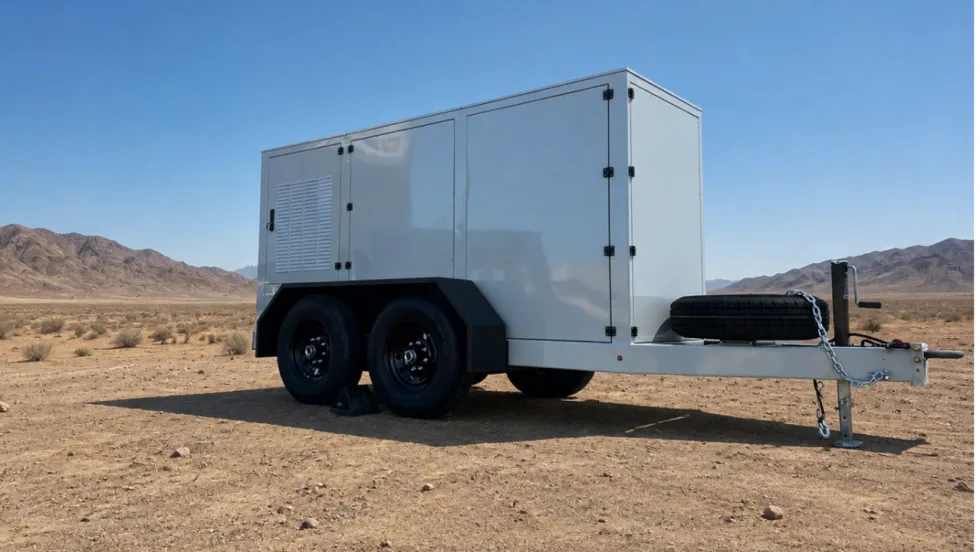
A single Xos Hub has surpassed one gigawatt-hour of energy across more than 33,600 charging sessions in the field, demonstrating performance that supports Xos' expansion across new products and markets.
Read More →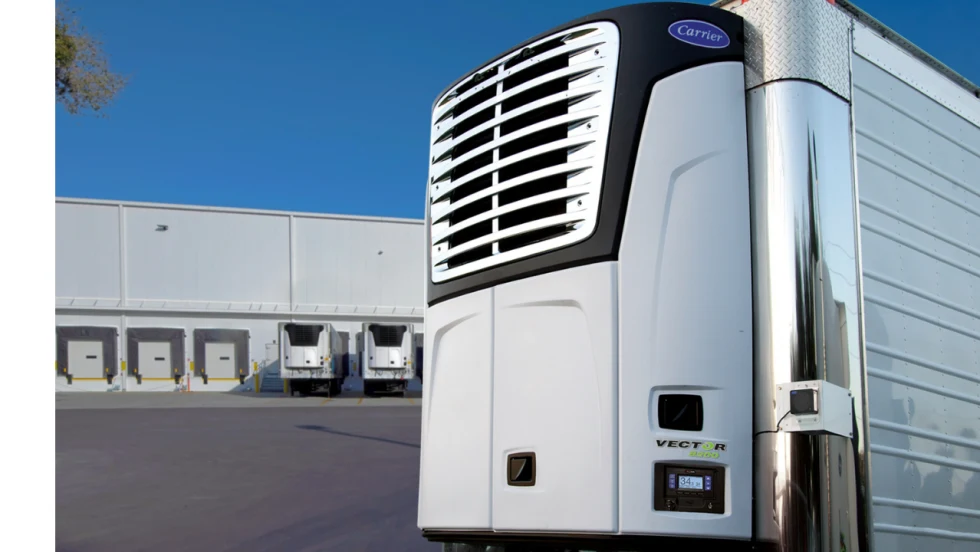
Carrier Transicold’s first engineless multi-temperature TRU helps fresh- and frozen-food fleets add supplemental cold storage capacity during seasonal peaks.
Read More →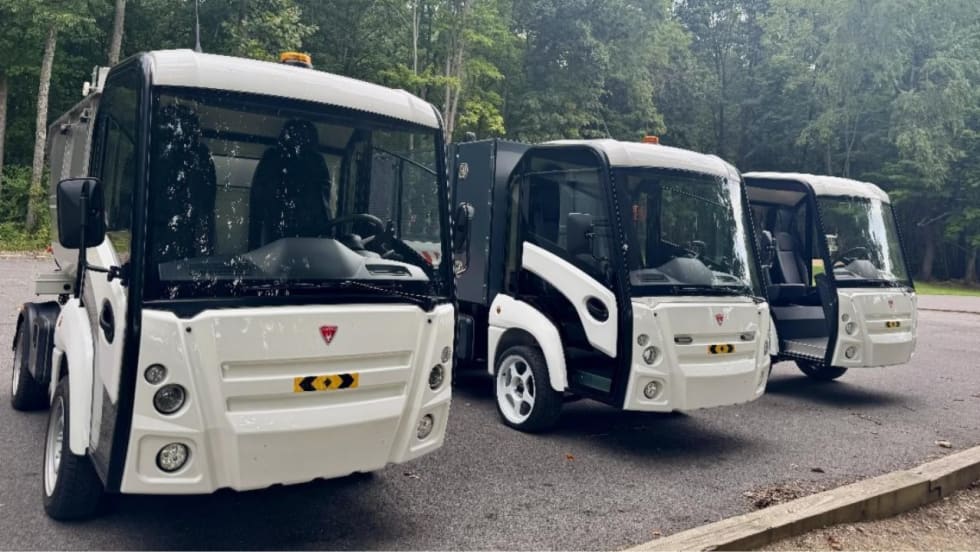
Narro Trucks officially launched its operations on Aug. 20 and hosted a ride and drive to showcase its electric truck, which will be produced in Virginia.
Read More →
Samsung SDI is taking full control of its Indiana battery plant with GM, marking a major shift from the EV-focused joint venture Charged Fleet first covered in 2023.
Read More →
CALSTART will provide free technical assistance services to drayage fleets serving the Ports of Seattle and Tacoma and looking to transition to cleaner technologies and help decarbonize freight hubs.
Read More →
Electric work truck upfits bring new compatibility questions. Learn how parts availability, OEM guidance, power demands, and route planning can affect fleet performance.
Read More →
Peterbilt Motors Company’s cooperative purchasing agreement with Sourcewell and its Canadian partner, Canoe Procurement Group, now includes including Peterbilt's battery-electric vehicle lineup.
Read More →