



ThyssenKrupp Elevator Test Drives Propane Vehicles
ThyssenKrupp Elevator will roll out its initial propane-powered fleet vehicles in Phoenix by the end of 2010.

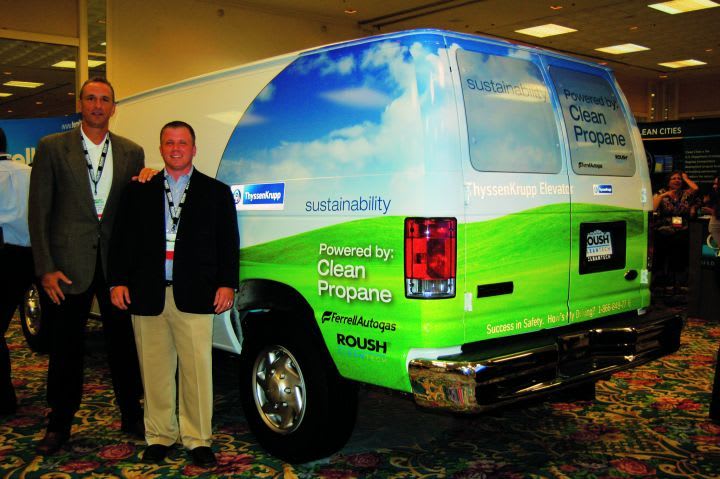
Tom Armstrong (left), fleet director for ThyssenKrupp Elevator, and Todd Mouw, ROUSH vice president of sales and marketing, revealed the fleet’s propane-powered van at the 2010 Green Fleet Conference.
In a move to address environmental and financial opportunities, ThyssenKrupp Elevator, headquartered in Atlanta, has begun test driving propane-powered service vehicles in Phoenix. The company sees the incorporation of propane vehicles into its fleet as a long-term sustainable solution and expects a return on investment (ROI) in Arizona in approximately three years.
Starting in Arizona
A number of federal and state tax incentives are available to help offset the cost of converting to propane or to install fueling infrastructure. However, these incentives are dependent on the individual tax liability of the company converting.
"Using Phoenix as an example, there are no up-front incentives for the vehicle type/size we are using; however, we will have HOV lane access, lower registration cost, and we can purchase our fuel for under $2 per gallon," explained Tom Armstrong, ThyssenKrupp Elevator's fleet director. "We are looking for long-term fundamental sustainable solutions. For each city we enter, we will expect a ROI of some sort but, even at cost neutral, it is a win-win based on the environment."
According to studies funded by the Propane Education and Research Council (PERC), propane vehicles emit 18-percent less greenhouse gases than traditional vehicles, as well as 20-percent less nitrogen oxide and 60-percent less carbon monoxide. Also, 90-percent of propane used in the United States is produced domestically, Armstrong added. Propane vehicles incur lower maintenance costs because they run cleaner and experience no carbon build-up.
With 3,300 fleet vehicles operating in North America, ThyssenKrupp Elevator has considerable potential for cost savings and a reduced company carbon footprint. For the propane vehicles soon to be used in the Arizona market, ThyssenKrupp Elevator partnered with ROUSH CleanTech to engineer liquid-propane fuel injection systems for Ford E-series cargo vans. There is virtually no difference in horsepower, torque, or towing capacity between the propane and traditional vans.
"We're excited for ThyssenKrupp Elevator to take on this leadership role," said Jack Roush, CEO of ROUSH Enterprises. "Propane continues to be a leading alternative fuel that is available right now, at an economical price, and helps to reduce emissions, which results in cleaner air for everyone to breathe."
Expanding Throughout Fleet
ThyssenKrupp Elevator plans to eventually expand its propane-powered fleet into other markets.
"We expect the pilot program in Phoenix to lead to significant cost savings in both fuel usage and maintenance intervals," Armstrong said. "A successful pilot will launch the use of alternative fuels in all our North American markets in the future, which will reduce the operating costs for our fleet overall."
ThyssenKrupp Elevator has approximately eight major cities on its shortlist for propane vehicles, but selected Phoenix as its pilot due to [propane provider] Ferrellgas' commitment to enhancing the fueling infrastructure in the Phoenix market.
"The switch to a more eco-friendly fuel is part of ThyssenKrupp Elevator's commitment to the environment," said Brad Nemeth, the company's director of sustainability. "We are committed to reducing our carbon footprint. One of our targets is a 20-percent improvement in fuel efficiency, so we are exploring alternative fuels like propane."
According to Nemeth, ThyssenKrupp Elevator is committed to seeking innovative ways to reduce the consumption of resources in everything the company does. "Our vision is simple: waste nothing. Our goal is to recognize and appreciate that every resource available to us has a significant value. Through the appreciation of this culture of valuing each resource as precious, we understand that inefficient use of resources is not an option."
Originally posted on Automotive Fleet
More Sustainability
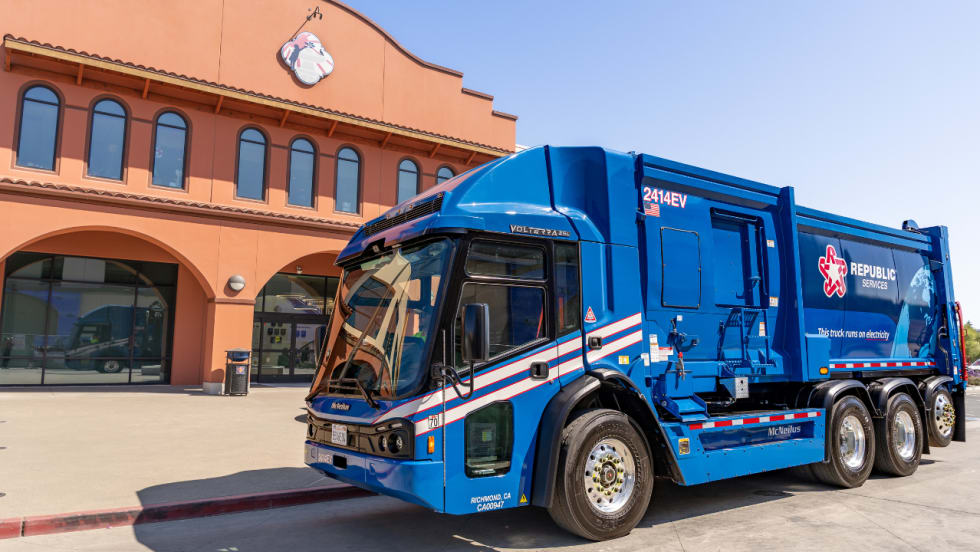
What Republic Services Learned Moving Electric Trucks Beyond the Pilot
With 250 electric refuse trucks now in service, Republic Services is learning that scaling a new powertrain depends as much on routes, drivers, technicians, and daily operations as it does on the truck itself.
Read More →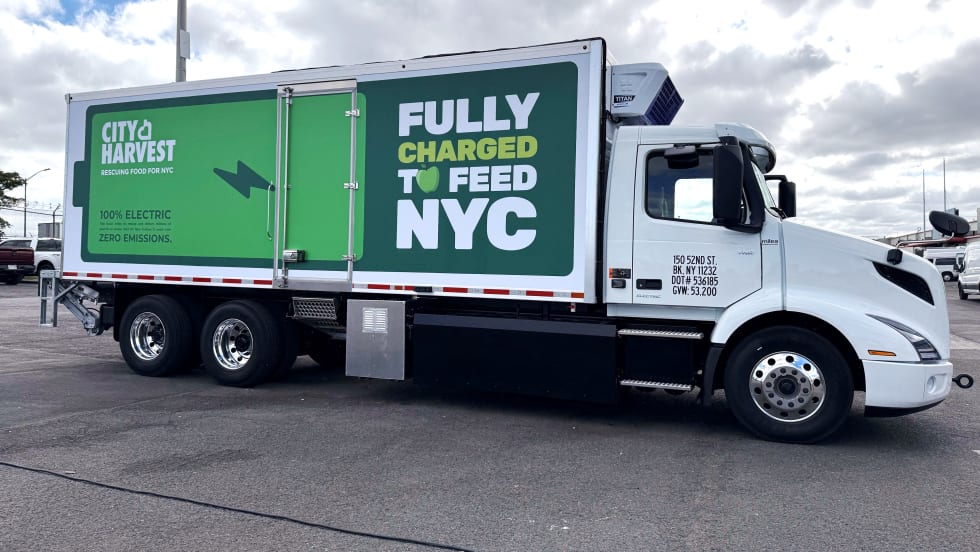
City Harvest Begins Using Volvo VNR Electric Trucks to Rescue Food Across New York City
Volvo Trucks North America and the Bronx Is Breathing project team handed over three new Volvo VNR Electric trucks to City Harvest, which will use the trucks to rescue and deliver food throughout the Bronx and across all five boroughs of New York.
Read More →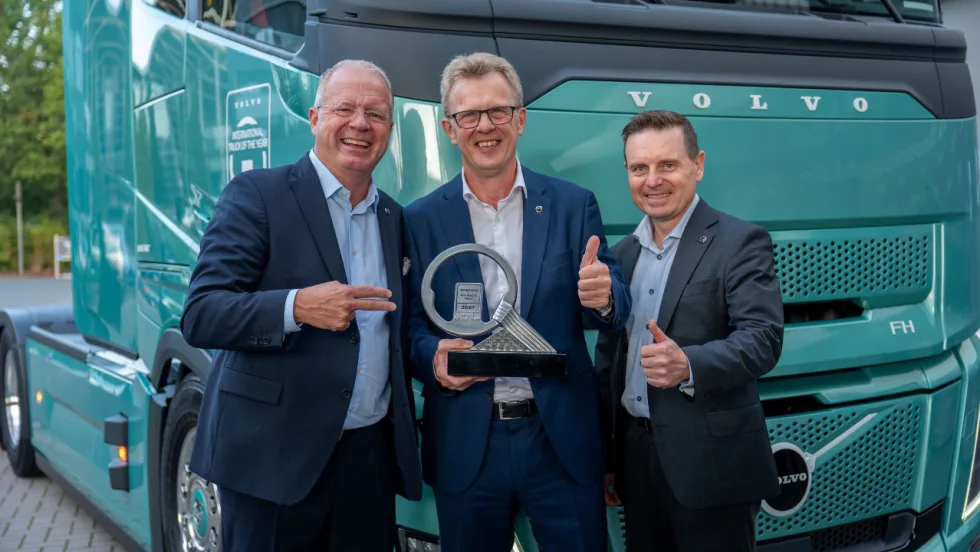
Volvo Trucks Wins International Truck of the Year 2027 for its Global Electric Range
Volvo Trucks' global heavy-duty electric range has been named International Truck of the Year 2027. Since 2019, more than 7,000 electric Volvo trucks have driven more than 310 million miles worldwide.
Read More →


Fleet Forward Conference Introduces One-Day Passes for 2026
New one-day registration gives fleet professionals the flexibility to attend Tuesday, Wednesday, or Thursday, with passes available for $199 through Sept. 18.
Read More →
CALSTART Rebrands as Catalyst Mobility, Will Combine with Forth in 2027
CALSTART has rebranded as Catalyst Mobility and will combine with Forth at the start of 2027. The new organization said it is poised to become one of the world's largest, strongest, and most impactful clean transportation nonprofits.
Read More →
Electric Truck and Charging Programs to Boost Sustainability at NY & NJ Ports
Together, the Port Authority of New York and New Jersey and CALSTART will electrify drayage and terminal operations serving the East Coast’s busiest container port. A pair of incentive programs totaling $45 million has launched to accelerate adoption of zero-emission drayage trucks and terminal tractors.
Read More →
The Smart Way to Build a Mixed-Energy Fleet Isn’t About Picking a Side
Mixed-energy fleets aren’t about picking a winning fuel. Sarah Booth of WEX explains how vehicle data, duty cycles, charging strategy, and real-world costs can help fleets choose the right energy source for each job.
Read More →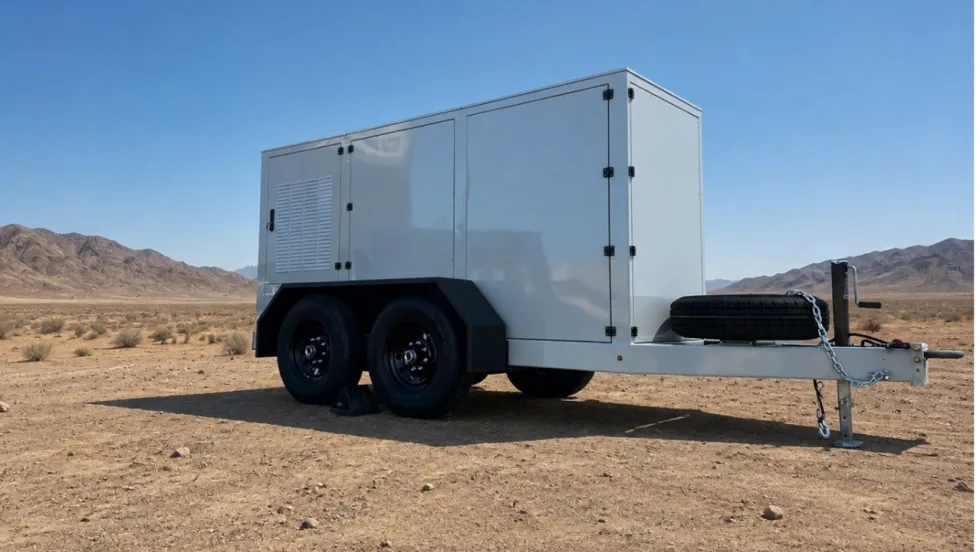
Xos Hub Surpasses One Gigawatt-Hour of Energy Delivered in the Field
A single Xos Hub has surpassed one gigawatt-hour of energy across more than 33,600 charging sessions in the field, demonstrating performance that supports Xos' expansion across new products and markets.
Read More →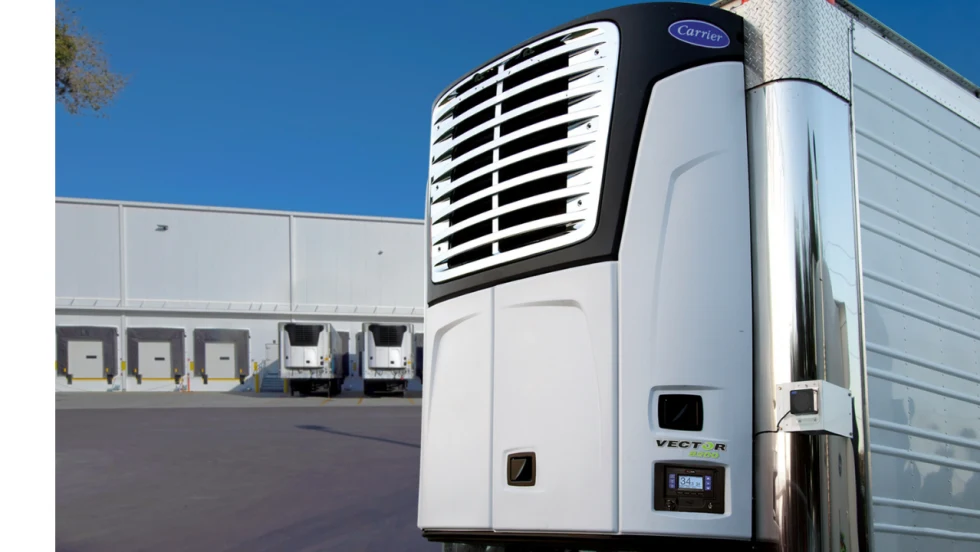
Carrier Transicold Launches All-Electric Vector 8200 TRU for Diesel-Free On-Site Cold Storage
Carrier Transicold’s first engineless multi-temperature TRU helps fresh- and frozen-food fleets add supplemental cold storage capacity during seasonal peaks.
Read More →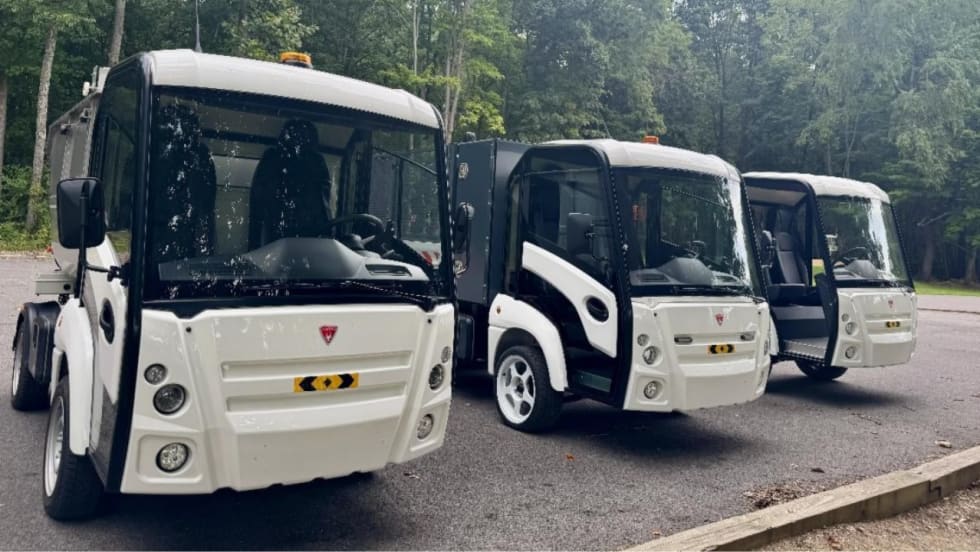
Narro Trucks Introduces Electric Utility Vehicle
Narro Trucks officially launched its operations on Aug. 20 and hosted a ride and drive to showcase its electric truck, which will be produced in Virginia.
Read More →