





Want More? A Four-Sentence Description of Reasonable Suspicion Training
The Difference a Word Makes in DOT Compliance
In fleet compliance, one word can change what’s required. Learn how FMCSR definitions help determine which rules apply to your trucks and drivers.
November 23, 2026

A single word can change what a regulation requires. Understanding terms such as “must,” “may,” and “should” helps fleets distinguish requirements from recommendations and permissions.
Credit:
Work Truck
5 min to read
Compliance with the Federal Motor Carrier Safety Regulations (FMCSRs) often hinges on a single word. Knowing where to look for definitions is the first step in knowing the who, what, and where of regulatory jargon.
The explanations in 390.7, Rules of construction, when overlooked, can get a carrier or driver into serious trouble.
The section plainly states when something is mandatory versus optional in the FMCSRs. The following words have the noted meaning when used in the motor carrier regulations:
Term | Meaning |
|---|---|
Shall | An imperative sense |
Must | An imperative sense |
Should | A recommendatory sense |
May | A permissive sense |
Includes | A word of inclusion, not limitation |
An imperative sense is a must-do or absolute, while a permissive or recommendatory sense leaves the decision up to the party to whom the regulation is directed.
Know What’s Required and What’s Optional
The rules of construction are sprinkled throughout the FMCSRs. As you read the regulations, watch for the use of may, must, should, shall, and include to know what is expected of you.
The following are common examples:
Description | Regulation |
|---|---|
A motor carrier must (required) mark its vehicles as instructed. | 390.21 |
An employer may (permitted to) perform DOT pre-employment alcohol tests. | 382.301(d) |
An employer should (recommended) report failures to respond to safety performance history inquiries. | 391.23(c)(3) |
A motor carrier employee is one who directly affects commercial motor vehicle (CMV) safety and includes (not limited to) a driver, mechanic, and freight handler. | 390.5T |
Start With the General Definitions
In addition to the rules of construction, motor carriers and their employees must be familiar with the definitions used in the FMCSRs. The list of general definitions in 390.5T begins with a simple phrase: “Unless specifically defined elsewhere, in this subchapter.”
The word “subchapter” refers to a specific block of regulations within the U.S. Code of Federal Regulations (CFR). In this case, the use of “this subchapter” refers to CFR Title 49 (which contains all the transportation-related regulations), Volume 5, Chapter 3 (which contains regulations from the Federal Motor Carrier Safety Administration (FMCSA)), Subchapter B, which is the FMCSRs. Within that subchapter are Parts 350-399.
These definitions apply, except in cases where a particular CFR part has its own definition. You can find other definitions in 383.5, 382.107, 395.2, and 393.5. Since Part 382 references Part 40, readers should be familiar with terms in 40.3.
Determine When a Work Truck Is Regulated
Using the principles presented in this article, let’s apply them in determining whether a vehicle is regulated.
Suppose a construction company operates large pickup trucks to and from worksites. These trucks are loaded with supplies and may travel out of state. The employees are classified by human resources as construction workers rather than drivers. In addition, there may be occasions when other laborers move the vehicles around the jobsite, but never on the open road. By looking at the definitions, what are some conclusions you can draw?
First, you should look at the definitions in 390.5T. For the transportation of property, a commercial motor vehicle (CMV) is a self-propelled or towed motor vehicle used on a highway in interstate commerce to transport property. The definition doesn’t require transporting freight on behalf of others. Any vehicle used to further business is engaged in commerce. In this scenario, the construction company’s movement of equipment and supplies begins or ends outside of the state, so it’s interstate commerce.
Next, you look at the nature of the vehicle. It must have an actual weight or weight rating of at least 10,001 pounds. When calculating the weight, you must include any towed trailer. However, weight is not a factor when transporting placarded hazardous materials. Any size placarded vehicle is considered a CMV.
Lastly, for those employees who just operate the vehicle around the worksite, you must compare the work area against the definition of highway in 390.5T. It encompasses public or private property that is open to public traffic. If a standard passenger vehicle can come in without gates or prohibitive signs, it’s a highway, and the employees are regulated drivers.
If all the boxes are checked, the operation of this vehicle subjects the driver and carrier to the bulk of the safety regulations, including driver qualifications, hours of service, vehicle inspection and maintenance, and so forth.
Check Which Definition Applies
Since definitions appear in other areas of the regulations, it’s important to refer to them all before drawing concrete conclusions. There are a few cases where the CMV definition differs from that found in 390.5T. Applicability to Parts 380, 382, and 383 all relies on the CMV definition found in 382.107 and 383.5.
Basically, this definition refers to a larger class of vehicles (i.e., over 26,001 pounds, or designed for 16 or more passengers, or placarded for hazardous materials). The definition applies to both interstate and intrastate commerce.
Drivers of these larger (or placarded) vehicles are subject to additional regulations for CDL licensing, drug/alcohol testing, and new-driver training. If you find that your vehicles qualify, you have several other definitions with which to become familiar.
Misreading the Rules Can Lead to Violations
If a company fails to fully understand regulatory legalese, it can result in serious violations. In the event of an audit, enforcement will not accept the excuse that management or administrative personnel didn’t understand how to read to the regulations. According to 390.3(e), every employer, employee, and driver must know and comply with the FMCSRs.
Since the definitions are a part of the regulations, these must also be understood, referenced, and applied.
Subscribe to Our Newsletter
More Safety & Compliance

What Your Fleet's Brakes Might Be Telling You About Tailgating
Could frequent brake replacements reveal a driver following too closely? Learn how brake wear, driving habits, and maintenance costs connect.
Recalls You Need to Know About in November 2026
If you have Altec, Autocar, Battle Motors, Chrysler, Daimler Truck, Ford, General Motors, Kalmar, Mack Trucks, Paccar, Rivian, Terex, Toyota, or Volvo Trucks vehicles in your fleet, you should check these important recalls issued by the National Highway Traffic Safety Administration.
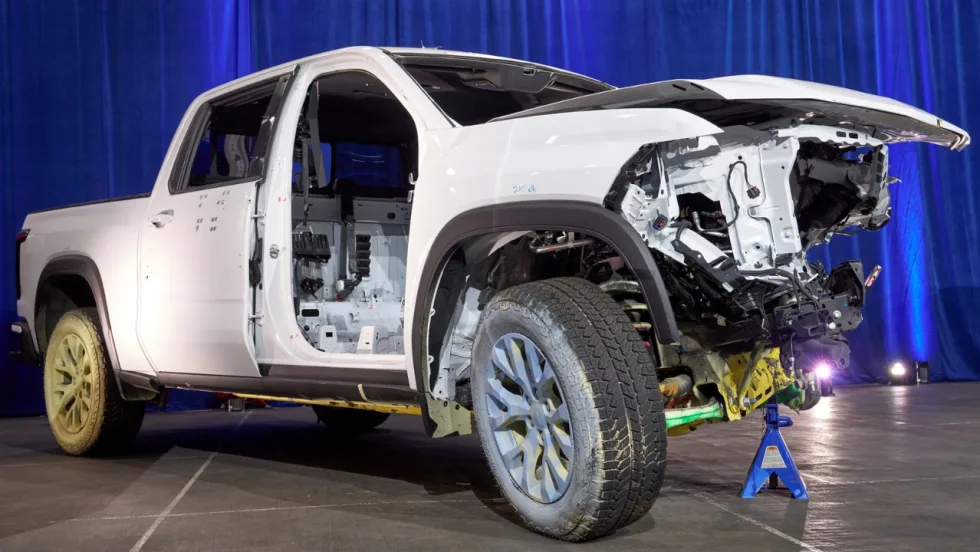
GM Runs 92,000 Virtual Crash Tests to Develop 2027 Chevrolet Silverado 1500
GM used 92,000 simulated crashes to evaluate the 2027 Chevrolet Silverado 1500's safety performance before confirming results through physical testing.
From Our Partners


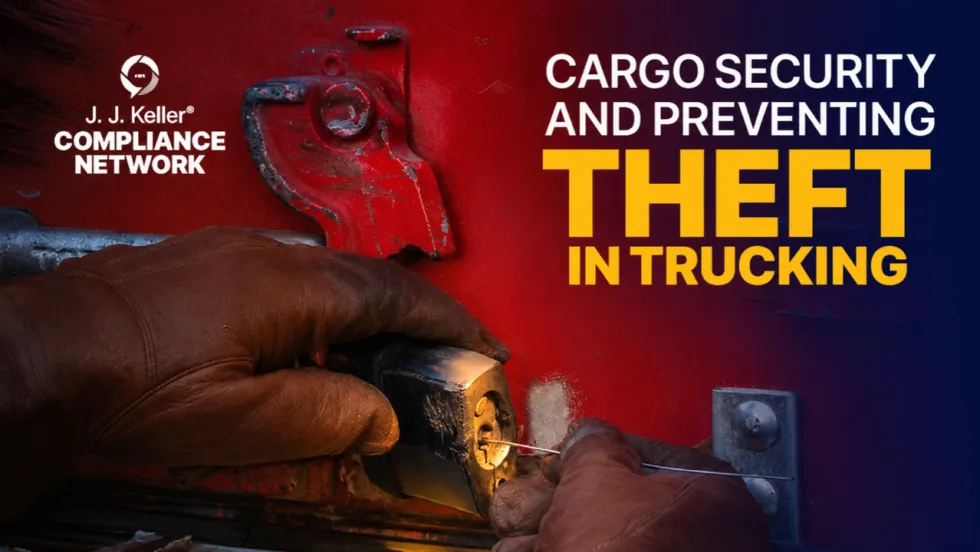
Thanksgiving Cargo Theft Risks Put Fleet Security in Focus
J. J. Keller shares cargo theft prevention tips for work truck fleets ahead of Thanksgiving, when parked vehicles and reduced staffing can increase security risks.
5 Winter Fleet Videos to Help Keep Trucks Running and Drivers Safe
From preventing cold-weather breakdowns to navigating icy roads, these five videos offer practical winter preparation tips for work truck fleets.
Navigating the Effects of Daylight Saving Time on Work Truck Fleets
Discover how daylight saving time impacts work truck fleets and get essential tips for fleet managers and drivers to navigate the "fall back" transition.
How Halloween Changes the Job for Work Truck Drivers
Truck traffic doesn’t take the same Halloween break as other drivers. What fleet managers should know about timing, neighborhood stops, and braking data.
Tips for Driving Safely on Halloween Night
This video features a reminder from the Connecticut Department of Transportation (DOT) and the Connecticut Police Chiefs Association, urging drivers to prioritize safety this Halloween.
Re-rating Gross Vehicle Weight Ratings (GVWR): Why and How it's Done
Sometimes, it is not in a fleet’s best interests to have a vehicle at a given GVWR. Changing the GVWR to a special value can be done, but the process is complicated.
When a Work Truck Gets Stolen, the Real Loss Is Time
A stolen work truck can take more than a vehicle off the road. From tools and access cards to crew downtime, here’s how fleets can prepare for theft before it disrupts the entire workday.