




Is Your Company's Pickup Truck Really a CMV?
The notion that a company pickup truck might be a commercial motor vehicle (CMV) may seem highly unlikely to some.

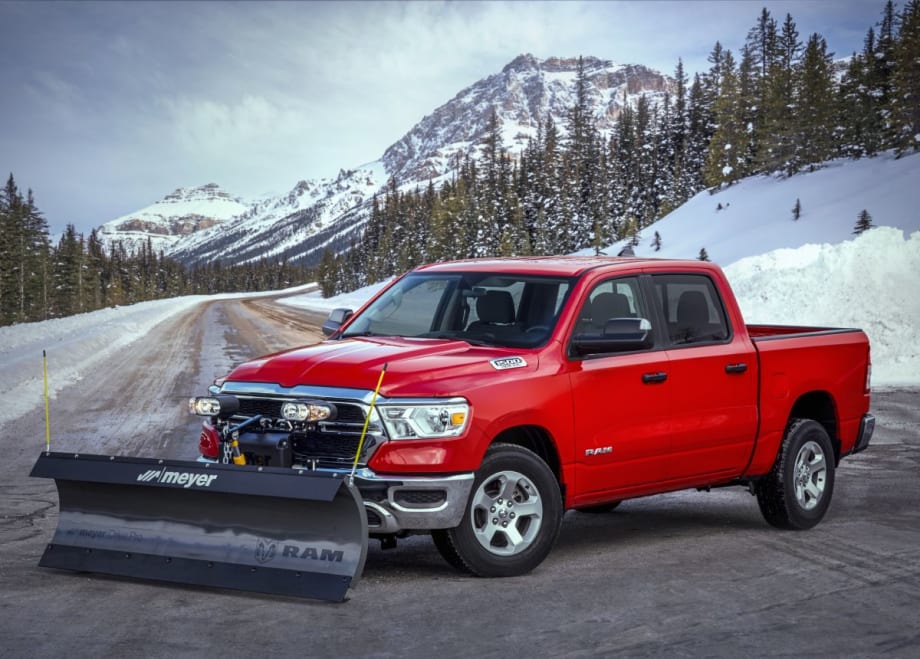
An examination of the Federal Motor Carrier Safety Regulations (FMCSRs) could very well reveal that some smaller fleet vehicles qualify as regulated CMVs.
Photo: Ram
The notion that a company pickup truck might be a commercial motor vehicle (CMV) may seem highly unlikely to some.
Common arguments against classifying a pickup as a CMV often include the truck:
Is not transporting cargo, and
Is too small.
But, an examination of the Federal Motor Carrier Safety Regulations (FMCSRs) could very well reveal that some smaller fleet vehicles qualify as regulated CMVs.
Is it a CMV? How Do I Know?
When determining whether a smaller vehicle is a CMV, consider the following:
Commerce involves anything that moves business forward, such as hauling supplies and tools to and from a worksite, dropping off workers, or just visiting a worksite. If you are not hauling freight for someone else, you can still be considered a private (motor) carrier.
The weight threshold of 10,001 pounds or greater in the CMV definition (§390.5) includes the truck, load, and any attached trailer (including a small utility trailer). This weight is based on the manufacturer’s specifications of the truck by itself or with a trailer. If you exceed the manufacturer’s weight specifications, the actual weight of the vehicle or vehicle combination is used to determine applicability. If the actual weight is 10,001 pounds or greater, you have a CMV.
Any size vehicle hauling placardable amounts of hazmat is a CMV.
If the vehicle only meets the definition when pulling a trailer, you would only be concerned about observance of the safety regulations on those days it meets the definition.
It’s a CMV. Now What?
Even if you find you (mistakenly) didn’t identify your pickup truck as a CMV, all hope is not lost. If you demonstrate a good faith effort to comply with the regulatory requirements going forward, this will lessen the impact during an FMCSA audit.
Pickups that are defined as CMVs must be reflected on your FMCSA registration (MCS-150) as straight trucks. And, you need to adjust your number of drivers, trailers, and vehicle miles traveled.
Next, you must make sure that both the driver and vehicle meet all applicable safety regulations.
The vehicle and any attached trailer are subject to such areas as:
Cargo securement.
Weigh station stops for roadside inspections (depending on the state).
Annual vehicle inspections.
Daily pretrip and post-trip vehicle inspections.
Recordkeeping for repairs and preventative maintenance.
Equipment requirements.
Vehicle standards.
The driver of a regulated vehicle, including a pickup, must have a complete driver’s qualification (DQ) file. If current operators do not have a file, you must generate one as soon as possible.
Never try to hide a violation, such as backdating documents to give the appearance records were created prior. Falsification is frowned upon and carries a hefty price tag for fines. A best practice is to place note in the file indicating the date you discovered the violation and what you are doing going forward so that the violation is not repeated.
For instance, someone within the organization will be given the role of maintaining driver qualification files. You could indicate that all vehicles are being properly classified going forward and only qualified drivers will be assigned to them.
In addition, the operator of the vehicle is subject to hour-of-service (HOS) limits. The company may be required to equip the vehicle with an electronic logging device (ELD) unless it qualifies for one of the exceptions. However, an exception to the ELD requirements may not remove all HOS requirements.
ELDs exceptions used for pickups may include:
Vehicles manufactured before model year 2000, when electronic control modules were not required.
Drivers who are required to use a standard paper log no more than eight days within any 30-consecutive-day period. Examples include “intermittent” or “occasional” drivers and drivers eligible for a short-haul exception in §395.1(e). These drivers may continue to use paper logs when necessary in place of ELDs.
Drivers claiming exceptions such as utility service vehicles and certain agricultural operations.
Don’t Cut Your Fleet Short
When deciding which of your vehicles and drivers are subject to the federal safety regulations, don’t limit yourself to the big rigs. CMVs come in a variety of shapes and sizes, and are used for variety of business activities, not just hauling freight.
Always compare the vehicle or vehicle combination against the definition of CMV in §390.5.
More Operations
Family Ties Inside the Fleet Families Building Careers Across Generations
Three fleet families share what it really takes to work together, learn across generations, and keep business from following them home.
Read More →
Shades of Fleet Call for Voices: Fleet's Hidden Heroes
Fleet’s hidden heroes are often the ones keeping everything moving behind the scenes. September’s Shades of Fleet is looking for dispatchers, coordinators, parts specialists, and other support pros to share their stories.
Read More →
Truck Centers, Inc. Celebrates National Truck Driver Appreciation Week with $1,000 Fuel Card Giveaways
During National Truck Driver Appreciation Week, Truck Centers, Inc. is offering customers a chance to fuel up for free. Customers at all Truck Centers locations can enter to win one of four $1,000 fuel cards from Sept. 14 - 18.
Read More →
Fleet Guides, AI Time-Savers, Truck Tariffs & Fuel Strategy Lead the News
This week’s Truck Chat Cheat Sheet covers new fleet vehicle guides, practical AI use cases, U.S.-Canada truck production, mixed-energy strategy, and more.
Read More →
What Fleet Employers Are Missing When Hiring Veterans
What if some of the strongest candidates for fleet are already out there, but their experience is written in a language our industry does not always recognize?
Read More →
Automotive Fleet Opens 2026 Personal Use Survey for Commercial Fleet Managers
Less than two weeks left! Commercial and corporate fleet managers are invited to share how their organizations handle company vehicle personal-use policies, charges, and driver eligibility.
Read More →
What Resilient Fleets Do Differently When Conditions Change
Fleet resilience is about more than reacting to disruption. Lauren Fletcher talks with AP Fleet’s Alex Coveney about flexibility, planning, scaling, and what helps fleets adapt when business conditions shift.
Read More →
If We Want the Next Generation in Automotive, We Have to Give Them a Reason to Care
The automotive industry talks constantly about its workforce shortage. But before we can recruit the next generation, we may need to do a better job giving kids a reason to care about automotive in the first place.
Read More →
Ram ProMaster City Under $40K, Truck Tariffs, and AI Maintenance Lead the News
A sub-$40K commercial van, tariff questions, AI-powered maintenance, and a new EV production strategy headline this week’s Truck Chat Cheat Sheet.
Read More →
Bob Adamsky Shares the Fleet Lessons You Usually Learn the Hard Way
After more than 30 years in fleet, Arrow International’s Bob Adamsky has learned that the job is about far more than vehicles. He shares the lessons he wishes every fleet manager could learn a little earlier.
Read More →