





Download "Building a Better Tire Program," by the editors of Heavy Duty Trucking
Technology and The Tire
Technology has increased a modern truck tire’s useful life, overall fuel efficiency, and rolling resistance as well as helped reduce failures.
November 13, 2019
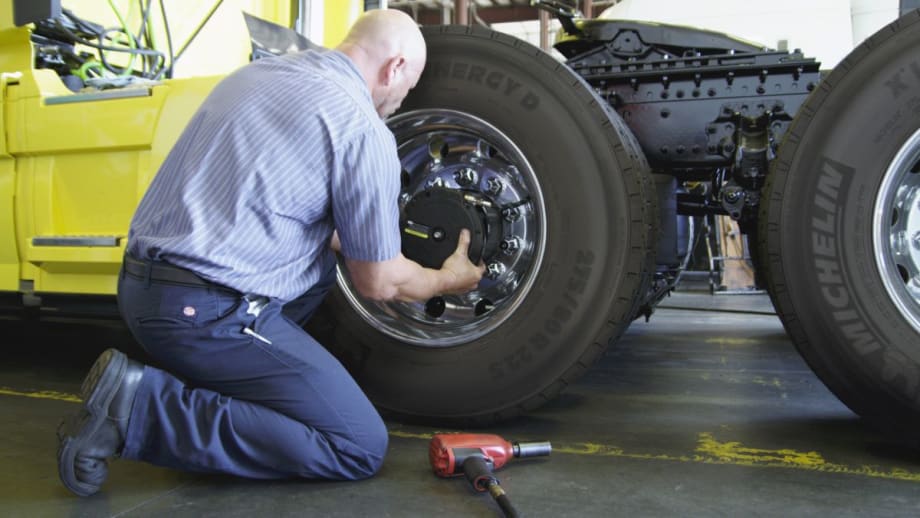
Tire technology changing today’s fleets includes devices such as Aperia Technologies’ Halo automatic tire inflation system.
Photo: Aperia Technologies
6 min to read
Technology. It’s changed our lives in ways we never could have imagined over the past few decades. And while the movie visions of our future have not necessarily come to fruition, we can’t ignore the fact that tech is a part of every fleet manager’s daily life.
Tech hasn’t just changed the vehicles and how we manage them, but truck tires, too. Technology has reduced failures, helped tires have longer useful lives, increased fuel efficiency, and improved rolling resistance, to name a few.
Here are four ways tech has impacted the work truck tire:
1. Increased Fuel Efficiency
Fuel efficiency has become an increasingly important consideration for fleets.
“Power OEMs, as well as fleets, have embraced the need for greater fuel efficiency and tire manufacturers have answered the call. However, performance gains in one area, such as rolling resistance, can often negatively impact other performance targets like traction and durability. In turn, new product development has focused on minimizing these trade-offs,” said Tom Clauer, senior manager of commercial and OTR product planning for Yokohama.
Tire solutions engineered for fuel efficiency can improve a fleet’s bottom line.
“Bridgestone continues to innovate in fuel-efficient tire solutions with its Ecopia tire line, which is a full line of tires engineered for low rolling resistance and corresponding fuel efficiency,” said Ben Johnson, director of marketing, truck and bus radial, U.S. and Canada, Bridgestone Americas Tire Operations (BATO).
2. Improved Rolling Resistance
Technology improvements have led to tires with lower rolling resistance, which improves fleets’ fuel economy.
“With the use of advanced materials, the performance attributes of a tire can be expanded to realize improvements in rolling resistance while maintaining or improving other key attributes in the tire like treadwear and durability,” said Phil Mosier, manager of commercial tire development for Cooper Tire.
In the past, there was a trade-off between tire life and fuel economy.
“Technology has reduced the gap, and we are at the point where there is little or no trade-off. Toyo recently developed a Nano Composite Polymer (NCP) that greatly contributes to durability while improving rolling resistance performance,” said Mike Graber, director of Commercial Truck Tire Sales for Toyo Tire U.S.A. Corp.
Rolling resistance is a significant driver of innovation.
“This source of innovation is due to government regulations and the high cost of fuel for our customers,” said Justin Brock, marketing manager- Construction & Tweel for Michelin North America. “The trade-off to get low rolling resistance is often traction. Two major innovations to break that compromise have been silica tread rubber and more rigid tread designs. Silica rubber improves wet traction while lowering rolling resistance. 3D-matrix siping is a great example of making the tread rigid in the contact patch while keeping the traction benefits of sipes.”
3. Reduced Failures
Technology has also helped in the way of tire pressure monitoring systems (TPMS).
“Active pressure management translates to healthier tires, more vehicle uptime, happier drivers, and customers. According to TMC, 90% of tire failures are caused by excessive heating from under-inflation,” explained Judith Monte, VP of marketing & customer success for Aperia Technologies.
Tire pressure is critical to the safety and efficiency of a vehicle’s operation.
“It’s the air inside a tire that’s carrying the load of the vehicle, not the tire itself. However, many don’t realize how dynamic tire pressure is. This makes optimal pressure management practically impossible to do manually, resulting in significant uncertainty and error in even the best tire pressure management program,” Monte added.
4. Longer Useful Tire Life
Retread technology has seen significant innovation over the last few years.
“Retreading is another area we’ve seen technology improvements. Bandag FuelTech retreads are the retread counterpart to the Bridgestone Ecopia tire line. These complementary tread patterns allow a fleet to extend the useful life of a tire, which helps to lower the total cost of ownership per mile and keeps the tire casing running longer than ever,” said Johnson of Bridgestone.
Technology is continuing to drive innovation in the commercial tire industry.
“As fleets look to limit downtime and maximize performance, they demand longer-lasting, durable tires that increase efficiency and drive a lower total cost of ownership. As tire technology progresses, you see solutions that last longer when properly maintained and managed,” Johnson added.
Goodyear’s engineers have developed products such as UniCircle retread technology.
“UniCircle helps expand the life of tire casings, providing seamless construction and a precise fit that delivers repeat performance. This technology helps deliver even wear and an improvement in rolling resistance to increase the life span of each retreaded tire,” said Dustin Lancy, commercial product marketing manager – regional/urban for The Goodyear Tire & Rubber Company.
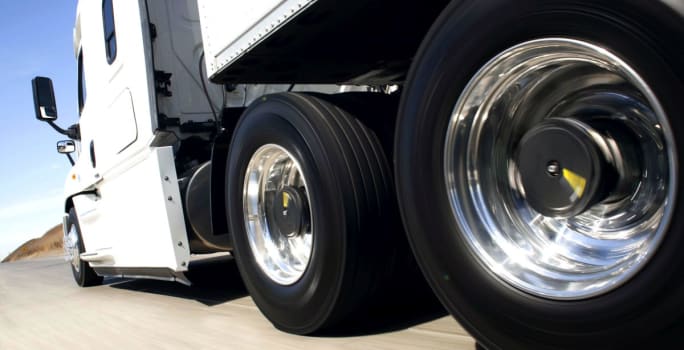
Technology is helping create better tires that enhance safety and reduce resistance.
Photo: Aperia Technologies
New Tire Manufacturing Tech
How tires are made has also been impacted by technology.
“All commercial tire manufacturers are constantly looking for ways to enhance and improve tire durability and overall performance. Cooper Tire’s R&D and technical departments use new technology to improve upon cut/chip compounds and increased tread life while decreasing overall tire weight. There is a shift in using higher-tensile-strength steel in the belts of the tire to more efficiently make use of the materials in the tire. This also leads to reduced weight and rolling resistance,” said Mosier of Cooper Tire.
Always innovating, Hankook Tire has developed various new technologies for truck tires over the past 10 years.
“Some of the new technologies Hankook has developed include the Spiral-Coil (0-degree Belt), which helps improve the Tread/Belt endurance performance (especially on Ultra Super Single tires). We’ve also developed many types of 3D-kerf, which makes more improved traction/wear performance, and several types of tread compound: for better rolling resistance, wear, traction, and more,” said KJ Kim, director of TBR Marketing for Hankook Tire America.
Manufacturers are investing in research to develop innovative tires with new technologies that meet the expectations of today’s hard-working fleets.
“At Bridgestone, we’re engineering tires for specific applications, keeping in mind any conditions that may challenge a tire on or off the road. We’re designing tougher tread patterns with unique compounds to last longer and be more durable. We’re engineering tires for improved traction across any environment a fleet may encounter along their haul. And, we’re educating fleets on the best way to manage their tires through programs that include digital analytics and asset tracking,” said Johnson of Bridgestone.
Today, we manage tires by guesswork with random checks, or at scheduled intervals.
“Technology advancements allow fleets to outsource tire management effectively. The system combines active pressure management, proactive automation, analytics, and alerts to allow fleets to work safer, and smarter,” said Monte of Aperia Technologies.
And for many fleets, tire management entails more reactive fire-fighting than planning.
“According to a study conducted by TMC, only 55% of heavy-duty truck and trailer tires are within the optimal range. Effectively identifying underinflation and leaks is nearly impossible when assets are out on the road, and yet not addressing these issues in time could lead to catastrophic tire failure and costly truck downtime,” concluded Monte of Aperia Technologies.
But increased tech and updating tires require a balancing act.
“A tire, like many other things, has compromises. For example, noise and traction. Typically, the more traction built into the tread design the noisier the tire is on the road. Innovation at Michelin is about breaking those compromises. We are constantly looking at our products and measuring our performance not only versus our competitors but more importantly versus customer needs,” said Brock of Michelin North America.
Subscribe to Our Newsletter
More Maintenance
Les Schwab Expands Commercial Tire Footprint Into Arizona
Les Schwab Tires has expanded into Arizona with two commercial tire locations in Phoenix and Tucson, strengthening its fleet service footprint in the Southwest.
Read More →
Volvo Trucks’ 'Lock and Leave' Software Updates Go Live Across North America
Unattended over-the-air software updates are now available in Volvo trucks across the U.S. and Canada. The new capability lets trucks stay current with the latest software without interrupting operations or requiring a dealership visit.
Read More →
Why Technician Appreciation Can’t Be a Once-a-Year Thought
For fleets trying to keep skilled technicians, recognition cannot begin and end with Technician Appreciation Week. Learn what year-round appreciation really looks like and why the everyday technician experience matters just as much as pay when fleets are trying to keep good people.
Read More →
How Faster Driver Reporting Can Keep Small Truck Problems Small
When minor damage, warning lights, or equipment issues are reported late, small problems can quickly become bigger maintenance headaches. Conversational AI can help shorten the path from what a driver notices in the field to the person who can act on it.
Read More →
BendPak’s Ranger Wheel Service Equipment Achieves North American Safety Certification
BendPak’s full line of Ranger tire changers and wheel balancers has been ETL certified to UL and CSA standards to improve operator safety.
Read More →
Isuzu & U.S. Department of Labor Celebrate Milestone for Veterans Apprenticeship Program
The Isuzu Veterans Apprenticeship Program (IVAP) signing ceremony highlighted Isuzu’s long-term commitment to veterans, Isuzu dealers, and the skilled workforce supporting its customers and the commercial transportation industry.
Read More →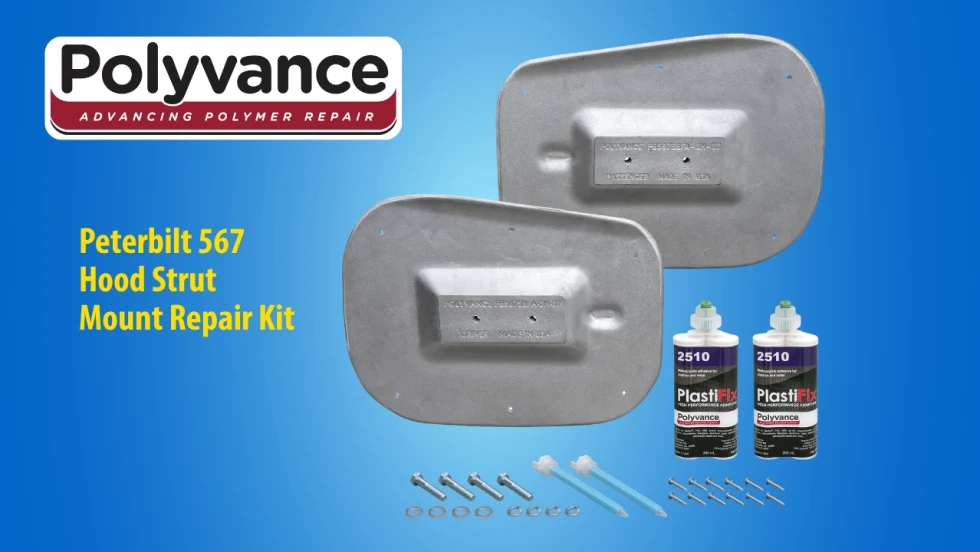
Polyvance Introduces New Peterbilt 567 Hood Strut Mount Repair Kit
Polyvance has launched a repair solution for Peterbilt 567 hood struts, helping truck owners and repair facilities avoid costly hood replacements.
Read More →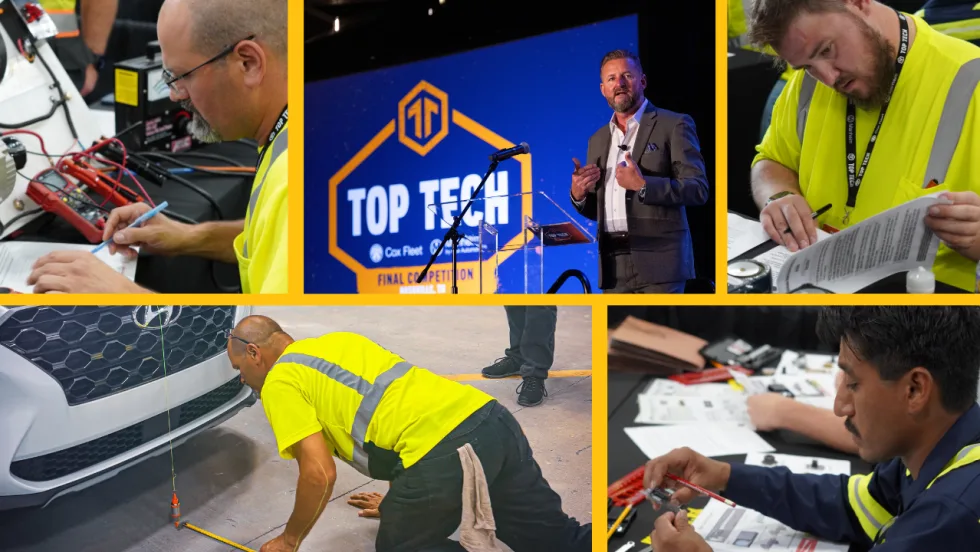
Cox Automotive Celebrates Technical Excellence at 2026 Top Tech Finals
The top technicians from Cox Fleet and Manheim tested their skills in Nashville, Tennessee, at Cox Automotive’s 2026 Top Tech Finals. The overall winners will advance to compete at the American Trucking Association’s TMC SuperTech competition.
Read More →
Grote Industries Appoints Vice President of North American Operations
Grote Industries has appointed Patrick Smith as vice president of North American operations as it celebrates 125 years of innovation and manufacturing excellence. He has more than 20 years of manufacturing leadership experience.
Read More →
Winter Fleet Prep: Expert Tips to Keep Vehicles Running Smoothly
Cold weather can expose weak batteries, tires, fuel systems, and maintenance gaps fast. Use this winter fleet checklist to prepare trucks and drivers before temperatures drop.
Read More →