




Importance of Proper Truck Tire Maintenance
By managing a tire throughout its lifecycle – from selection to removal – fleet managers can make a big impact on the bottom line, all while making mobility more efficient for their fleet.


By managing a tire throughout its lifecycle – from selection to removal – fleet managers can make a big impact on the bottom line, all while making mobility more efficient for their fleet.
Photo: Bridgestone

Tire selection with application and position in mind is particularly relevant today, as fleets are running heavier loads for longer hours of operation, according to Bridgestone.
Photo: Bridgestone
Tires are one of a fleet’s most important assets.
“A proactive tire maintenance program supports safety on the road and helps fleets capitalize on long-term performance. From Class 8 trucks to passenger vehicles, proactive tire maintenance helps fleets identify and address problems before they happen, potentially avoiding costly downtime while multiplying savings through optimized tire performance, including improved tread life and fuel economy,” explained Kyle Chen, brand manager, truck and bus radial tires, U.S. and Canada, Bridgestone Americas Tire Operations (BATO).
By managing a tire throughout its lifecycle – from selection to removal – fleet managers can make a big impact on the bottom line, all while making mobility more efficient for their fleet.
Tips for Tire Safety
Before they hit the road, every driver should conduct a pre-trip inspection to ensure there are no tire-related issues that need to be addressed before a haul.
“For example, visually inspecting tires for irregularities such as cuts or penetrations is a simple and effective pre-trip tire maintenance step that every fleet should perform,” Chen added.
Below are some other best practices that Bridgestone recommends fleets implement before, during, and after a haul to promote safer driving conditions and efficient operations:
Select the right tire for the job. Fleet managers should consider the proper tire size, load carrying capacity, and service type. According to Bridgestone, tire selection is the foundation of tire performance. Fleet managers should also consider additional factors when choosing a tire to make sure performance expectations are met, such as application, size, load carrying capacity, and route. Once a tire is selected, proactive maintenance, operations, and inspections are critical to ensure a tire’s long-term safety and performance over time.
Ensure and maintain proper cold inflation tire pressure. Tire inflation pressure is a critical and often overlooked aspect of a tire maintenance program, according to Bridgestone. Improper tire inflation pressure can lead to downtime and damaged tire casings. Proper tire inflation pressure can help to ensure even weight distribution across a tire’s contact patch, which can maximize treadwear life and fuel efficiency.
It is important to remember to check tire inflation pressure when a tire is cold. According to Bridgestone, cold inflation pressure is most accurately measured when tires have been parked for at least three hours or driven less than one mile at a moderate speed. Bridgestone also recommends fleet managers and commercial truck drivers use a calibrated tire pressure gauge at each wheel position.Inspect tires often. Hands-on inspections are helpful to identify irregular wear issues, low tread depth, and road-related damage. Before each trip, fleet managers should ensure drivers look for such issues as irregular wear, flat spotting, cuts, cracks, bulges, or penetrations. Frequent, manual inspections will help drivers address any issues before they impact tire performance.
Abide by a tire’s recommended speed rating. Fleet managers should always reinforce drivers abide by each tire’s maximum speed rating, which may be lower than posted highway speed limits. By not exceeding the speed rating of a tire, drivers can help avoid various tire-related incidents that could potentially cause downtime or create additional road hazards for the motoring public.
Fleet managers and their drivers should always be on the same page when it comes to tire maintenance.
“Everyone benefits from proper tire maintenance practices. Training and education can help ensure that everyone behind the wheel and in the yard understands their role in a fleet’s tire maintenance program. When everyone knows their role and what proactive maintenance steps to take, fleets are better prepared to avoid downtime and improve safety on the road,” Chen added.
Debunking Tire Myths
Myths are abundant when it comes to tires. Misinformation is spread so much more quickly today than ever before, and it’s essential to know the truth related to truck tires.
One myth is that all tires are created equal.
“Tires are highly specialized pieces of technology engineered for specific vehicles, equipment, and applications. With this specialization in mind, selecting the right tire for the application and use is critical to tire safety and performance. Fleet managers should consider the vehicle type, Gross Axle Weight Rating (GAWR), speed requirements, service conditions, and tire specifications such as size, load range, and intended application,” Chen said.
Tire selection with application and position in mind is particularly relevant today, as fleets are running heavier loads for longer hours of operation, according to Bridgestone.
Another myth is around retreading, or the practice of replacing the tread on a tire casing instead of removing the tire from service after one use.
“Retreading helps extend the useful life of a tire casing by replacing the tread two or more times, which, in turn, helps lower the total cost of ownership (TCO) per mile,” Chen said. “Many people still believe a common tire myth that retreads are of lesser quality than new tires and are a contributor to tire debris seen on highways. In reality, rubber debris most often is the result of human error and poor tire care such as underinflation, overloading, and tire abuse,” Chen said.
Today’s high-quality retreads can provide performance and reliability benefits for much less than purchasing another new tire.
“It is easy to see why many of the largest fleets in North America incorporate retreads in their tire programs. Again, safety and performance come back to tire care best practices, which are critical for both new and retread tires,” Chen said.
The Bottom Line
It can’t be said enough: Tires are one of a fleet’s most valuable assets.
“A proactive tire maintenance program encourages fleets to monitor their tires every day and address issues proactively before they impact operational efficiency, increase incremental operating costs, cause safety concerns, and unplanned downtime. A proactive tire maintenance program treats tires like the important asset that they are, and more importantly, supports the safety of a fleet, its operators, and other drivers on the road,” concluded Chen.
More Maintenance & Uptime

Kooner and Global Partners Connect Mobile Fleet Maintenance and Fueling Services
A new referral partnership connects on-site fueling and maintenance services, with a focus on reducing off-site trips and making better use of fleet downtime.
Read More →
Maintenance Failures That Sideline Work Trucks and the Inspection List That Catches Them Early
Unplanned downtime hurts efficiency and even profitability for work truck fleets, but catching potential problems early can help prevent it. Here is an inspection list that can help potentially prevent that downtime.
Read More →
Hunter Engineering Enters Collaborates with Bosch for Remote Diagnostics Service Through ADASLink
Hunter Engineering’s collaboration with Bosch enables ADASLink to connect directly with Bosch diagnostic experts through an integrated remote support platform, allowing shops to service more vehicles.
Read More →From Our Partners
How JASPER Keeps Fleets Moving and Profitable
Sponsored by Jasper Engines & Transmissions

Basic Tracking vs Next Generation Fleet Technology
Sponsored by AT&T Business

5 Facts Every Fleet Manager Should Know About Embedded Telematics
Sponsored by Stellantis/Mobilisights

How AI Video Telematics Boosts Driver Safety and Helps to Avoid Unnecessary Costs
Sponsored by Verizon Connect

Charting the 8 Bottom-Line Benefits of Workforce Optimization
Sponsored by Verizon Connect

Mack Adds Chassis Coverage Options for Fleet Repair Costs
Mack Trucks introduced four system-specific chassis coverage plans, giving fleets more flexibility to manage repair costs for driveline, HVAC, electronics, safety systems, and other components.
Read More →
GM Launches ‘30 Under 30’ Program to Elevate Automotive Service Technicians and Inspire the Next Generation
The GM Automotive Service Technicians 30 Under 30 program honors GM service technicians under the age of 30 who demonstrate continuous technical training, exemplary customer service, mentorship, and leadership.
Read More →
Kooner Fleet Management Solutions Named Exclusive On-Site Fleet Maintenance Provider for Safe Truck Parking
A strategic partnership between Kooner Fleet Management Solutions and Safe Truck Parking brings mobile maintenance and 24/7 repair services directly to Safe Truck Parking locations, beginning in San Diego, California, with nationwide expansion planned.
Read More →
Building a Better Vehicle Replacement Model
Meter readings still matter, but engine hours, idle time, maintenance trends, and utilization can help fleets spot costly vehicles before the odometer does.
Read More →
How JASPER Keeps Fleets Moving and Profitable
Every business decision within fleet management ultimately comes down to financial performance. Investing in dependable replacement powertrain components and responsive support can measurably impact the bottom line.
Read More →
Ryder Honors 2026 Top Technician at 25th Anniversary Skills Competition
Hosted in Nashville, Ryder’s 25th annual Top Technician Skills Competition honored the best technicians across the U.S. and Canada. Top Tech celebrates technician expertise while promoting growth, recognition, and camaraderie. Here are the winners.
Read More →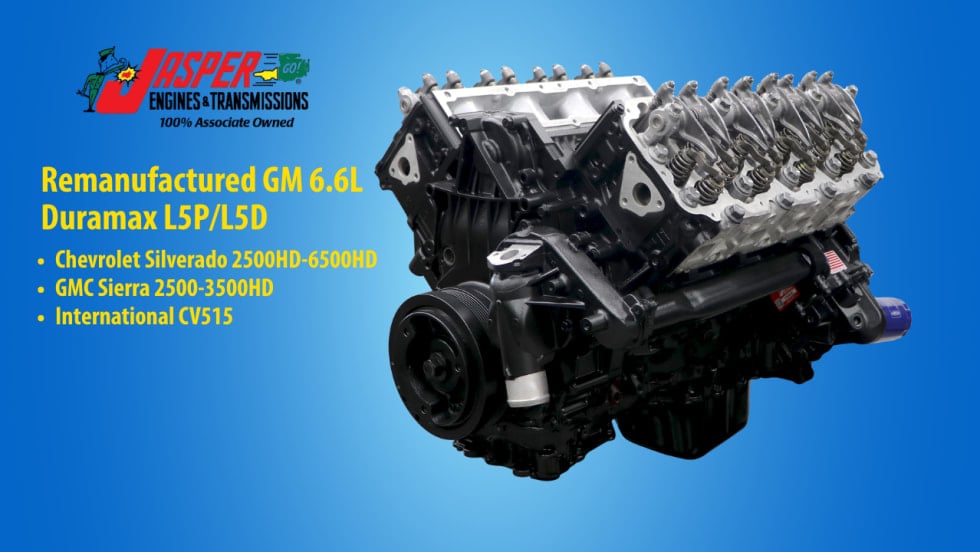
Jasper Offers GM 6.6L Duramax L5P/L5D Complete Format Diesel Engines
Jasper Engines & Transmissions now offers the remanufactured GM Duramax 6.6L L5P/L5D as a complete format engine for several General Motors and International 2017-2023 HD pickup trucks.
Read More →