




'Steel' Yourself for the Future of Truck Bodies
Defined by two key measurements, yield strength and percent elongation, steel is being evaluated by a growing number of fleet managers.


Advanced high-strength steel (AHSS) contributed to a 30-lb. weight reduction of the frame in the 2013 model Ram 1500.
Photo: Ram Truck
When it comes to specialty truck bodies (such as service bodies, flat beds, dump beds, and stake bodies) steel remains the most prevalent material, because of its strength, durability, and relatively low cost. The downside to steel, however, has traditionally been its heaviness, which can be a liability in an era of high fuel prices.
A growing number of fleet managers are evaluating truck bodies that incorporate lighter-weight materials, such as fiber composites and aluminum, to reduce body weight and contribute to improved fuel economy. Yet, these materials often come with a trade-off of higher body cost, and, depending on the design, diminished strength and durability.
What if steel could lose weight, without sacrificing its strength or increasing costs?
That’s the promise of the latest generation of advanced high-strength steel (AHSS), according to its proponents. And, this technology may find its way into future designs of specialty bodies, expanding options for fleet managers for “light-weighting” vehicles.
Defining AHSS
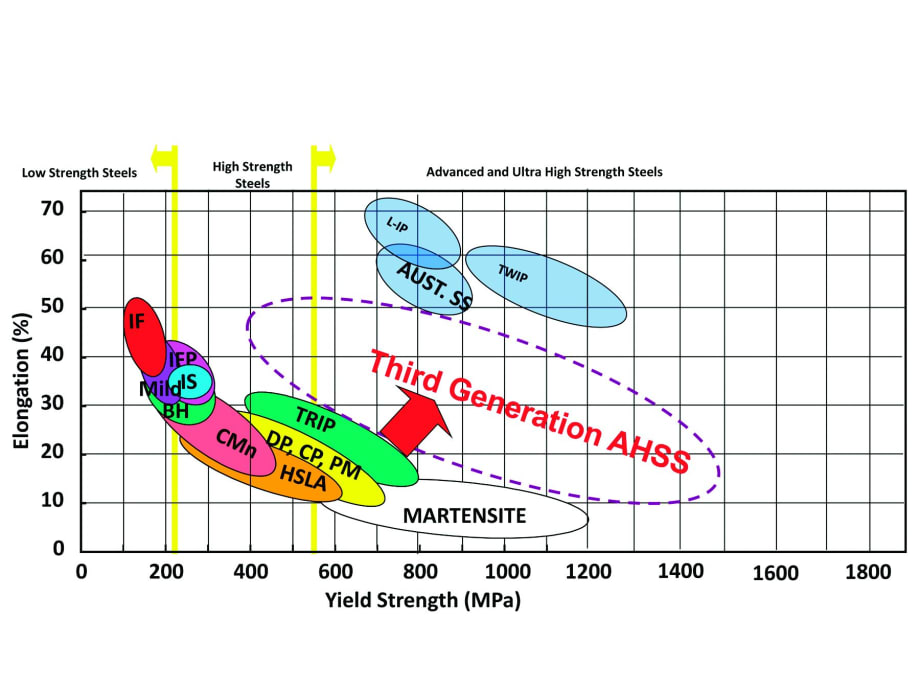
What exactly is AHSS? What makes AHSS different from conventional “mild” and “high-strength” steels? What makes advanced high-strength steels so “advanced”? Without getting into an overly technical definition that requires a Ph.D. in metallurgy to decipher, let’s begin by referring to the “Steel Strength Comparison Chart,” which illustrates where AHSS fits relative to other steels.
As you look at the chart, several acronyms are listed (such as IF, TRIP, and DP) that may not mean anything to you right now. That’s okay — we’ll touch on some of those shortly. Right now, note the “X” and “Y” axis.
Steels are defined by two key measurements:
Yield strength (YS), measured in units of megapascals (MPa), which relates to the maximum amount of force the material can withstand before it deforms permanently.
Percent (%) elongation, which describes the material’s formability — that is, the ability to be bent and shaped, without fracturing.
To understand what these terms mean, consider interstitial-free (IF) steel on the left of the chart. Its YS is somewhere between 100 MPa and 200 MPa and elongation ranges from 35 to 52 percent. Toward the center of the chart are high-strength, low alloy (HSLA) steels, with YS from 200 to 500-plus MPa and elongations between 10 and 25 percent.
Notice the pattern: The higher percent elongation (formability) of IF steel correlates to lower strength. Correspondingly, for the higher-strength HSLA steels formability decreases substantially, making these steels more difficult to work with in a number of manufacturing applications.
There’s a trade-off between strength versus formability with conventional low-strength and high-strength steels. If a component design requires substantial bending and forming, the material would need to be low strength. Then, in areas of the component that require greater strength and durability, there would need to be thicker steel, which adds weight.
Solving the Steel Equation
How can the strength versus formability tension be resolved? That is what drives the research and development of advanced high-strength steels.
AHSS = (Strength + Formability) – Weight
“High-strength steels were developed in the 1970s and 1980s, basically by altering the chemistry of these steels — adding different alloys [mixture of metals] and elements to increase strength,” said David Anderson, senior director of Automotive Technical Panel and Long Products Program, Steel Market Development Institute (SMDI). The process of adding metals to the steel is called “alloying,” which increases strength, but (depending on the metals included) can also lower formability and drive higher material costs.
“Advanced high-strength steel is different because it combines both chemistry and thermo-mechanical processing,” Anderson explained. “So, if you look at how it’s made, you would have to heat, hold, clamp, and temper the product to get to the strength levels you require.”
This process is known as “continuous annealing,” which puts the steel through a series of hot and cold treatments, changing the steel’s microstructure to achieve both higher formability and strength.
As a result, AHSS enables engineers to use thinner (reduced gauge) steel to produce a lighter-weight part, while maintaining or improving the strength and other performance properties.
Applying AHSS to Trucks
The most prevalent AHSS structures being developed today include dual phase (DP), transformation-induced plasticity (TRIP), complex phase (CP), martensitic (MS), hot-formed (HF), and twinning-induced plasticity (TWIP), among several others.
Each of these structures offer unique strength and formability characteristics, allowing the steel to be fabricated for specific automotive applications.
For example, DP and TRIP steels are well-suited for the crash zones in the truck because of their high energy absorption capabilities.
MS and boron-based HF steels increase safety, strength, and rigidity, working best indoor beams for passenger compartments.
Here’s a sampling of how AHSS is being incorporated by OEMs:
Ram 1500 pickup. AHSS has contributed to a 30-lb. weight reduction of the frame in the 2013 model.
Ford F-150 pickup. In the 2010 model, use of AHSS improved roof strength by 75 percent from the previous model-year.
The Future of Steel Vehicles
While the aforementioned vehicle examples showcase how strength gains and weight reduction can be achieved with AHSS technologies available today, the FutureSteelVehicle (FSV) program, sponsored by WorldAutoSteel, offers a glimpse into the future — highlighting the development of new “third-generation” AHSS grades, that the organization says will be commercially available in the 2015-2020 time frame.
The FSV project achieved 35-percent vehicle mass reduction, compared to a benchmark vehicle, using 97-percent high-strength and advanced high-strength steels, while avoiding high-cost penalties typically associated with lightweight materials.
To understand the significance of the FSV program’s findings, refer to the “Steel Strength Comparison Chart.” Notice the oval in the middle labeled “Third-Generation AHSS.” That’s the global steel industry's direction with AHSS technology — to fill the gap between TRIP steels (considered “first generation” AHSS) and TWIP, a second-generation AHSS.
Once available, these new steels, combined with previous generations of AHSS, could offer engineers nearly limitless options in selecting the right lightweight steel, with right strength and formability properties, for the right application.
Putting AHSS in Truck Bodies
Could this wider range of steel properties make AHSS a viable lightweight material in the design of specialty truck bodies?
“There is absolutely no reason AHSS could not be of benefit to truck bodies in the same way they are being envisioned for and used in automobiles,” said David Matlock, a metallurgist (trained in the extraction and refining and alloying and fabrication of metals) at the Colorado School of Mines and director of the Advanced Steel Processing and Products Research Center. “With the third generation of AHSS, there may be some new developments that, with different strength property combinations, allow body companies to implement them without having to totally retool. There is some flexibility coming they should not overlook.”
How could AHSS be used in the design of truck bodies? Here are three possibilities:
1. Reducing weight of existing steel body designs, while increasing durability.
Matlock posed this example: “If you have a truck bed floor made out of conventional steel, and you drop a large rock load onto it, the surface will most likely come out deformed, where a higher-strength material might not. It will hold up better.”
What is the approximate weight savings with AHSS compared to conventional steel? “At the Automotive Applications Council and with our partners in the AutoSteel Partnership, we’ve seen as much as 25- to 30-percent weight savings with these advanced high strength steels — at no cost penalty historically,” said Anderson with the SMDI.
According to a spokesperson for the U.S. Department of Energy’s (DOE) Vehicle Technologies Program, “The weight savings that can be achieved using AHSS will vary depending on the application. For example, it may be possible to reduce more weight from the truck frame than from the truck doors. Most structural subsystems achieve weight savings between 15 and 25 percent through the use of AHSS.”
2. Reinforcing bodies to support mounted equipment, without increasing body thickness or weight.
Instead of having to use thicker-gauge steel to support a body-mounted crane, compressor, or any other heavy equipment, a body manufacturer could achieve similar or even greater strength with thinner — and lighter — AHSS.
3. Using AHSS in conjunction with other lightweight materials to achieve further weight reductions.
Even bodies comprised primarily of lightweight fiber composites or aluminum still use some form of steel for the body’s substructure (frame), where rigidity and maximum strength is essential. It would figure that if the substructures were also “lightweight,” comprised of AHSS instead of conventional steels, that much more weight could be saved.
Challenges for AHSS
While AHSS offers the promise of increased strength and lower weight, can it become a reality in specialty truck body applications?
Here are two key challenges that the truck equipment and steel industries must overcome for AHSS to gain wider share of specialty truck body designs:
1. Cost to re-tool production capabilities.
“I would imagine that [body manufacturers] don’t have huge flexibility in manufacturing capabilities (because they are smaller companies),” said Matlock of the Colorado School of Mines. “They are not going to put in a whole new stamping line like an automotive OEM, where they are going to make millions of parts. So they likely have limitations in their material choice criteria.”
2. AHSS repairability and weldability.
“Repairing AHSS structures can be a challenge due to the increased work hardening and sensitivity to welding,” said a spokesperson for the U.S. Department of Energy’s Vehicle Technology Program. “Work hardening occurs when the metal is deformed, causing an increase in strength and rigidity. Conversely, AHSS alloys are susceptible to softening near welds due to heat, which causes a localized decrease in strength. Both effects are usually manageable when repairs are done, while considering the unique behavior of AHSS.”
Anderson with SMDI acknowledged this concern.
“With some of these advanced high-strength steels, you’ve got to repair it outside a higher stress area,” he said. “For a front rail or for a B-pillar or rocker: All those applications require different [repair] techniques, sometimes complete replacement. We’re working with the repair industry to get them up to speed on where [on the vehicle] the advanced high-strength steels are applied and the best ways to work with those steels based on their properties.”
What does this mean for body manufacturers? They will likely need specially trained welders and repair technicians to work with AHSS, which could drive higher personnel and production costs.
Outlook for AHSS
What does the future look like for AHSS in the truck body market?
“There will be a greater infrastructure for the manufacture of AHSS. It’s already on the way. If that’s the case, then that means the opportunities for commercial implementation in vehicles will be improved,” Matlock said. “One of the factors driving down costs is the expansion of current facilities — and coming online with new facilities that are built specifically to produce these products. As those facilities come on line, the availability — and costs — will be improved.”
What does that mean for body manufacturers?
“You’ll see a greater availability of new [AHSS] product with a broader set of capabilities that could then be implemented in specific designs [like truck bodies],” Matlock said. “The research has been ongoing and steel manufacturers are building facilities or modifying existing facilities to accommodate. That means you’ll have new materials that will allow you some design applications that may not be available today. If your customers can’t buy these steels, it’s not good either. That’s where the industry is really moving — to increase the availability of AHSS. They will only be available in the market if they are cost competitive with any other material.”
More Upfitting
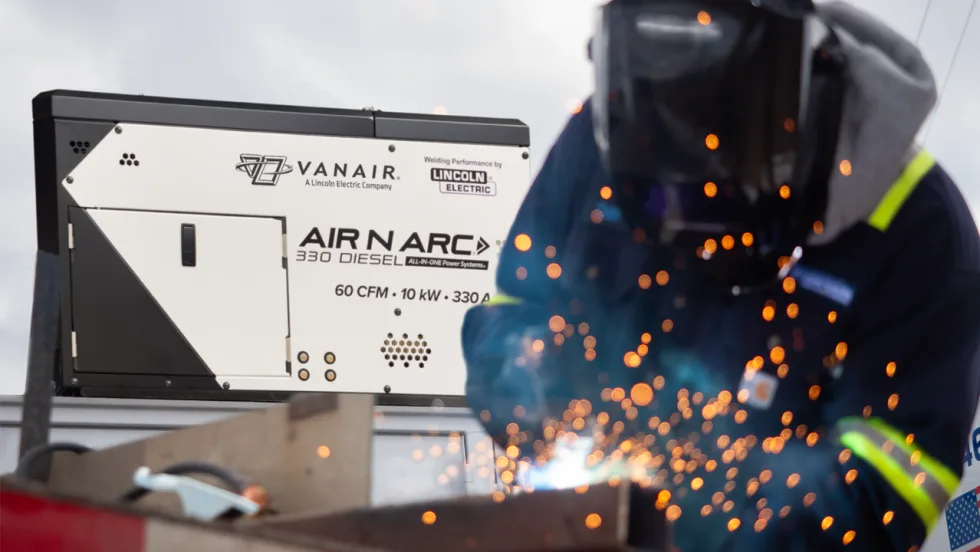
Multitasking: Vanair’s Air N Arc 330 Diesel 60 CFM All-In-One Power System
The Air N Arc 330 Diesel 60 CFM from Vanair consolidates a welder, generator, rotary screw air compressor, battery booster, battery charger, and EV charger into a single 750-pound enclosure driven by one 24.8-horsepower Kubota diesel engine.
Read More →
Buyers Products Awarded Sourcewell Cooperative Purchasing Contract for Snow & Ice Equipment
Buyers Products has been awarded a Sourcewell contract for a wide range of winter maintenance equipment and accessories, including snowplows, municipal plow systems, wing plows, spreaders, and more.
Read More →
Hilltip Introduces the SnowStriker SFT Flex Expandable Box Plow
Hilltip’s new SnowStriker SFT Flex expandable box plow features hydraulically extendable sections that allow operators to adapt the clearing width to changing conditions and applications on the go.
Read More →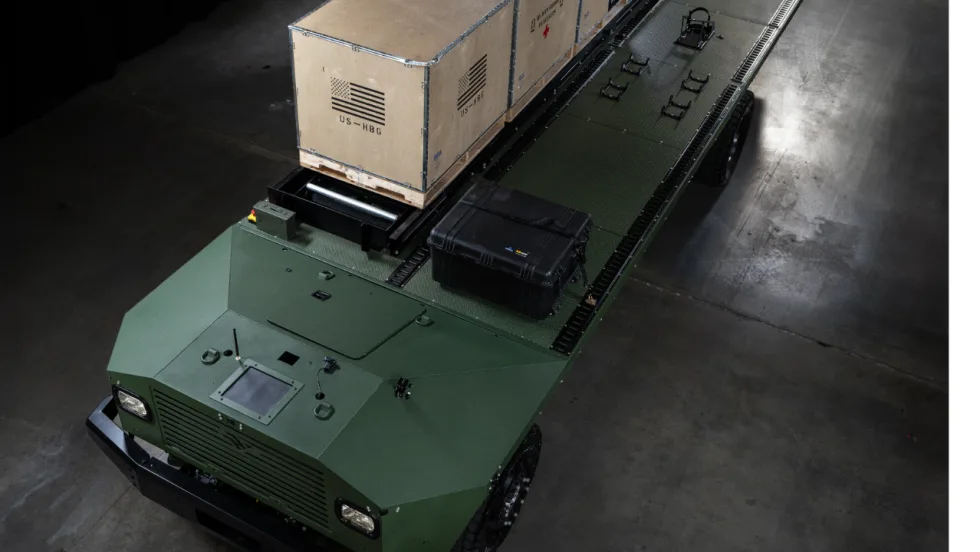
Harbinger Part of Effort to Deliver Autonomous Logistics Capabilities for U.S. Army
American Rheinmetall received an 18-month U.S. Army contract to deliver autonomous, hybrid-powered uncrewed ground vehicles. Harbinger is providing the truck platform for those vehicles.
Read More →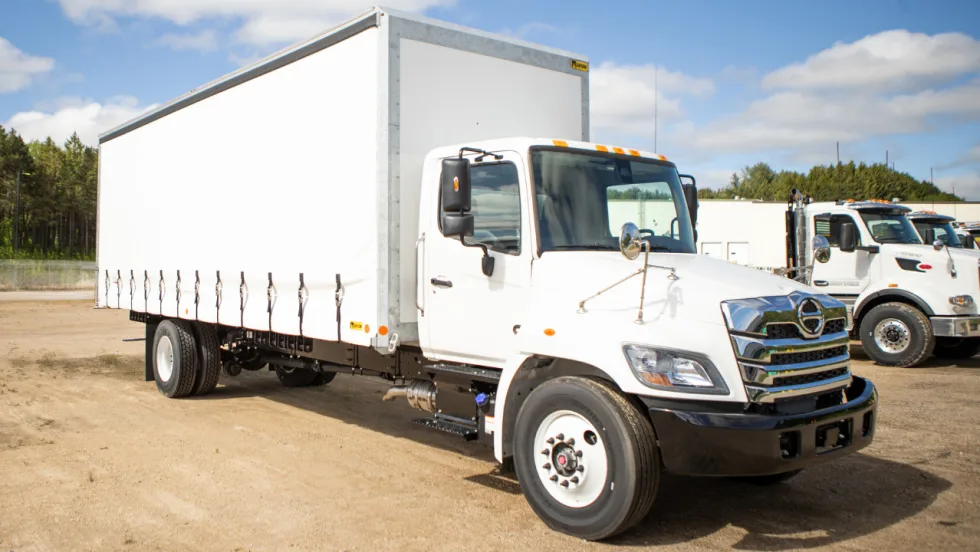
Thinking Outside of the Box: Choosing the Right Truck Body for Your Fleet
Choosing the right truck body can have a major impact on loading efficiency, cargo protection, downtime, and long-term operating costs. Here’s how dry vans, platforms, and curtainsiders compare, plus what fleets should consider before spec’ing their next truck.
Read More →
Fourth Annual Upfit Package of the Year Awards Open for 2027 Entries: One Month Left!
Think your upfit deserves industry recognition? Enter the 2027 Work Truck Upfit Package of the Year Awards before the Sept. 30 deadline. There is less than a month left to get your submissions in!
Read More →
Reading Truck Equipment & Masterack Unite as One of North America's Largest Commercial Vehicle Upfit Networks
Reading Truck Equipment and Masterack have integrated operations to create one of North America's largest and most comprehensive commercial vehicle upfit organizations.
Read More →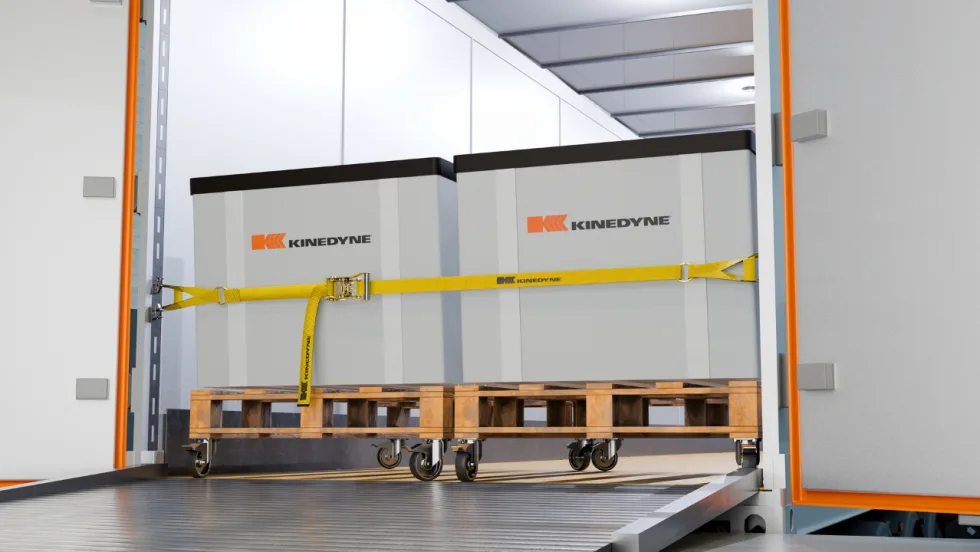
Kinedyne Launches Heavy Duty Logistic Shoring Strap
Kinedyne’s new Heavy Duty Logistic Shoring Strap features a patent-pending four-point design to deliver greater cargo stability, increased strength, and easier handling for rolling and shifting freight.
Read More →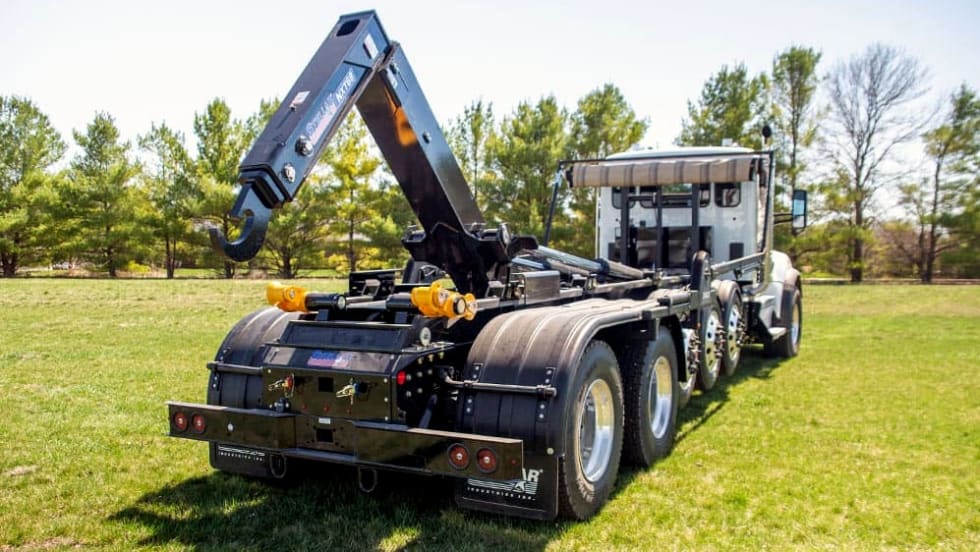
Hooklift Bumper Design from Stellar Showcases Strength & Versatility
Stellar Industries’ new bumper for the NZT Series Hooklifts come in two capacity options: the 20K, designed for Class 3 – 6 chassis with a 20,000-pound pull capacity, and the 90K, built for Class 7 and 8 chassis with a 90,000-pound pull capacity.
Read More →
Maxon Lift Awarded the Wabash Platinum Award for Supply Chain Performance
Maxon Lift, a liftgate manufacturer since 1957, received the Wabash Platinum Award for supply chain performance in 2025. Each year, Wabash presents awards to top suppliers for excellence in supply chain performance.
Read More →