




Fuel Up: Does Your Fleet Need Mobile Fueling?
State of Fuel Industry: Gasoline & Diesel
Fuel prices for diesel and gas are impacted by numerous unpredictable factors, both in the short and long term. Fleet managers can make informed decisions and manage their finances better by keeping up to date with the latest fuel price trends.

Hillary Weiss・Senior Editor

State of Fuel Industry: Will EVs kick out gasoline and diesel?
Photo: Work Truck
6 min to read
Gasoline and diesel fuels have been the backbone of the work truck industry for decades.
However, in recent years, the industry has faced pressures from supply chain restraints, the COVID-19 pandemic, and the push to transition toward sustainable alternatives.
With fleet managers, governments, and consumers increasingly prioritizing clean energy solutions, the future of the fuel industry is in flux.
While some experts predict a gradual decline in traditional fossil fuels, others believe that innovation and technological advancements will allow the industry to adapt and thrive.
We will explore the history and current state of the gas and diesel markets and examine how these fuels are likely to evolve in the coming years.
Diesel Prices Remained Constant Before 2020
Before the COVID-19 pandemic, the diesel industry was relatively stable, with prices fluctuating based on supply and demand.
In the United States, diesel fuel prices were generally higher than gasoline prices due to higher refining costs and taxes.
According to the U.S. Energy Information Administration (EIA), the average retail price for diesel fuel in 2019 was $3.06 per gallon, with prices varying by region and season.
Globally, diesel fuel prices were influenced by geopolitical events, such as OPEC production cuts and economic sanctions on oil-producing countries.
The diesel industry was characterized by steady demand from the transportation and construction sectors, with ongoing efforts to improve fuel efficiency and reduce emissions with cleaner-burning diesel engines and alternative fuels such as biodiesel.
Gas Prices Were Stable Before 2020
The gasoline industry was also relatively stable before 2020, with prices influenced by various factors, including crude oil prices, refinery capacity, seasonal demand, and taxes.
In the United States, gasoline prices fluctuated throughout the year. Generally, they followed a predictable seasonal pattern, with prices typically highest in the summer months due to increased demand for travel.
According to the EIA, the average retail price for regular gasoline in 2019 was $2.60 per gallon.
Like diesel, gasoline prices were also affected by geopolitical events and global supply and demand, with prices sometimes impacted by natural disasters or refining or transportation infrastructure disruptions.
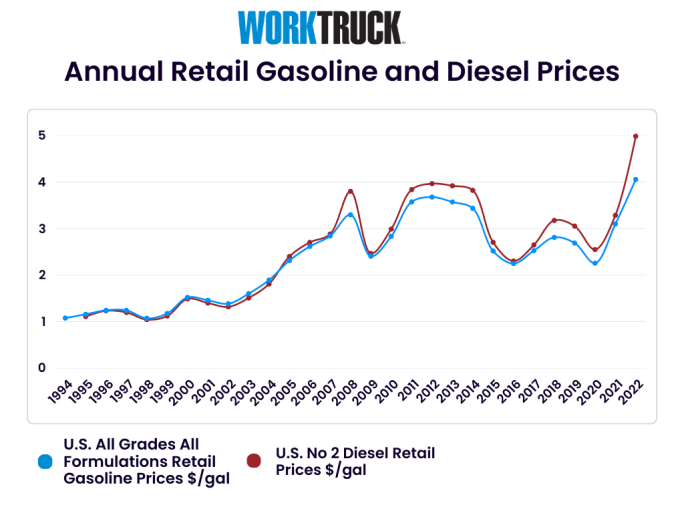
The annual retail gasoline and diesel prices from 1994 to 2022.
Photo: EIA/Work Truck
Current Trends Impacting Prices
Diesel and gas prices remained stable before 2020, but after 2020, things went downhill (or uphill for prices).
The average price of diesel for 2022 in the U.S. was $4.99 per gallon, while gas was $4.059. The impact of current oil prices comes down to supply and demand.
If we expand on that, current trends in diesel and gas prices can be broken down into three factors: fluctuating demand, extreme weather, and war.
Fluctuating Worldwide Demand — Although the U.S. produces most of its crude oil in the states, America still imports and exports diesel and gas from other countries and is not immune to the effects of global supply and demand.
When the world started to recover from COVID-19, demand increased. The U.S., Europe, and especially China in the past few years have steadily increased diesel consumption. According to CeicData, China’s diesel consumption has increased in almost every city from 2016 to 2019.
On the other hand, gas consumption is on a prolonged decline. This could be contributed to the rise in EVs and incentives to purchase them across America.
According to the EIA, America’s capacity to refine crude oil into fuel and other products hit its lowest levels in 2022 since 2014. Less gas produced also contributes to a fluctuation in prices. As a result, U.S. oil refiners have cut back to stay profitable, and some have even shut down.
Extreme weather — Several extreme weather events occurred that have affected the price of oil in recent years.
In December 2022, an extreme winter storm passed across North America, and with it, blizzards, high winds, and cold temperatures. Gas consumption surged, and production rapidly fell. This resulted in the need to import more gas and the prices to rise.
Other extreme weather events that happen often are hurricanes. In 2022, three hurricanes made landfall, and 14 total named storms. Half the nation's petroleum and natural gas refinery capacity is on the Gulf Coast.
War — On February 24, 2022, Russia launched a military invasion of Ukraine. Oil prices were already rising, and the Biden administration's Russian oil import ban surged prices even more.
According to World Economic Forum, strong economic recovery tied with low investment in oil production grew worse by the Russian invasion of Ukraine.
As of 2023, prices have calmed down and are slowly recovering from the 2022 highs. Of course, there is another player on diesel’s and gas’ heels, the electrification push…
Will EVs Kick Diesel & Gas Out of the Playing Field?
With current laws throughout the U.S. trickling in to ban diesel engines soon, does this mean the price of diesel will go up or down?
In its recent outlook as of March, the EIA predicts that global consumption of liquid fuels such as gasoline, diesel, and jet fuel will reach new heights in 2024.
The 2023 average consumption prediction is over 100 million barrels per day and over 102 million barrels per day in 2024.
The price of gasoline in the U.S. is closely linked to crude oil, and the EIA predicts that there will be significant reductions in the price at the pump compared to 2022.
According to the EIA, the average U.S. gasoline price is expected to be approximately $3.30 per gallon in 2023 and $3.10 per gallon in 2024.
EIA Administrator Joe DeCarolis stated that the reduction in gasoline prices would result from the lower crude oil prices and reduced refinery margins, bringing gasoline prices down from their highest 2022 levels.
However, DeCarolis cautions that the forecast for global petroleum consumption and price depends on uncertain economic conditions, particularly in China. Any changes in China's economy following the pandemic lockdowns could significantly impact global petroleum consumption.
So diesel and gas are still leading the fuel game for the next couple of years.
Gas Vs. Diesel — Who Will Rise to the Top
Diesel wasn’t always the top dog.
Since September 2004, diesel fuel prices have continuously been higher than regular-grade gasoline prices on a dollar-per-gallon basis.
Aside from cold winters with higher diesel demand, a deviation occurred to switch the prices and has remained that way ever since. The reasons for the shift are broken down into three reasons:
Demand for diesel fuel is now higher than other distillate fuel oils, particularly in Europe, China, India, and the United States. According to Diesel Technology Forum, diesel-fueled trucks make up 76% of all commercial trucks in the U.S.
The transition to less-polluting, lower-sulfur diesel fuels in the United States affected diesel fuel production and distribution costs.
The federal excise tax for on-highway diesel fuel is 24.3 cents per gallon, 6 cents per gallon higher than the federal excise tax on gasoline.
Will gas prices ever surpass diesel like before 2004? If some of the potential possibilities occur, then it is possible. For gas prices to rise higher than diesel prices, the following would have to happen:
A significant increase in demand for gasoline due to seasonal changes, and the gasoline supply cannot keep up with this demand.
If refineries that primarily produce gasoline experience outages or cannot produce enough gasoline.
If the taxes on gasoline increase more rapidly than those on diesel fuel.
If environmental changes increase the cost of producing gasoline more than diesel fuel.
In the end, diesel and gas prices are influenced by various factors that can be hard to predict, not just in the long term but also short term. That’s why for fleet managers, staying informed about the latest developments in fuel prices allows for more informed decisions and better management of finances.
Stay tuned for the next State of the Fuel Industry featuring alternate fuels!
Subscribe to Our Newsletter
More Fuel

The Smart Way to Build a Mixed-Energy Fleet Isn’t About Picking a Side
Mixed-energy fleets aren’t about picking a winning fuel. Sarah Booth of WEX explains how vehicle data, duty cycles, charging strategy, and real-world costs can help fleets choose the right energy source for each job.
Read More →
Ignoring This Dashboard Warning Could Cost Your Fleet Thousands in Fuel
New research suggests neglected diesel aftertreatment systems could waste up to $30 in fuel per vehicle each day. Here's why vocational fleets should pay attention.
Read More →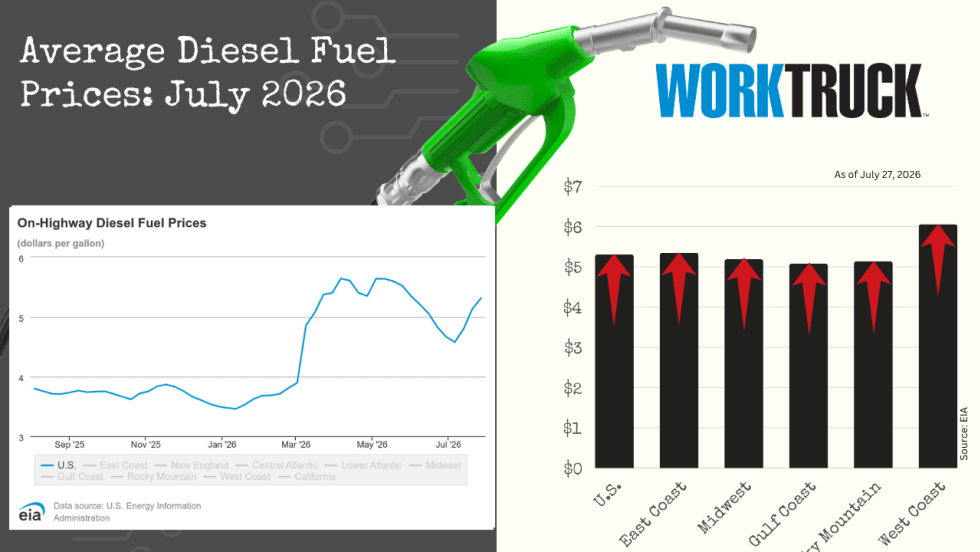
July Diesel Trends Update
The average price of a gallon of diesel increased again this week, and the EIA reported a new national average of $5.31 at the start of the week.
Read More →
WEX Brings Standard Fleet's Connected Vehicle Platform to Fleet Customers
This week’s product launch with Standard Fleet’s connected vehicle platform reflects WEX Venture Capital's strategy of turning startup innovation into customer solutions. Standard Fleet is now available to WEX fleet customers.
Read More →
Teletrac Navman Adds Mixed-Energy Fleet Tools to TN360
The new Energy Hub combines fuel transactions, EV charging data, vehicle range, and energy costs in one dashboard for fleets operating multiple vehicle and energy types.
Read More →
WEX DriverDash adds CITGO, Expands Nationwide Access for Fleets
The DriverDash mobile payment app, by WEX, has been integrated into the CITGO merchant network, which means WEX has expanded its U.S. station footprint with the addition of approximately 4,000 CITGO locations.
Read More →
Mixed Energy Fleet Tips for Balancing EVs, Gas and Diesel Vehicles
Mixed energy fleets are becoming the new normal. Learn how fleet managers are balancing EVs, gas and diesel vehicles while controlling costs and planning for the future.
Read More →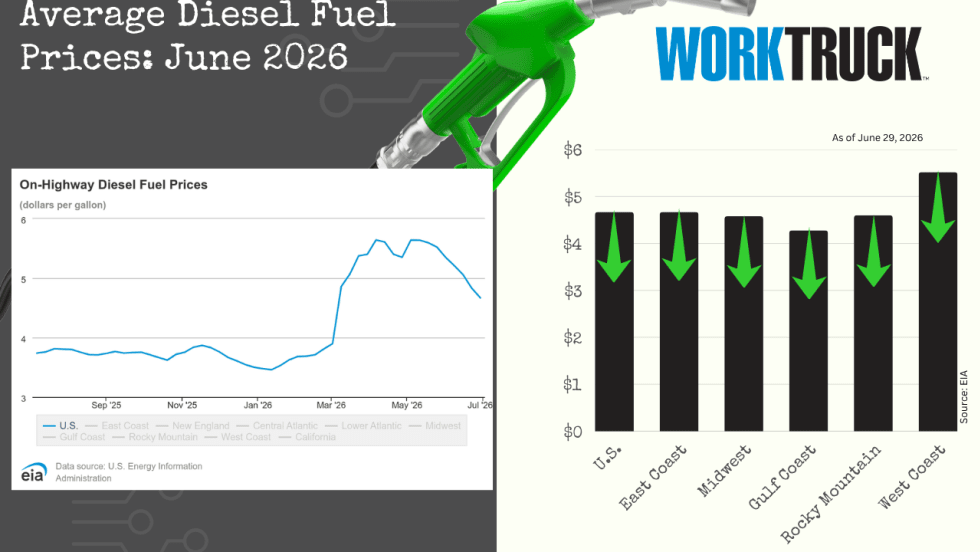
June Diesel Trends Update
The national average price of a gallon of diesel has dropped again, this week by more than 16 cents. All five regions reported lower average prices, ranging from almost 13 cents to more than 28 cents cheaper than a week ago.
Read More →
RoadFlex Launches RoadFlex Direct Open API Platform
RoadFlex Direct connects fuel cards, controls, and data to the telematics and fleet management systems fleets already run, from Geotab and Samsara to Fleetio and RTA, with no separate dashboard or double data entry.
Read More →
The Key to Fuel Efficiency Sits in the Cab
Learn how driver behavior, telematics, coaching, and fuel data can help fleets improve fuel efficiency, lower costs, and reduce emissions.
Read More →