




ROUSH Now Retrofitting Ford Medium-Duty Trucks
ROUSH CleanTech has been certified to convert customers’ existing Ford medium-duty vehicles with the 6.8L V-10 engine to run on propane autogas in all 50 states.

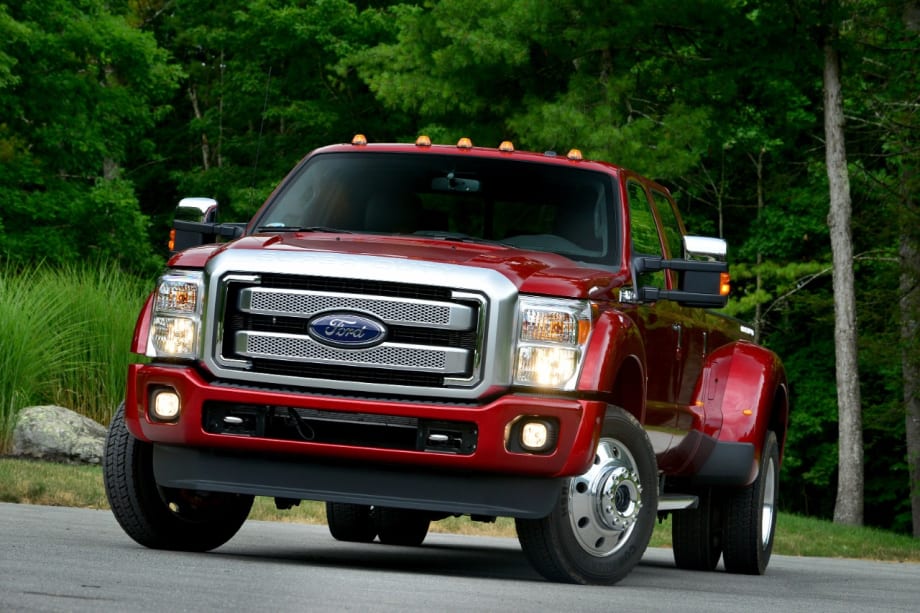
ROUSH CleanTech can retrofit propane-autogas medium-duty vehicles, including the Ford F-450 (pictured).
Medium-duty vehicle fleets seeking to switch to propane autogas now have another option available: Following certification from the California Air Resources Board (CARB) in January, ROUSH CleanTech has been certified to convert 2012-2015 model-year Ford medium-duty vehicles equipped with the 6.8L V-10 engine to run on propane autogas to operate in all 50 states.
This retrofitting option will allow emissions-minded fleets with recent model-year Ford medium-duty vehicles to switch to propane autogas in a more cost-effective way, since they won’t have to purchase a new propane-autogas-equipped truck to replace their existing vehicle with a lot of life left, according to Todd Mouw, vice president of sales and marketing at ROUSH CleanTech.
“The fact that these medium-duty vehicles have a heavier GVWR naturally decreases the mpg, so that means, over the chassis’ lifecycle, there is significantly more fuel burned. Our ability to retrofit these used trucks with our liquid propane technology will allow them to significantly reduce fuel and maintenance costs over the remaining life of these units,” Mouw said.
Since its establishment in 2010, ROUSH CleanTech has offered propane-autogas-powered Ford trucks and vans in a variety of packages, including full-size vehicles, cutaways, and chassis cabs.
Benefitting from Propane
There are a number of financial benefits to using a propane-autogas system compared to traditional gasoline or diesel, according to Mouw:
Fuel cost savings: Propane autogas costs less than gasoline or diesel, and fleets can save from 15 to 20 cents per mile by using propane autogas, Mouw said.
Maintenance cost savings: Propane-autogas vehicles do not require after-treatment systems, eliminating the need for diesel exhaust fluid, and Ford’s 6.8L V-10 engine is designed to last over 250,000 miles when properly maintained, according to Mouw.
Vehicle-lifetime cost savings: “It’s tough to provide an exact number, but, if a fleet keeps the propane-autogas vehicle for 200,000 miles and saves 15 cents per mile, the savings would equate to $30,000 in gross savings over the life of the vehicle. That is at today’s fuel prices, with diesel being under $3 per gallon. All of the experts predict it will head back to at least $3.75 per gallon over the next few years, which would equate to even greater savings,” Mouw said.
Additional incentives: A number of states offer financial incentives for alternative-fuel vehicle usage, such as tax credits and lower vehicle registration fees.Retrofitting in Action
Retrofitting in Action
ROUSH CleanTech — a Ford Qualified Vehicle Modifier (QVM)-certified alternative-fuel vehicle manufacturer — can install its propane-autogas kit in customers’ vehicles either at ROUSH’s facility in Livonia, Mich., or at a Ford-approved QVM installation facility. Or, ROUSH technicians can be sent out to the customer’s location to install the system onsite.
“We design, develop, manufacture, and produce the final kit, and that kit consists of all of the propane-autogas components, including fuel rails, injectors, fuel lines, the tank, and the calibration so that it runs efficiently on propane autogas,” Mouw said.
ROUSH CleanTech also offers customers the option of installing an onsite propane-autogas fueling station.
And, ROUSH CleanTech technicians train the customer’s technicians on providing service and maintenance for a propane-autogas-powered vehicle, as well as train the customer’s drivers on how to properly drive and fuel the vehicle.
“We’ve got Web-based training that walks the technicians and the service managers through propane-autogas basics, propane-autogas safety, how to diagnose a problem, how our fuel system integrates into the vehicle, and who to call to get a service part,” Mouw said. “Once the vehicles are on the ground, we actually send our technicians in to train the customer’s technicians or their service partner.”
UPDATED: August 21, 2015, correcting 6.8L V-10 engine.
More Green Fleet

Fleet Forward Conference Introduces One-Day Passes for 2026
New one-day registration gives fleet professionals the flexibility to attend Tuesday, Wednesday, or Thursday, with passes available for $199 through Sept. 18.
Read More →
CALSTART Rebrands as Catalyst Mobility, Will Combine with Forth in 2027
CALSTART has rebranded as Catalyst Mobility and will combine with Forth at the start of 2027. The new organization said it is poised to become one of the world's largest, strongest, and most impactful clean transportation nonprofits.
Read More →
Electric Truck and Charging Programs to Boost Sustainability at NY & NJ Ports
Together, the Port Authority of New York and New Jersey and CALSTART will electrify drayage and terminal operations serving the East Coast’s busiest container port. A pair of incentive programs totaling $45 million has launched to accelerate adoption of zero-emission drayage trucks and terminal tractors.
Read More →
Xos Hub Surpasses One Gigawatt-Hour of Energy Delivered in the Field
A single Xos Hub has surpassed one gigawatt-hour of energy across more than 33,600 charging sessions in the field, demonstrating performance that supports Xos' expansion across new products and markets.
Read More →
Carrier Transicold Launches All-Electric Vector 8200 TRU for Diesel-Free On-Site Cold Storage
Carrier Transicold’s first engineless multi-temperature TRU helps fresh- and frozen-food fleets add supplemental cold storage capacity during seasonal peaks.
Read More →
Narro Trucks Introduces Electric Utility Vehicle
Narro Trucks officially launched its operations on Aug. 20 and hosted a ride and drive to showcase its electric truck, which will be produced in Virginia.
Read More →
Samsung SDI Takes Full Control of GM Battery JV as Indiana Plant Pivots to Energy Storage
Samsung SDI is taking full control of its Indiana battery plant with GM, marking a major shift from the EV-focused joint venture Charged Fleet first covered in 2023.
Read More →
NWSA Taps CALSTART to Administer Zero-Emission Drayage Assistance Program
CALSTART will provide free technical assistance services to drayage fleets serving the Ports of Seattle and Tacoma and looking to transition to cleaner technologies and help decarbonize freight hubs.
Read More →
EV Fleet Reality Check: What Operators Wish They Knew Before Electrifying Their Work Vans
Electric work truck upfits bring new compatibility questions. Learn how parts availability, OEM guidance, power demands, and route planning can affect fleet performance.
Read More →
Peterbilt Expands Sourcewell Partnership with Electric Vehicle Lineup
Peterbilt Motors Company’s cooperative purchasing agreement with Sourcewell and its Canadian partner, Canoe Procurement Group, now includes including Peterbilt's battery-electric vehicle lineup.
Read More →