




Roadcheck Should be Business as Usual
During Roadcheck, enforcement will use the same driver and vehicle criteria as any other day of the year. Only the number of inspections performed will be heightened.
Every year the Commercial Vehicle Safety Alliance (CVSA) partners with federal, state, and provincial authorities across North America to hold its annual roadside inspection blitz, International Roadcheck. This year’s event is scheduled June 7-9.
During Roadcheck, enforcement will use the same driver and vehicle criteria as any other day of the year. Only the number of inspections performed will be heightened.
The event typically has an educational component. Each year, an emphasis is placed on a specific area of compliance (e.g., brakes, seat-belt usage, cargo securement, and hazmat). This year’s topic is tire safety. As officers interact with commercial drivers, they will provide training materials on this annual topic.
All CMVs Affected
Roadside inspections are not just for the large trucks. Those operating commercial motor vehicles (CMVs) as defined in 49 CFR 390.5 (10,001 pounds or greater, etc.) are subject to the safety regulations and, subsequently, roadside enforcement. This is true all year long, not just during enforcement campaigns such
as Roadcheck.
For example, in CY-2015, out of all roadside inspections for the year, the Federal Motor Carrier Safety Administration (FMCSA) reports 17,551 inspections took place for vehicles under 10,000 pounds; 450,322 for those between 10,000 and 26,000 pounds; and 2,597,564 for those over 26,000 pounds.
Even though all CMVs are subject to potential roadside inspections, states dictate whether a specific vehicle type must enter a weigh station. Drivers need to observe road signs to know how to respond.
In addition to weigh stations, roadside inspections are performed in a variety of locations thanks to advances in technology. Mobile inspection sites allow inspectors the ability to set up just about anywhere, including rest areas, truck stops, outside terminal facilities, and along rural roadways.
The bottom line is that all CMVs are affected by Roadcheck, and there may not be a “safe route” to take to avoid the inspection blitz.
A Systematic Approach
Thorough pre- and post-trip vehicle inspections are the best strategy against a negative roadside inspection due to vehicle defects. As a driver performs the daily inspections, it is best to perform the inspection the same way each and every time to avoid overlooking a defective component. A systematic approach typically involves a walk-around inspection, covering the entire vehicle’s exterior, including the coupling system.
Performing this regiment each and every time will hopefully reveal damage or wear that requires attention — before a roadside inspection finds it!
Don’t Forget Your Recordkeeping
Drivers need to know exactly what records will be asked of them by enforcement. Similar to a checklist when inspecting the condition of the CMV, before beginning or continuing a trip, a driver needs to verify that he or she has all required documents.
The driver, for example, will be expected to present his or her driver’s license, records of duty status and supporting documents, proof of registration, fuel tax sticker or cab card, permits, shipping papers, and documentation of the vehicle’s annual inspection.
Proof of insurance is on a state-by-state basis, and many fleets require documentation in CMVs as a precaution.
For those drivers that do not hold a commercial driver’s license (CDL), and those CDL drivers with an exam within the past 15 days, a medical examiner’s certificate must also be carried by the driver.
About the Author
Kathy Close is a transportation editor at J.J. Keller & Associates, Inc. Her areas of expertise include transportation security, DOT drug and alcohol testing, and driver qualification. She can be reached via e-mail at transporteditors@jjkeller.com.
More Safety
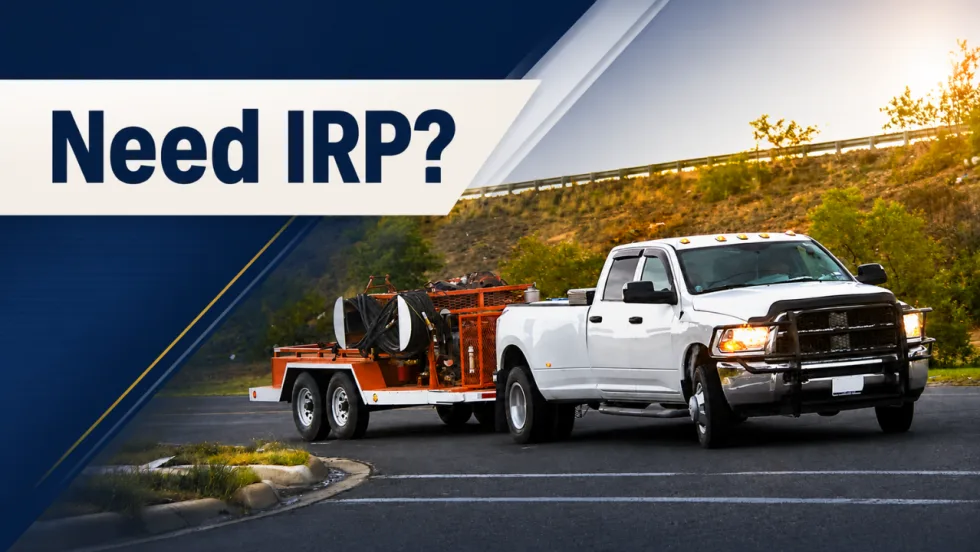
When Work Trucks Under 26,001 Pounds Need IRP Registration
Think trucks under 26,001 pounds are automatically in the clear when it comes to IRP? Not always. Learn where lighter vehicles can still run into trip permit, apportioned registration, and IFTA compliance requirements when crossing state or provincial lines.
Read More →
Volvo Trucks Releases New Safety Recommendations for Traveling with Pets
One of the most important recommendations for professional drivers traveling with pets is to ensure pets are properly restrained while the truck is moving. Other tips are available in the new guide from Volvo Trucks North America and Center for Pet Safety.
Read More →
API Issues Refueling Safety Guidelines
The American Petroleum Institute offers a list of safe vehicle refueling guidelines, including ways to avoid potential problems with static electricity discharges in fall, winter, and early spring.
Read More →
Winter Fleet Prep: Expert Tips to Keep Vehicles Running Smoothly
Cold weather can expose weak batteries, tires, fuel systems, and maintenance gaps fast. Use this winter fleet checklist to prepare trucks and drivers before temperatures drop.
Read More →
When a Work Truck Breaks Down, the Job Can Stop, Too
A work truck breakdown can stop more than the vehicle. Discover how payloads, jobsites, and specialty equipment change the roadside response.
Read More →
What Stronger Long-Term Fleet Service Partnerships Actually Require
Fleet service partnerships rarely fall apart all at once. Learn the three warning signs that trust is eroding and what fleets and providers can do before downtime, frustration, and lost revenue follow.
Read More →
Applause & TRUCE Software Partner to Improve Driver Safety Through AI-Powered Telematics & Employee Performance Management
Applause has integrated TRUCE driving metrics directly into its employee-first performance and safety platform that transforms mobile devices into AI-powered telematics.
Read More →
How Detroit Assurance with Active Brake Assist Works
Do you want to see what it is like to experience Detroit Assurance’s Active Brake Assist? In this video, Work Truck will put you in the cab to see how it all works and then hear more details from DTNA’s Mike Young.
Read More →
Get Left of Loss: A 5-Step Workplace Violence Prevention Framework for Fleet Operators
Violence risks do not stop at the driver’s door. Learn five practical steps fleets can take to spot threats early and protect workers before loss occurs.
Read More →
How Better Visibility Cut Speeding Violations by 48%
Fleet leaders don't need more data, they need clearer visibility into what the data is saying. This case study explores how one utility replaced speeding-event counts with a single metric — miles driven in violation — to strengthen safety and significantly reduce speeding violations.
Read More →