




Eco-Friendly Diesel: Why These Fleets Use Renewable Diesel Fuel
Out With the Old, in With the New: Diesel Alternatives for Construction
The goal is to reduce global emissions by 2050. Does that mean completely leaving behind diesel?

Hillary Weiss・Senior Editor
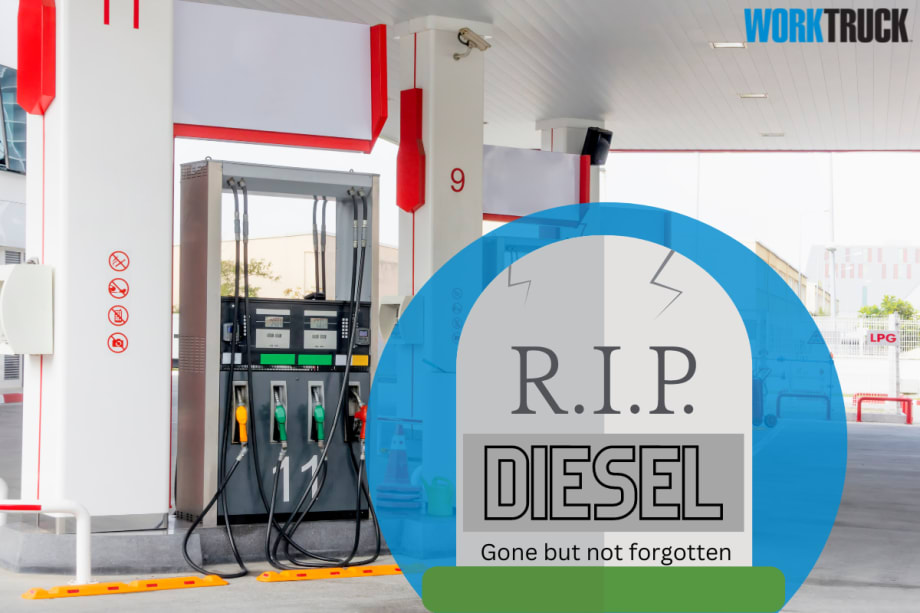
Cleaner alternatives for powering construction equipment and fleets are required for a net zero emissions world.
Photo: Work Truck
3 min to read
Diesel’s time is up. Not only has it soared almost 50% in a year, but it is also harmful to the environment. With 98% of construction’s energy use coming from diesel in the U.S., according to Diesel Technology Forum, it’s time for a change.
If we want to make it to zero net emissions by 2050, cleaner alternatives for powering construction equipment and fleets are required.
The Association of Equipment Manufacturers (AEM) also agrees. Jeremy Harsin, construction market director at AEM member company Cummins, stated three solutions are necessary for fleets to be less reliant on diesel:
Completely replacing the diesel engine.
Reconstructing engines to run on lower-carbon fuels.
Making diesel engines their most efficient.
Harsin also said, “The combination of duty cycle and available infrastructure is going to decide what wins out, but they’re probably all going to have their place in the world.”
Luckily, there are several diesel alternatives to choose from — electric, hydrogen, biodiesel, and other biofuels.
Switching to Electric
Going electric has many benefits, making it a viable alternative in the construction space. On top of zero emissions, electric is quieter, has an instant response, and has fewer components needed for maintenance.
Because of this, compact electric equipment has gained popularity. Companies such as Volvo are selling electric compact excavators and wheel loaders in North America this year, and it recently expanded its offering to five machines.
“Battery power density is increasing all the time, and we’re seeing a number of different technologies that make better use of battery energy,” said Ray Gallant, vice president of product management and productivity at AEM member company Volvo Construction Equipment.
“Electric is happening now as machines are starting to be commercially available,” says Chris Sleight, managing director at AEM member Off-Highway Research. Although now quite expensive compared to their diesel counterparts, at some point the economic argument will be there,” Sleight added.
And if there is a concern about running out of a charge in rural areas, OEMs sell chargers with their electric machines. Solar charging is a potential option as well.
The Beginning Stages of Hydrogen
Hydrogen is another diesel alternative, but it has a long way to go. The main obstacle in creating a hydrogen-fueled world is infrastructure.
AEM stated: “Construction equipment powered by hydrogen fuel cells and hydrogen-fueled engines are – at least at this point – in the prototype stage.” And most of the hydrogen fueling stations are only in California.
But this is just the beginning stages. Hydrogen has the potential to completely replace diesel-fueled engines and charge battery-electric machines.
Will Diesel Disappear Forever?
The goal is to reduce global emissions by 2050. Does that mean completely leaving behind diesel?
Cummins reminds us that compared with Tier 1 engines, Tier 4 Final engines offer a 96% reduction of oxides of nitrogen and a 97% reduction in particulate matter.
“The U.S. is also likely to see Tier 5 emissions regulations by the end of the decade,” Harsin said.
And according to AEM, “California has already discussed enacting a Tier 5 regulation in 2024 with implementation to start in 2028. Another consideration is the gradual retirement of construction’s aging fleet. Construction machines have a relatively long life; plenty of Tier 3 engine-powered machines are still plugging away on jobsites. Cat, for example, estimated the average age of its field population to be 11.3 years.”
Subscribe to Our Newsletter
More Green Fleet

Fleet Forward Conference Introduces One-Day Passes for 2026
New one-day registration gives fleet professionals the flexibility to attend Tuesday, Wednesday, or Thursday, with passes available for $199 through Sept. 18.
Read More →
CALSTART Rebrands as Catalyst Mobility, Will Combine with Forth in 2027
CALSTART has rebranded as Catalyst Mobility and will combine with Forth at the start of 2027. The new organization said it is poised to become one of the world's largest, strongest, and most impactful clean transportation nonprofits.
Read More →
Electric Truck and Charging Programs to Boost Sustainability at NY & NJ Ports
Together, the Port Authority of New York and New Jersey and CALSTART will electrify drayage and terminal operations serving the East Coast’s busiest container port. A pair of incentive programs totaling $45 million has launched to accelerate adoption of zero-emission drayage trucks and terminal tractors.
Read More →
Xos Hub Surpasses One Gigawatt-Hour of Energy Delivered in the Field
A single Xos Hub has surpassed one gigawatt-hour of energy across more than 33,600 charging sessions in the field, demonstrating performance that supports Xos' expansion across new products and markets.
Read More →
Carrier Transicold Launches All-Electric Vector 8200 TRU for Diesel-Free On-Site Cold Storage
Carrier Transicold’s first engineless multi-temperature TRU helps fresh- and frozen-food fleets add supplemental cold storage capacity during seasonal peaks.
Read More →
Narro Trucks Introduces Electric Utility Vehicle
Narro Trucks officially launched its operations on Aug. 20 and hosted a ride and drive to showcase its electric truck, which will be produced in Virginia.
Read More →
Samsung SDI Takes Full Control of GM Battery JV as Indiana Plant Pivots to Energy Storage
Samsung SDI is taking full control of its Indiana battery plant with GM, marking a major shift from the EV-focused joint venture Charged Fleet first covered in 2023.
Read More →
NWSA Taps CALSTART to Administer Zero-Emission Drayage Assistance Program
CALSTART will provide free technical assistance services to drayage fleets serving the Ports of Seattle and Tacoma and looking to transition to cleaner technologies and help decarbonize freight hubs.
Read More →
EV Fleet Reality Check: What Operators Wish They Knew Before Electrifying Their Work Vans
Electric work truck upfits bring new compatibility questions. Learn how parts availability, OEM guidance, power demands, and route planning can affect fleet performance.
Read More →
Peterbilt Expands Sourcewell Partnership with Electric Vehicle Lineup
Peterbilt Motors Company’s cooperative purchasing agreement with Sourcewell and its Canadian partner, Canoe Procurement Group, now includes including Peterbilt's battery-electric vehicle lineup.
Read More →