




New Strategies for Managing Diesel Fleets
Soaring pump prices and new emissions controls have made running trucks and vans on diesel an expensive proposition. Learn how fleet managers and OEMs are responding to the high cost of lower emissions.
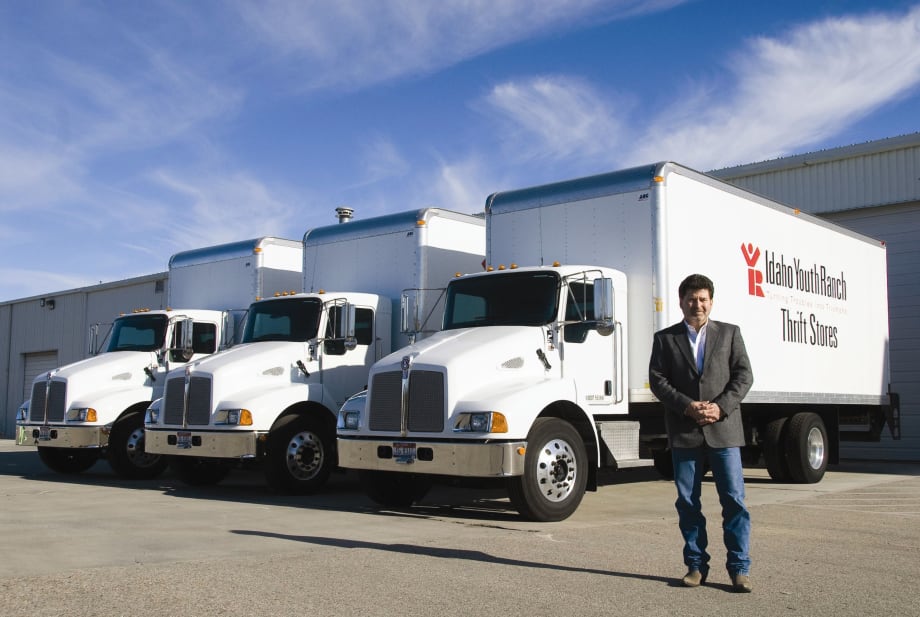
Idaho Youth Ranch's Gregg Crow said leasing new trucks was the best way to facilitate the nonprofit's plan to expand its distribution network.
Photo: Idaho Youth Ranch
Choosing between diesel and gas used to be a no-brainer for truck fleet managers. The one-two punch of better fuel economy and higher torque from a diesel powerplant - not to mention greater engine durability - made it the fuel of choice for commercial applications.
That began to change with the introduction of ultra-low sulfur diesel (ULSD) fuel in 2007. The switch produced substantial environmental benefits; however, its per-gallon cost has remained high ever since, and the spread between gas and diesel pump prices has widened. To further eat into the bottom line, the latest diesel emissions standards, effective Jan. 1, 2010, have driven up diesel engine premiums by $5,000 to $10,000.
Fleet managers are adapting to these developments in a number of ways. Some are switching to fleet leasing programs to head off future costs. Others are considering gasoline or alternative fuels such as propane and compressed natural gas, and manufacturers and suppliers are responding with new engine options. Still others are investing in new technology to reduce emissions from or increase the efficiency of their existing diesel units.
Leasing Defrays Future Costs
Gregg Crow is the director of distribution for Idaho Youth Ranch (IYR), a Boise-based nonprofit that gives troubled children and their families the opportunity to live and work on a 500-acre rural ranch. Most of the ranch's operating funds are generated by a network of 27 thrift stores across the state, which are supported by a fleet of 33 trucks.
When Crow joined the organization in 2007, he was handed the keys to a hodgepodge of makes and models. They all came to the ranch used - some purchased, others donated by businesses. The organization wanted to expand its network of stores, but Crow couldn't make the numbers work with so many dilapidated trucks in the fleet. The cost to maintain them was up to 60 cents per mile for some units.
"The trucks were dying in the field," Crow said. "We knew we couldn't just go out and buy [new] trucks, so leasing made a lot of sense."
IYR partnered with Trebar Pac-Lease, the Boise franchise for PACCAR Leasing (PacLease), a division of the company that manufactures Kenworth, Peterbilt, and DAF trucks. IYR now leases 13 trucks, including 10 medium-duty Kenworth T300s.
For Crow, fewer maintenance headaches and reduced downtime were attractive near-term benefits to leasing over buying. Through leasing, IYR is only paying for a fraction of the premium for the new diesel engine controls. As well, leasing offers a hedge against how those new diesel emissions systems will fare in the years ahead.
"Now is a good time to try leasing, especially with all the unknowns on the new [diesel] vehicles such as the urea tanks and other systems," said Steve Musgrave, Crow's account manager at Trebar.
Working with Trebar gives Crow the ability to crunch the numbers for multiple scenarios. "No matter which emission reduction system we choose to go with [to meet] the 2010 standards, there's no doubt it will add more dollars to the lease price," Crow said. "But we're looking at how those added costs can be captured back, in fuel savings and other ways. PacLease has been helpful to me in providing that data to make highly technical decisions."
As IYR's distribution network grows, Crow hopes to one day divide the fleet's miles between highway and in-town driving. That would give him the opportunity to add smaller vehicles, possibly including hybrids or alternative fuels. "If we're close to the distribution point, the lighter we can get, the more fuel savings we'll have," he said.
The Alt-Fuels Equation
If you're looking into alternative fuels to power your fleet, the cost-benefit analysis became more attractive when the new diesel emissions controls were introduced this year.
General Motors has reentered the compressed natural gas market with a fully integrated, CNG fuel system option for its Chevrolet Express and GMC Savana vans. The CNG option package, available now, carries an MSRP of $15,910. That cost can be offset by government rebates of $5,000 to $7,000, though the rebates were set to expire at the end of 2010. (A new bill has been introduced to extend them.)
A liquefied petroleum gas (LPG) version will be available for the 2012 Chevrolet Express and GMC Savana.
Ford Motor Co. has introduced an alternative fuels engine prep package for its F-450 and F-550 Super Duty chassis cabs that use the 6.8L V-10, enabling the use of CNG or LPG.
Suppliers are working more closely with manufacturers for seamless, OEM-approved alt-fuel conversion systems.
ROUSH CleanTech - a new company under the ROUSH Enterprises umbrella - has rolled out a propane fuel conversion system for Ford's E-150, E-250, and E-350 vans, E-350 and E-450 cutaways, as well as F-150, F-250, and F-350 pickups. Certified to be sold in all 50 states, fleets can order the vehicles with the conversion installed, or bolt a retrofit onto some existing models.
Don't Forget Gasoline
In the diesel-dominated truck segment, gas can be considered an "alternative fuel." Truck makers have responded with new gas-engine alternatives direct from the factory.
Freightliner Custom Chassis Corp. (FCCC) has jumped into the market with a gas-engine option on its MT-45 and MT-55 walk-in van chassis platform.
"The gasoline-powered chassis was designed and engineered by FCCC after speaking with numerous customers and recognizing there was a market desire for FCCC chassis with this powertrain," said Jonathan Randall, director of sales and marketing for FCCC.
Ford will introduce a V-10 gasoline engine option for its F-650 and F-750 chassis cabs for 2012. The three-valve, single-overhead-camshaft engine is rated at 457 lb.-ft. of torque and 362 hp. The V-10 will be mated to the heavy-duty 6-speed TorqShift automatic transmission.

GM's factory-integrated CNG system comes with either three or four tanks, with the fourth located in the cargo area.
Photo: General Motors
New Retrofit Burns Cleaner Diesel
Ron Burkhart runs a fleet of 35 medium-duty trucks, most of them Kenworth T300s and International HT 570s, for County Beverage, an Anheuser-Busch wholesaler in Lee's Summit, Mo. The 30-year fleet veteran and longtime truck mechanic was searching for a diesel alternative, but instead found a system that works with his existing diesel engines to make them burn cleaner and get better fuel economy.
Burkhart uses an injection system from Diesel Performance Products (DPP) that mixes propane vapor with diesel fuel on the intake stroke. The bolt-on system, called Powershot 2000, uses a patented regulator/valve design to gauge boost pressure and inject propane from a proprietary tank; either progressively or variably with the turbo boost pressure. The result is an approximately 30 percent LPG, 70 percent diesel mix. The compression ignites the diesel fuel, which in turn ignites the LPG. The result is a cleaner burn - up to 100 percent of the diesel in the chamber - and less "black smoke."
"When we started back in 2000, our focus was on performance," said DPP's founder, Keith Long. "We began to see Powershot as 'green' technology around the same time fuel prices shot up, in 2007."
The results for County Beverage have been impressive. Burkhart has seen a nearly 100-percent improvement in fuel economy, burning eight to 10 miles per gallon in trucks that used to get four or five. Overall, he has reduced his fuel spend by about a third, and his drivers are happy as well.
"They love it for the performance," Burkhart said. "These trucks have 250 or 275 hp, and they start out loaded heavy. With the propane injection system, they can get up hills, pass cars - it has all the power they need."
It's clear that diesel is in a transition phase, but the fuel's leadership role in truck applications is in no immediate danger. Until the economies of scale catch up to the goals of clean-air advocates, fleet managers and manufacturers will continue to find ways to adapt to the new rules of the road.
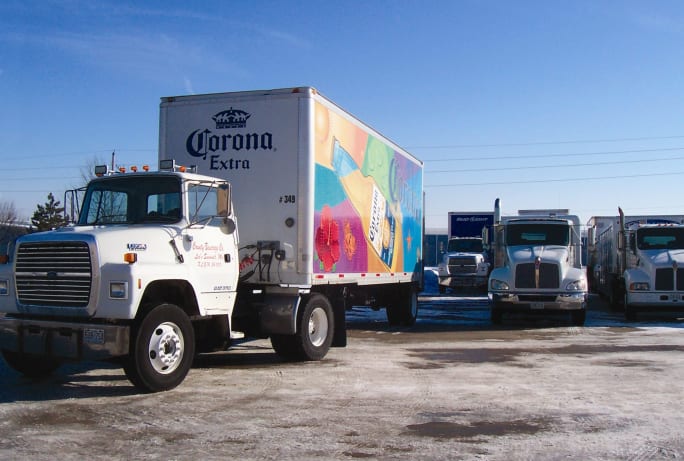
By investing in propane injection systems for County Beverage's medium-duty trucks, Ron Burkhart has realized a fuel economy improvement of up to 100 percent and reduced his diesel spend by about a third.
Photo: County Beverage
More Fuel

The Smart Way to Build a Mixed-Energy Fleet Isn’t About Picking a Side
Mixed-energy fleets aren’t about picking a winning fuel. Sarah Booth of WEX explains how vehicle data, duty cycles, charging strategy, and real-world costs can help fleets choose the right energy source for each job.
Read More →
Ignoring This Dashboard Warning Could Cost Your Fleet Thousands in Fuel
New research suggests neglected diesel aftertreatment systems could waste up to $30 in fuel per vehicle each day. Here's why vocational fleets should pay attention.
Read More →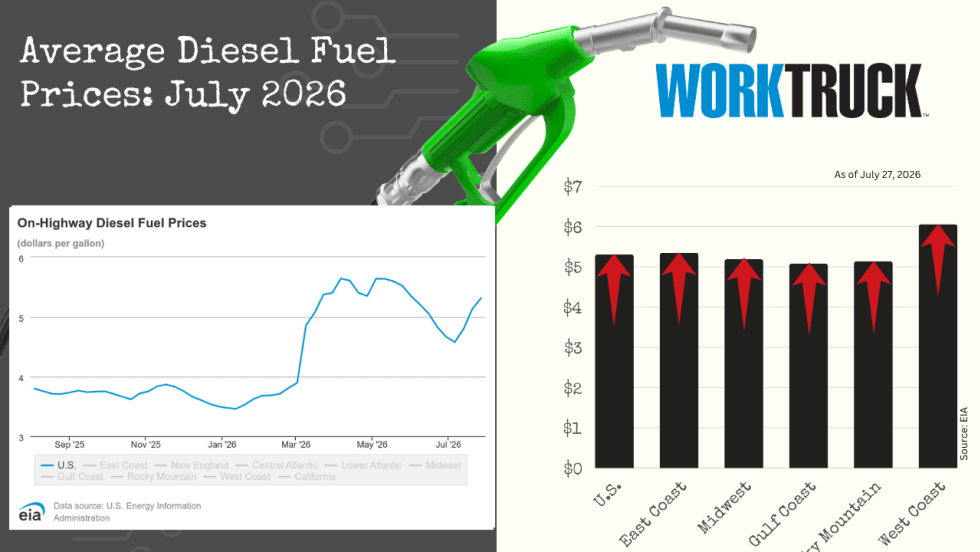
July Diesel Trends Update
The average price of a gallon of diesel increased again this week, and the EIA reported a new national average of $5.31 at the start of the week.
Read More →

WEX Brings Standard Fleet's Connected Vehicle Platform to Fleet Customers
This week’s product launch with Standard Fleet’s connected vehicle platform reflects WEX Venture Capital's strategy of turning startup innovation into customer solutions. Standard Fleet is now available to WEX fleet customers.
Read More →
Teletrac Navman Adds Mixed-Energy Fleet Tools to TN360
The new Energy Hub combines fuel transactions, EV charging data, vehicle range, and energy costs in one dashboard for fleets operating multiple vehicle and energy types.
Read More →
WEX DriverDash adds CITGO, Expands Nationwide Access for Fleets
The DriverDash mobile payment app, by WEX, has been integrated into the CITGO merchant network, which means WEX has expanded its U.S. station footprint with the addition of approximately 4,000 CITGO locations.
Read More →
Mixed Energy Fleet Tips for Balancing EVs, Gas and Diesel Vehicles
Mixed energy fleets are becoming the new normal. Learn how fleet managers are balancing EVs, gas and diesel vehicles while controlling costs and planning for the future.
Read More →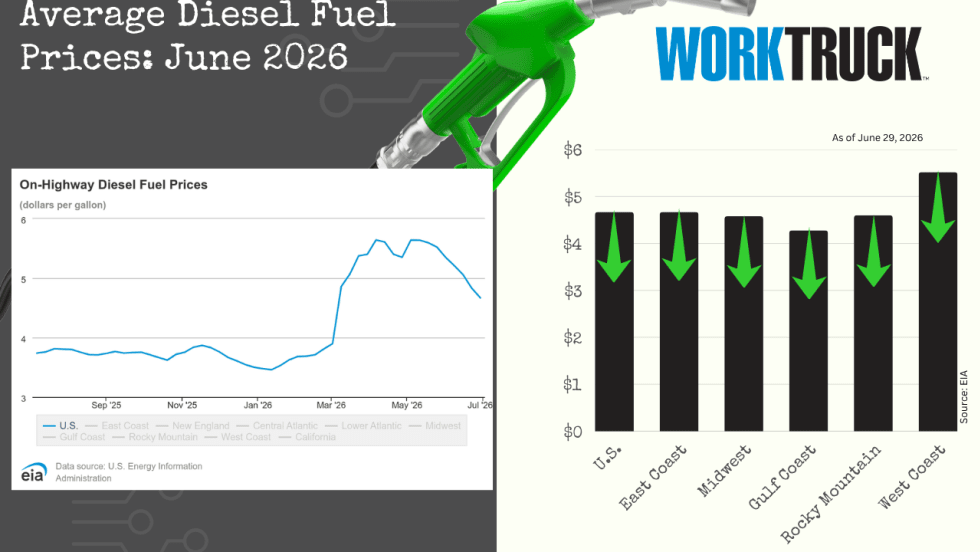
June Diesel Trends Update
The national average price of a gallon of diesel has dropped again, this week by more than 16 cents. All five regions reported lower average prices, ranging from almost 13 cents to more than 28 cents cheaper than a week ago.
Read More →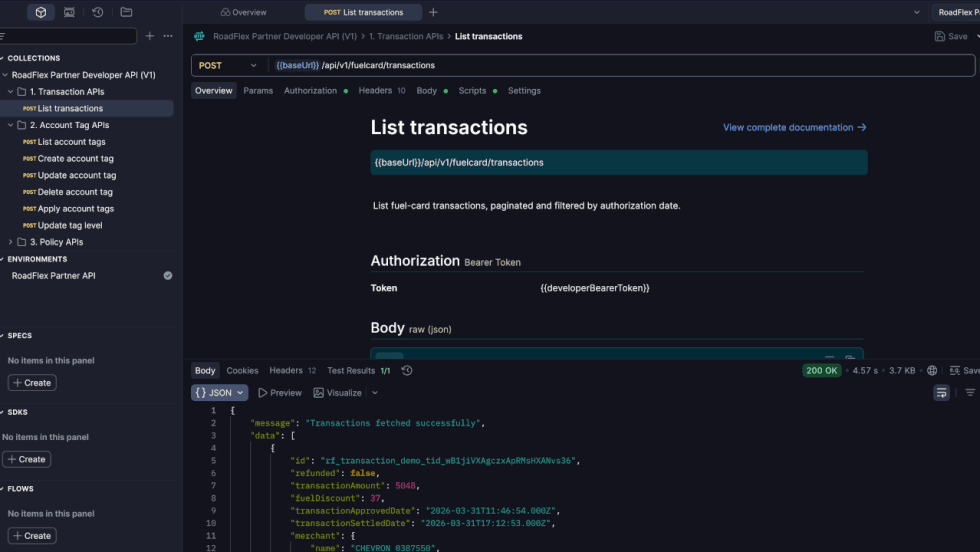
RoadFlex Launches RoadFlex Direct Open API Platform
RoadFlex Direct connects fuel cards, controls, and data to the telematics and fleet management systems fleets already run, from Geotab and Samsara to Fleetio and RTA, with no separate dashboard or double data entry.
Read More →
The Key to Fuel Efficiency Sits in the Cab
Learn how driver behavior, telematics, coaching, and fuel data can help fleets improve fuel efficiency, lower costs, and reduce emissions.
Read More →