




What to Know Before You Choose an Alt-Fuel Vehicle
What are the pros, cons, and costs of the primary alternative-fuel options for your fleet?


Not every alternative fuel is a perfect fit for every application. The advantages of one fuel type as well as adjusted per gallon price might outweigh the benefits of another.
Photo: Gettyimages.com/Petmal
In the face of climate change and concerns about energy security, fleets may be giving alt-fuel vehicles a second look. But, not every alternative fuel is a perfect fit for every application, and depending on your current fleet mix and how you operate, the advantages of one fuel type might outweigh the benefits of another.
How do you know which fuel is suitable for the needs of your fleet? Examining each type’s pros, cons, and costs is an excellent place to start.
Here’s a rundown of the five major alt-fuel types:
Biodiesel
[ Pros ] Biodiesel is sustainable from an environmental standpoint and allows fleets to lower their carbon footprint. Because it’s made from inedible vegetable oils, animal fats, and recycled restaurant greases, it’s a renewable fuel, meaning it’s made from waste products that can be grown and used again instead of removing crude oil from the ground-like fossil-based fuels.
Because of the products it’s made from, biodiesel is safer, non-toxic, and biodegradable, benefiting shop operations.
On top of being renewable, biodiesel can reduce emissions by up to 86% compared with petroleum diesel, depending on the blend. For instance, B-20 reduces CO2 by 15%.
Although biodiesel is made from different feedstocks and processes than petroleum diesel, its makeup is still chemically similar. That means it can be used with any diesel engine and fueling system.
Perhaps the most significant benefit of biodiesel is it requires zero infrastructure or capital investments to use, meaning fleets can adopt it (and begin cutting emissions) almost immediately.
Biodiesel can be used in its pure form (B-100) or blended with petroleum diesel. Common blends include B-2 (2% biodiesel), B5, and B-20, but most automakers approve blends up to B5 and some blends up to B20.
[ Cons ] The transition to biodiesel blend is usually seamless when used in a newer diesel engine. However, when used in older diesel engines, it may require more frequent fuel filter changes in the first few months. That’s because biodiesel has cleaning properties that may loosen deposits accumulated over time on fuel tank walls and flush them out into fuel filters. However, maintenance schedules can return to normal after these are flushed out.
Fleets also need to consider the climate in which they operate when using higher blends. B-5, which contains 5% biodiesel, usually has a cloud point similar to or the same as 100% No. 2 petroleum diesel. Fuel containing 20% biodiesel (B-20) can have a cloud point approximately 2-degrees to 7-degrees Fahrenheit higher than that of 100% No. 2 petroleum diesel. But, pure biodiesel, B-100, isn’t suitable for use in low temperatures.
Biodiesel can also result in lower fuel economy and power than petroleum diesel, but it depends on the blend. For B-100, the difference is about 10%, but for B-20, just 2%.
[ Costs ] The per-gallon cost of biodiesel tends to be higher than its alt-fuel and conventional fuel counterparts. According to the Clean Cities Alternative Fuel Price Report for October 2021, a quarterly report on the prices of alternative fuels in the U.S., the national average cost for B-20 and B-99 to B-100 between October 1 and October 15, 2021, came in at $3.29 and $3.80 per gallon, respectively.
That said, biodiesel users can take advantage of state and federal tax incentives that help lower their costs. For instance, the $1 per gallon federal Biodiesel Tax Incentive is locked in through 2022.
Renewable Diesel
[ Pros ] Like biodiesel, renewable diesel is also made from renewable feedstocks, including inedible corn and soybean oil, tallow, and recycled restaurant grease. However, renewable diesel burns slightly cleaner than biodiesel when compared to petroleum diesel. Depending on the blend, renewable diesel potentially reduces CO2 emissions by up to 100% compared to petroleum diesel, whereas biodiesel tops out at 86%.
Renewable diesel is chemically identical to petroleum diesel, making it a drop-in fuel used in diesel engines without any modifications. So, like biodiesel, fleets can start reducing their environmental impact immediately without having to invest in converting a truck to run on a different fuel type, buying new vehicles, or establishing new fueling infrastructure.
[ Cons ] The biggest challenge with renewable diesel is its availability — that is, unless your fleet operates in California. Because of the state’s Low Carbon Fuel Standard, California consumed most of the 960 million gallons of renewable diesel used in the United States in 2020.
However, over the next few years, this could change. Some larger renewable diesel producers are expanding existing facilities to increase capacity or are establishing new ones on the West Coast and Gulf Coast.
Likewise, some traditional fuel producers modify petroleum refineries to produce renewable diesel. Suppose all of the projects announced or currently under construction come to fruition. In that case, it’s estimated U.S. renewable diesel production would total 5.1 billion gallons per year (330,000 barrels per day) by the end of 2024.
[ Costs ] Renewable diesel tends to cost more than other alternative fuels. However, an apples-to-apples comparison of the cost of renewable diesel to other alternative fuels is tricky since the consumption of RD is concentrated in California and not nationwide.
Instead of looking at a nationwide comparison, the Clean Cities Report compares the average of 49 renewable diesel prices across California with the average price of petroleum diesel in the same market.
Looking at California alone, in October 2021, the average price of renewable diesel in California was $4.15/gallon, an increase of $0.15/gallon from July 2021, while the average diesel price in California was $4.45/gallon, an increase of $0.30/gallon during the same period. This comparison shows renewable diesel has a lower cost per gallon and, between July and October 2021, has not risen in price as much, either.
Although biodiesel and renewable diesel tend to have a higher cost per gallon, the lack of infrastructure investments can balance fuel costs.
Propane Autogas
[ Pros ] Propane, or liquefied petroleum gas (LPG), is not a renewable fuel like biodiesel or renewable diesel. Still, it is a clean-burning fossil fuel used in internal combustion engines. About 86% of the propane used in the U.S. comes from domestic sources.
Propane tends to be cheaper than gasoline without sacrificing performance. For medium-duty (Class 3-7) fleets that need fuel that can handle their range and payload needs, LPG is a viable option.
Propane fuel has a lower carbon content than conventional gasoline and diesel fuel. When used in vehicles, it can offer life cycle greenhouse gas (GHG) emissions benefits over conventional fuels, depending on the vehicle’s type, age, and drive cycle. Because it burns cleaner than gas, it can also lower maintenance costs. It’s also quick and easy to refuel LPG vehicles; because propane autogas is a liquid, it pumps at the same rate as gasoline and diesel.
[ Cons ] Unless your fleet operates on routes near one of the roughly 2,000 public fueling stations that sell LPG in the United States, fuel availability will be a challenge. That means you may have to invest in fueling infrastructure or a mobile fueling service.
However, some propane suppliers will provide the infrastructure needed to store LPG on-site at no cost when a fleet locks in a contract. Considerations for establishing a private propane autogas fueling site include available space, expected growth, and traffic requirements.
Vehicle availability can also be limited. Some light-duty vehicles — mostly larger trucks and vans — can be ordered from a dealer with a prep-ready engine package and converted to use propane.
Fleets can also convert existing vehicles that run on gas to LPG, costing between $6,000 and $12,000 per vehicle. However, those costs may be offset by lower fuel and maintenance costs.
[ Costs ] Currently, the price of propane autogas is slightly lower than biodiesel, renewable diesel, gas, and petroleum diesel at $3.17 per gallon. However, liquid fuels have differing energy contents per gallon, so the price paid per unit of energy can differ from the price paid per gallon.
Looking at propane on an energy-equivalent basis puts the gas gallon equivalent (GGE) price at $4.08 and the diesel gallon equivalent (DGE) at $4.58, making propane the highest cost on an energy-equivalent basis.
One cost to note, however, is when making a comparison to diesel vehicles, propane autogas vehicles don’t require diesel aftertreatment systems, including particulate matter filters or diesel exhaust fluid (DEF), so the total cost of ownership of a propane vehicle is often less for that reason.
Natural Gas
[ Pros ] Natural gas can be used in two forms: compressed natural gas (CNG) or liquified natural gas (LNG). Although natural gas is a fossil fuel, it is predominantly methane; it is one of the cleanest burning alternative fuels. Vehicles powered by natural gas see 21% fewer GHG emissions than comparable gas and diesel vehicles. When fueling with Renewable Natural Gas, GHG emissions can be reduced up to 382%.
[ Cons ] Natural gas vehicles aren’t widely available like propane-powered vehicles, but gasoline and diesel vehicles can be retrofitted for CNG.
Natural gas fueling stations are also limited. According to the American Gas Association’s CNG Infrastructure Guide, the U.S. has approximately 1,200 public and private CNG stations. This can be a challenge for dedicated natural gas vehicles. Bi-fuel vehicles, which also run on gasoline or diesel, allow users to take enable users to take advantage of traditional fueling stations and use natural gas when it is available.
Bi-fuel vehicles do come at a cost: Since natural gas is stored in high-pressure fuel tanks, bi-fuel vehicles need dual fueling systems, which take up passenger/cargo space.
[ Costs ] On a straight per-gallon cost basis, both LPG and CNG are the lowest cost alternative fuels at $2.75 and $2.33 per gallon, respectively, except electricity.
According to the Alternative Fuel Price Report, compressed natural gas tends to cost less than gasoline and diesel on an energy-equivalent basis. In October 2021, gas and diesel cost $3.25 and $3.48, respectively, whereas CNG cost $2.33 per gas gallon equivalent and $2.63 per diesel gallon equivalent.
In addition to being lower cost, natural gas prices tend to be steadier; this predictability makes it easier for fleets to plan their fuel budgets.
Electricity
[ Pros ] The most obvious benefit of electric vehicles is they have zero tailpipe emissions. However, they aren’t necessarily net-zero vehicles. That’s because the power plants that generate the electricity for EVs may burn fossil fuels to generate electrical power and produce pollutants and GHGs in doing so. Environmental advantages can depend on how the electricity is generated.
Fuel costs are another clear advantage. Electricity is the cheapest of all the alternative fuels and allows fleets to virtually eliminate their fuel budgets.
Because all-electric vehicles don’t rely on combustion engines, electric vehicles operate very quietly, thus making a dent in noise pollution.
[ Cons ] One common concern with electric vehicles is range. However, as battery technology develops, the range has improved and is less of a concern than it once was.
The other most common challenge is charging infrastructure. In 2020, the U.S. had 26,000 publicly accessible charging stations for a total of 80,000 places to charge. While that is a much higher number of stations than are available for other alternative fuel types, fleets seeking to use electric vehicles will likely need to establish their own charging stations — and that comes at a cost that can offset what fleets gain in fuel savings.
The number of publicly available charging stations is likely to increase, especially with funds from the Bipartisan Infrastructure Law to build out charging infrastructure.
The other downside of electric vehicles is the time they take to charge. Some applications, like snowplows or delivery vans, may be used for multiple shifts and don’t have the downtime to charge overnight.
When relying on electric vehicles, fleets must also have a plan in case of a power outage. If the grid goes down, fleets will likely need a generator capable of producing the same amount of energy as the location where EVs are charged — and don’t forget; generators operate on fossil fuels.
[ Costs ] The national average price of electricity currently rings in at $0.14/kWh, making it very inexpensive to charge electric vehicles. However, the purchase price is typically steeper than similar gas and diesel models and can be significantly higher depending on the size of the batteries used in the system.
Tax credits can help offset these costs. For instance, the federal Qualified Plug-In Electric-Drive Motor Vehicle Tax Credit gives buyers of new vehicles a tax credit of $2,500 to $7,500, depending on the size of the vehicle and its battery capacity.
More Green Fleet

Electric Truck and Charging Programs to Boost Sustainability at NY & NJ Ports
Together, the Port Authority of New York and New Jersey and CALSTART will electrify drayage and terminal operations serving the East Coast’s busiest container port. A pair of incentive programs totaling $45 million has launched to accelerate adoption of zero-emission drayage trucks and terminal tractors.
Read More →
Xos Hub Surpasses One Gigawatt-Hour of Energy Delivered in the Field
A single Xos Hub has surpassed one gigawatt-hour of energy across more than 33,600 charging sessions in the field, demonstrating performance that supports Xos' expansion across new products and markets.
Read More →
Carrier Transicold Launches All-Electric Vector 8200 TRU for Diesel-Free On-Site Cold Storage
Carrier Transicold’s first engineless multi-temperature TRU helps fresh- and frozen-food fleets add supplemental cold storage capacity during seasonal peaks.
Read More →
Narro Trucks Introduces Electric Utility Vehicle
Narro Trucks officially launched its operations on Aug. 20 and hosted a ride and drive to showcase its electric truck, which will be produced in Virginia.
Read More →
Samsung SDI Takes Full Control of GM Battery JV as Indiana Plant Pivots to Energy Storage
Samsung SDI is taking full control of its Indiana battery plant with GM, marking a major shift from the EV-focused joint venture Charged Fleet first covered in 2023.
Read More →
NWSA Taps CALSTART to Administer Zero-Emission Drayage Assistance Program
CALSTART will provide free technical assistance services to drayage fleets serving the Ports of Seattle and Tacoma and looking to transition to cleaner technologies and help decarbonize freight hubs.
Read More →
EV Fleet Reality Check: What Operators Wish They Knew Before Electrifying Their Work Vans
Electric work truck upfits bring new compatibility questions. Learn how parts availability, OEM guidance, power demands, and route planning can affect fleet performance.
Read More →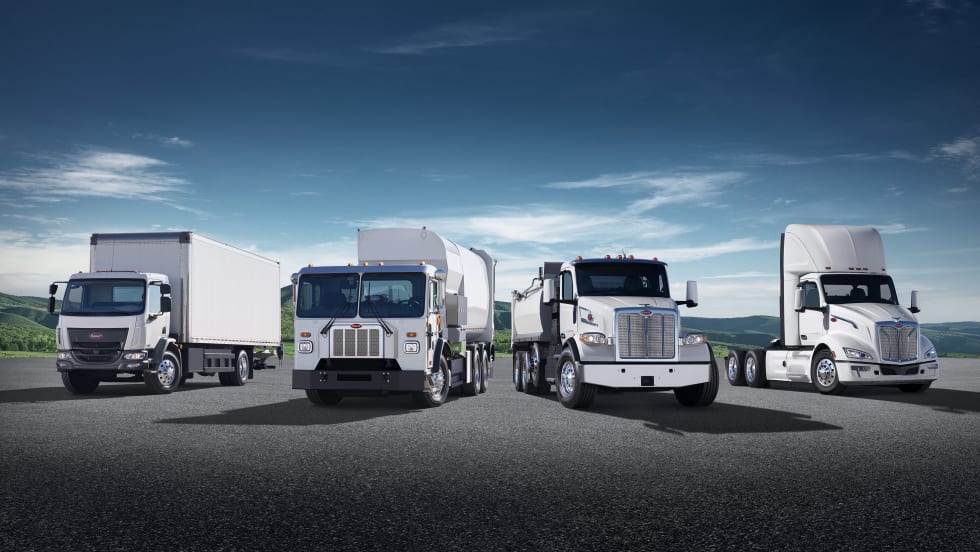
Peterbilt Expands Sourcewell Partnership with Electric Vehicle Lineup
Peterbilt Motors Company’s cooperative purchasing agreement with Sourcewell and its Canadian partner, Canoe Procurement Group, now includes including Peterbilt's battery-electric vehicle lineup.
Read More →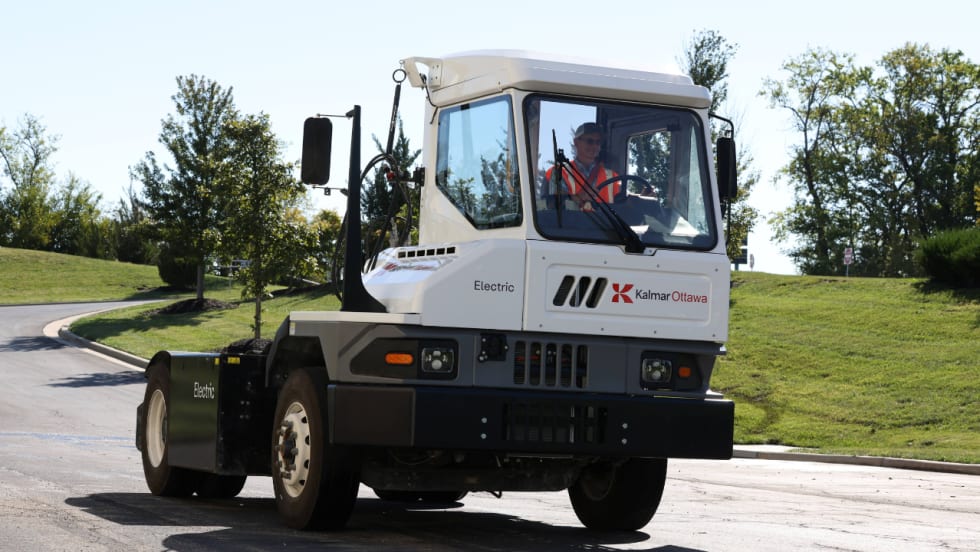
WTC Group Expands Sustainable Operations with Kalmar Ottawa T2 EV Fleet
Commercial adoption of the Kalmar Ottawa T2 EV terminal tractor continues to grow as customers add the zero-emission yard tractor to their fleets. WTC Group has placed an order for a Kalmar Ottawa T2 EV.
Read More →
Where Propane Autogas Fits in Today's Fleet Fuel Strategy
Learn more from PERC's Joel Stutheit, as he explains why propane autogas remains a practical alternative for fleets seeking to reduce emissions without sacrificing operational flexibility.
Read More →