



How to:
Test Your Tires Like a Pro
You don’t have to have big-fleet money, manpower and machines to obtain useful tire test results. Time, patience, and discipline can give even small fleets excellent tire performance data.
 MENU
MENU SEARCH
Truck fleets have spoken, and the use of retread tires is growing in popularity. Medium-duty, last-mile fleets are seeing it to promote sustainability and reduce fleet tire costs, too.
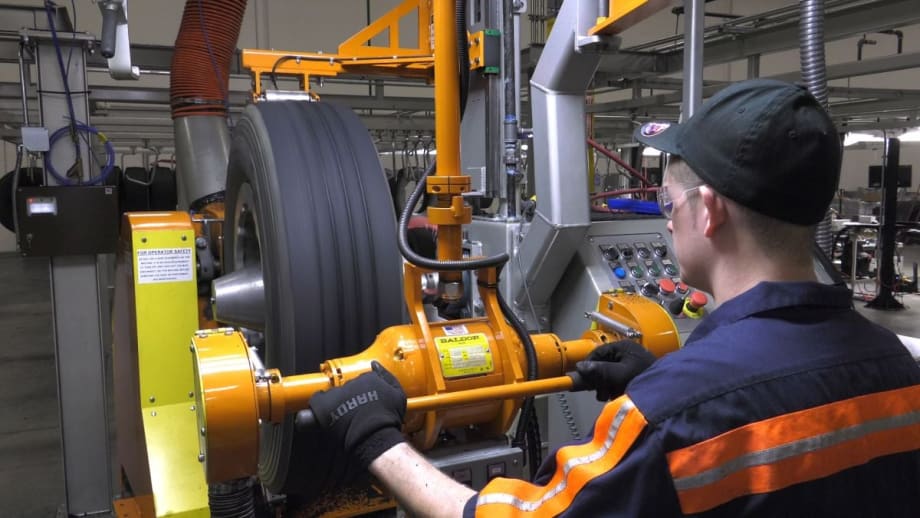
The top goal of retreading a tire is to increase its useful life. Tires can be retreaded multiple times and can cost around half of the cost of a new tire.
Photo: TRIB
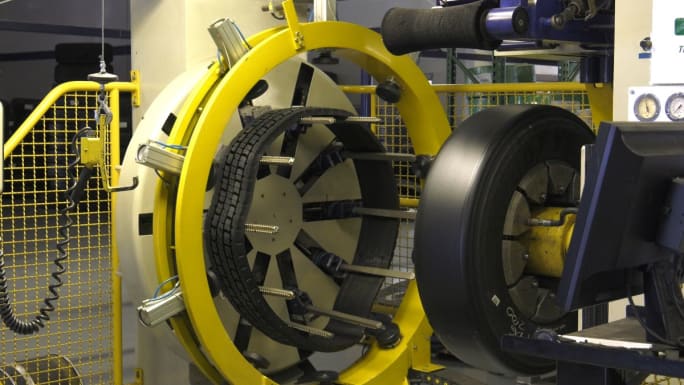
Retreading tires dates back to 1912, also know at the time as pre-cured treads. in the 1980s, tire retreading grew in popularity. The process is also known as a recap or remold.
Photo: TRIB
Retreading tires is not new. The process dates back more than 100 years. In 1912, Martin Oliver developed and patented a tire retreading method: pre-cured treads. Today, 89% of fleets with 500 or more trucks use retreaded tires in their operations, according to the Tire Retread & Repair Information Bureau (TRIB).
“These larger fleets are constantly testing their tires and measuring performance down to the fraction of a penny. They know how retreaded tires perform for them,” said David Stevens, managing director for TRIB.
“I can’t talk about retreading without mentioning the massive environmental savings our industry delivers. A retread tire uses 15 gallons less oil and approximately 90-100 pounds less total material than a new tire. The U.S. and Canada tire retread industry, therefore, saves approximately 217.5 million gallons of oil and delivers 1.4 billion pounds of landfill avoidance on an annual basis,” Stevens added.
Fleets continue to recognize the higher return on investment (ROI) and lower overall operating costs achieved with a quality retread program.
“Companies that opted for ultra-low-cost, low-quality new tires have found the reduced mileage they get and non-retreadability of those casings ultimately lead to higher total costs. Retreading a premium new tire two times can deliver 500% more miles per tire than those one-and-done new tires,” noted Stevens of TRIB. “Retread manufacturers continue to invest in technology to either bring across the same tread designs from their new tire businesses or are developing well-performing standalone tread patterns to meet the application-specific needs of their customers. This includes several retreaded tires that are SmartWay verified as low rolling resistance tires.”
Even in uncertain times, the total value delivered by retreads cannot be denied.
“Retreading lowers the total cost of tire ownership and improves a fleet’s bottom line. It’s a smart business decision that offers greater flexibility in a fleet’s supply chain and cash management strategies. As fleets become more autonomous in the future, we anticipate more small- to medium-sized fleets will adopt retreading as it will help them optimize their operations and maximize their tire investment,” said Ben Johnson, director of TBR brand and channel marketing, U.S. and Canada for Bridgestone Americas Tire Operations.
It’s also safe to say that retreading must be part of any fleet’s maintenance program to achieve the lowest overall driving cost.
“Many of the largest fleets in the U.S. rely on retreading as a key component of their tire strategy. The retread market seems to be softer than we would expect at the moment. Still, we are optimistic that this will return to normal as the year progresses,” said Tom Fanning, Continental’s U.S. market manager for truck and bus tires.
Retreading continues to be a strong contributing factor to promoting sustainability and reducing fleet tire costs for large and small fleets.
“As with new tire technology, retread technology continues to evolve and push the envelope toward safer, more fuel-efficient, and longer wearing treads. Advances in new tire casing and retread sculpture design, together with advances in retread shop manufacturing technology, continue to improve the quality of retreads to the point that their safety and performance rival that of new tires. Particularly when comparing locally sourced and manufactured high-quality retreads versus Tier 3, imported new tires from Asia — retreads provide superior value,” said Karl Remec, business model leader – Large Fleet for Michelin North America.
The sustainable, high-quality, low-cost retread message is getting through to the North American market.
“We are seeing more and more private and public/government-municipal fleets turn to retreading to manage environmental commitments and budget concerns,” Remec added.
It’s impossible to cover any significant topic today without discussing the impact of the COVID-19 pandemic.
“The perception was that the retread market would greatly benefit from the COVID-19 market conditions. Many dealers are reporting that segment to be like new tire market conditions,” said Robert Williams, vice president of TBR Sales for Hankook Tire America Corp.
The pandemic may push fleets to look at using retreads based merely on cost savings.
“With the current economic challenges amid COVID-19, fleets that don’t typically rely on retreads may now see added value in retreading as they look for more cost-saving opportunities,” said Dustin Lancy, commercial product marketing manager, regional/urban for The Goodyear Tire & Rubber Co.
Retreaded tires today are being designed with several specific applications in mind.
“If a fleet is looking for a specific tire for a specific application, then they can easily find a retread tire that meets those needs. From 4x4s to school buses, from emergency vehicles to commercial trucks, and large off-the-road vehicles up to commercial aircraft, retreaded tires are used safely every day in all of these industries,” said Stevens of TRIB.
More and more fleets in all segments have been leaning toward retreads over new tires due to the tax on import tires last year.
“A cheap, new import used to be around the same price as a stock retread (cap and casing). Since the tariffs hit, that is no longer the case. Fleets are now seeing the value in buying retreads since they will perform just as well as a new tire in most applications for a lesser price,” said John McCarthy Jr., president of McCarthy Tire Service.
John Boynton, who oversees operations for Southern Tire Mart, was adamant that every refuse, waste, or garbage fleet should be taking advantage of retreading.
“The refuse and waste fleets are very tough on tires, carrying heavy loads. Retread works extremely well in that. Occasionally, you run into fleets that don’t run retreading, and there’s such a huge cost saving there. Sometimes you run into some city and county garages that don’t use them for whatever reason, but it should be part of every one of those fleets,” Boynton said.
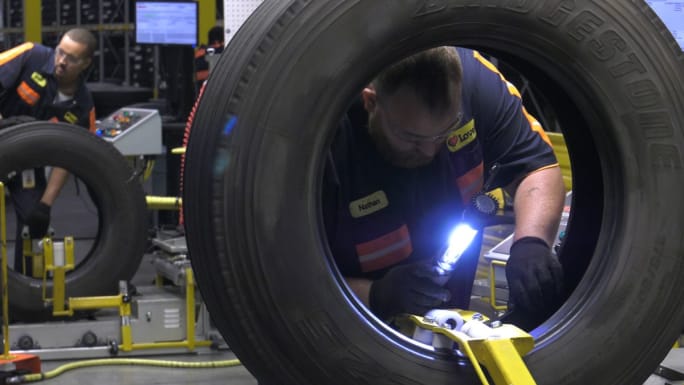
The best time to pull a tire for retreading, according to the Tire Retread & Repair Information Bureau (TRIB) is at 6/32nds. This depth helps ensure the tire casing is in top shape. The legal limit is 2/32nds on dirve or trail positions and 4/32nds on steer positions.
Photo: TRIB
All of the tire experts agreed that the medium-duty truck segment is growing. This growth is having a clear impact on tire sales as well as the retread market.
“Medium-duty truck use is one of the fastest- growing segments today when we consider Class 7 and under. This is due to the exponential demand for final-mile delivery. The traditional box trucks, step vans, utility bodies, etc., have historically used retreads with great success. Some even run them on the steer position,” explained Howie Harding, vice president, Sales for Service Tire Truck Center, Inc.
The application is demanding on tires due to the high number of deliveries within a day.
“Tires must withstand lots of twisting, turning, braking, curbing, which all lead to increased heat and abuse on the tire. As the segment continues to grow, so will the advancement to improve retread technology for their use,” Harding added.
Today, Love’s is seeing more medium-duty fleets utilizing retreads today than in the past.
“Medium-duty fleets typically have specific application and service needs, and it’s important to understand those requirements and be able to measure results to provide the best value to the fleet,” said Steve Phillips, director of tire sales and plant operations for Love’s. “Retreads will work in most medium-duty truck applications. The applications in this category can be extensive, so the most important consideration is finding the right product for the specific application and truck configuration.”
The larger parcel-delivery fleets, such as UPS and FedEx, already leverage retreads for their last-mile delivery business, according to Keith Iwinski, director of marketing, Bandag, U.S. and Canada, Bridgestone Americas Tire Operations (BATO).
“As this segment grows to include additional last-mile delivery fleet service providers, there is a strong business case for them to specify retreads as a preferred tire solution. Last-mile delivery fleets typically operate in high scrub and urban environments. Retreads are a cost-effective solution that offers the durability and reliability the last-mile delivery business demands,” Iwinski added.
Lancy of Goodyear agreed that as the medium-duty trucking segment continues to grow, so does their investment in retreads as a cost-saving approach.
“Last-mile delivery applications, such as walk-in vans and lightweight trucks used for package delivery, are outpacing other growth segments. With this growth, fleets are likely to adopt retreading to lower their overall cost per mile,” he said.
Inner-city driving, with its abundance of stopping, turning, and twisting, is a very strong application to retread into with the right product.
But, according to Boynton of Southern Tire Mart, it also requires a very knowledgeable retreader to be there to closely look at the tires because they’re more prone to picking up debris and getting operational damage.
“Just ‘retread it and forget it’ is not the best game plan. You need to retread, inspect, and monitor these tires. The last thing a fleet wants is having a problem en route. Delayed deliveries equal unhappy customers,” Boynton said.
Beyond last-mile, growth in retreads is occurring in other medium-duty vocational truck fleets as well.
“Retreads are often used in pick-up and delivery, refuse and other similar medium-duty truck applications where there is a lot of starting, stopping and turning. The faster wear rates are ideal for retreading because they allow fleets to maximize the value of their casing over multiple retreads, while also reducing the environmental impact,” Lancy said.
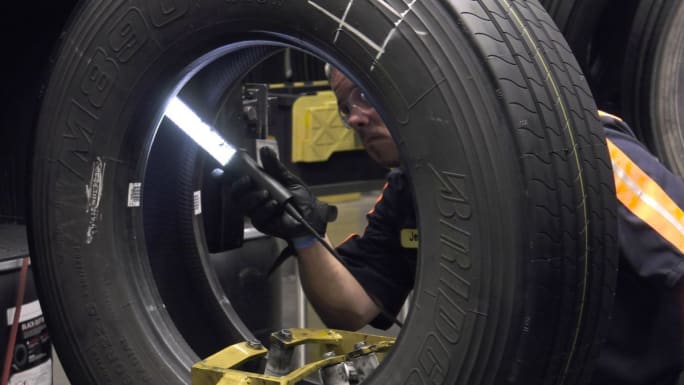
Whether a tire can be retreaded is not simply a matter of age. The condition the tire casing is in matters, among other factors.
Photo: TRIB
Many fleets have concerns regarding retread quality, either through experience or hearsay, about retreaded tires exploding or coming apart at the seam.
“This is a common misconception that we still hear from time to time, but there’s simply no basis for it. There have been multiple State and Federal studies that have looked at retread reliability and rubber on the roads. They have all reached the same conclusion: new tires and retreaded tires fail at the same rate, and those failures are caused by under-inflation, overloading, hitting debris, improper repairs, or other abuse. Those failures have nothing to do with the retreading or manufacturing process. Fleets that take care of their tires, keep them properly inflated/repaired, and treat them as investments will have no problem with reliability,” said Stevens of TRIB.
A retread program starts with having a good foundation to build on.
“Make sure you’re using a quality casing that is proven to retread multiple times and ensure you select the right tread design and repair specs for your application. If all this is done in conjunction with a comprehensive tire maintenance program, retreads will lower your costs without increasing risk of failure,” said Howie Harding, vice president, Sales for Service Tire Truck Center, Inc.
Many have tried retreads in the past and experienced something that led to their discontinuation.
“Perhaps you tried retread tires, but one of the key ingredients I mentioned above was missing. We’ve all heard the story, ‘I ran retreads 20 years ago, and one came apart and took out Uncle Buck’s fender.’ Technology and maintenance practices are ever-improving. You owe it to yourself and your business to get the educated facts before ruling out retread use,” Harding said.
Harding noted that he might be partial to retreads, but he’s not merely a believer because he’s in the business.
“I’ve seen customers in all segments of transportation benefit greatly from the use of retreads. Whether you’re running a fleet of medium-duty or heavy-duty truck and trailers, retreads will help you reduce your overall tire costs regardless of application,” Harding said.
The single best way to understand the retreading process and the technological sophistication that goes into it is to visit your local retread plant.
“They are proud of the work they do and will gladly take customers through their plants to explain what they do to create quality retreaded tires. Retreaders also work closely with their customers to ensure they are using the right tire for their applications and make any recommendations on adjustments,” concluded Stevens of TRIB.
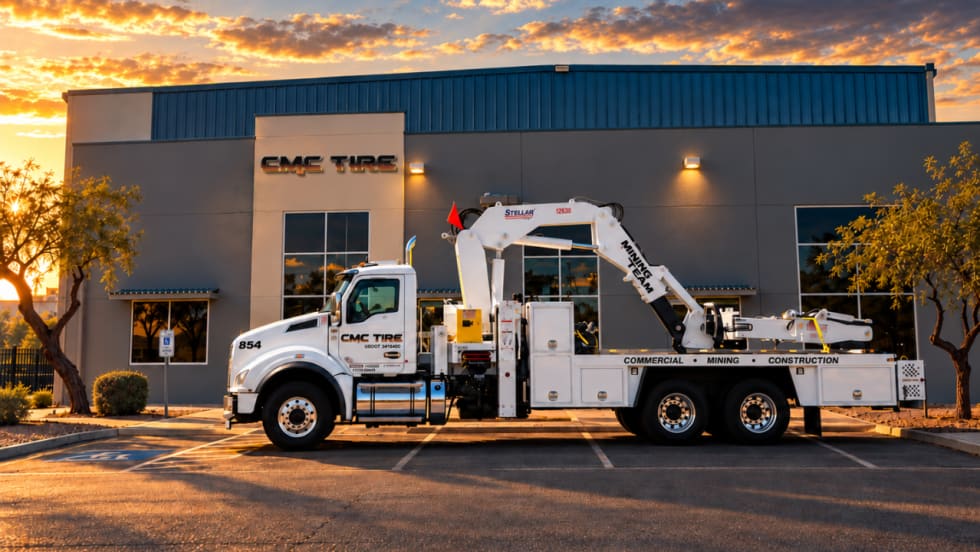
Les Schwab Tires has expanded into Arizona with two commercial tire locations in Phoenix and Tucson, strengthening its fleet service footprint in the Southwest.
Read More →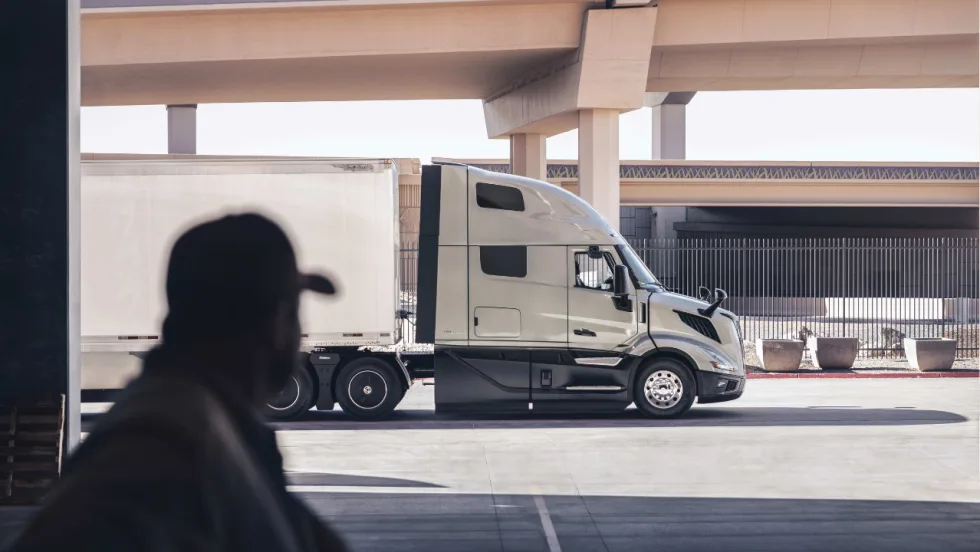
Unattended over-the-air software updates are now available in Volvo trucks across the U.S. and Canada. The new capability lets trucks stay current with the latest software without interrupting operations or requiring a dealership visit.
Read More →
For fleets trying to keep skilled technicians, recognition cannot begin and end with Technician Appreciation Week. Learn what year-round appreciation really looks like and why the everyday technician experience matters just as much as pay when fleets are trying to keep good people.
Read More →
When minor damage, warning lights, or equipment issues are reported late, small problems can quickly become bigger maintenance headaches. Conversational AI can help shorten the path from what a driver notices in the field to the person who can act on it.
Read More →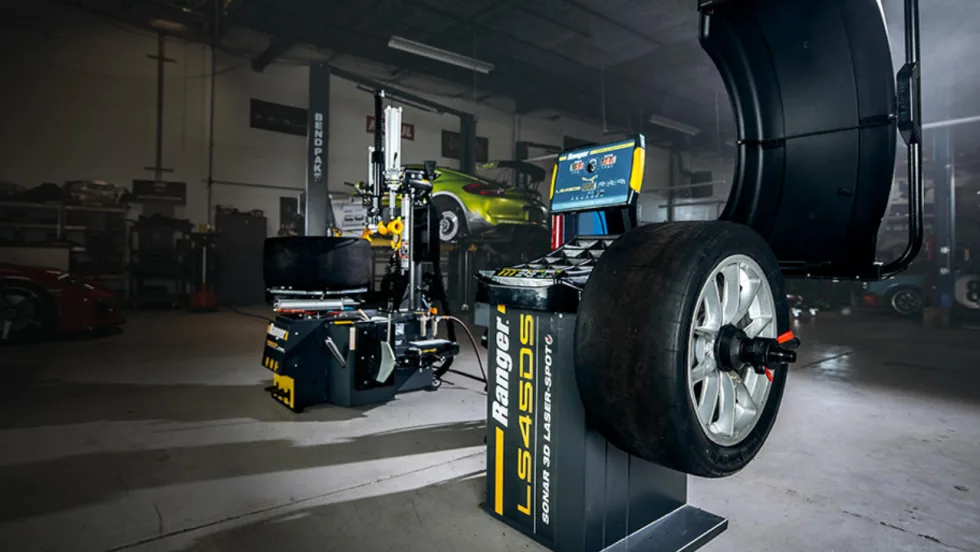
BendPak’s full line of Ranger tire changers and wheel balancers has been ETL certified to UL and CSA standards to improve operator safety.
Read More →
The Isuzu Veterans Apprenticeship Program (IVAP) signing ceremony highlighted Isuzu’s long-term commitment to veterans, Isuzu dealers, and the skilled workforce supporting its customers and the commercial transportation industry.
Read More →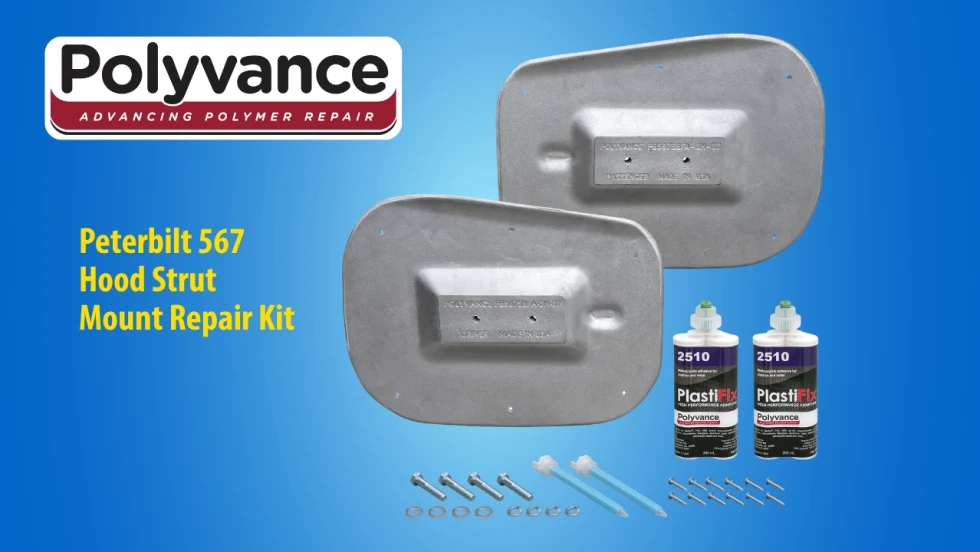
Polyvance has launched a repair solution for Peterbilt 567 hood struts, helping truck owners and repair facilities avoid costly hood replacements.
Read More →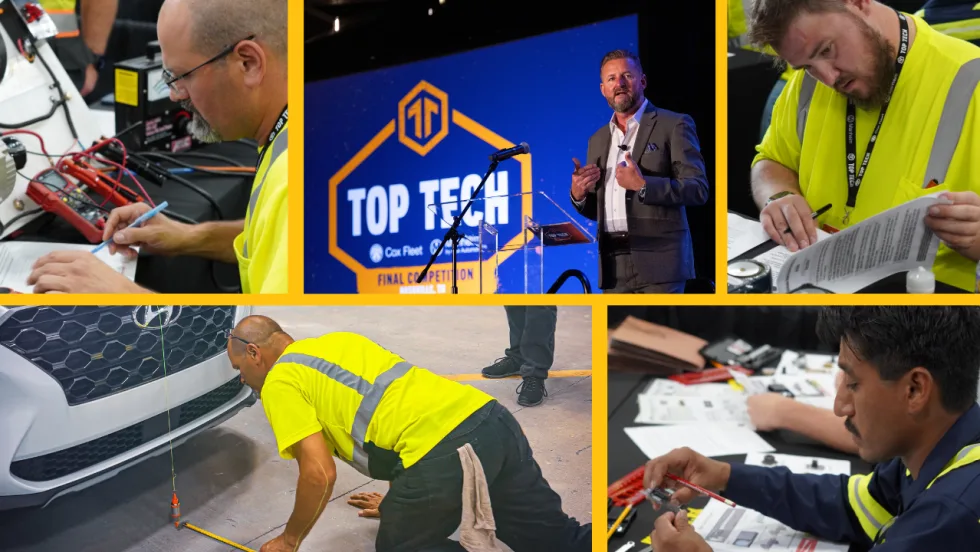
The top technicians from Cox Fleet and Manheim tested their skills in Nashville, Tennessee, at Cox Automotive’s 2026 Top Tech Finals. The overall winners will advance to compete at the American Trucking Association’s TMC SuperTech competition.
Read More →
Grote Industries has appointed Patrick Smith as vice president of North American operations as it celebrates 125 years of innovation and manufacturing excellence. He has more than 20 years of manufacturing leadership experience.
Read More →
Cold weather can expose weak batteries, tires, fuel systems, and maintenance gaps fast. Use this winter fleet checklist to prepare trucks and drivers before temperatures drop.
Read More →