





Download the HDT supplement "Building a Better Tire Program."
How to Maximize Retread Tire Life
Retread tires offer comparable performance to a new tire in a more environmentally friendly package. Here’s how to make sure they last.
November 7, 2019

One tire casing can be retreaded several times. But it’s important to know when to pull a tire from service for retreading.
Photo: Getty Images
6 min to read
Tires are a major expense for truck fleets. Replacement tires are often the second-highest expense after fuel. But there are strategies to make tires last longer, reducing the expense to replace them.
Adopting retreads is one way to reduce that expense, because it allows a casing to be retreaded multiple times, maximizing the productivity of one casing. But that’s only half of the job.
Fleets must also consider how they use and maintain these retreads to ensure they last.
Why Choose Retreaded Tires?
There are several benefits to using retreads. For one, tire makers are working on designing retreads with no discernable difference from new tires. On the user end, fleet drivers should not perceive any difference from a new tire.
David Stevens, managing director, Tire Retread & Repair Information Bureau (TRIB), noted that a retread tire could cost 30% to 50% less than a quality new tire. And, it can be retreaded several times, offering further savings.
“Once you combine the cost savings with multiple retreads of the same tire, you are easily delivering the lowest total cost of ownership for tires and creating the greatest return on your fleet’s tire investment,” Stevens explained.
Cost has always been considered a benefit of retread tires. But with the influx of lower-cost import tires available, fleets should remember the additional benefits of retreads, including performance.
“In many instances, low-priced imports have a lower quality than a retreaded tire from a reputable source. And the new treads from a low-priced import may wear more quickly, and the resultant casing from the import tire may not have the same quality as that from a major brand,” said Glenn Stockstill, product category manager, retread, Michelin B2B.
Stevens noted retread tires reduce the usage of natural rubber, oil, steel, and other materials and helps keep millions of tires out of a landfill.
What to Look for in a Retread
There are two primary elements to consider when selecting the right retread: the casing and the tread.
“The casing should be inspected and evaluated for damage or defects to make sure it can handle a retread. It is also important to make sure the retread width fits the casing accurately,” explained Dustin Lancy, commercial product marketing manager - regional/urgan for The Goodyear Tire & Rubber Company.
The right tread depends on a variety of factors, including trade cycle, vehicle type and configuration, average casing age in the fleet, load type, and length of haul, according to Stockstill. And based on these needs, the right tread may not be the one that comes with your truck.
“Don’t assume that the original equipment (OE) tire tread that came with your vehicle is optimal for your business’ conditions,” Stockstill warned. “Select a tread that is best suited for your application needs while also offering good performance and durability.”
When the casing and tread are combined, the retread should fit the job and the environment.
“Select the right tire (or retread) for the application, considering the proper tire size, load-carrying capacity, speed capability, and service type,” said LaTres Jarrett, director of marketing, Bandag, U.S. and Canada, Bridgestone Americas Tire Operations.
Use Under the Right Conditions
Regardless of tire you’re working with, the most important factor for maintenance is air pressure.
“Whether it is a new tire or a retread, the key to maximizing the life of a tire is to always run the tire at the manufacturer’s recommended pressure for the application it is in,” said John Barnes, head of ContiLifeCycle for the Americas, Continental.
But maintaining proper air pressure is especially important for retreads since retreads have a much longer expected life cycle.
“Maintaining proper air pressure will help reduce irregular wear and extend tread life, giving fleets more value out of their tire. It also helps protect the tire casing, which is essential for getting the maximum number of retreads,” said Barnes.
The ideal air pressure can vary, depending on the loads carried and manufacturer recommendations. Stockstill said to know the maximum load a fleet vehicle may carry under day-to-day operations, and consult tire manufacturers’ load and inflation charts.
Jarrett also warned against exceeding the maximum recommended speed of the tire, which may be lower than posted highway speed limits.
Air pressure should be checked regularly.
“Fleets should perform daily pressure checks on tires. Air loss is the number one cause for over-the-road failures both in new and retread tires,” Lancy explained.
Air pressure is only part of a tire management program. But the experts agree that it is the most important part of tire maintenance.
“Of course, fleets should have robust tire management and maintenance programs to ensure they get the best performance out of their tires, but nothing has more of an impact than keeping the tire inflated properly in the first place,” Stevens explained.
Stevens pointed to tire pressure monitoring systems (TPMS) and automated tire inflation systems to help maintain tires. He also recommended throwing out tire thumpers, relying instead on properly calibrated tire gauges.
Establish a Maintenance Policy
To ensure the productivity of a retread is maximized, fleets should maintain a written maintenance policy.
“This policy should be specific to their vehicles, equipment, geography, distance they travel, loads they carry, time on the road, and other pertinent factors. It should also cover the specifics of replacement treads entering their fleet as per the retreading policy. A part of this maintenance policy should include scrap analysis,” Stockstill said. “The key to a good maintenance program is that everyone has ‘skin in the game.’ All maintenance technicians, drivers, and managers know and understand what the fleets tire parameters are and what is ‘out of tolerance.’ ”
In addition to regular maintenance, Jarrett recommends conducting pre- and post-trip inspections as well as regular yard checks.
“Inspect tires for road-related damage such as cuts, cracks, bulges, and penetrations,” Jarrett said.
Working with a dealer partner can make tire management easier. Jarrett noted that some dealers have the capability to monitor and record retread performance, repair history, inventory, and casing rejection information in real-time.
Know When to Retread
An important factor in working with retreads: knowing when to pull it from service for retreading.
“The tire must be pulled out of service when it reaches 4/32 inches of tread depth for steer tires and 2/32 inches for drive and trailer tires. This ensures that there is still rubber above the belts of the casing. If the tire is run below this depth, damage to the tire integrity can occur, making the tire non-retreadable,” Barnes said.
Also, fleets should establish a tire replacement policy. The policy should cover the casings, number of times a quality casing will be retreaded based on the vehicle usage, casing age and condition, tire position, type, and quality of the new retreads.
Fleets should predetermine their pull point for the tire, based on the application. Many fleets pull the tire for retreading when the tread is 4/32 or 5/32.
“The pull point should maximize the number of retreads per casing and include an age of service limitation for the first, second, and third, etc., life of the retreads and their position. Some urban or severe-service fleets (such as sanitation fleets) can retread six or seven times on a quality casing,” Stockstill said.
Any tire coming out of service should be evaluated for damage and documented. This evaluation will help the fleet determine the best future selections for the application for the best overall value.
Subscribe to Our Newsletter
More Maintenance & Uptime

Kooner and Global Partners Connect Mobile Fleet Maintenance and Fueling Services
A new referral partnership connects on-site fueling and maintenance services, with a focus on reducing off-site trips and making better use of fleet downtime.
Read More →
Maintenance Failures That Sideline Work Trucks and the Inspection List That Catches Them Early
Unplanned downtime hurts efficiency and even profitability for work truck fleets, but catching potential problems early can help prevent it. Here is an inspection list that can help potentially prevent that downtime.
Read More →
Hunter Engineering Enters Collaborates with Bosch for Remote Diagnostics Service Through ADASLink
Hunter Engineering’s collaboration with Bosch enables ADASLink to connect directly with Bosch diagnostic experts through an integrated remote support platform, allowing shops to service more vehicles.
Read More →From Our Partners
How JASPER Keeps Fleets Moving and Profitable
Sponsored by Jasper Engines & Transmissions

Basic Tracking vs Next Generation Fleet Technology
Sponsored by AT&T Business

5 Facts Every Fleet Manager Should Know About Embedded Telematics
Sponsored by Stellantis/Mobilisights

How AI Video Telematics Boosts Driver Safety and Helps to Avoid Unnecessary Costs
Sponsored by Verizon Connect

Charting the 8 Bottom-Line Benefits of Workforce Optimization
Sponsored by Verizon Connect

Mack Adds Chassis Coverage Options for Fleet Repair Costs
Mack Trucks introduced four system-specific chassis coverage plans, giving fleets more flexibility to manage repair costs for driveline, HVAC, electronics, safety systems, and other components.
Read More →
GM Launches ‘30 Under 30’ Program to Elevate Automotive Service Technicians and Inspire the Next Generation
The GM Automotive Service Technicians 30 Under 30 program honors GM service technicians under the age of 30 who demonstrate continuous technical training, exemplary customer service, mentorship, and leadership.
Read More →
Kooner Fleet Management Solutions Named Exclusive On-Site Fleet Maintenance Provider for Safe Truck Parking
A strategic partnership between Kooner Fleet Management Solutions and Safe Truck Parking brings mobile maintenance and 24/7 repair services directly to Safe Truck Parking locations, beginning in San Diego, California, with nationwide expansion planned.
Read More →
Building a Better Vehicle Replacement Model
Meter readings still matter, but engine hours, idle time, maintenance trends, and utilization can help fleets spot costly vehicles before the odometer does.
Read More →
Sponsored•September 21, 2026
How JASPER Keeps Fleets Moving and Profitable
Every business decision within fleet management ultimately comes down to financial performance. Investing in dependable replacement powertrain components and responsive support can measurably impact the bottom line.
Read More →
Ryder Honors 2026 Top Technician at 25th Anniversary Skills Competition
Hosted in Nashville, Ryder’s 25th annual Top Technician Skills Competition honored the best technicians across the U.S. and Canada. Top Tech celebrates technician expertise while promoting growth, recognition, and camaraderie. Here are the winners.
Read More →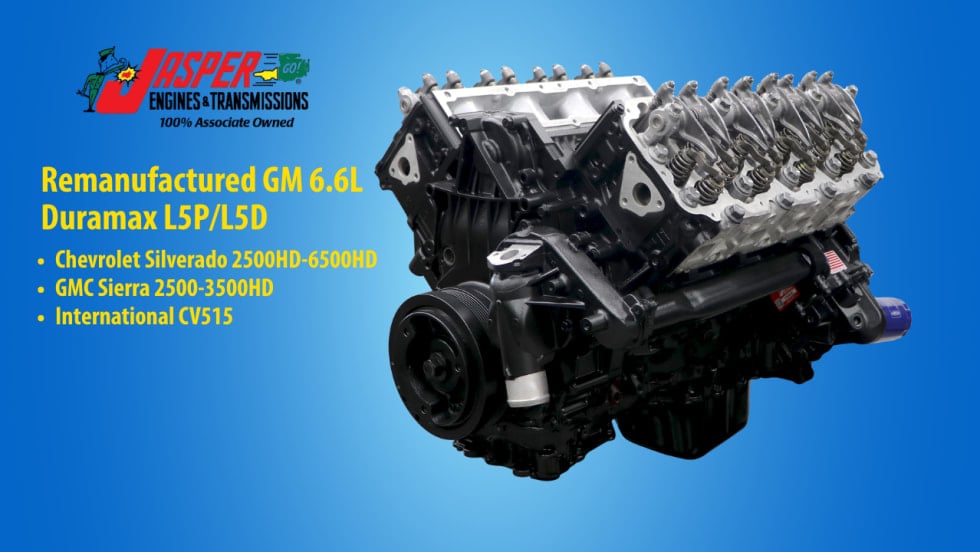
Jasper Offers GM 6.6L Duramax L5P/L5D Complete Format Diesel Engines
Jasper Engines & Transmissions now offers the remanufactured GM Duramax 6.6L L5P/L5D as a complete format engine for several General Motors and International 2017-2023 HD pickup trucks.
Read More →