




Improving Truck Ergonomics for Driver Safety
OSHA regs require an employer to provide a workplace (which includes upfitted work vehicles) free from recognized hazards. The best way to make a work truck fleet more ergonomic is to proactively identify and rectify potential issues.
April 4, 2017

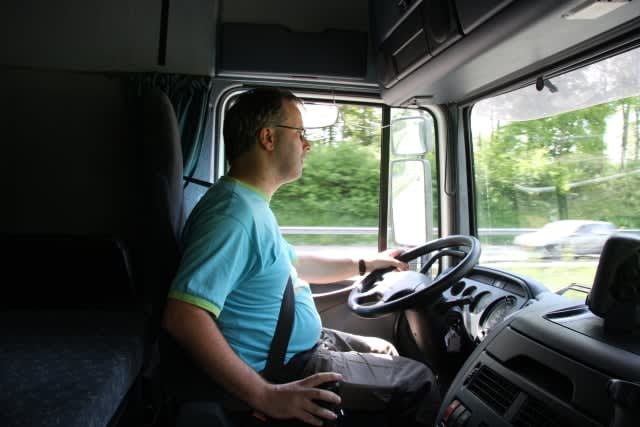
Ease of use and operator safety must be a fundamental concern for all fleet managers. Consultation with the end-user by including site visits to their location helps to understand how the vehicle and equipment will be utilized.
Photo courtesy of Getty Images
7 min to read
Ensuring truck driver safetry has evolved work trucks over the years into mobile offices equipped with a variety of in-cab devices, such as mobile data terminals for job-site reporting, routing, and work orders; along with in-cab filing bins and swivel writing boards, all of which have dramatically enhanced driver productivity.
However, these devices and equipment consume interior space, creating a cramped cab environment that restricts a driver’s body movement, which can potentially lead to ergonomic injuries.
While in the field, drivers must input data using a small keyboard, or touch screen, while sitting in cramped truck cabs that are even more constrained than a typical office environment. Carpal tunnel syndrome is viewed as primarily an office worker injury, but there has been an increase in drivers filing carpal tunnel syndrome claims as they spend more time typing on keyboards in cramped work truck cab interiors. Without adequate desk space for wrist supports, cushions, and other ergonomic-friendly accessories, drivers are at increased risk to develop a wrist strain and/or carpal tunnel syndrome. This is a growing HR concern due to the uptick of workers’ compensation claims among company drivers.
Ease of use and operator safety must be a fundamental concern for all fleet managers. Consultation with the end-user by including site visits to their location helps to understand how the vehicle and equipment will be utilized. Work closely with drivers to analyze their normal work processes. This may identify actions that can lead to an injury, such as repeatedly having to climb into the rear of a service body for parts or equipment. Site visits provide the opportunity to determine what does or doesn’t work well and help identify opportunities to minimize/eliminate injuries and improve ease of use of upfitted equipment.
Check out this video from WorkSafeBC about the dangers of poor truck driver ergonomics:
Ergonomic Truck Upfits
Under OSHA regulations, an employer must provide a workplace (which includes upfitted work vehicles) free from recognized hazards. Across a variety of vocational segments, today’s fleet managers are devoting increased consideration to ensuring upfits will be ergonomically safe for the driver over the service life of the vehicles.
For instance, more fleets are requesting upfits with additional safety equipment, such as a rear-view camera, reverse sensing, backup alarm, remote start, grab handles, convex spot mirrors, and drop-down ladder racks to reduce workers’ comp claims and to improve operator efficiency.
To create an ergonomically safe work environment, make sure the vehicle is properly engineered upfront for the job it is required to do. For example, if a fleet application requires a crane installation on service bodies, the chassis GVWR should be sufficient for the application. Under-engineering can lead to unnecessary safety risks to drivers.
A variety of upfitting options are available to fleets to help reduce the risk of injury to employees, such as hydraulic self-unloading ladder racks, lower-profile service bodies, and even simple features such as step bumpers. However, workers’ compensation claims resulting from poorly spec’ed add-on equipment is on the rise. There are increased complaints about “less-than-ergonomic” upfit decisions.
Fleets often find themselves defending upfit specifications against negligence allegations that result from pushing, pulling, lifting, or bending injuries. Inappropriate equipment spec’ing decisions can result in expensive litigation. For instance, the average workers’ compensation cost for a pushing/pulling injury is more than $10,000, while the average cost for a lifting/bending incident is more than $9,000.
When selecting upfit equipment, review vehicle requests from the field and ask follow-up questions of drivers to verify the equipment is suitable for the job. Thoroughly train all employees handling the equipment in its operation and safe use. Develop written guidelines covering vehicle and equipment usage. Follow manufacturer guidelines to avoid unnecessary accidents.
Field managers should regularly inspect equipment to ensure it is in safe working condition and that equipment is only used for its intended purpose. Often, decisions are made in the field to modify vehicles without the fleet manager being informed. The home office is often not aware of the modification until there is an issue, such as when someone complains about an ergonomics-related health issue.
Consider creating an ergonomic task force to evaluate the merits of upfits and the installation of other auxiliary equipment. A task force, usually comprised of representatives from HR, fleet, technical services, and safety departments, establishes criteria regarding safety, cost, and functionality. These recommendations should be based on information collected from workers’ comp claims, employee interviews, observation, evaluation of body postures, and input from the in-house safety specialist. The task force would also spend time on the job with field employees to observe workplace conditions and routine.
How to Avoid Ergonomic Minefields
A “one-size-fits-all” approach to truck specifications is an ergonomic minefield, which, besides health, safety, and productivity issues, could result in litigious consequences.
Fuel prices, higher acquisition costs, and corporate sustainability initiatives have cumulatively contributed to a widespread trend to spec smaller, lower-GVW trucks, so long as it does not impair the ability to fulfill the fleet application. Spec’ing a smaller, lower GVW truck may be able to fulfill a fleet application, but it may also contribute to poor driver ergonomics due to space constraints. While smaller trucks cost less, decrease fuel consumption, and reduce greenhouse gas emissions, they also constrict in-cab work space for drivers, especially if a mobile data terminal is installed.
Taller drivers working out of smaller trucks often cite ergonomic issues relating to cab egress and ingress, or discomfort when operating the vehicle for extended periods. Drivers who are of above-average height complain they must “contort” their bodies to fit into a smaller cab, which, some allege, will ultimately lead to ergonomic-related injuries or aggravate pre-existing conditions.
Larger trucks are not immune from driver-ergonomic complaints. In fact, some contend that large trucks can exacerbate the chance of ergonomic injuries for some drivers.
Shorter stature drivers — women in particular —can be at risk if they must regularly stretch and strain while entering and exiting trucks or when attempting to access storage compartments mounted on top of the side beds of high-profile trucks. These trucks make it difficult for employees under 5-feet-8-inches tall to access top-opening side bins or work out of a pickup bed. Another concern for shorter stature employees operating large trucks is the increased brake and accelerator pedal distance, even with the seat moved completely forward. Some models offer adjustable gas and brake pedals, which can be a positive total cost of ownership (TCO) factor. For those models that don’t offer adjustable gas and brake pedals, aftermarket pedal adjustment kits are available.
Also, contributing to the increase in fleet-related ergonomic issues is the “growth in waistlines.” When originally developed, GVW calculations were based on a driver’s average weight of 150 pounds. However, most of us today would be hard pressed to locate many 150-pound employee drivers. The expanding girth of many drivers is creating unanticipated ergonomic issues. When seated, the most important feature is the ability of the driver to adjust the seat and steering column to allow easy access to instrument panel controls, along with maintaining good visibility of the road and the dashboard. Many plus-size employees find themselves sitting much closer to the steering wheel, even when the seat is fully retracted.
Spec’ing trucks to meet the diverse needs of your entire workforce is a challenge. You can spec your fleet to a “bell curve” and deal with the exceptions by adding ergonomic-friendly equipment or swapping a driver from a large to small truck and vice versa.
Ergonomics Minimize Accidents
In addition to health issues, poor ergonomics is a key contributor to preventable accidents.
Perhaps the most important aspect of good ergonomics is that it can increase accident avoidance. Poor ergonomics reduces driver comfort, which increases fatigue, a key contributor to preventable accidents. In the final analysis, resolving ergonomic issues can have a significant impact on your company’s bottom line by reducing workers’ comp costs, improving driver productivity, and reducing fatigue-induced operator errors.
When spec’ing vehicles, the cost-avoidance benefits of good ergonomics must be monetized to an approximate value and factored into calculating the true total cost of ownership.
Ergonomics Improves Driver Morale
While low morale is an HR/management issue, and even though fleet managers do not control driver salaries, there are actions that fleets can take to help increase driver morale.
One way is to spec more ergonomic vehicles by proactively identifying potential issues and rectifying them before they impact morale, or, in worst case situations, result in injuries. Improved ergonomics can also have a significant impact in reducing workers’ compensation costs, improving user productivity, and decreasing fatigue-induced driver errors that can lead to preventable accidents.
Proactive Ergonomics
Ergonomics must be higher on the fleet manager’s “radar screen.” The best approach to make your fleet more ergonomic is to be proactive in identifying potential issues and to rectify them before they result in injuries. Liability emanating from using inappropriately spec’ed equipment is an issue to which fleet managers should devote more attention, due to the high cost of litigation to defend against alleged negligence and to protect the health of employees.
Subscribe to Our Newsletter
More Safety
When Work Trucks Under 26,001 Pounds Need IRP Registration
Think trucks under 26,001 pounds are automatically in the clear when it comes to IRP? Not always. Learn where lighter vehicles can still run into trip permit, apportioned registration, and IFTA compliance requirements when crossing state or provincial lines.
Read More →
Volvo Trucks Releases New Safety Recommendations for Traveling with Pets
One of the most important recommendations for professional drivers traveling with pets is to ensure pets are properly restrained while the truck is moving. Other tips are available in the new guide from Volvo Trucks North America and Center for Pet Safety.
Read More →
API Issues Refueling Safety Guidelines
The American Petroleum Institute offers a list of safe vehicle refueling guidelines, including ways to avoid potential problems with static electricity discharges in fall, winter, and early spring.
Read More →
Winter Fleet Prep: Expert Tips to Keep Vehicles Running Smoothly
Cold weather can expose weak batteries, tires, fuel systems, and maintenance gaps fast. Use this winter fleet checklist to prepare trucks and drivers before temperatures drop.
Read More →
When a Work Truck Breaks Down, the Job Can Stop, Too
A work truck breakdown can stop more than the vehicle. Discover how payloads, jobsites, and specialty equipment change the roadside response.
Read More →
What Stronger Long-Term Fleet Service Partnerships Actually Require
Fleet service partnerships rarely fall apart all at once. Learn the three warning signs that trust is eroding and what fleets and providers can do before downtime, frustration, and lost revenue follow.
Read More →
Applause & TRUCE Software Partner to Improve Driver Safety Through AI-Powered Telematics & Employee Performance Management
Applause has integrated TRUCE driving metrics directly into its employee-first performance and safety platform that transforms mobile devices into AI-powered telematics.
Read More →
How Detroit Assurance with Active Brake Assist Works
Do you want to see what it is like to experience Detroit Assurance’s Active Brake Assist? In this video, Work Truck will put you in the cab to see how it all works and then hear more details from DTNA’s Mike Young.
Read More →
Get Left of Loss: A 5-Step Workplace Violence Prevention Framework for Fleet Operators
Violence risks do not stop at the driver’s door. Learn five practical steps fleets can take to spot threats early and protect workers before loss occurs.
Read More →
Sponsored•July 17, 2026
How Better Visibility Cut Speeding Violations by 48%
Fleet leaders don't need more data, they need clearer visibility into what the data is saying. This case study explores how one utility replaced speeding-event counts with a single metric — miles driven in violation — to strengthen safety and significantly reduce speeding violations.
Read More →