




How to Improve EV Battery Performance in Cold Weather
Cold weather has been proven to hurt an electric vehicle’s battery performance, but there are ways to minimize this concern for work truck fleets.

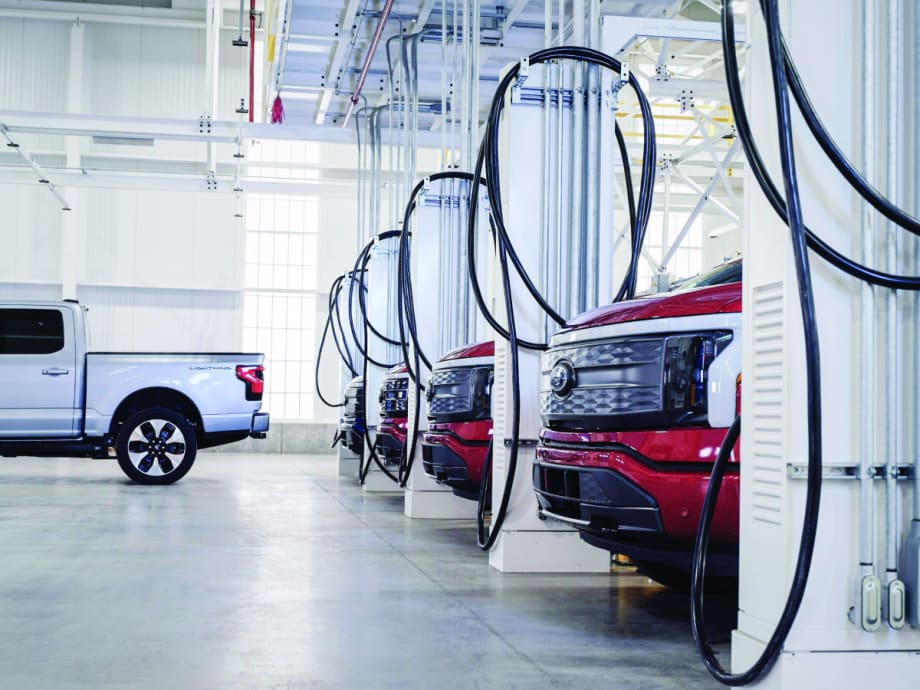
When driving long distance, fast charging when the vehicle drops below 80% state of charge will heat up the battery.
Photo: Ford
As fleet companies are investing more into electrification, they’re learning how to deal with external factors that can impact electric vehicle (EV) range. For example, one big question many fleets have is whether cold will impact an EV's performance. And, in research cold weather has been shown to make an impact.
In 2019, AAA tested the range effects on EVs and found that 20-degree weather could reduce range by 10-12%. The study also found that when there is up to 95-degree weather outside and air conditioning is used inside the vehicle, ranges can decrease by 17%.
Minimizing Cold Weather Battery Concerns
Cold weather has proven to impact an EV’s battery performance, and fleets are looking to lessen the blow of low temperatures.
Understanding how an EV battery works best is important to minimize these concerns.
Ramesh Natarajan, business unit engineering manager of Webasto Group, cited low charging performance, potential lithium plating, potentially permanent damage to electrochemistry, time-consuming charging loops, and additional heat energy required to heat the system as the main cold-weather concerns.
“To minimize these concerns, understanding their operating conditions in detail and adapting the loads (powertrain, cooling/heating, auxiliaries) is the key,” Natarajan said.
Natarajan presented the following example:
“If a certain use case will work between minus 25 to 70 degrees Fahrenheit, it would be wise to start with how often the minus 25-degree temperature occurs in a year? How many of these days can the vehicle draw energy from the grid? Can the vehicle be equipped with pre-conditioners, which draw power from charging architecture and keep the vehicle at an optimum temperature?”
With this in mind, it will drive a data-driven decision of thermally insulating the battery during the winter with preconditioning loops. This can result in less heat loss and improved range.
Andrew Walker, Ford Pro EV product marketing manager, said proper planning can help fleets extend the operating range of their EVs in cold weather. For example, unlike gas-powered vehicles, which use exhaust heat from the engine to warm up the cabin, all-electric vehicles use battery power. The more power they expend to heat the van interior, the less that’s available to power the van on the road.
"Our top recommendation is to precondition your vehicle by scheduling departure times and selecting a cabin temperature level using the SYNC 4 touchscreen, Ford Pro E-Telematics dashboard, or FordPass app. Think of it as a more sophisticated remote start system -- vehicle preconditioning brings the vehicle cabin up to a comfortable temperature before the driver gets in, but also heats the battery so the vehicle maintains the best efficiency and range when it's on a route," he said. "When ambient temperatures are under 50°F, scheduling departure times also enables battery pre-conditioning, which heats the battery system at the departure time. This is important because colder temperatures cause the high-voltage battery’s electrolyte fluid to be sluggish, limiting how much power is available to discharge and how quickly the vehicle can charge."
Walker offered other ways to maximize an EV’s battery performance:
- Keep speeds moderate. Higher speeds use more energy.
- Use “Eco” or “L” drive modes to increase regenerative braking to help recover more energy from the battery.
- Avoid harsh acceleration and braking to help maximize battery range.
- Keep doors and windows closed when running the heat (or air conditioning) to conserve energy.
- If driving a long distance, fast charging when the vehicle drops below 80% state of charge will heat up the battery, increasing available energy for the next leg of the trip.
- If the vehicle is covered with snow, start it remotely or schedule preconditioning to melt snow, and brush off any remaining snow before driving to eliminate extra weight and drag.
Park in a garage whenever possible to shield EVs from colder temperatures, according to Walker.
“They also should be plugged in when parked,” Walker said. “In cold temperatures, the vehicle uses power from the charger to heat the battery. Keeping it plugged in can ensure the battery remains charged.”
Checking the Outside Temperature for EV Battery Performance
Batteries work best between 40 to 80 degrees F (5-30 degrees C), according to Natarajan.
“Anything below 40-degrees F over a prolonged time would mean reduced performance,” he said. “The underlying physics is that the batteries have higher internal resistance in colder temperatures. The most concern is below 5 degrees, where the possibility of formation of lithium-plating is higher. Again, this is cell chemistry dependent.”
One of the ways to address this is to heat the batteries. Megan Soule, director of Chevrolet Trucks & Full-size SUV Communications, outlined how General Motors tests its EV batteries. Chevrolet has hot and cold chambers in its Estes battery systems lab to test its batteries in both conditions.
“The lab can simulate minus 68 degrees C to 85 degrees C and 5-95% relative humidity environments for battery pack testing and minus 73 degrees C to 190 degrees C and 5-95% humidity for cell testing,” Soule said.
The solution for minimizing cold weather damage to battery performance is to choose the right size and chemistry for the applications.
Pursuing EV Initiatives that Matter to Work Truck Fleets
Recognizing the issue is one part, but fleet companies are also taking action to reduce cold weather concerns.
“We are constantly working toward optimizing battery performance,” Soule said. “Last month, GM announced a feature standard in its Ultium-based EVs that captures and repurposes waste energy from the battery and heat from inside and outside the vehicle.”
To address applications in colder regions, Webasto has an off-the-shelf product eBTM (Battery Thermal Management) which is a system with a:
- Water pump.
- Reservoir.
- Chiller.
- Radiator.
- Expansion.
- Valves
- Heater.
“This system was designed, developed, and tested from day one for our battery packs,” Natarajan said. “Understanding the application’s use case is still key to ensuring the sizing and power demands correlate.”
Ford is investing $50 billion through 2026 as part of its plan to lead electrification in several areas and electrify its products, according to Walker.
Ford said it plans to build more than 2 million EVs by late 2026.
From advice to initiatives, fleet companies are adapting to ensure the battery performance of their EVs is not severely impacted by factors like cold weather. Check out these tips to improve your EV battery performance in cold weather.
And cold impacts more than just electric cars and trucks - driver injuries increase during winter months due to icy walk ways and accidents are more frequent, too. Be sure to protect your trucks and your drivers during the colder winter months.
More Green Fleet

Fleet Forward Conference Introduces One-Day Passes for 2026
New one-day registration gives fleet professionals the flexibility to attend Tuesday, Wednesday, or Thursday, with passes available for $199 through Sept. 18.
Read More →
CALSTART Rebrands as Catalyst Mobility, Will Combine with Forth in 2027
CALSTART has rebranded as Catalyst Mobility and will combine with Forth at the start of 2027. The new organization said it is poised to become one of the world's largest, strongest, and most impactful clean transportation nonprofits.
Read More →
Electric Truck and Charging Programs to Boost Sustainability at NY & NJ Ports
Together, the Port Authority of New York and New Jersey and CALSTART will electrify drayage and terminal operations serving the East Coast’s busiest container port. A pair of incentive programs totaling $45 million has launched to accelerate adoption of zero-emission drayage trucks and terminal tractors.
Read More →
Xos Hub Surpasses One Gigawatt-Hour of Energy Delivered in the Field
A single Xos Hub has surpassed one gigawatt-hour of energy across more than 33,600 charging sessions in the field, demonstrating performance that supports Xos' expansion across new products and markets.
Read More →
Carrier Transicold Launches All-Electric Vector 8200 TRU for Diesel-Free On-Site Cold Storage
Carrier Transicold’s first engineless multi-temperature TRU helps fresh- and frozen-food fleets add supplemental cold storage capacity during seasonal peaks.
Read More →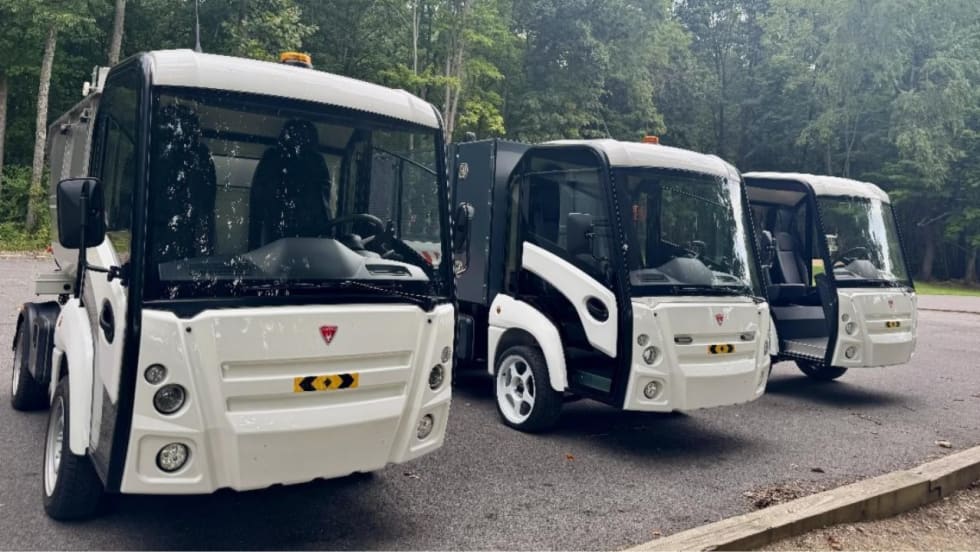
Narro Trucks Introduces Electric Utility Vehicle
Narro Trucks officially launched its operations on Aug. 20 and hosted a ride and drive to showcase its electric truck, which will be produced in Virginia.
Read More →
Samsung SDI Takes Full Control of GM Battery JV as Indiana Plant Pivots to Energy Storage
Samsung SDI is taking full control of its Indiana battery plant with GM, marking a major shift from the EV-focused joint venture Charged Fleet first covered in 2023.
Read More →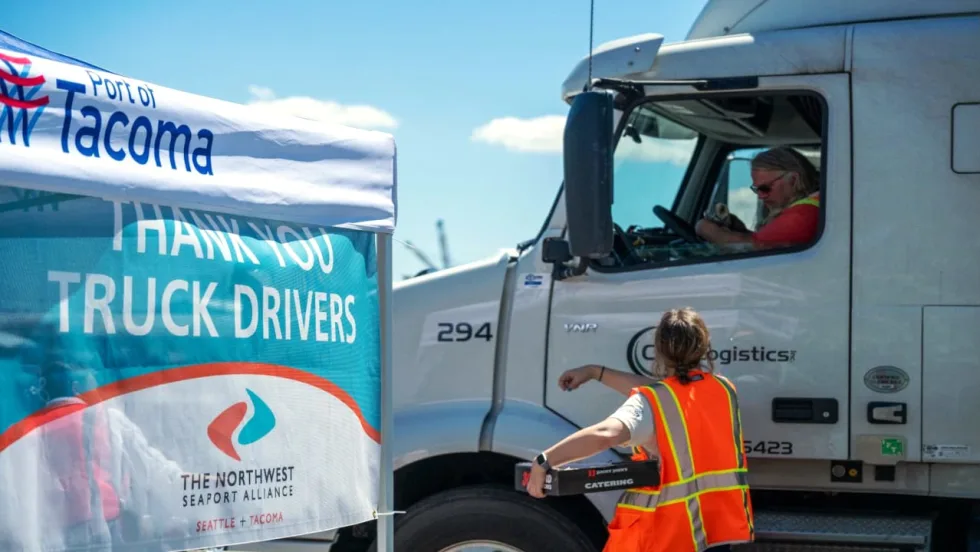
NWSA Taps CALSTART to Administer Zero-Emission Drayage Assistance Program
CALSTART will provide free technical assistance services to drayage fleets serving the Ports of Seattle and Tacoma and looking to transition to cleaner technologies and help decarbonize freight hubs.
Read More →
EV Fleet Reality Check: What Operators Wish They Knew Before Electrifying Their Work Vans
Electric work truck upfits bring new compatibility questions. Learn how parts availability, OEM guidance, power demands, and route planning can affect fleet performance.
Read More →
Peterbilt Expands Sourcewell Partnership with Electric Vehicle Lineup
Peterbilt Motors Company’s cooperative purchasing agreement with Sourcewell and its Canadian partner, Canoe Procurement Group, now includes including Peterbilt's battery-electric vehicle lineup.
Read More →