





Watch Now: Fleet 101: Do You Need a DOT Number?
How to Ace a DOT Safety Review
Federal regulators are pushing stricter enforcement of complex vehicle safety regulations. Staying up-to-date with the mandates help commercial fleets avoid heavy fines or shut-downs for noncompliance.
May 1, 2008

An accident or roadside inspection, for example, can open a fleet to a full audit.
Photo: Ivan Bandura/Unsplash
8 min to read
The Department of Transportation’s (DOT) push for stricter state enforcement of Federal Motor Carrier Safety Regulations (FMCSR) has raised the potential for fleet audits in many locales.
Due to the regulations’ complexity it’s easy to become tripped up. A complacent attitude such as, “We’ve been running our fleet a long time, and we’ve never been audited,” can be equally dangerous.
An accident or roadside inspection, for example, can open a fleet to a full audit. If the fleet is found negligent in complying with regulations, it can be heavily fined or even operationally shut down.
In case of accidents, a high SafeStat score or negligence in complying can lead the fleet to significant exposure to litigation and claims for punitive damages by the plaintiff. (See sidebar for information on SafeStat scores.)
As poor risk management with significant downside exposure, noncompliance or litigation is worth striving hard to avoid, notes Vivek Khosla, director of product management for PHH Arval.
Small Trucks May be Affected
Even as they provide guidance on vehicle ordering, commercial fleet management firms such as PHH Arval counsel clients on which vehicles require DOT compliance and ensure clients’ ongoing compliance with the requirements.
The DOT regulations begin coming into play on vehicles or combinations of vehicles at 10,001 lbs. gross vehicle weight (GVW).
Many fleets mistakenly assume that because the truck is small — a ½- or ¾-ton model below 10,001 lbs. GVW, for example — it is automatically and always exempt from regulation. However, by attaching a 4,000-lb. trailer to a Chevrolet Silverado, for example, its gross combined weight rating (GCWR) exceeds the 10,001-lb. governmental regulation limit. Therefore, fleets must pay close attention to any trucks that can potentially exceed 10,001 lbs. GCWR, once a trailer is attached.
At that point, companies must obtain a DOT number/decal and follow various FMCSR guidelines. The driver must have a medical exam, for example, documented on a DOT form. Employers are compelled to keep a driver file, including items such as certificate of road test evaluation, background check on moving violations, and log of hours spent on the road. Employers also must provide documented driver training in various regulations.
Interstate vs. Intrastate
For the purposes of an audit, the DOT also must know the number of interstate versus intrastate trucks and drivers in a fleet operation.
Fleet failure to differentiate between these categories and maintain the necessary records is another common mistake, according to Dixie Burbank, vice president of ITS Compliance, Inc., headquartered in Sun Prairie, Wis. ITS partners with Wheels Inc. to offer compliance services for Wheels’ leasing customers.
Intrastate trucks and drivers must comply with DOT regulations or individual state regulations, whichever the fleet chooses to follow. However, if the trucks or the goods are hauled across jurisdiction lines, the trucks and drivers are interstate regulated, Burbank adds.
Many states have adopted the FMCSR in its entirety, even for intrastate drivers and trucks. Fleets must stay current with state regulations and track state changes to the FMCSR.
Companies also often delude themselves into thinking that they’re exempt from DOT requirements because they only operate intrastate, Jeff Robley, national truck sales manager for ARI, points out.
That may be true for operators in a few states, such as Texas and Wisconsin, but only if their trucks weigh less than 26,000 lbs. GCWR, and they’re not delivering items shipped to the companies from out of state.
Whenever a fleet delivers items sent from out-state to its warehouse, for example — even if its deliveries are local — the transport technically falls under the furtherance of state commerce, subjecting it to DOT regulations.
Some states, such as California and North Carolina, also have their own in-state commercial truck requirements. California regulations, for example, exceed those of the federal government, requiring operators of trucks over 10,001-lb. GCWR to have commercial driver license (CDL).
Defining Hazardous Materials
The definition of “hazardous materials” and their impact on regulations can be confusing.
“We’ve had inquiries from people who aren’t sure about the impact of the hazardous material requirement,” says Ron Heck, director of DOT compliance at AmeriFleet Transportation Inc.
“They’ll say, ‘We carry some hazardous materials, but only with a small truck,’ ” Heck explains. “You can’t say, ‘We carry some.’ You either carry it or you don’t.”
Here, the gross weight of a flammable gas and cylinder, for instance, must not exceed 220 lbs. Otherwise, it is classified as Materials of Trade (MOT) and requires placarding, shipping papers, specialized training, etc.
Hauling hazardous material, whether across state lines or within a state, subjects the vehicle to full governmental regulation. Transporting such materials requires specific placarding of the vehicle, as well as the container carrying the material.
Drug & Alcohol Testing
In general, the driver of any truck over 26,000-lbs. GVW or over 26,000-lbs GCWR with a trailer attached is required to have a CDL.
California regulations, more stringent than the federal government’s, require operators of trucks exceeding 10,001 lbs. GCWR to possess CDLs.
CDL drivers must undergo more stringent pre-employment drug and alcohol testing and are required to join a pool for random quarterly drug testing.
Therefore, companies with assorted sizes of trucks who drug-test all their employees must be certain to separate CDL drivers into a pool for their own more stringent requirements, says ITS Compliance’s Burbank.
In the CDL driver quarterly drug test, companies must meet certain required percentages. That’s a key reason for separating drug testing of these drivers from others — to avoid watering down the percentage of CDL drivers being randomly tested, adds Burbank.
Compliance officers are “very sticky about a company including all its drivers in such a pool, making sure drivers are aware they are being included, that the inspections are random, and the company meets the required percentages for the quarterly tests,” adds Heck.
AmeriFleet recommends using a national pool to meet percentage requirements. It outsources random testing of its own drivers to a company that includes them with dozens of other companies, ensuring sufficient numbers to meet the government’s percentage requirements.
Recordkeeping for Maintenance
Fleets can also get tripped up by the required record-keeping for maintenance items such as oil changes, tire pressure checks, and brakes and annually-required vehicle inspections. Compliance requires separately identifying each vehicle with its own FMCSR equipment maintenance file. And each requires an annual inspection, with one copy kept in the vehicle and another in the company’s vehicle file.
Pre- and post-trip vehicle inspections are the driver’s responsibility. A company must maintain records for three months and driver logs for six months.
The DOT also requires maintaining annual inspection records for 12 months, starting from the last day of the month in which the inspection was performed to ensure the fleet hasn’t missed its annual inspection by one or more weeks and operated without it.
“We’ve seen carriers get hurt by that. They have to make sure there’s no time lapse between the 12-months prior annual and the new annual,” Heck adds.
According to PHH’s Khosla, “Some fleets think the first inspection isn’t due until 12 months after they take possession of the vehicle. In fact, it’s required from the time the vehicle goes into service.”
“If it’s required, the annual inspection should be performed before the vehicle hits the road. Otherwise, if a driver stops at a weigh station without a current record of the annual DOT inspection, that driver will be ticketed,” Khosla adds.
It’s also important to be able to document a mechanic’s qualifications for conducting these inspections. Often compliance review officers want to see a copy of the mechanic’s certification.
DOT reviews are document-intensive. The annual review should include the inspecting mechanic’s name and document his or her qualifications, which may be based on certain number of years of experience or a specific school’s certification.
Khosla recommends fleets formalize a schedule of their operations, inspections, maintenance items, and mechanic inspectors — clearly outlining all that’s being doing to make certain road units are properly maintained.
A fleet operator can partner with a managed vehicle maintenance program provider to ensure compliance. The advantage of using a provider is that centralized records can be maintained for all maintenance repairs that include those identified in annual DOT inspections.
Auditing Driver Logs
Compliance review officials spend the greatest amount of time auditing driver logs. Typically, if drivers operate a commercial vehicle that doesn’t require going beyond 150 miles of the terminal location, they’re only required to keep time sheets. If they exceed the 150-mile parameter, they’re required to keep a log. For CDL-required drivers, the radius limit is 100 miles.
The key point here is drivers must conclude their runs at the end of the day at the same work reporting location from which they started. If drivers take trucks home for the evening or conclude deliveries at another nearby location other than their original starting point, they’re required to keep a log. Such a record of duty status also mandates drivers log any stops for fuel.
“I’ve seen a number of logs audited where drivers stopped for fuel at a certain time and show themselves driving during that period,” says Heck.
The same mandate applies to drivers pulling over to a weigh station, for example, without noting the stop.
“That’s a false log,” says Heck. “They’re either not trained or disciplined enough to correctly and accurately maintain the log.”
Compliance officers can review all the supporting documents (such as fuel receipts), and identify an event by time and date. When they conduct audits, the driver’s company will be charged with maintaining a false log and subjected to a fine(s).
“It’s incumbent on companies to train drivers so that they understand and comply with regulations as required by DOT,” Heck concludes.
Subscribe to Our Newsletter
More Safety
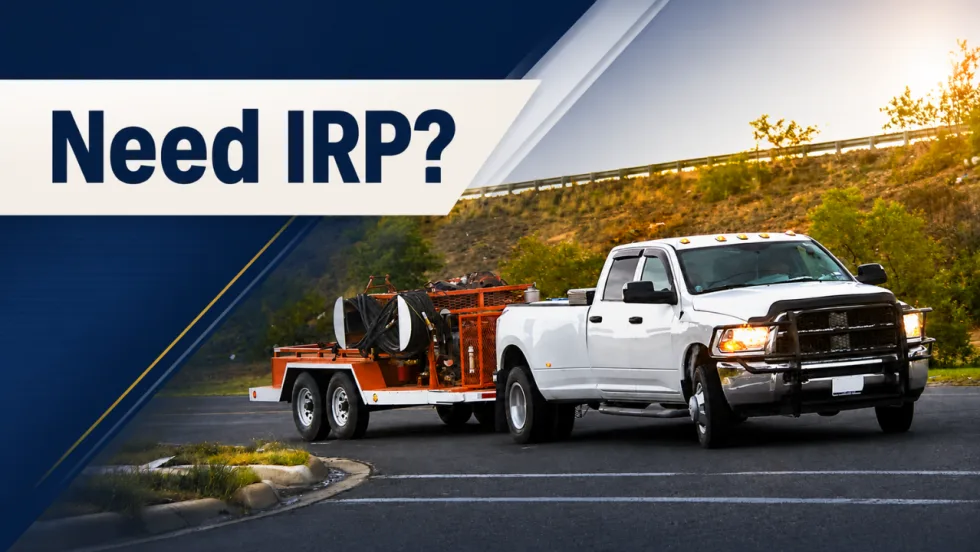
When Work Trucks Under 26,001 Pounds Need IRP Registration
Think trucks under 26,001 pounds are automatically in the clear when it comes to IRP? Not always. Learn where lighter vehicles can still run into trip permit, apportioned registration, and IFTA compliance requirements when crossing state or provincial lines.
Read More →
Volvo Trucks Releases New Safety Recommendations for Traveling with Pets
One of the most important recommendations for professional drivers traveling with pets is to ensure pets are properly restrained while the truck is moving. Other tips are available in the new guide from Volvo Trucks North America and Center for Pet Safety.
Read More →
API Issues Refueling Safety Guidelines
The American Petroleum Institute offers a list of safe vehicle refueling guidelines, including ways to avoid potential problems with static electricity discharges in fall, winter, and early spring.
Read More →
Winter Fleet Prep: Expert Tips to Keep Vehicles Running Smoothly
Cold weather can expose weak batteries, tires, fuel systems, and maintenance gaps fast. Use this winter fleet checklist to prepare trucks and drivers before temperatures drop.
Read More →
When a Work Truck Breaks Down, the Job Can Stop, Too
A work truck breakdown can stop more than the vehicle. Discover how payloads, jobsites, and specialty equipment change the roadside response.
Read More →
What Stronger Long-Term Fleet Service Partnerships Actually Require
Fleet service partnerships rarely fall apart all at once. Learn the three warning signs that trust is eroding and what fleets and providers can do before downtime, frustration, and lost revenue follow.
Read More →
Applause & TRUCE Software Partner to Improve Driver Safety Through AI-Powered Telematics & Employee Performance Management
Applause has integrated TRUCE driving metrics directly into its employee-first performance and safety platform that transforms mobile devices into AI-powered telematics.
Read More →
How Detroit Assurance with Active Brake Assist Works
Do you want to see what it is like to experience Detroit Assurance’s Active Brake Assist? In this video, Work Truck will put you in the cab to see how it all works and then hear more details from DTNA’s Mike Young.
Read More →
Get Left of Loss: A 5-Step Workplace Violence Prevention Framework for Fleet Operators
Violence risks do not stop at the driver’s door. Learn five practical steps fleets can take to spot threats early and protect workers before loss occurs.
Read More →
Sponsored•July 17, 2026
How Better Visibility Cut Speeding Violations by 48%
Fleet leaders don't need more data, they need clearer visibility into what the data is saying. This case study explores how one utility replaced speeding-event counts with a single metric — miles driven in violation — to strengthen safety and significantly reduce speeding violations.
Read More →