




Going Green Lowers Owens Corning's Operating Costs
Owens Corning switched to the Ford Taurus X crossover vehicle and Ford Escape, increasing the fleet’s miles per gallon and reducing its greenhouse gas emissions.

(L-R) Callie Glave, sourcing leader, Owens Corning; Matt Lefeld, sourcing specialist, Owens Corning; Karen Healey, dir., product management., PHH; and Isaac Chapman, fleet administrator, Owens Corning.
With gasoline prices hovering around the $4 range, a fleet that achieves an 8-percent reduction in operating costs should get some attention.
By building a green fleet, Owens Corning, a Toledo, Ohio manufacturer of composite and building materials, cut its operating costs by 8 percent.
Though the company has always strived to be environmentally friendly, over the past few years, it has stepped up efforts even more — especially important for a company whose fleet included mostly large, less fuel-efficient vehicles.
Owens Corning recently began exploring ways to continue getting employees involved in the effort to reduce the company’s carbon footprint, including sales representatives and sales managers who drive the fleet of about 400 vehicles. Many of the salespeople require larger vehicles to transport insulation product samples to customers.
The Ford Explorer was the most popular vehicle on the company’s selector list, but the fleet department began searching for a vehicle that produced lower emissions. The fleet department got help from its fleet management company, PHH Arval, and signed on to the PHH GreenFleet program in 2007. The program helps fleets reduce greenhouse gas (GHG) emissions through improved vehicle selection and use. The fleet department eventually chose the Ford Taurus X crossover vehicle and the Ford Escape.
Starting the Process: Driver Input
Callie Glave, corporate sourcing leader for Owens Corning, said it was important to get sales team input throughout the process. Sales staff reaction was not all positive at first.
“This is a big deal for them,” Glave said. “It’s part of their benefits and the type of vehicle they use everyday. We want to make sure they’re comfortable and certainly that they’re safe. We are also looking at the total win of reducing costs, GHG emissions, fuel usage, and making sure they can do their job well.”
As corporate sourcing leader, Glave manages the relationship between Owens Corning and PHH, in addition to Owens Corning’s relationship with Ford. Isaac Chapman, the company’s fleet administrator, manages the ordering process and day-to-day fleet operations out of Owens Corning’s Charleston, W. Va. office. The company’s corporate sustainability department was also involved with the switch to more environmentally friendly vehicles.
Gale Tedhams, director of corporate sustainability for Owens Corning, said the company consulted with PHH early in the process. Owens Corning told PHH it wanted a fleet “that would be both economical, reduce our GHG emissions, and maintain all other capabilities and characteristics required of fleet. This includes a high degree of safety and the capability of moving equipment and products that salespeople must take with them when they go on calls,” Tedhams said.
Another early step was for the sales team to test the vehicles. “One of the things we learned through this process is having the involvement of the people who were going to be using the cars,” Tedhams said. Although sales team members had some reservations at first, they eventually got on board with the change. “They actually became advocates to the rest of the sales force, as well as the greater purpose of their contribution to greening our operations.”
Legroom, comfort, safety, and carrying capacity of the vehicle were among the top concerns of salespeople. “These cars have a lot of roominess inside, as well as being able to take samples, materials for trade shows, and whatever they need to carry,” Tedhams said.
Once sales leaders were onboard with the new vehicle, the fleet department worked with Owens Corning’s internal communications group to ensure drivers were aware of the selector changes and their support of overall environmental goals. The fleet department ran a story with photos of a satisfied salesman and his Ford Taurus X in the fleet department’s internal news Web page.
Tedhams said she heard a lot about hybrid vehicles during the decision-making process, but says hybrids aren’t the best option in all situations, especially with the amount of cargo that Owens Corning salespeople often carry in the vehicles. The company discovered the Taurus X offered 20-percent better fuel economy than the Explorer, a lower acquisition cost, and slightly more cargo capacity.
Results: Emissions Down, MPG Up
In this first year of deploying the Taurus X and the Escape, benefits to both the company and environment have been impressive. The fleet’s average mpg increased 18 percent, from 18.3 to 21.6, helping the company’s bottom line and contributing to lessening the nation’s dependence on foreign oil.
The switch has also increased Owens Corning’s contribution to a cleaner environment. The company estimates it has reduced its greenhouse gas emissions by 14.6 percent, using a formula based on the amount of fuel reduced and the emissions it created.
However, important to the company‘s bottom line, the switch has also resulted in an improvement in total operating cost. That improvement goes beyond reduced fuel use and includes total vehicle lifecycle costs, including acquisition cost, resale value, and maintenance costs. Glave said the fleet has seen some benefits in the area of maintenance cost reductions, but since the new vehicles have been in the fleet for only a year, the company has not yet completely analyzed maintenance data.
Owens Corning’s sustainability program set goals with a baseline in 2002 and an achievement target in 2012. The company plans to achieve a 30-percent reduction in GHG emissions, a 25-percent reduction in energy use, and a 20-percent reduction in particulate matter.
Fleet is a small, but very visible part of Owen’s Corning’s environmental footprint, Glave said.
“Every employee in our company has a part to play in making our company and our world more sustainable,” she said.
Originally posted on Automotive Fleet
More Green Fleet

Fleet Forward Conference Introduces One-Day Passes for 2026
New one-day registration gives fleet professionals the flexibility to attend Tuesday, Wednesday, or Thursday, with passes available for $199 through Sept. 18.
Read More →
CALSTART Rebrands as Catalyst Mobility, Will Combine with Forth in 2027
CALSTART has rebranded as Catalyst Mobility and will combine with Forth at the start of 2027. The new organization said it is poised to become one of the world's largest, strongest, and most impactful clean transportation nonprofits.
Read More →
Electric Truck and Charging Programs to Boost Sustainability at NY & NJ Ports
Together, the Port Authority of New York and New Jersey and CALSTART will electrify drayage and terminal operations serving the East Coast’s busiest container port. A pair of incentive programs totaling $45 million has launched to accelerate adoption of zero-emission drayage trucks and terminal tractors.
Read More →
Xos Hub Surpasses One Gigawatt-Hour of Energy Delivered in the Field
A single Xos Hub has surpassed one gigawatt-hour of energy across more than 33,600 charging sessions in the field, demonstrating performance that supports Xos' expansion across new products and markets.
Read More →
Carrier Transicold Launches All-Electric Vector 8200 TRU for Diesel-Free On-Site Cold Storage
Carrier Transicold’s first engineless multi-temperature TRU helps fresh- and frozen-food fleets add supplemental cold storage capacity during seasonal peaks.
Read More →
Narro Trucks Introduces Electric Utility Vehicle
Narro Trucks officially launched its operations on Aug. 20 and hosted a ride and drive to showcase its electric truck, which will be produced in Virginia.
Read More →
Samsung SDI Takes Full Control of GM Battery JV as Indiana Plant Pivots to Energy Storage
Samsung SDI is taking full control of its Indiana battery plant with GM, marking a major shift from the EV-focused joint venture Charged Fleet first covered in 2023.
Read More →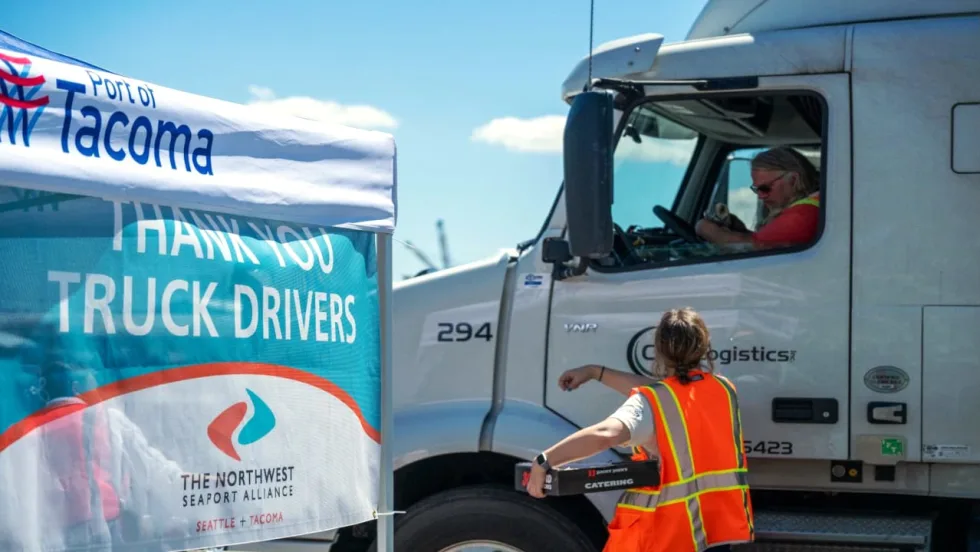
NWSA Taps CALSTART to Administer Zero-Emission Drayage Assistance Program
CALSTART will provide free technical assistance services to drayage fleets serving the Ports of Seattle and Tacoma and looking to transition to cleaner technologies and help decarbonize freight hubs.
Read More →
EV Fleet Reality Check: What Operators Wish They Knew Before Electrifying Their Work Vans
Electric work truck upfits bring new compatibility questions. Learn how parts availability, OEM guidance, power demands, and route planning can affect fleet performance.
Read More →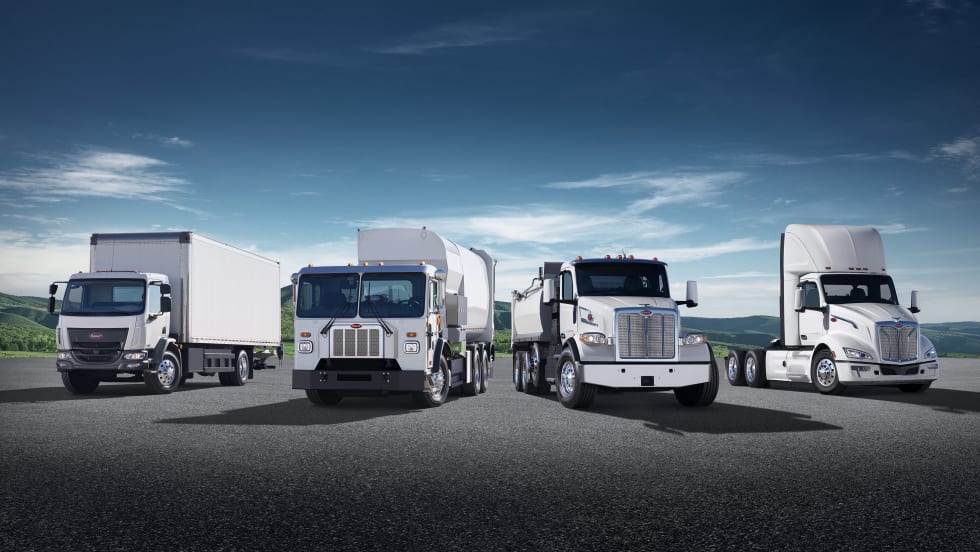
Peterbilt Expands Sourcewell Partnership with Electric Vehicle Lineup
Peterbilt Motors Company’s cooperative purchasing agreement with Sourcewell and its Canadian partner, Canoe Procurement Group, now includes including Peterbilt's battery-electric vehicle lineup.
Read More →