




Gaining Control Over Driver Accident Rates
Dave Vance, Fleet Response’s director of safety services, studies driver and crash incident data to identify causes and establish preventability.

A re-emphasis on safety, through a retraining or refresher session, can help maintain consistent attention to safe driving practices.
Photo: Work Truck
When too many vehicles in a fleet are involved in accidents in a given year, costs mount not only in repairs and employee productivity but also in potential medical and liability expenses.
Director of Safety Services for Fleet Response, an accident management company in Cleveland, David Vance said the way to gain control of such a troubling trend is to begin by delving into driver and accident data. When he analyzed the data, Vance found that among fleets having “way too many accidents,” he identified drivers who had been involved in six to eight events or more during the previous two to three years.
That nugget of knowledge led to Vance’s first question, “What contributed to those drivers being allowed to get behind the wheel?”
And then it was back to the data to discover the answer.
Fleet Response offers, among other services, electronic ordering and management of MVRs from all 50 states, Puerto Rico, and Canada. Fleet managers can easily review an MVR for insight into a driver’s past performance.
Data Identifies At-Risk Drivers
Fleet Response also can mine its extensive database for valuable information, Vance said. For instance, drivers who are potentially the greatest risk of being involved in a preventable accident can be identified. An enhanced Web-based service, Driver History Profile (DHP), classifies drivers into risk categories by combining MVRs and accident claim data. The accident data includes accident type, cause, repair cost, time for repair, and the overall effect each incident has on a fleet.
Using National Safety Council guidelines and other industry standards, each accident is reviewed to establish type, cause, and preventability. Once the data is confirmed for each incident, Fleet Response’s safety specialists work with a fleet to establish an effective safety program targeting problem drivers and recurring incidents.
Study Reveals Driver Behavior
Vance recently completed a study of high-incident drivers involved in more than three incidents in 12 months. As part of the project, he scrutinized how those drivers described incident details to their employers and compared them to the details in the database.
According to Vance, high-incident drivers often misrepresented what had happened or their accounts conflicted with the filed claims. For example, a company driver might say his or her vehicle was rear-ended, while the claim indicated just the opposite: that the employee had rear-ended the other vehicle.
Vance, a Certified Safety Specialist, said that in studying details of claims he also found delays in the number of times drivers took to turn in a vehicle after an incident.
However, these drivers should not be summarily fired, Vance advised, noting that often drivers had personal issues that were “tearing them apart.” Instead, they should be advised or trained in how to improve their driving.
Not all blame falls on the drivers, Vance also learned. He said when business is good, managers and others are busy keeping up with business demands that can overshadow or distract attention from other matters. For example, when regional managers and their sales representatives are under pressure to complete a certain number of daily visits to customers, conscientious driving practices sometimes get short shrift. A re-emphasis on safety, through a retraining or refresher session, can help maintain consistent attention to safe driving practices.
Originally posted on Automotive Fleet
More Safety

When Work Trucks Under 26,001 Pounds Need IRP Registration
Think trucks under 26,001 pounds are automatically in the clear when it comes to IRP? Not always. Learn where lighter vehicles can still run into trip permit, apportioned registration, and IFTA compliance requirements when crossing state or provincial lines.
Read More →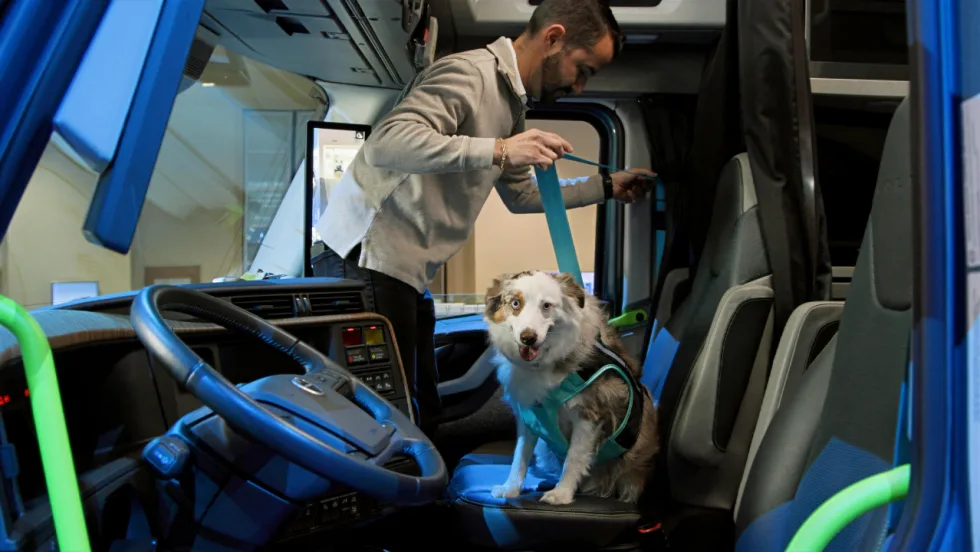
Volvo Trucks Releases New Safety Recommendations for Traveling with Pets
One of the most important recommendations for professional drivers traveling with pets is to ensure pets are properly restrained while the truck is moving. Other tips are available in the new guide from Volvo Trucks North America and Center for Pet Safety.
Read More →
API Issues Refueling Safety Guidelines
The American Petroleum Institute offers a list of safe vehicle refueling guidelines, including ways to avoid potential problems with static electricity discharges in fall, winter, and early spring.
Read More →
Winter Fleet Prep: Expert Tips to Keep Vehicles Running Smoothly
Cold weather can expose weak batteries, tires, fuel systems, and maintenance gaps fast. Use this winter fleet checklist to prepare trucks and drivers before temperatures drop.
Read More →
When a Work Truck Breaks Down, the Job Can Stop, Too
A work truck breakdown can stop more than the vehicle. Discover how payloads, jobsites, and specialty equipment change the roadside response.
Read More →
What Stronger Long-Term Fleet Service Partnerships Actually Require
Fleet service partnerships rarely fall apart all at once. Learn the three warning signs that trust is eroding and what fleets and providers can do before downtime, frustration, and lost revenue follow.
Read More →
Applause & TRUCE Software Partner to Improve Driver Safety Through AI-Powered Telematics & Employee Performance Management
Applause has integrated TRUCE driving metrics directly into its employee-first performance and safety platform that transforms mobile devices into AI-powered telematics.
Read More →
How Detroit Assurance with Active Brake Assist Works
Do you want to see what it is like to experience Detroit Assurance’s Active Brake Assist? In this video, Work Truck will put you in the cab to see how it all works and then hear more details from DTNA’s Mike Young.
Read More →
Get Left of Loss: A 5-Step Workplace Violence Prevention Framework for Fleet Operators
Violence risks do not stop at the driver’s door. Learn five practical steps fleets can take to spot threats early and protect workers before loss occurs.
Read More →
How Better Visibility Cut Speeding Violations by 48%
Fleet leaders don't need more data, they need clearer visibility into what the data is saying. This case study explores how one utility replaced speeding-event counts with a single metric — miles driven in violation — to strengthen safety and significantly reduce speeding violations.
Read More →