




Fleet Managers Battle Escalating Cargo Theft with Advanced Tech
Facing a surge in cargo theft, fleet managers turn to AI, GPS, and real-time monitoring. Check out these expert strategies to protect your assets and maintain security.


The consequences of cargo theft extend beyond the immediate loss of goods, impacting insurance rates, operational downtime, and overall business efficiency.
Photo: This is an AI-generated image. Refer to our Terms of Use.
Cargo theft is escalating at an alarming rate, particularly in urban areas, presenting a significant challenge for fleet managers and transportation companies.
Recent data and industry insights reveal a surge in thefts, with sophisticated criminal tactics increasingly targeting the supply chain. This growing threat has prompted industry leaders and government agencies to act, aiming to safeguard valuable assets and maintain operational integrity.
In 2023, cargo theft surged by 57% compared to the previous year, and the trend continued into 2024, with an additional 10% increase in the first quarter alone, according to CargoNet.
“Cargo theft is increasing at a rate we’ve never seen, especially in urban areas. The areas we’ve seen the most unforgiving and brutal cargo theft have been in Baltimore/Washington, D.C.,” shared Brendan Church, chief marketing officer for Legend Fleet.
The consequences of cargo theft extend beyond the immediate loss of goods, impacting insurance rates, operational downtime, and overall business efficiency. Industry stakeholders and federal agencies, including the American Trucking Associations (ATA) and the Department of Homeland Security (DHS), are stepping up efforts to combat this growing menace through strategic initiatives and advanced technological solutions.
Industry Response and Technological Innovations in Combating Cargo Theft
Ron Cordova, director of safety and compliance at Zonar, emphasizes cargo theft's severe and often unreported nature.
"Whether the asset is physically stolen from the site or strategically stolen through scams and identity theft, the consequences are costly. Replacing stolen vehicles or equipment incurs major expenses, including the cost of parts, significant downtime spent on paperwork, and increased insurance rates," Cordova said.
Smaller fleets, in particular, face challenges in adopting advanced anti-theft technologies, making them more vulnerable to these crimes.
This growing challenge has mobilized industry and government groups to take decisive action.
"The American Trucking Associations (ATA) has made reducing cargo theft a strategic priority in 2024, advocating for federal support and investments to address and prevent cargo theft. Recently, the Department of Homeland Security’s (DHS) 2025 funding bill was announced to include a measure requiring Homeland Security Investigations (HSI) to create a Supply Chain Fraud and Theft Task Force, along with $2 million allocated for the project," Cordova added.
Technological advancements are critical in the fight against cargo theft. Zonar's fleet health and safety portfolio includes innovative solutions like ZTrak, which provides comprehensive asset and equipment tracking and recovery.
Cordova explained, "By attaching the discrete ZTrak device to the vehicle, trailer, and/or cargo, managers can keep tabs on the asset when it’s stationary, deployed, and in motion, all from one online platform. The solution has a theft recovery mode to remotely track lost and stolen assets and enhance high-value asset security."
Additionally, CarriersEdge contributes to the battle against cargo theft through education and awareness.
CEO Jane Jazrawy highlighted the importance of their training programs: "We have courses on security awareness through our online driver training system (Hazmat Security Awareness, CTPAT Security Awareness, and general Security Awareness practices) that teach drivers how to prevent theft."
Jazrawy also noted a disturbing trend: "The most disturbing trend we noticed this year is the emergence of identity theft as an important component of cargo theft. Thieves are more organized and strategic, stealing company credentials and selling their 'services' to unsuspecting carriers on load boards."
Eric Frey, director of global product management at Powerfleet, stressed the importance of visibility and data consolidation in combating cargo theft.
"Enabling visibility and actionable insights throughout all facets of the business — through the consolidation of data across mobile asset types, human beings operating those assets, and surrounding business processes — can bolster preventive measures for fleets around the world and combat cargo theft," Frey said.
Technology providers like EROAD and Super Dispatch are also developing innovative solutions to address this issue.
Robert Donoho, director of channel sales at EROAD, noted, "Today's criminals are using technology to access supply chain information, including security procedures and details about shipments."
Bek Abdullayev, CEO of Super Dispatch, discussed the platform’s features, which are designed to prevent fraud and theft.
"Among the platform’s key offerings is a verified carrier network... Our private load board gives users secure access, so they feel confident they’re working exclusively with trusted carriers," he explained.
As the threat of cargo theft grows, the industry must adapt to these evolving challenges.
"Cargo thieves continue to find new, more sophisticated ways of achieving their goals. Today’s criminals are using technology to access supply chain information, including security procedures and shipment details," Donoho emphasized.
The Importance of Driver Vigilance and Technology Integration
Cargo theft is a persistent and costly challenge for fleet managers, demanding a multifaceted approach to prevention and mitigation.
The rise in sophisticated theft methods and the complexity of modern logistics networks exacerbate these challenges, making it imperative for fleet managers to adopt advanced security measures.
Fleet managers frequently encounter several obstacles when implementing theft prevention measures, including budget constraints, insufficient training, and the reluctance to adopt new technologies. Specific challenges unique to truck and van fleets—such as transporting high-value cargo and frequent stops—further complicate security efforts.
Cordova of Zonar and Abdullayev of Super Dispatch emphasized the importance of a comprehensive approach, integrating advanced technologies like AI, GPS tracking, and real-time monitoring to enhance security and streamline operations.
“As in any proactive and preventative maintenance, security, and safety procedure in this industry, it all starts with the driver. Anti-theft starts with a thorough pre- and post-trip inspection process, leveraging digitized inspection solutions such as Zonar’s Electronic Verified Inspection Reports (EVIR) solution. EVIR automates and simplifies pre- and post-trip inspections, ensuring each inspection is done properly—every time,” Cordova explained.
This approach underscores drivers' critical role in theft prevention, emphasizing their first-line responsibility in identifying potential threats.
“With the support of this technology, drivers are trained to be vigilant for unusual devices attached to the trailer, tampered lock bolts, and suspicious vehicles or persons in the area. Drivers can take photos and attach them to the electronic inspection reports to verify the inspection of cargo doors,” Cordova added.
This hands-on vigilance, supported by technology, forms the backbone of an effective theft prevention strategy.

Cargo theft is a persistent and costly challenge for fleet managers, demanding a multifaceted approach to prevention and mitigation.
Photo: Work Truck
Tip 1: Try Advanced Tracking and Real-Time Monitoring
Beyond the driver’s role, advanced tracking systems are crucial in combating theft.
“Beyond inspections, drivers should be instructed to obtain and verify shipper information and ensure that delivery locations match the Bill of Lading (BOL) brokers provide. If any changes or the information does not match, this could indicate strategic theft,” Cordova explained.
Tip 2: Adopt Comprehensive Solutions Suites
Abdullayev of Super Dispatch highlighted several common challenges fleet managers face, such as limited resources, inadequate training, and the reluctance to adopt new technologies.
“Fleet managers face exactly the things you’d expect. Some don’t have the resources to allocate to deal with theft prevention. Some teams haven’t had training or compliance issues. Some companies have teams that haven’t adopted tech solutions as they expected. And then others have thrown in the towel and believe fraud is just a reality to accept without putting up a fight,” Abdullayev said.
Super Dispatch addresses these challenges through its all-in-one platform, integrating multiple theft prevention measures.
“At Super Dispatch, our all-in-one platform addresses these challenges by integrating multiple theft prevention measures. We make onboarding easy by providing extensive support, robust training programs, and continuous support to ensure smooth implementation and ongoing compliance,” Abdullayev added.
Tip 3: Utilize AI and Real-Time Insights
AI plays a pivotal role in modern theft prevention strategies.
“I’m very proud to offer real-time tracking, AI route optimization, and features like panic buttons and secure communication capabilities. Besides ensuring security on our platform, driver safety is at the top of our minds. Super Dispatch even provides remote support and coordinates with local authorities for rapid response to theft incidents,” Abdullayev emphasized.
These technologies enhance security and provide actionable insights to prevent theft before it happens.
Tip 4: Use Comprehensive Fleet Monitoring Systems
Frey of Powerfleet further elaborated on the use of advanced fleet management systems.
He noted that “Fleet managers face numerous challenges when implementing theft prevention measures, including the rising value of cargo theft, regional variations in theft patterns, and operational disruptions post-theft.”
Truck and van fleets encounter specific challenges, such as cargo theft and expensive vehicle parts, which can devastate businesses of all sizes.
“The integration of rich data-derived insights with geofencing and video monitoring not only assists in the quick recovery of stolen assets but also provides crucial evidence for law enforcement and insurance claims,” Frey added.
Tip 5: Create Virtual Boundaries
Additionally, Frey shared that by utilizing advanced fleet management systems, such as GPS and geofencing, “fleet managers can create virtual boundaries around locations and provide real-time monitoring to enhance cargo management and theft prevention significantly”
Combined with other fleet monitoring capabilities like door sensors and freight cameras, these systems offer a comprehensive view of cargo status and movement, equipping fleet managers to respond faster and mitigate further risks.
Tip 6: How to Overcome Specific Challenges in Van Fleets
Church of Legend Fleet pointed out a unique challenge faced by van fleets:
“A common problem is even when cargo locks and other theft prevention measures are invested in and put in place, the areas where vans are stored, such as lots and sites, are being targeted too. This happens in broad daylight sometimes, as brazen thieves try anytime, anywhere, repeatedly, to get their hands on the tools and equipment inside vans.”
Tip 7: How to Overcome Budget/Resource Constraints
Finally, Robert Donoho, Director of Channel Sales at EROAD, addressed the budget and resource constraints issue.
“Budget and resource constraints are common challenges. Companies operating across different regions could be up against different levels of risk. This makes standardizing theft prevention measures a challenge and leads to complexity in training personnel and ensuring compliance across the organization,” Donoho said.
Driving Thoughts on Increasing Cargo Theft in Fleets
Preventing cargo theft is a collaborative effort between carriers and drivers.
Jazrawy of CarriersEdge emphasized, “Preventing cargo theft is a partnership, requiring diligence on the part of both the carrier and the driver. On the carrier’s side, solid technology and rigorously following defined security processes will be a major part of the solution. Drivers have a part to play as well. They need to be able to use the technology but also be educated in security awareness and how to follow sound security practices.”
More Safety
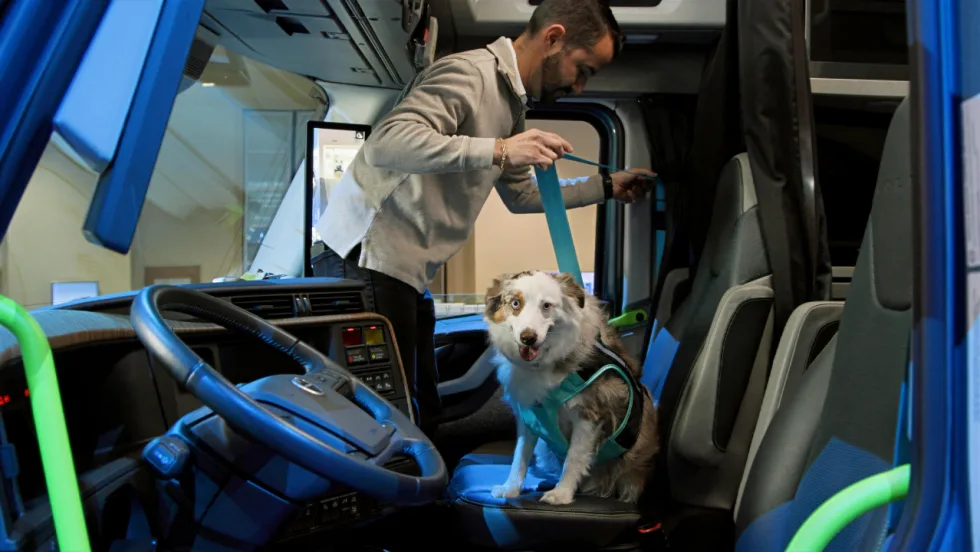
Volvo Trucks Releases New Safety Recommendations for Traveling with Pets
One of the most important recommendations for professional drivers traveling with pets is to ensure pets are properly restrained while the truck is moving. Other tips are available in the new guide from Volvo Trucks North America and Center for Pet Safety.
Read More →
API Issues Refueling Safety Guidelines
The American Petroleum Institute offers a list of safe vehicle refueling guidelines, including ways to avoid potential problems with static electricity discharges in fall, winter, and early spring.
Read More →
Winter Fleet Prep: Expert Tips to Keep Vehicles Running Smoothly
Cold weather can expose weak batteries, tires, fuel systems, and maintenance gaps fast. Use this winter fleet checklist to prepare trucks and drivers before temperatures drop.
Read More →
When a Work Truck Breaks Down, the Job Can Stop, Too
A work truck breakdown can stop more than the vehicle. Discover how payloads, jobsites, and specialty equipment change the roadside response.
Read More →
What Stronger Long-Term Fleet Service Partnerships Actually Require
Fleet service partnerships rarely fall apart all at once. Learn the three warning signs that trust is eroding and what fleets and providers can do before downtime, frustration, and lost revenue follow.
Read More →
Applause & TRUCE Software Partner to Improve Driver Safety Through AI-Powered Telematics & Employee Performance Management
Applause has integrated TRUCE driving metrics directly into its employee-first performance and safety platform that transforms mobile devices into AI-powered telematics.
Read More →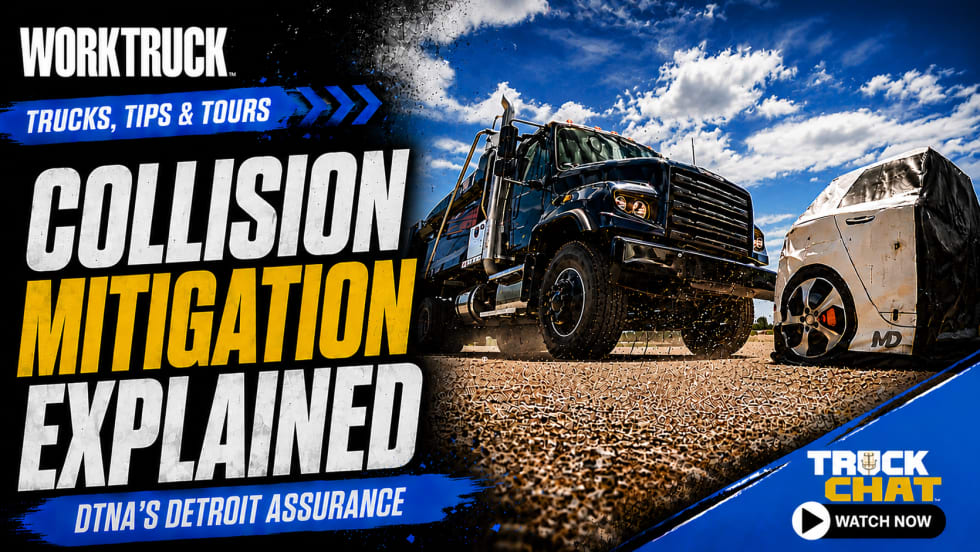
How Detroit Assurance with Active Brake Assist Works
Do you want to see what it is like to experience Detroit Assurance’s Active Brake Assist? In this video, Work Truck will put you in the cab to see how it all works and then hear more details from DTNA’s Mike Young.
Read More →
Get Left of Loss: A 5-Step Workplace Violence Prevention Framework for Fleet Operators
Violence risks do not stop at the driver’s door. Learn five practical steps fleets can take to spot threats early and protect workers before loss occurs.
Read More →
How Better Visibility Cut Speeding Violations by 48%
Fleet leaders don't need more data, they need clearer visibility into what the data is saying. This case study explores how one utility replaced speeding-event counts with a single metric — miles driven in violation — to strengthen safety and significantly reduce speeding violations.
Read More →
13 Safe Driving Tips for Commercial Vehicle Drivers
Make sure you are spending time on the road safely with these important tips.
Read More →