




FedEx Implements Green Fleet Initiative
FedEx’s diverse environmental efforts range throughout its operation, with commercial hybrids dominating the company’s attention.

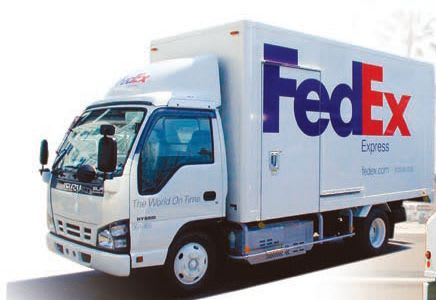
Photo: FedEx
With manufacturers such as General Motors and Ford preparing to launch production of hybrid-electric trucks, it’s only a matter of time before the technology becomes widely available in the commercial fleet arena.
For Memphis-based FedEx Corp. officials, that can’t be soon enough.
"Based on our original projections and discussions with commercial vehicle manufacturers, we thought they’d be widely available by now," says Mitch Jackson, FedEx director of environmental affairs and sustainability.
FedEx has a diverse range of environmental and fuel conservation efforts reaching into all phases of its operation, such as strategic route planning and vehicle optimization — even reducing the use of in-gate aircraft auxiliary power units and replacing much of its airplane fleet.
On the truck side, the company operates alternative-fuel vehicles (AFVs), such as liquefied petroleum gas (LPG) Mercedes-Benz Sprinter vans, biodiesel-powered trucks on routes in Washington, D.C., and compressed natural gas (CNG)-powered vehicles where it has central fueling capability abroad.
But the lack of a national fueling infrastructure severely limits the company’s potential use of AFVs in the U.S., as does the lack of a national standard for biodiesel.
"We’re pleased with our biodiesel experience," says Jackson. "But it’s fuel company- and location-specific; so you run B-5 in Washington, D.C., for example, B-10 in the Midwest."
He adds, "We’ve explored how to roll it out on a more consistent basis. But with the distribution challenges and availability and varying levels of fuel, it’s really hard to go national with biodiesel."
FedEx has also teamed with General Motors to test a fuel cell delivery vehicle. But the viability and availability of such vehicles still have a fairly lengthy horizon.
Major Hybrid Focus
Commercial hybrids have dominated the company’s attention and spearheading their ready availability is its major environmental/fuel-saving focal point.
The company actually has separate twin hybrid efforts: one aimed at commercial vehicles over 8,500 lbs. GVW up to Class 6 and another at commercial vehicles in the Class 6-7 range.
FedEx Express overnight delivery operations in Memphis has been working with several manufacturers, including Eaton Corp., Isuzu, Iveco, and Azure Dynamics, whose hybrid system is used by Ford, to promote hybrid-electric use in vehicles over 8,500 lbs. GVW.
Meanwhile, FedEx Ground operations in Pittsburgh, with its parcel post-type delivery, has been working with Parker Hannifin Corp. to test hybrid hydraulic technology in heavier Class 6 vehicles.
"We did that by intent to focus the technology developments by company operation," Jackson says.
Whereas electric hybrids use an electric motor and a bank of batteries to assist the powertrain, hydraulic hybrids use pressurized hydraulic fluid.
The hydraulic hybrid development effort, while following that of electric hybrids, still lags considerably further behind.
FedEx is just now planning to put its first hydraulic hybrid into operation.
As part of a heavy-truck users group (CALSTART’s Hybrid Truck Users Forum), the company has also teamed with other major package delivery companies, including UPS and Purolator Corp., to help speed hybrid hydraulic development.
Meanwhile, the FedEx worldwide fleet of 172 commercial hybrid trucks, including the largest commercial hybrid-electric fleet in North America, has already logged more than 2 million miles of revenue service.
FedEx’s assorted group of hybrids, including four types of vehicles, has more than proven the technology’s reliability/dependability and tremendous environmental/fuel saving benefits: 42-percent better fuel economy and 30- and 96-percent reductions in greenhouse gas emissions and particulate pollution, respectively, over their conventional counterparts.
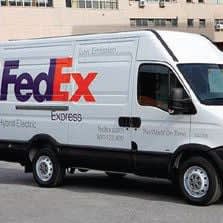
Photo: FedEx
Cost is Stumbling Block
Expense is the only current drawback to popularizing the vehicles. Commercial hybrid trucks typically cost about 75 percent more than their conventional counterparts.
FedEx would like to see the premium reduced to 20-25 percent, similar to that for passenger models, Jackson says.
If commercial truck manufacturers could achieve that, FedEx Express VP of Global Vehicles John Formisano thinks the trucks would become overwhelming favorites with Class 4 and 5 fleet operators.
But the commercial truck market’s more limited size (compared to retail) has made manufacturers reluctant to take the initiative Toyota took in popularizing the Prius. Just getting the 172 hybrids produced in the timeframes FedEx sought was difficult, Jackson notes.
The company’s vehicle fleet includes about 30,000 Class 3-6 models. Although sizeable, the numbers haven’t been enough to drive full commercialization.
"When you’re looking at a fleet population of 30,000, with a vehicle life of more than 10 years, you’re only in the low thousands for what one could replace on a year-to-year basis," Jackson notes. "Manufacturers need a lot more volume on an annual basis to justify their tooling investments."
To help encourage production, Fed Ex has refrained from making any proprietary technology claims for its vehicles and actively encouraged and assisted other fleet operators, including competitors, in stepping up their hybrid use.
The company has also gone to the U.S. Congress seeking fuel economy standards for medium- and heavy-duty fleet trucks — the only commercial fleet to do so. Such standards would, perhaps, be the most potent stimulus to expanding the market for commercial hybrids.
"We recognize that government support will give a major boost to this technology," Jackson says.
FedEx Boasts a 'Green' History
Meanwhile, FedEx has had a long history of such environmental efforts.
The company first began teaming with the Environmental Defense Fund (EDF) in 2000 on an ambitious project to make the standard delivery truck more environmentally friendly, just as passenger hybrid cars were beginning to grow in popularity.
Its work with EDF was a collaborative effort. The process began by clearly defining its goals for the vehicle:
Improve environmental performance.
Maintain or improve operational performance and cost competitiveness.
Increase market share for clean delivery vehicles.
A request for proposal was issued to the industry, and FedEx and EDF selected Eaton Corp. and Freightliner Custom Chassis Corp. to build the FedEx hybrid-electric truck. One year later, the first available commercial hybrid delivery truck was placed into service on FedEx routes.
"The majority of the hybrids we’re using, those we’ve been using the longest, are Freightliner Custom Chassis models, equipped with Eaton hybrid powertrains," says Jackson.
"We never stipulated who the suppliers would be. Eaton selected Freightliner because they manufactured an ideal chassis for pickup and delivery.
"We’re looking for the most viable, appropriate solutions to meeting our sustainability goals, and we’re open to any company that can meet them. That’s why we’ve sought to work with so many different companies and employ diverse designs and technologies," Jackson explains.
FedEx’s role in spurring hybrid truck advancements has been recognized by the Environmental Protection Agency (EPA), Harvard University, and WestStart-CALSTART.
More than 30 companies have now integrated hybrid truck technology into their fleets and that number is expected to grow significantly.
"I’m optimistic we’re trending in the right direction. The industry just needs to accelerate production and volumes and get the costs down," says Jackson.
Meanwhile, FedEx is continuing its leadership role by encouraging more companies to purchase and develop clean-technology trucks.
Its vehicle experts continue to participate in various industry conferences and gatherings to educate companies about the benefits of cleaner truck technology.
It also championed the need for a smaller engine for application in hybrid vehicles following the 2007 EPA federal engine standard to replace the existing larger, less efficient engine.
In addition, the company has been an advocate for government incentives at the national, state, and local levels to offset the higher capital costs of cleaner vehicles during market development.
More Green Fleet

Fleet Forward Conference Introduces One-Day Passes for 2026
New one-day registration gives fleet professionals the flexibility to attend Tuesday, Wednesday, or Thursday, with passes available for $199 through Sept. 18.
Read More →
CALSTART Rebrands as Catalyst Mobility, Will Combine with Forth in 2027
CALSTART has rebranded as Catalyst Mobility and will combine with Forth at the start of 2027. The new organization said it is poised to become one of the world's largest, strongest, and most impactful clean transportation nonprofits.
Read More →
Electric Truck and Charging Programs to Boost Sustainability at NY & NJ Ports
Together, the Port Authority of New York and New Jersey and CALSTART will electrify drayage and terminal operations serving the East Coast’s busiest container port. A pair of incentive programs totaling $45 million has launched to accelerate adoption of zero-emission drayage trucks and terminal tractors.
Read More →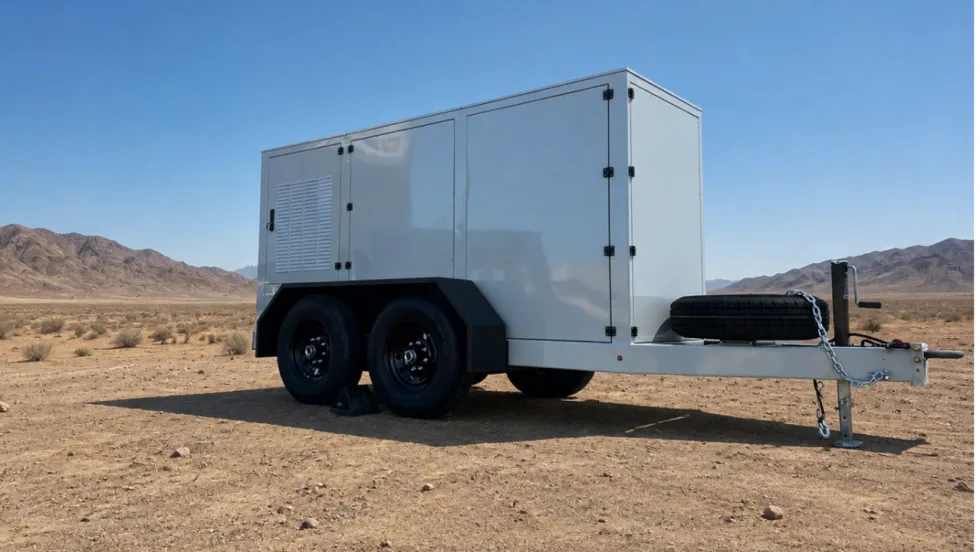
Xos Hub Surpasses One Gigawatt-Hour of Energy Delivered in the Field
A single Xos Hub has surpassed one gigawatt-hour of energy across more than 33,600 charging sessions in the field, demonstrating performance that supports Xos' expansion across new products and markets.
Read More →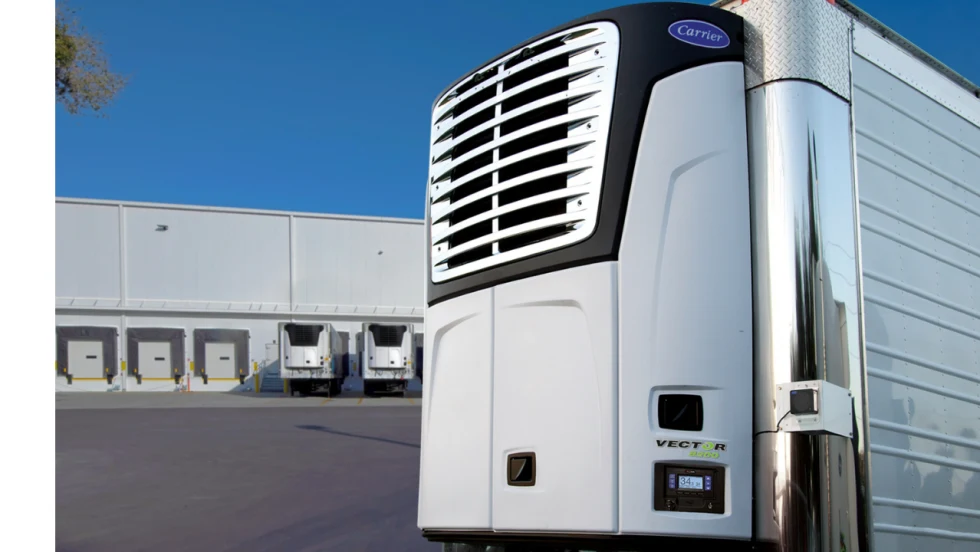
Carrier Transicold Launches All-Electric Vector 8200 TRU for Diesel-Free On-Site Cold Storage
Carrier Transicold’s first engineless multi-temperature TRU helps fresh- and frozen-food fleets add supplemental cold storage capacity during seasonal peaks.
Read More →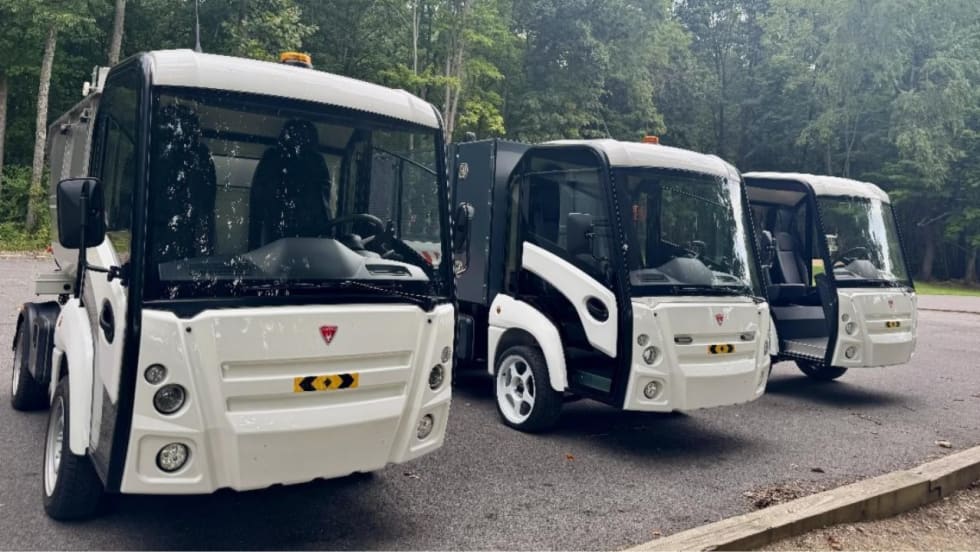
Narro Trucks Introduces Electric Utility Vehicle
Narro Trucks officially launched its operations on Aug. 20 and hosted a ride and drive to showcase its electric truck, which will be produced in Virginia.
Read More →
Samsung SDI Takes Full Control of GM Battery JV as Indiana Plant Pivots to Energy Storage
Samsung SDI is taking full control of its Indiana battery plant with GM, marking a major shift from the EV-focused joint venture Charged Fleet first covered in 2023.
Read More →
NWSA Taps CALSTART to Administer Zero-Emission Drayage Assistance Program
CALSTART will provide free technical assistance services to drayage fleets serving the Ports of Seattle and Tacoma and looking to transition to cleaner technologies and help decarbonize freight hubs.
Read More →
EV Fleet Reality Check: What Operators Wish They Knew Before Electrifying Their Work Vans
Electric work truck upfits bring new compatibility questions. Learn how parts availability, OEM guidance, power demands, and route planning can affect fleet performance.
Read More →
Peterbilt Expands Sourcewell Partnership with Electric Vehicle Lineup
Peterbilt Motors Company’s cooperative purchasing agreement with Sourcewell and its Canadian partner, Canoe Procurement Group, now includes including Peterbilt's battery-electric vehicle lineup.
Read More →