




EV Battery Solutions: Troubleshooting Batteries & End-Of-Life Recycling
EV Battery Solutions by Cox Automotive welcomed Work Truck to Oklahoma City, Oklahoma, for an inside look at how it diagnoses, repairs, remanufactures, and recycles battery-electric vehicle batteries.

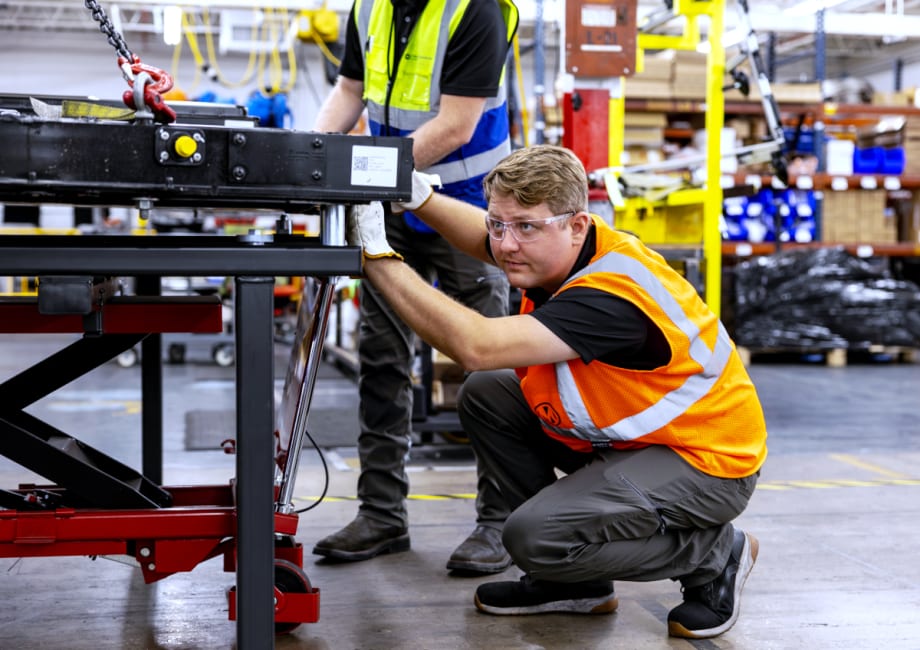
Brandon Carter, root cause engineering manager, inspects a large BEV battery pack for quality assurance at EV Battery Solutions by Cox Automotive’s Oklahoma City facility.
Photo: Cox Automotive
As fleets and consumers explore the transition to battery-electric vehicles, the front end of the equation — where batteries are manufactured, tax incentives, and charging infrastructure — often becomes a key focus, but there are considerations at the other end of the spectrum. To truly discuss EVs, one must also wonder what will become of the batteries if they are damaged or reach the end of their life cycle.
EV Battery Solutions by Cox Automotive, with four locations across the US, has those answers. Cox Automotive has 75 years of experience in the automotive world and now has more than 10 years of EV battery experience.
“The electric vehicle is absolutely reshaping the automotive landscape. And at the center of it is the EV battery pack. It's heavy, it's expensive, it's perishable, and it requires special care and feeding, and that is exactly where we come in, and we're really proud to do,” said Lea Malloy, associate vice president of EV Battery Solutions by Cox Automotive.
EV Battery Solutions facilities are located in:
Oklahoma City, Oklahoma
Detroit, Michigan
Las Vegas, Nevada
Atlanta, Georgia
The Netherlands
EV Battery Solutions supports OEMs, dealers, and fleet operators with a mixture of services, including:
Diagnostics
Storage
Distribution
Repair and remanufacture
Repurpose
Recycle
The footprint is significant, and EV Battery Solutions has more than a million square feet of fire-suppressed, climate-controlled, secure space across its battery center network.
"Ensuring the safety and sustainability of the EV landscape is not just our mission; it's our passion,” Malloy added. “As the electric vehicle sector grows, so will our commitment to offering rapid, expert intervention and championing a future where every battery finds a second life in recycling.”
EV Battery Solutions, Oklahoma City
Malloy said the Oklahoma City facility is the nation’s first and only true one-stop shop for EV battery lifecycle management.
“It is here in Oklahoma that we do it all, diagnostics, repair, remanufacturing, refurbishment, supporting, repurposing, and recycling, and that makes us really unique,” she explained. “It is also here where we supported the industry's largest EV battery recall and we learned a ton about the patterns and processes required to support that scale of EV batteries all in one time period.”
She said the team has excelled at battery diagnostics among all that is accomplished at the Oklahoma site. The electronics lab develops proprietary tooling and testing equipment to assess battery packs and individual modules.
Another standout activity in Oklahoma is EV battery recycling. The facility recovers about 95% of the recycled material and produces black mass, which battery makers can use to produce new batteries.
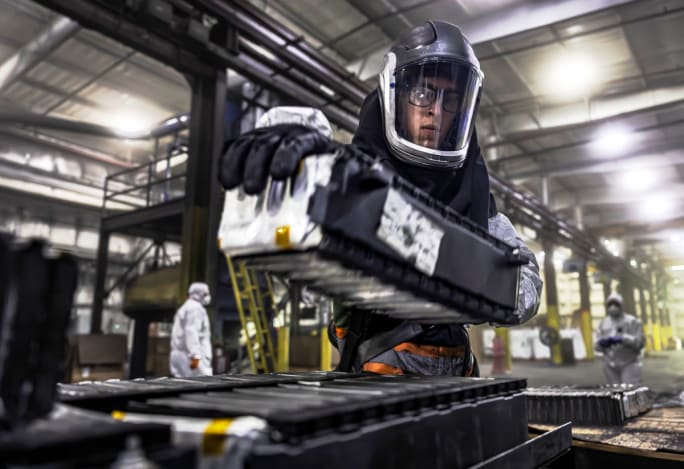
An EV Battery Solutions worker splits battery modules before sending them to be shredded for recycling.
Photo: Cox Automotive
End of Life: Recycling EV Batteries
The Oklahoma City site recycles EV batteries, starting with a core shredder, and operates two shifts a day for 16 hours. The throughput has been significant. EV Battery Solutions by Cox Automotive has handled more than three-and-a-half million pounds of feedstock, batteries to be recycled, resulting in the production of more than a million pounds of black mass.
The batteries are shredded and pulverized, and then different remnants are filtered out. Plastics and other byproducts are sent to other recyclers, and the black mass is sold to refiners, who will use it to make precursors to build more batteries.
While the EV industry has been increasingly focused on using batteries manufactured in the US rather than overseas, the black mass contributes to shifting away from overseas dependencies for raw materials.
“When we're talking about the government incentives for manufacturing batteries in the United States, whether these batteries were manufactured anywhere else if we shred them in the US and then send that precursor out, it's now US-source material,” Tim Harris, director of operations for EV Battery Solutions, explained.
He also shared that EV Battery Solutions by Cox Automotive uses a dry shredding process, unlike the wet processes that some people use. In a wet process, a water solution is used to shred live modules. But in Oklahoma City, all modules are depowered before recycling, thereby allowing a dry process.
“We don't push them down into water to shred them because we depower them to zero before we shred them,” Harris added.
He said the dry process used by EV Battery Solutions is also cleaner and produces a higher-quality black mass.
Electronic Lab Designs Testing Equipment
When it comes to testing EV batteries and the related modules and components, sometimes EV Battery Solutions may not be able to find the ideal testing equipment needed for specific tasks. No problem; engineers design and build whatever they need in the electronics lab in Oklahoma City.
The electronic lab team's mission is to design and build electronics that aid battery testing during remanufacturing, especially when conventional equipment is either unavailable or not cost-effective. Cox Automotive said this focus has led to groundbreaking developments, such as an 8-channel controller driver and a high-voltage isolation-capable synchronous data acquisition system.
“It's obviously expensive, but the testing that we need to do on some of these batteries, sometimes there just isn't a commercial option, so we build equipment for those cases,” said Connor Taylor, who leads the electronics lab engineering team. He has more than a decade of experience building instrumentation and testing electronics.
As an example, he cited how some newer batteries have an 800-volt architecture, but most commercial equipment that could be used for testing tops out at 600 volts. So, the lab designed its own solution for 800-volt testing.
In some cases, a commercial solution may be available, but it might not be the best option. Taylor explained, using the example of determining which modules in a pack are bad and how you have to charge and discharge while taking measurements of voltage, current, and temperature. There is something called a source measurement unit that will do the job. But for the specific OEM’s packs he referenced, the cost would have been about $2 million to get the scale of testing needed. That was in 2018.
The team designed what they needed, and even faced with a redesign caused by the 2020 chip shortage, they built proprietary testing equipment for significantly less, $320,000. Taylor pointed out that the chip shortage and the related workarounds of 2020 were a blessing in disguise since the engineering team ended up using better technology, which had not been available when they started the process in 2018.
The team's approach to innovation is exemplified in their project pipeline and workflow. After receiving a statement of work from a customer, the team, alongside the test stand team, determines the necessary equipment to perform the outlined tests.
This process involves deciding whether to use off-the-shelf or existing in-house solutions or develop new equipment when the existing one is not available or economical.
Root Cause Analysis for BEV Batteries
Brandon Carter, root cause engineering manager, leads a team that specializes in root cause analysis, recalls, and remanufacturing. The root cause analysis team is spread across locations in Detroit, Las Vegas, and Atlanta. Primarily, they work on recalled batteries and perform warranty work.
At the Oklahoma City site, Carter showed an example of a battery in the 800-volt range with recall-related issues. Safety is paramount when working with high voltage, and workers will wear a 40 cal arc flash suit.
“It looks like a bomb defusal suit, or like a beekeeper suit. It’s heavy-duty, because we want everyone in our facility to go home exactly the way they came here. We want to treat everyone or treat these batteries with utmost respect and the possible dangers that they bring,” Carter said.
He explained that a lot of diagnostic work goes into these battery packs before engineers can even open them. Carter pointed out one that's been remanufactured that was currently being worked on during a tour of the Oklahoma City facility.
“There's a lot of sealant on the outside of the battery pack, so we must use an oscillating cutting tool to go around the perimeter of the lid and peel it from the battery pack. Once we gain access to it, run a series of tests to determine which module is bad and install a brand new module into the battery pack,” Carter explained. “Of course, we have to balance it, make sure that it matches the rest of its neighbors before we bus it back up.”
Then, the EV Battery Solutions staff applies sealant to the lid and allows time for the sealant to cure. In the battery displayed by Carter, 186 bolts then must be run in and tightened.
The team also takes great care in packaging and shipping modules. Each module is backed separately in a wooden crate and surrounded by fire-resistant material.
EV Battery Solutions has handled several major, well-known EV battery recalls.
The Flying Doctors: Battery Help Anywhere
However, problematic modules and batteries are not always shipped to EV Battery Solutions locations. Sometimes, instead, the experts respond to wherever their knowledge and skill sets are needed, typically at dealerships. The program, which began in 2021, is known as the Flying Doctors.
Malloy said the program provides a “white-glove experience” in which experts are dispatched to service damaged EV batteries across the United States. Currently, they are actively under contract for one OEM, and with their outreach extending to over 20+ dealers, they expect more OEMs to come on board during 2024.
“They're flying to locations across the United States and performing these repairs. They're acting as the experts,” Carter said. “So, we arrive on-site, and we provide expert assistance to guide the dealership through the repair. We're also doing the work too. It's a partnership to get their repair completed. In doing so we're able to help the customer to speed along.”
EV Battery Solutions will ship PPE to the location, but typically, the specialized tools and parts needed will already be at the dealership. Also, the OEMs usually perform the diagnostics before the Flying Doctors arrive to make repairs. However, Carter explained that there will often be a situation where the Flying Doctors arrive and perform more diagnostics and testing.
“There are times where we do pretty in-depth diagnostics, overnight parts, and have to be very flexible with our schedule when we're out in the field,” Carter added.
End-of-Line Testing for Batteries
When a battery repaired under warranty or in another situation is ready to go out the door, it is thoroughly checked first. Sarah Hake, manager of product operations, explained how many of the testing devices created in the lab come into play in this end-of-line testing.
“Once we have a battery put together, we can run it through tests to make sure it's ready to go out the door,” said Hake, who heads the electronics lab production team. “Same thing when we have something that's been sitting on the shelf for a bit, we can do another one of those tests to make sure it's ready to go, and nothing has happened, or depowered, or anything like that, while it’s been waiting to ship out.”
As Work Truck toured the Oklahoma City facility, Hake presented a hybrid battery line as an example and showed how the testing equipment is used. She said that in the case of those hybrid batteries, technicians break them down into individual modules and test each one.
Hake explained that the particular line she showcased had presented unique challenges — such as measuring the temperature in a particular way. The batteries, early hybrid batteries, needed a way EV Battery Solutions could test the temperature in multiple ports, and the answer was a fine-tuned 13-thermistor system, a thermistor bar that was created in the electronics lab.
“Because we have to remanufacture these, we want to make sure that everybody's safe, including ourselves, our equipment, the battery, the operators,” she explained. “As the temperature chart starts to creep up on these guys, that's usually a good indication that it's going to be a bad module, or it could be a dangerous module.”
More Green Fleet

Fleet Forward Conference Introduces One-Day Passes for 2026
New one-day registration gives fleet professionals the flexibility to attend Tuesday, Wednesday, or Thursday, with passes available for $199 through Sept. 18.
Read More →
CALSTART Rebrands as Catalyst Mobility, Will Combine with Forth in 2027
CALSTART has rebranded as Catalyst Mobility and will combine with Forth at the start of 2027. The new organization said it is poised to become one of the world's largest, strongest, and most impactful clean transportation nonprofits.
Read More →
Electric Truck and Charging Programs to Boost Sustainability at NY & NJ Ports
Together, the Port Authority of New York and New Jersey and CALSTART will electrify drayage and terminal operations serving the East Coast’s busiest container port. A pair of incentive programs totaling $45 million has launched to accelerate adoption of zero-emission drayage trucks and terminal tractors.
Read More →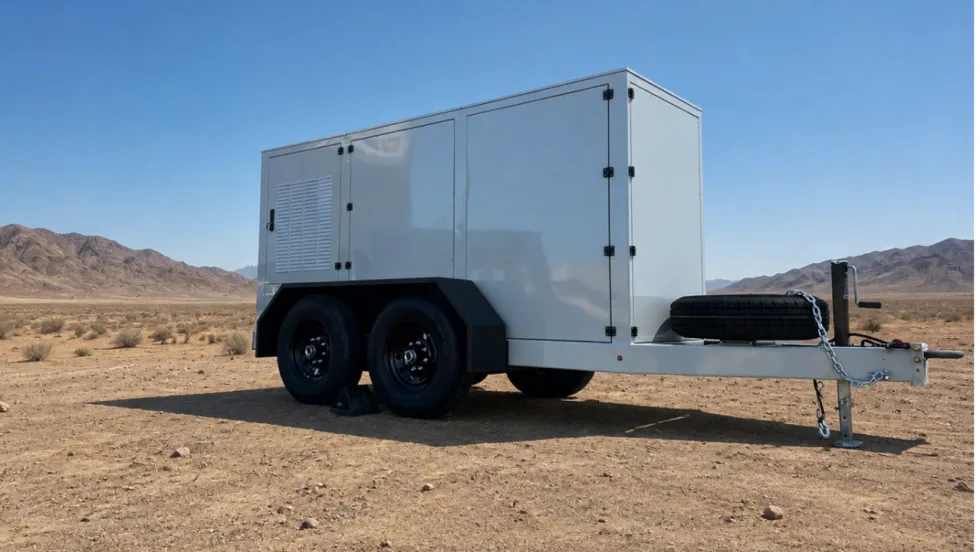
Xos Hub Surpasses One Gigawatt-Hour of Energy Delivered in the Field
A single Xos Hub has surpassed one gigawatt-hour of energy across more than 33,600 charging sessions in the field, demonstrating performance that supports Xos' expansion across new products and markets.
Read More →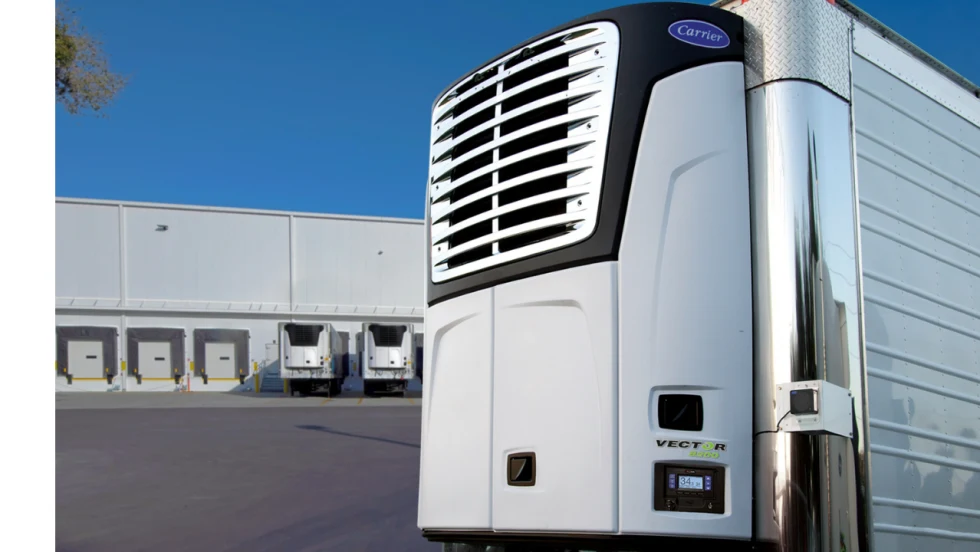
Carrier Transicold Launches All-Electric Vector 8200 TRU for Diesel-Free On-Site Cold Storage
Carrier Transicold’s first engineless multi-temperature TRU helps fresh- and frozen-food fleets add supplemental cold storage capacity during seasonal peaks.
Read More →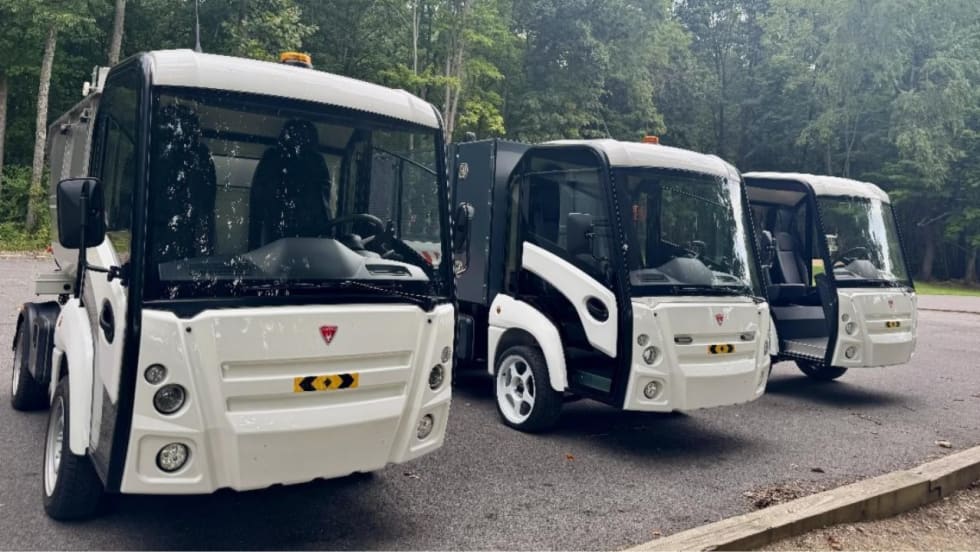
Narro Trucks Introduces Electric Utility Vehicle
Narro Trucks officially launched its operations on Aug. 20 and hosted a ride and drive to showcase its electric truck, which will be produced in Virginia.
Read More →
Samsung SDI Takes Full Control of GM Battery JV as Indiana Plant Pivots to Energy Storage
Samsung SDI is taking full control of its Indiana battery plant with GM, marking a major shift from the EV-focused joint venture Charged Fleet first covered in 2023.
Read More →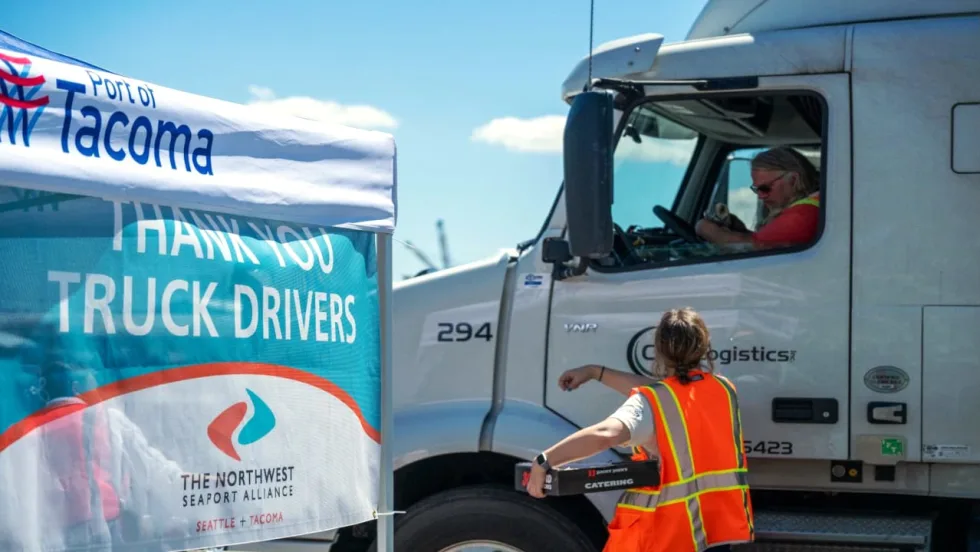
NWSA Taps CALSTART to Administer Zero-Emission Drayage Assistance Program
CALSTART will provide free technical assistance services to drayage fleets serving the Ports of Seattle and Tacoma and looking to transition to cleaner technologies and help decarbonize freight hubs.
Read More →
EV Fleet Reality Check: What Operators Wish They Knew Before Electrifying Their Work Vans
Electric work truck upfits bring new compatibility questions. Learn how parts availability, OEM guidance, power demands, and route planning can affect fleet performance.
Read More →
Peterbilt Expands Sourcewell Partnership with Electric Vehicle Lineup
Peterbilt Motors Company’s cooperative purchasing agreement with Sourcewell and its Canadian partner, Canoe Procurement Group, now includes including Peterbilt's battery-electric vehicle lineup.
Read More →