





How to: Handle EV Reimbursement for At-Home Work Truck Charging
How & Why to Create an Electric Vehicle Safety Team
To mitigate risks associated with EVs, organizations can create an EV Safety Team (EVST) that oversees policies, procedures, technology, and training programs and fosters safe practices among employees and drivers. Learn how!
April 1, 2024
The road to electrification is paved with innovation and safety. As electric vehicles (EVs) become more prevalent in our fleets, the importance of establishing an Electric Vehicle Safety Team (EVST) has never been clearer.
Photo: Work Truck
6 min to read
The adoption of electric vehicles (EVs) continues to grow. As with any new equipment, it’s important to protect drivers, passengers, pedestrians, and technicians from potential safety hazards. One effective way to achieve this is by creating an Electric Vehicle Safety Team (EVST).
Here’s why organizations should consider creating one and how to do it.
Understanding and Handling Electric Vehicle Risks
Maryam Khan, CEO of Axle Mobility, said the risks associated with EVs fall into two main categories: electric hazards and battery-related fire risks. However, these risks are generally relatively low.
“Electric vehicles, along with their charging systems, are generally regarded as extremely safe, and the risk of anything going wrong is highly unlikely,” Khan said. “However, electric vehicles come with risks just like gas-powered vehicles and hybrids. These risks are exacerbated by lapses in administrative controls, lack of training, mishandling, and, in rare instances, situations like manufacturer defects, charging issues, or collisions.”
Training, mishandling, and administrative controls are all elements an EVST can address, which is one reason to form one.
Matt Stevens-Rich, director of technical services for the Electrification Coalition, said technicians working on EVs bear most of the risk.
“Anyone that's popping the hood — that's usually where we find the biggest safety considerations. The good news is there's core training and education to help technicians know their way around high voltage systems,” he said. “The reason we focus on that is so that we're mitigating any opportunity for conduction to happen, and that allows us to operate safely. There is a process to de-energize the vehicle where an emergency cut-off physically disconnects the battery from the rest of the drive train component. There's a waiting period where the system is still live; once you let everything de-energize, it allows you to operate on the components safely.”
The charger side of the equation sees even fewer risks since most public chargers operate on 240 volts of electricity.
“It's basically the same level of electricity that's running through a dryer outlet or electrical cooking appliances, and so electricians can pretty easily and readily work on the charging stations,” Stephens-Rich said.
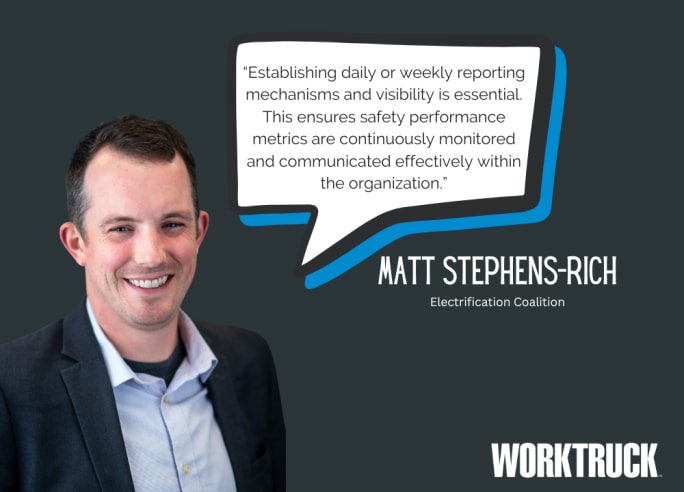
Specializing in the training and education of technicians, the Coalition is at the forefront of reducing risks associated with high-voltage systems in EVs.
Photo: Work Truck | Electrification Coalition
Why Create an Electric Vehicle Safety Team (EVST)?
“Fleets already prioritize safety and regulations like compliance. As EVs become increasingly common in fleet operations, having a team or single-threaded leader can ensure accountability when it comes to electric vehicle-related safety issues and compliance questions,” Khan explained.
She sees the reasons for creating an EVST falling into three categories:
- Safety Culture Development: Overseeing policies, procedures, technology, and training programs tailored to EV operations and fostering safe practices among employees and drivers.
- Compliance and Risk Management: Staying informed about, and ensuring compliance with, regulations specific to EV operations to minimize risks and liabilities.
- Incident Response: Leading incident response efforts and investigations for close calls or accidents to prevent them from happening again.
What Does an EVST Do?
At a high level, EVSTs exist to ensure safe and effective EV operations.
Khan said they play a central role in planning and implementation. “At the planning level, EVSTs are involved in policy development, while at field sites, they oversee the implementation of these policies,” she said. “The ultimate goal is to achieve a 100% compliant and incident-free workplace.”
If a fleet has already implemented EVs, a good place for an EVST to start is the area that presents the greatest risk: maintenance.
“One thing an EVST may do is make sure the fleet is using the best curriculum available and that technicians are getting the right training and have access to all the information they need to be safe,” Stephens-Rich said. “But sometimes it can be a little question like where to place charger signage or a larger question about how to make charging ADA compliant. We highly recommend at least having one charger be ADA accessible.”
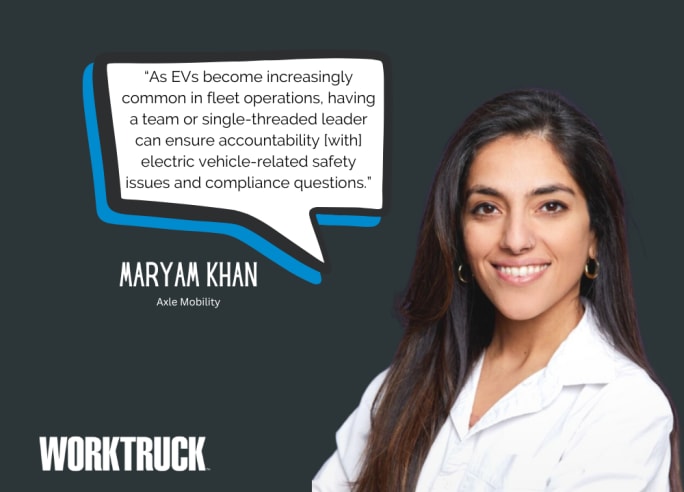
Maryam Khan, CEO of Axle Mobility, is steering the conversation on EV safety with a proactive approach.
Photo: Work Truck | Axle Mobility
Khan said other goals and EVST activities include:
- Risk Assessment: Staying aware and educating teams on electric hazards and risks.
- Compliance Monitoring: Staying current on safety regulations and ensuring compliance.
- Safety Protocols and Training: Identifying and training personnel based on their responsibilities and enforcing protocols like lockout/tagout and PPE use.
- Emergency Planning: Developing plans for EV incidents, including rare events like battery fires and electrocution, and engaging with first responders.
- Inspections: Checking EVs and charging systems for compliance and safety issues.
- Investigation of Incidents and Near Misses: Identifying the root cause of safety incidents when they do happen to prevent future occurrences.
- Managing Safety Equipment: Providing, maintaining, and ensuring the testing of safety gear and tools.
- Logistics: Helping coordinate logistics like battery disposal and vendor integrations like PPE.
- Continuous Improvement: Updating protocols based on lessons learned and industry advancements.
- Culture: Cultivating a culture that rewards vigilance and safety instead of incentivizing under-reporting due to fear of retribution.
Who Should Be on an EVST?
Fleet, safety, and maintenance managers are the most obvious choices to sit on an EVST. However, the most effective teams include roles across an organization.
Other EVST members may include:
- Director of Standards/Compliance
- Director of Operations
- Sustainability Director
- Facility Manager
- Driver(s)
- Technician(s)
- Environmental Health & Safety
- Department stakeholders
- Representation from the permitting office, fire chief’s office, and building and zoning department
- Infrastructure Manager
“On the public fleet side, we’ve seen infrastructure manager positions start to grow in popularity, which is someone who oversees the charging infrastructure and makes sure the organization is scaling the deployment responsibly and ensuring that everything's operating how it needs to,” Stephens-Rich said.
The size of an EVST will vary depending on the size and complexity of the fleet.
How Often Should an EVST Meet?
Like the size of an EVST, the frequency of meetings will vary, especially depending on how far along a fleet is in the implementation process.
Khan offers the following suggestions:
- EV rollout: During the initial roll-out stage of EV operations, hold regular meetings to establish protocols and address emerging safety concerns.
- Established EV fleet: As EV operations stabilize and safety protocols are in place, transitioning to a monthly meeting may suffice for ongoing monitoring and review.
- Continual evolution: Call ad hoc meetings as needed to respond to significant developments in EV operations or address urgent issues.
"Regardless of meeting frequency, establishing daily or weekly reporting mechanisms and visibility is essential,” Khan said. “This ensures that safety performance metrics are continuously monitored and communicated effectively within the organization.”
Stephens-Rich said maintaining a monthly meeting never hurts. “It’s good to at least get a once-a-month call on the books; if the update is ‘Everything's going according to plan,’ that's great. Even if it’s a short call, we've seen many entities drive success by having that time allocated,” he said.
What Does an Effective EVST Look Like?
Khan said an effective EVST is all about:
- Looking around corners to stay informed and spot potential hazards before they snowball into larger problems.
- Effective communication and creating a culture where everyone is on board with safety measures.
- Taking action to investigate issues quickly, make fixes, and implement protocols to ensure it doesn't happen again.
- Continuous improvement, learning from mistakes, and keeping up with the latest safety trends and tech.
Khan offered this parting advice: “It sounds counterintuitive, but don’t overthink it! Progress is better than perfection, and it may take several iterations to get the team right,” she said. “Start building the EVST as early as you can, even if the fleet is still in the early stages of EV adoption.”
Subscribe to Our Newsletter
More Safety & Compliance

Recalls You Need to Know About in October 2026
In October 2026, what recalls might impact your fleet? Work Truck has the answers in this comprehensive overview of recent NHTSA recalls.
Read More →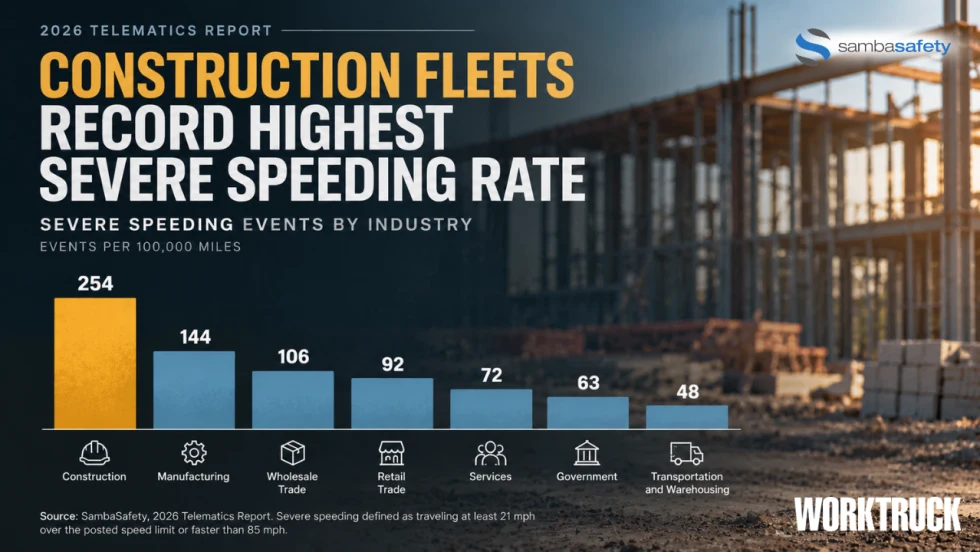
Construction Fleets Show Telematics Adoption Alone May Not Reduce Driving Risk
SambaSafety found construction fleets monitor roughly 92% of their vehicles but recorded the highest severe speeding rate among industries studied.
Read More →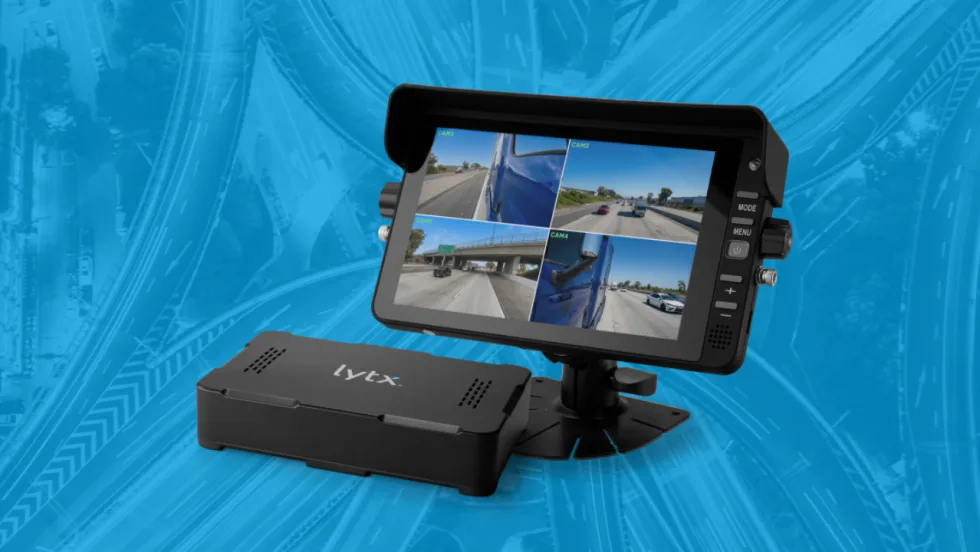
Lytx Launches 360 Hub Kit for Expanded Fleet Camera Visibility
Lytx’s new AI-ready gateway and HD auxiliary camera ecosystem, the Lytx 360 Hub Kit, extends visibility across side, rear, cargo, and blind-zone views to help fleets see more and respond faster.
Read More →From Our Partners

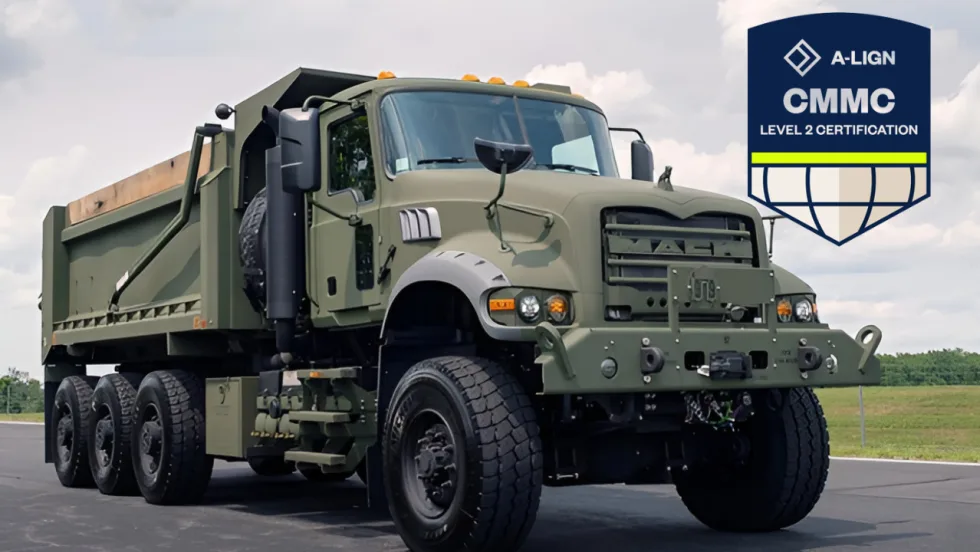
Mack Defense Achieves Cybersecurity Maturity Model Certification Level 2
After an assessment conducted by an authorized Certified Third-Party Assessment Organization (C3PAO), Mack Defense has achieved Cybersecurity Maturity Model Certification (CMMC) Level 2.
Read More →
When Work Trucks Under 26,001 Pounds Need IRP Registration
Think trucks under 26,001 pounds are automatically in the clear when it comes to IRP? Not always. Learn where lighter vehicles can still run into trip permit, apportioned registration, and IFTA compliance requirements when crossing state or provincial lines.
Read More →
Smith System Wants Work Truck Fleets to Look Beyond the Driver Alert
Smith System’s new Driver Risk Management program is built to help mixed work truck fleets turn telematics alerts and observations into specific behaviors, coaching actions, and measurable follow-up.
Read More →
Volvo Trucks Releases New Safety Recommendations for Traveling with Pets
One of the most important recommendations for professional drivers traveling with pets is to ensure pets are properly restrained while the truck is moving. Other tips are available in the new guide from Volvo Trucks North America and Center for Pet Safety.
Read More →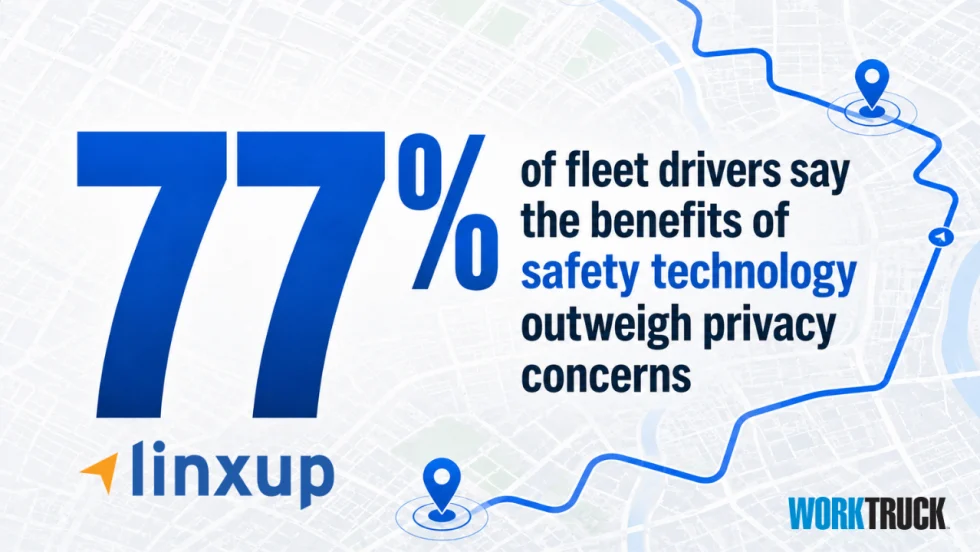
Are Work Truck Drivers Warming Up to Dash Cams and GPS Tracking?
A new survey finds field-service drivers may be more comfortable with dash cams and GPS tracking than fleet managers think, especially when the technology helps protect them after a crash.
Read More →
Recalls You Need to Know About in September 2026
If you have Altec, Chrysler, Ford, Heil, General Motors, International, Mack Trucks, Paccar, Rivian, Royal Truck, Toyota, US Truck Body, or Volvo Trucks vehicles in your fleet, you should check these important recalls issued by the National Highway Safety Administration.
Read More →
API Issues Refueling Safety Guidelines
The American Petroleum Institute offers a list of safe vehicle refueling guidelines, including ways to avoid potential problems with static electricity discharges in fall, winter, and early spring.
Read More →